A dining table anchors daily routines and shapes how a room is used. Choosing a solid wood table involves balancing everyday family meals, hosting guests, and understanding how natural timber patinates over time. Here are five practical considerations to guide your choice.
1. Measure seating space and perimeter clearance
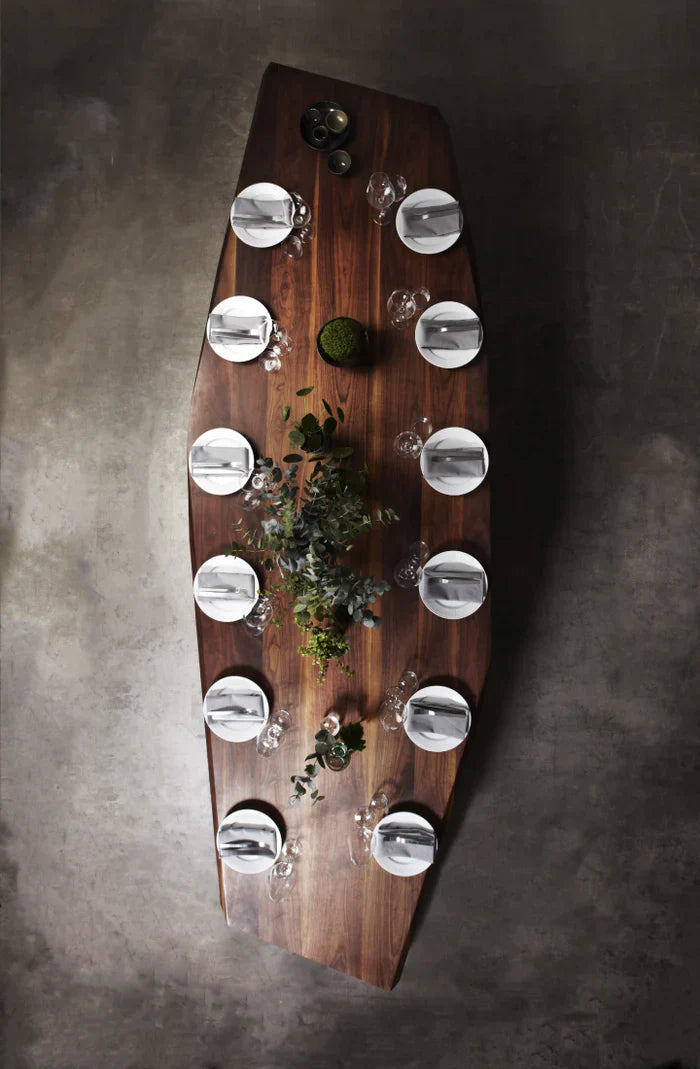
To ensure comfortable seating, allow at least 60 cm (24 in) of table width per person along the edge. If your chairs feature wide armrests, plan for additional width to prevent cramped elbows.
Perimeter clearance is just as critical. Keep a minimum distance of 75 to 90 cm (30 to 36 in) between the table edge and nearby walls or furniture. This gives diners enough space to slide chairs out and allows people to walk past comfortably. For table depth, a rectangular width of 90 to 100 cm leaves ample room for facing place settings and serving dishes in the middle.
2. Match the tabletop geometry to your floor plan
The shape of your tabletop directly affects circulation and how people interact across the surface:
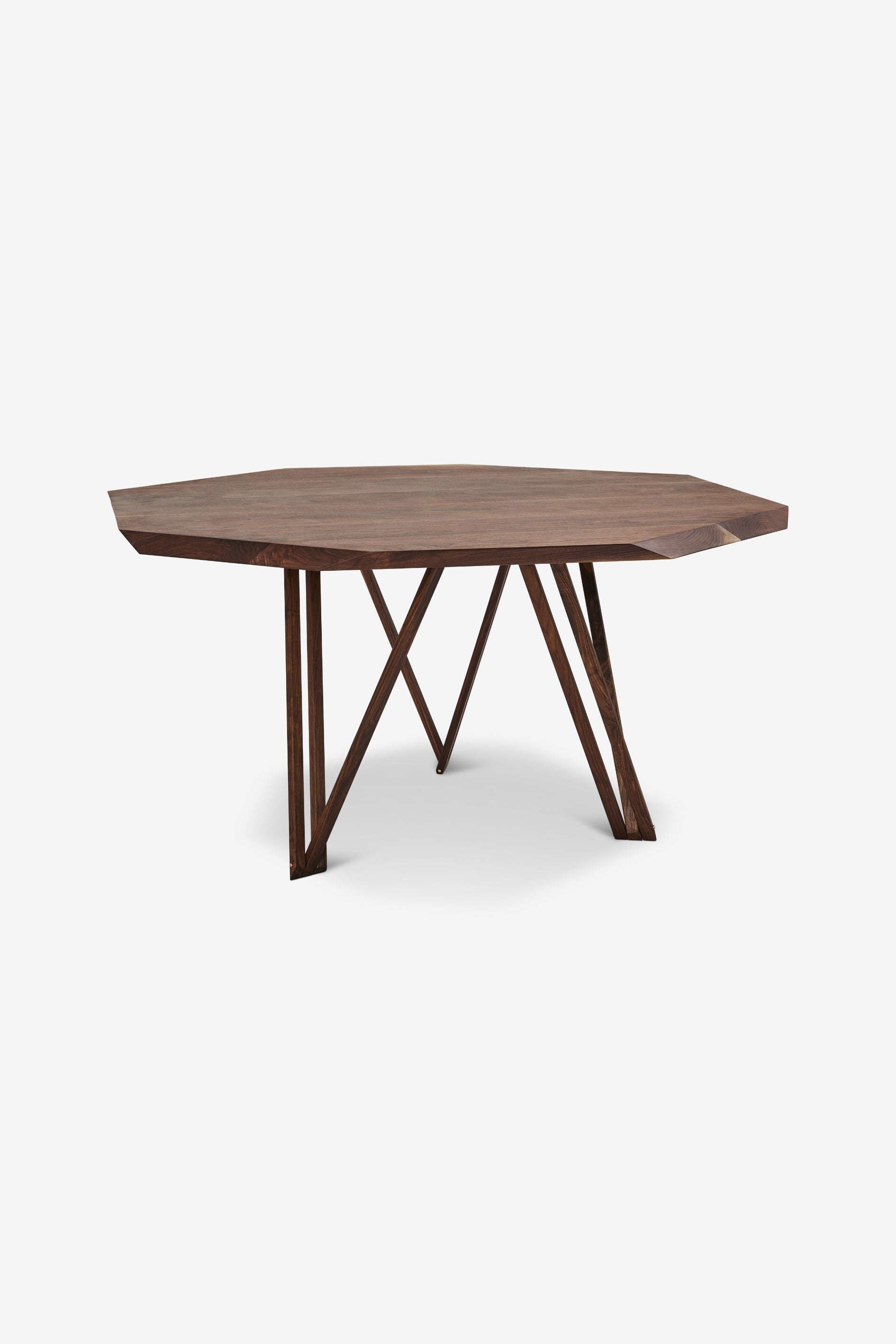
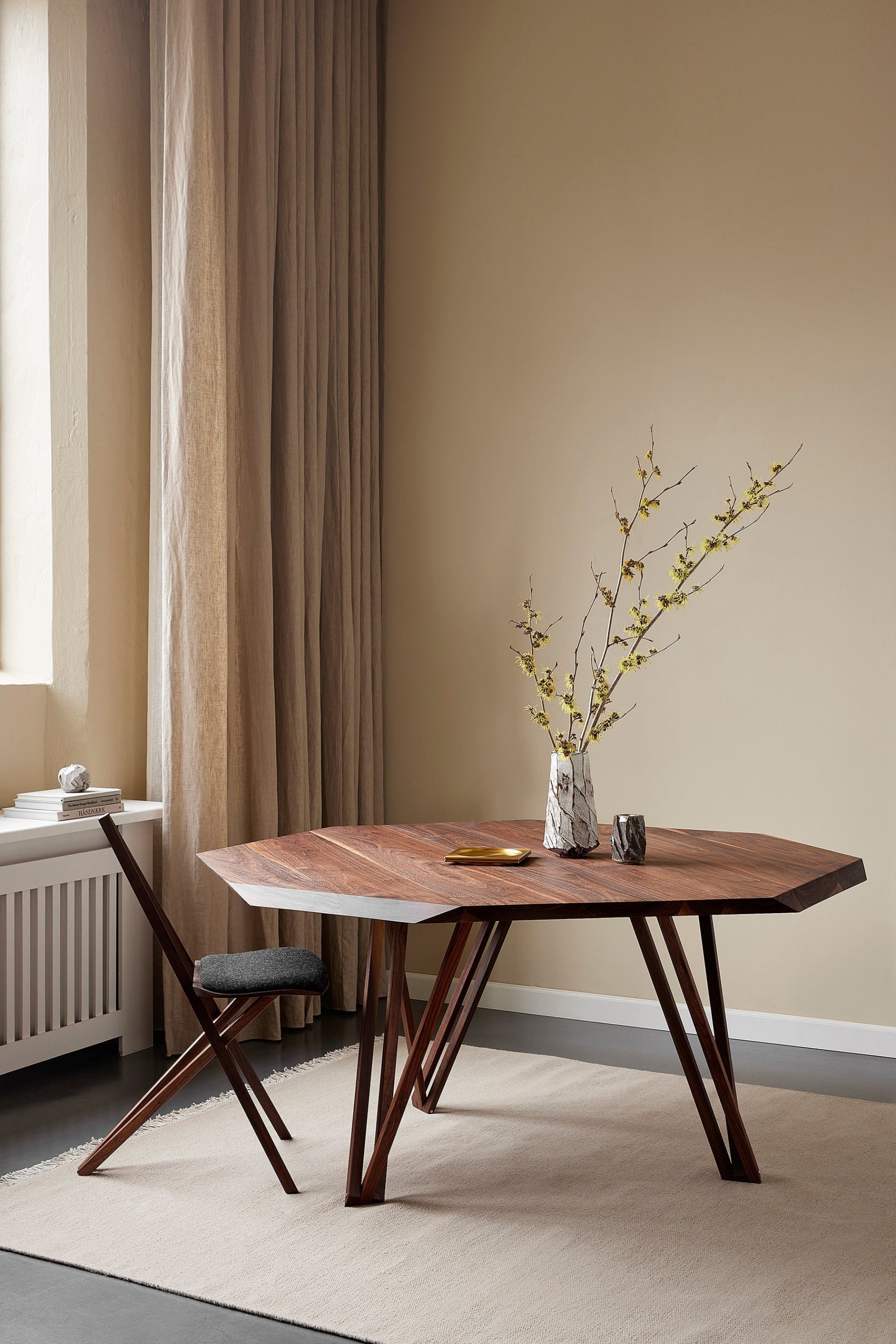
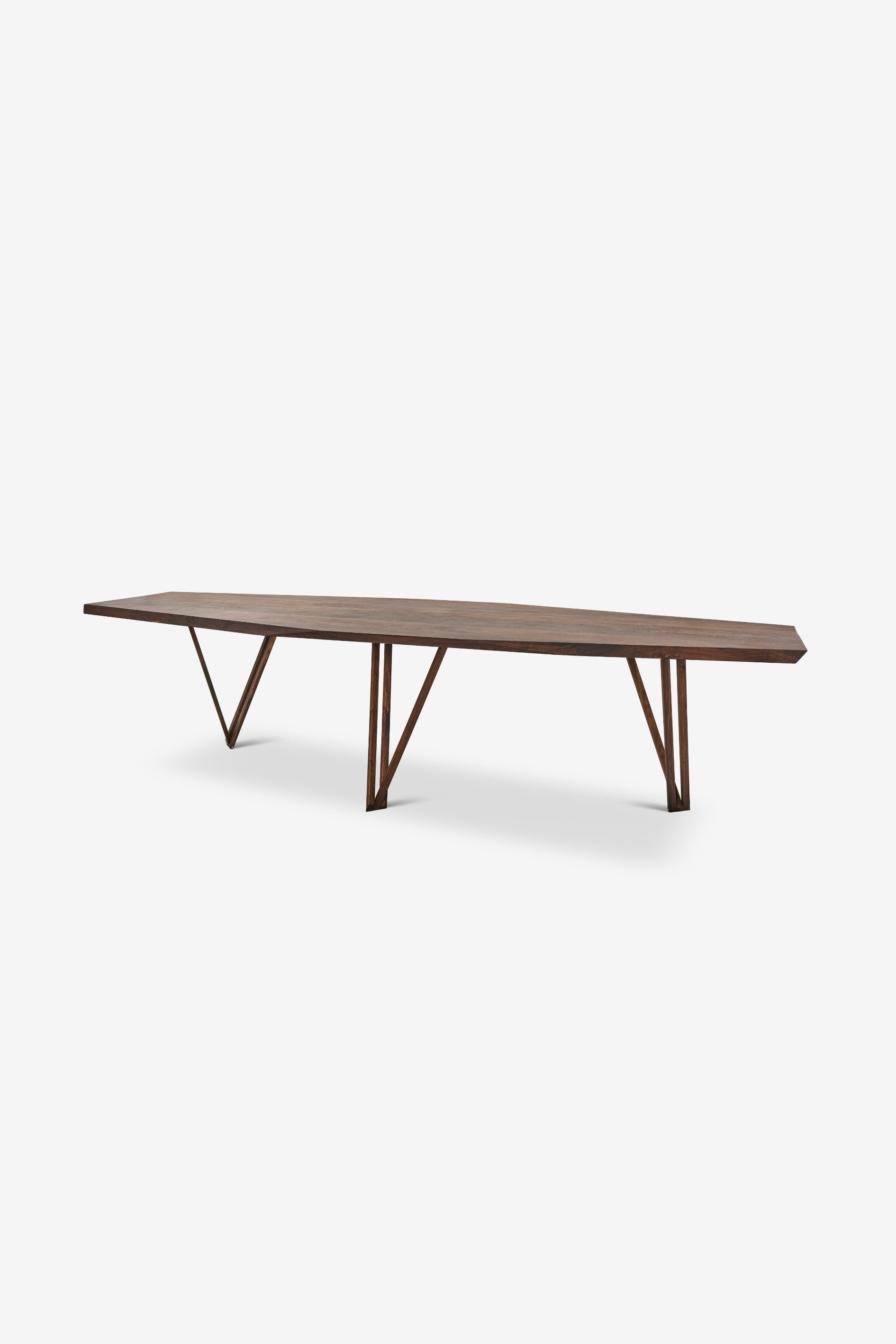
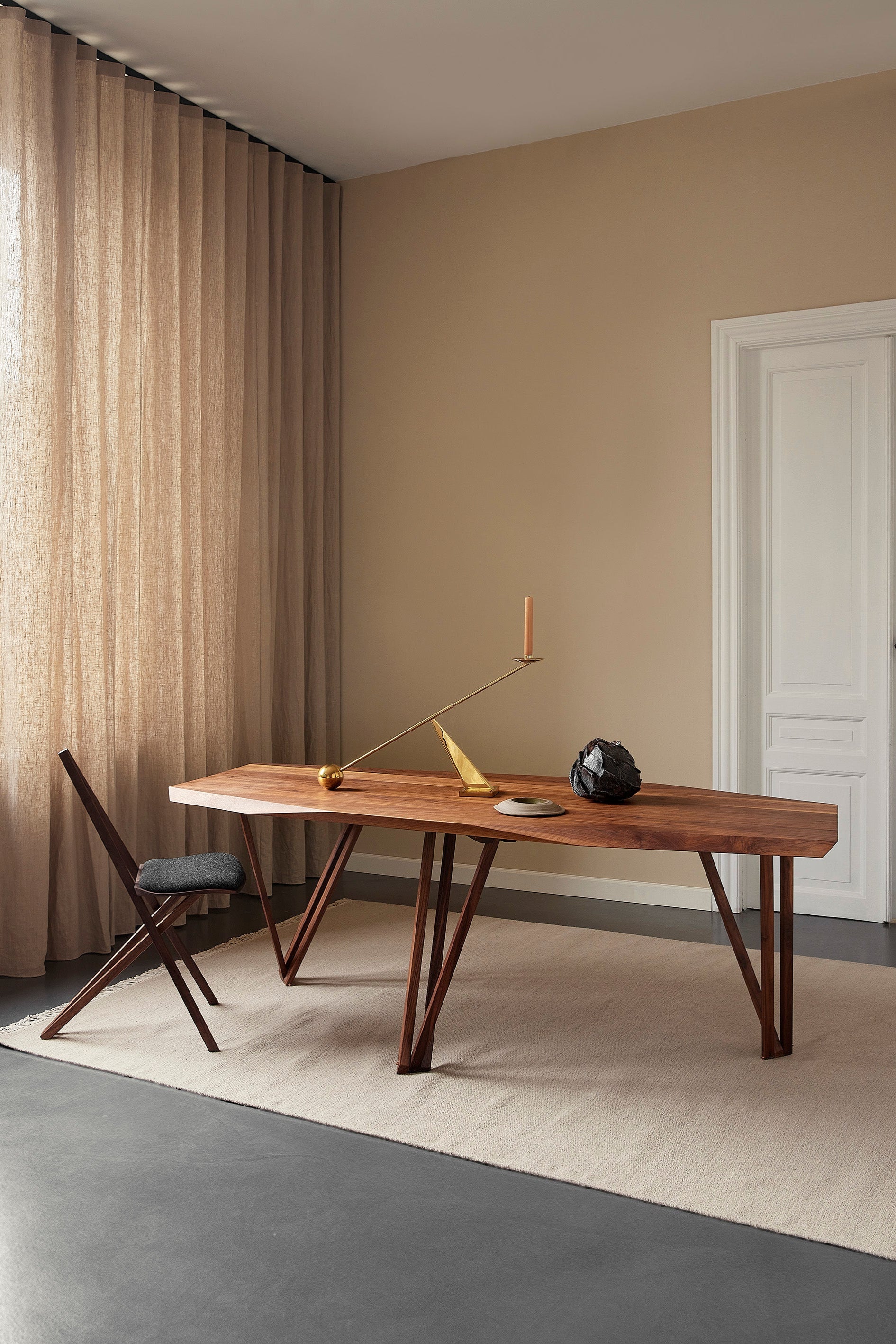
- Elongated and rectangular tables: Well-suited for longer rooms or open-plan living spaces where the table runs parallel to the main layout. Our elongated Dining table JN01 in walnut wood features an octagonal profile with edges cut at opposing 45-degree angles, creating a defined silhouette while preserving usable tabletop space.
- Round and polygonal tables: Encourage direct eye contact across the surface and fit well into squarer dining zones. A design like the Dining table JN01 in walnut wood 'round' distributes seating evenly around the base and softens strict rectangular room lines.
3. Consider timber tone and grain character
Different wood species create distinct contrasts in an interior. Lighter hardwoods such as oak or ash reflect natural daylight, while solid American walnut introduces a deep tone with visible grain patterns. This darker palette creates a clear architectural contrast against light floors and walls. When wide solid planks are matched together, the wood's natural figure becomes a central visual feature of the tabletop.
4. Evaluate base construction and leg placement
Underframe construction determines how freely you can place chairs and move your legs. Legs positioned strictly at outer corners can collide with chair arms or obstruct people sitting at the table ends.
A recessed base structure provides clear legroom along the sides. On our handcrafted tables, the angled legs are set inward beneath the tabletop, providing stable support for the solid timber while leaving unobstructed space for seated guests.
5. Select a surface finish you can maintain
A solid hardwood table offers the advantage of straightforward, long-term maintenance. While lacquered or thinly veneered tops can be difficult to patch when scratched, solid wood treated with oil allows for routine care and spot repairs.
Regular oiling helps protect the timber against daily wear and minor spills. If scratches or marks occur over years of use, a solid tabletop can be sanded down and re-oiled to renew the surface. For detailed guidance on caring for your furniture, explore our guide to Care and Maintenance.
If you have questions about choosing the right dimensions, wood, or table profile for your space, you are always welcome to contact us.