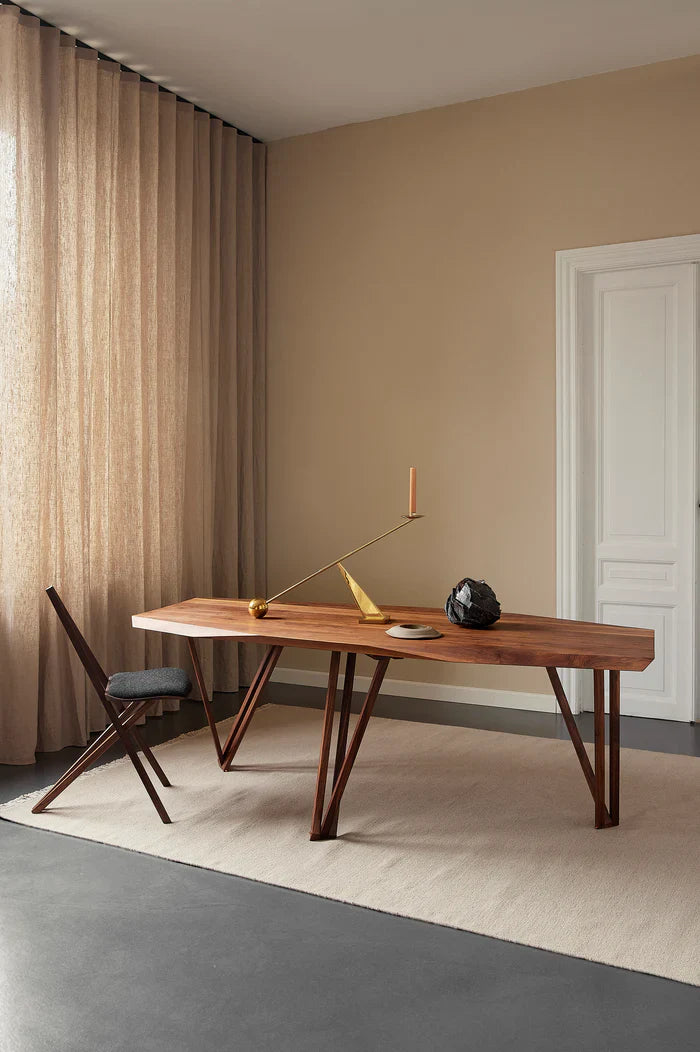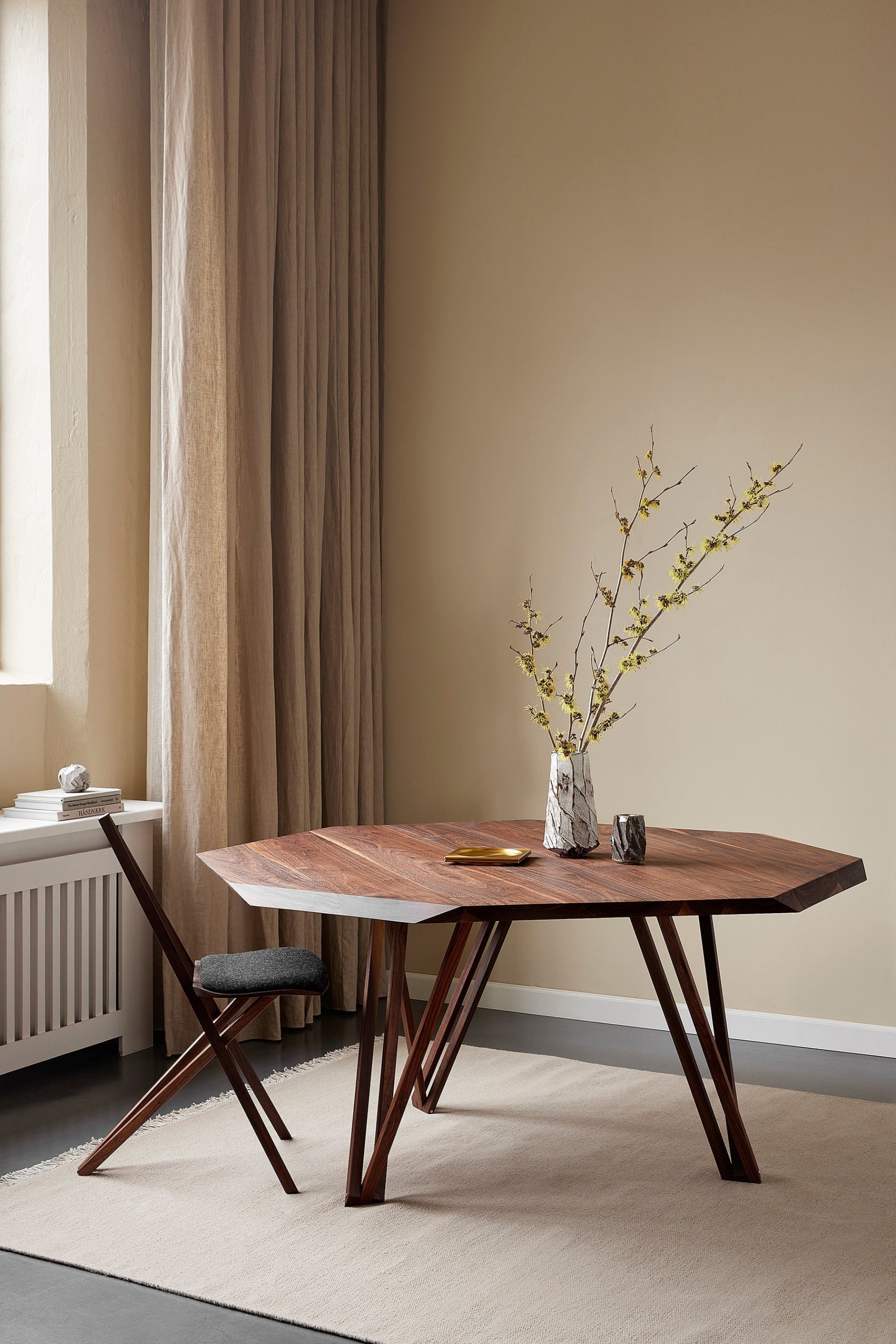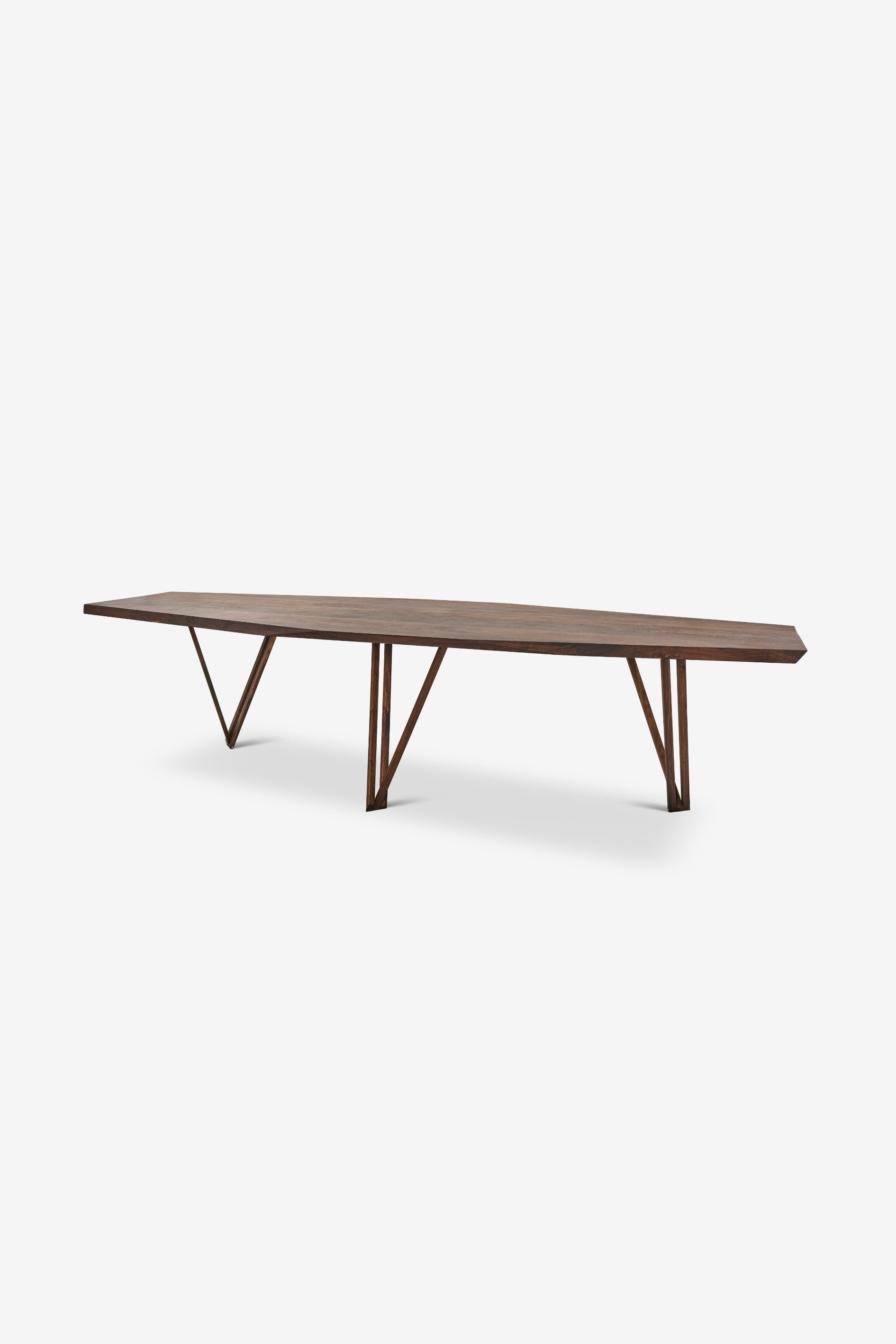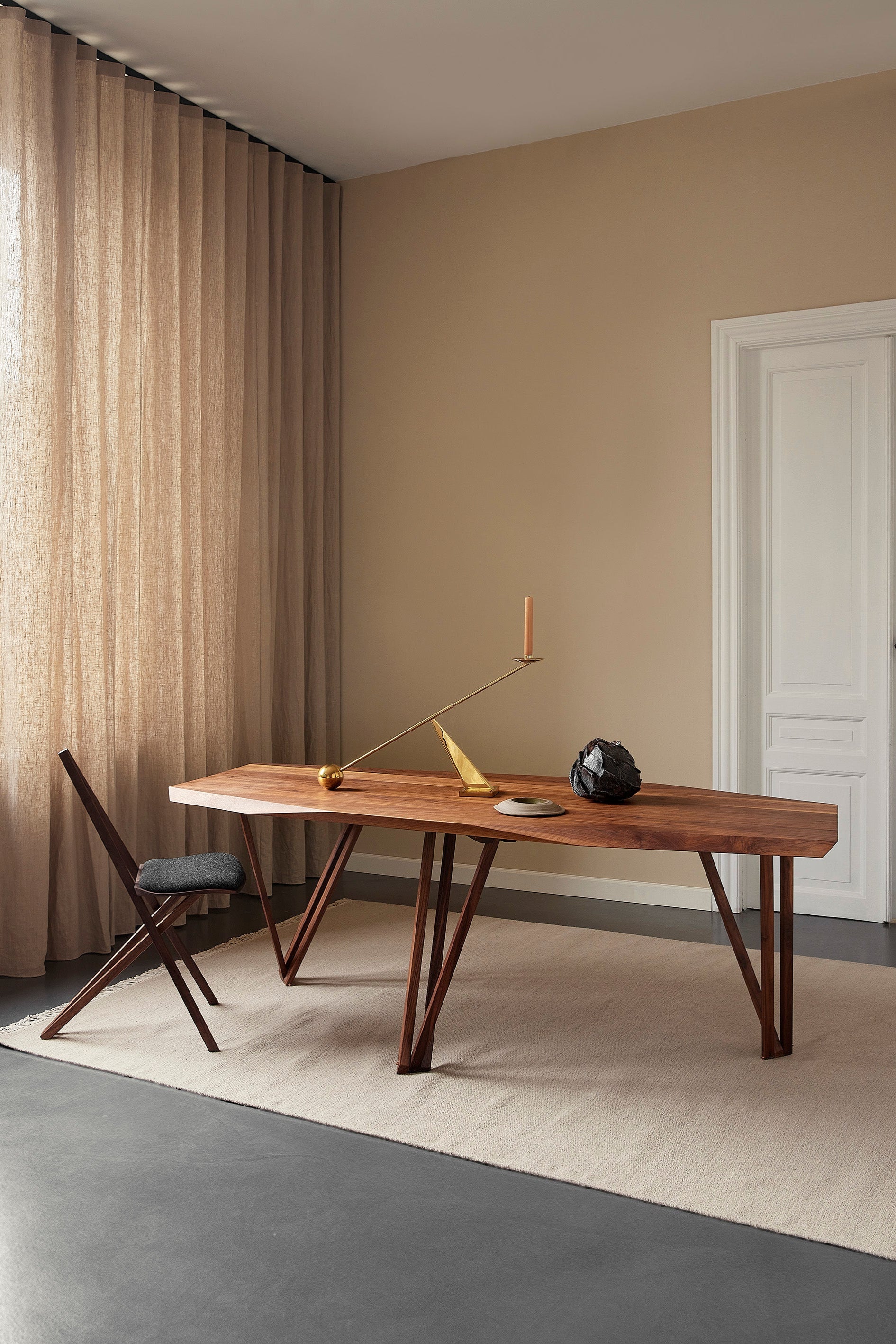
A dark wood dining table brings visual weight and definition to an interior. In contemporary Scandinavian spaces dominated by pale plaster walls, light oak flooring, or cool microcement, natural dark timber provides an anchor. Rather than making a dining area feel enclosed, deep wood tones establish clear boundaries for where people sit, eat, and gather.
The Nature of Solid Walnut
American walnut (Juglans nigra) is a dense hardwood known for its rich chocolate-brown heartwood, often laced with subtle violet and warm caramel undertones. Its figure is expressive, shifting between straight fibers and organic waves that catch natural daylight differently from each angle.
Unlike many light hardwoods that darken or turn yellow with age, walnut is photoreactive in reverse. Over years of exposure to natural daylight, unfinished and oiled walnut gradually lightens into a warmer, golden-honey patina. This slow shift is a natural characteristic of the hardwood rather than a finish breakdown.
Choosing solid hardwood over veneers or surface-stained timber also affects everyday ownership. A stained surface only holds its pigment in a thin exterior coat, making an accidental chip or scratch reveal pale wood underneath. Solid walnut carries its deep tone throughout the plank, allowing minor surface marks to be tended without uncovering a contrasting base layer.
Balancing Proportions and Contrast
Working with dark timber requires attention to light and scale. Because a dark surface absorbs more light than white-pigmented oak or ash, balance comes from the surrounding clearances and textures:
- Allow comfortable clearances: Plan for at least 60 cm of tabletop width per place setting, and maintain at least 90 cm of clear passage around the perimeter so chairs can be pulled out freely.
- Work with surface contrast: A dark tabletop pairs naturally with contrasting elements. Light dining chairs, textured linen, light oak floors, or pale stone balance the table's deep presence without competing with it.
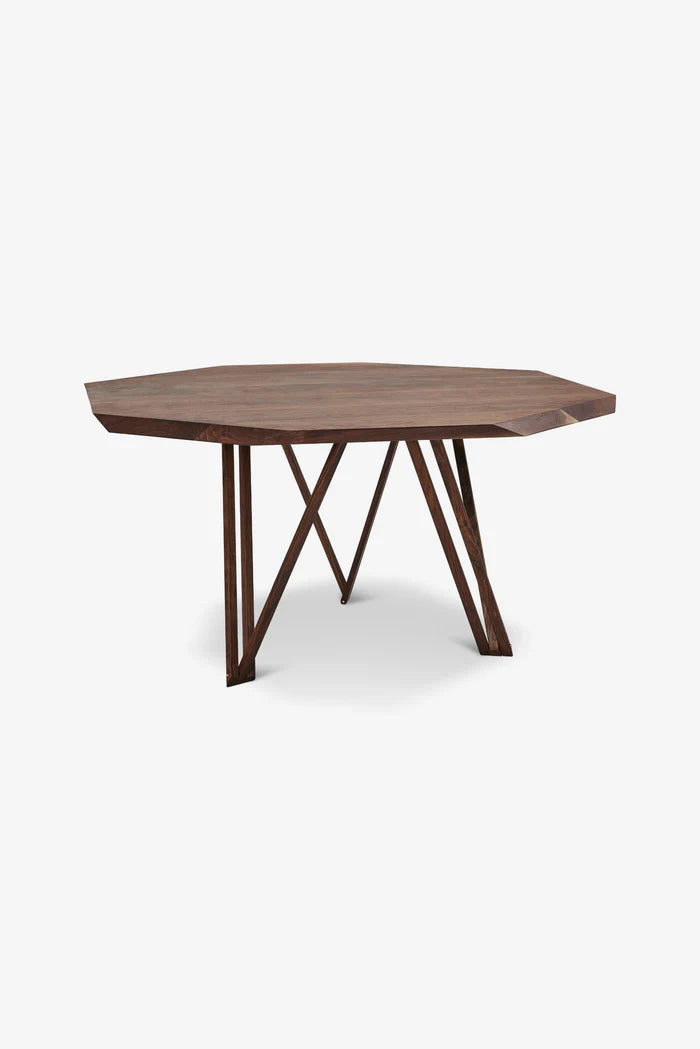
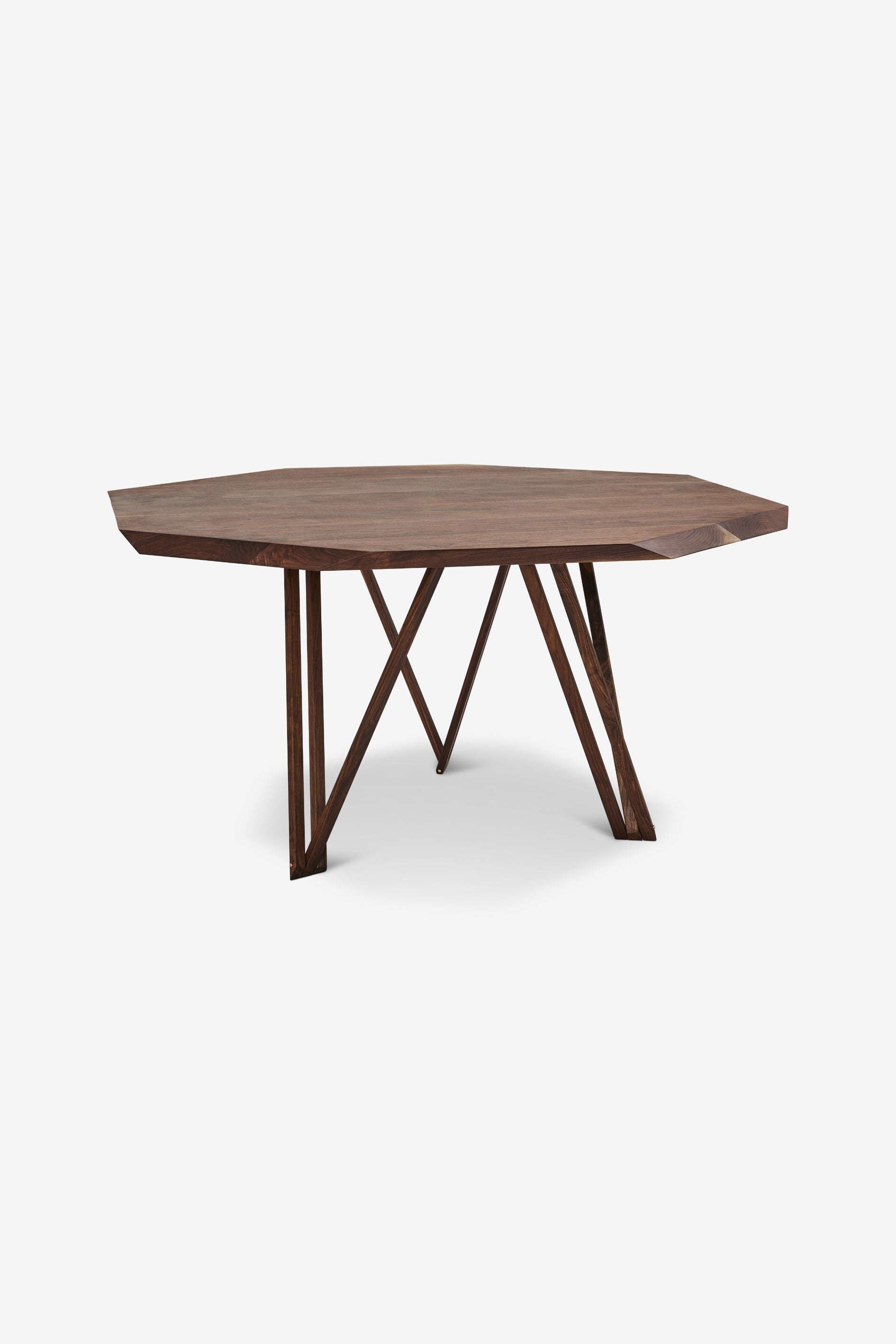
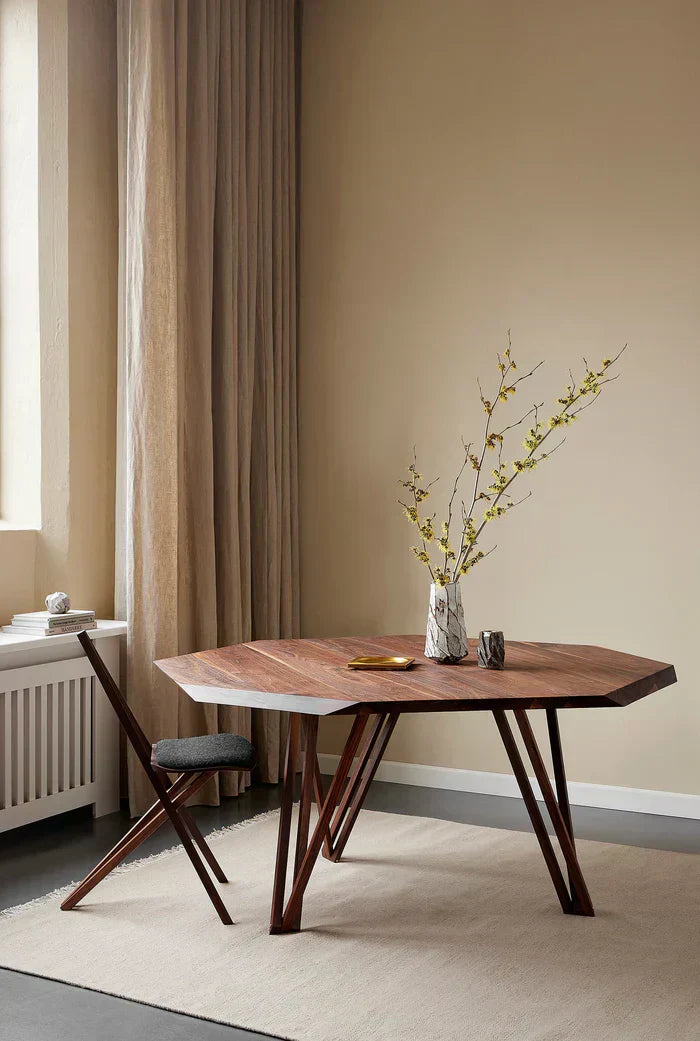
- Consider edge geometry: Crisp angles lighten the visual impression of a solid tabletop. Our octagonal JN01 dining table uses tabletop edges cut at opposing 45-degree angles, creating slim facet lines between the wide planks and the base.
Daily Use and Surface Care
Oiled solid timber offers a tactile finish where the wood grain remains open to the touch rather than sealed beneath a synthetic film. Living with an oiled surface simply takes a few clear habits:
- Routine wiping: Dust the surface with a soft, dry cloth. Clean liquid spills promptly using a well-wrung, slightly damp cloth, and wipe away residual moisture. Avoid aggressive detergents and degreasing soaps that strip natural oils.
- Heat and moisture protection: Use trivets for hot cookware and coasters under cold glasses to prevent surface rings.
- Periodic oiling: Refresh the tabletop with timber oil roughly once a year, or whenever the wood grain begins to look dull and dry, to protect the surface and preserve the wood's glow.
For detailed step-by-step guidance on surface treatment and spot care, read our complete guide to care and maintenance.