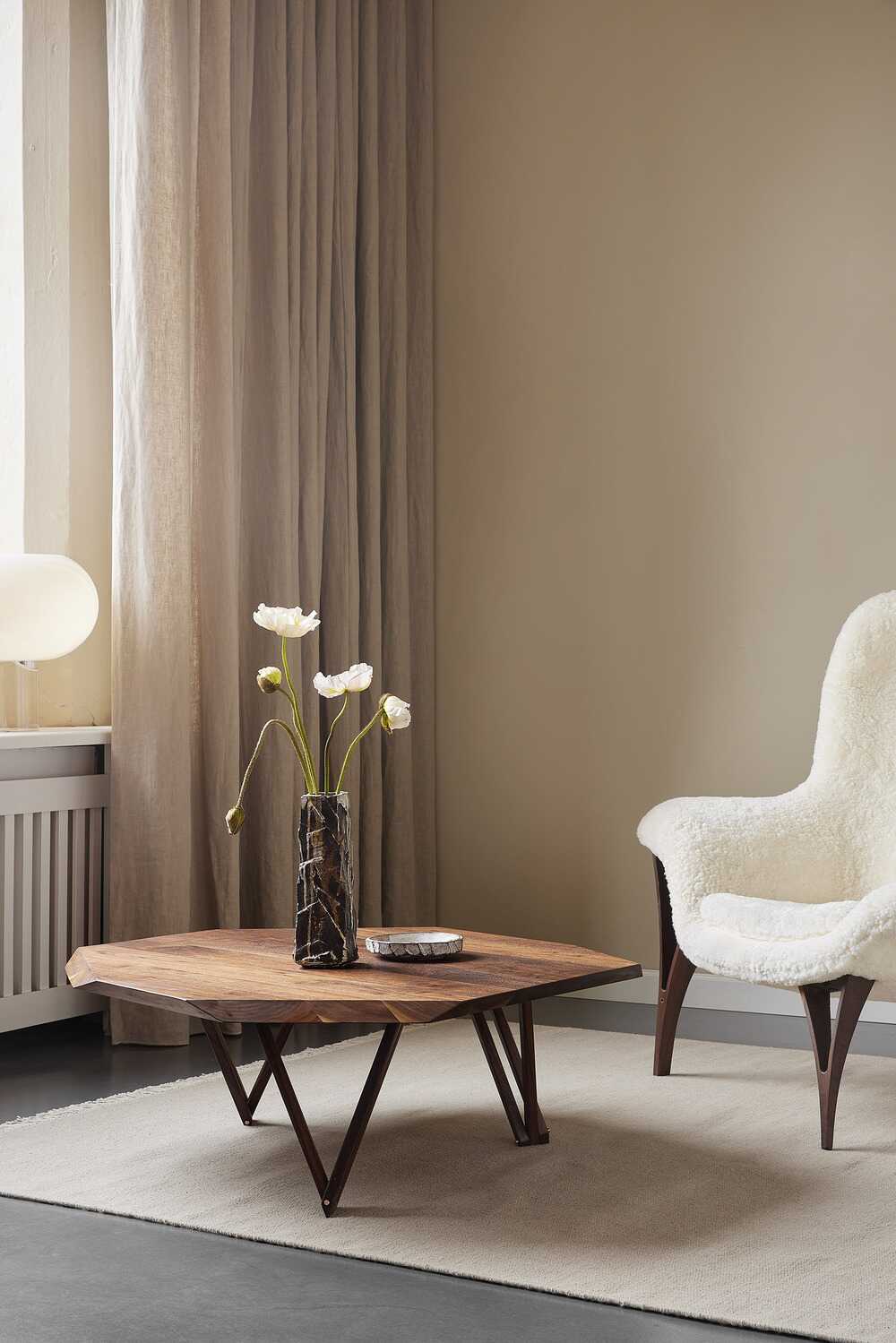
Bright interiors shaped by pale walls, light flooring, and cool natural daylight can sometimes feel visually unanchored. When considering darker timber, homeowners often worry that rich surfaces will make a room appear dim or heavy. In practice, thoughtful placement achieves the opposite effect. The deep chocolate tones and expressive grain of solid American walnut establish a clear focal point against pale surroundings, adding warmth and visual contrast.
Successful interior styling with walnut does not mean filling an entire space with dark timber. Instead, it relies on precise balance, deliberate scale, and considered contrast against neighboring materials and light sources.
Balancing Light and Dark Materials
In an open or pale room, a dark timber piece defines a zone without closing off sightlines. The varied grain patterns of American walnut prevent large surfaces from appearing flat or monochrome, breaking up incoming daylight across the wood.
To maintain an airy feel, pair solid walnut with materials that offer clear contrast:
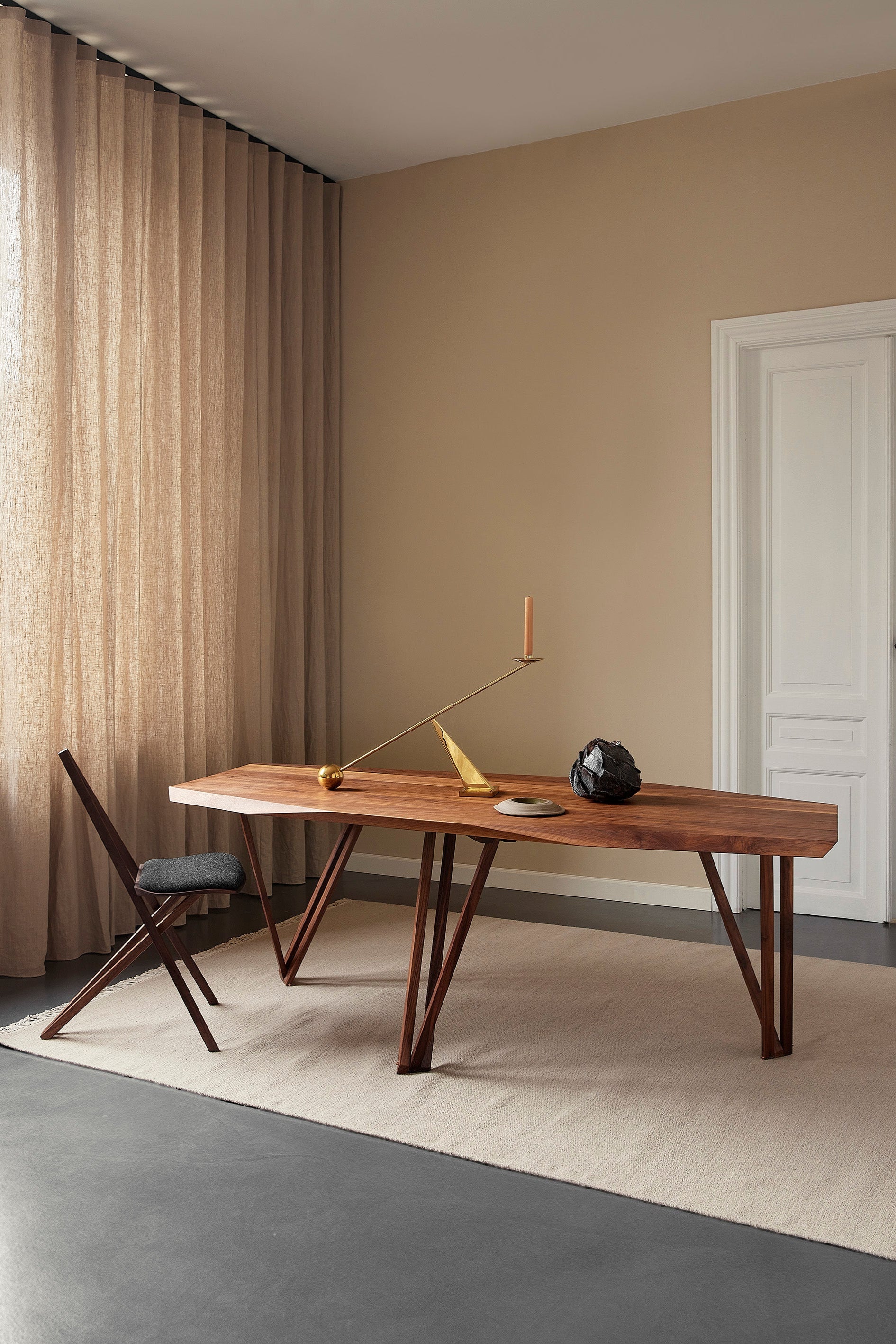
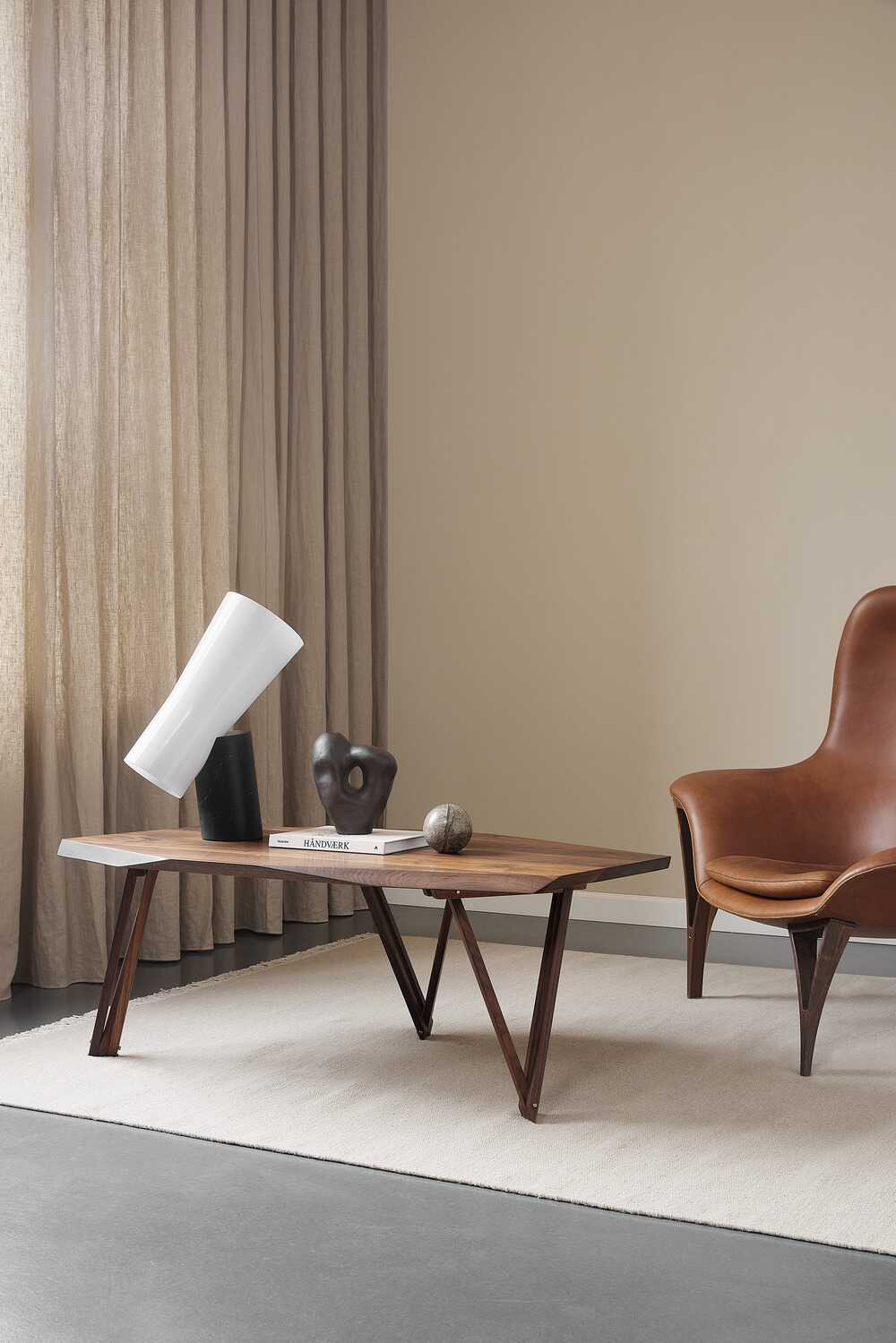
- Pale rugs and textiles: Placing a walnut table over a light woven rug frames the table's contours and creates a clear transition against the floor.
- Contrasting pale woods: Combining walnut with light oak or ash creates a deliberate distinction in color tone and grain structure, allowing the two species to complement each other without clashing.
- Cool architectural surfaces: Natural stone, plaster walls, or accents in steel and brass form a restrained backdrop that lets walnut’s warm tone stand out.
Angles, Profiles, and Natural Light
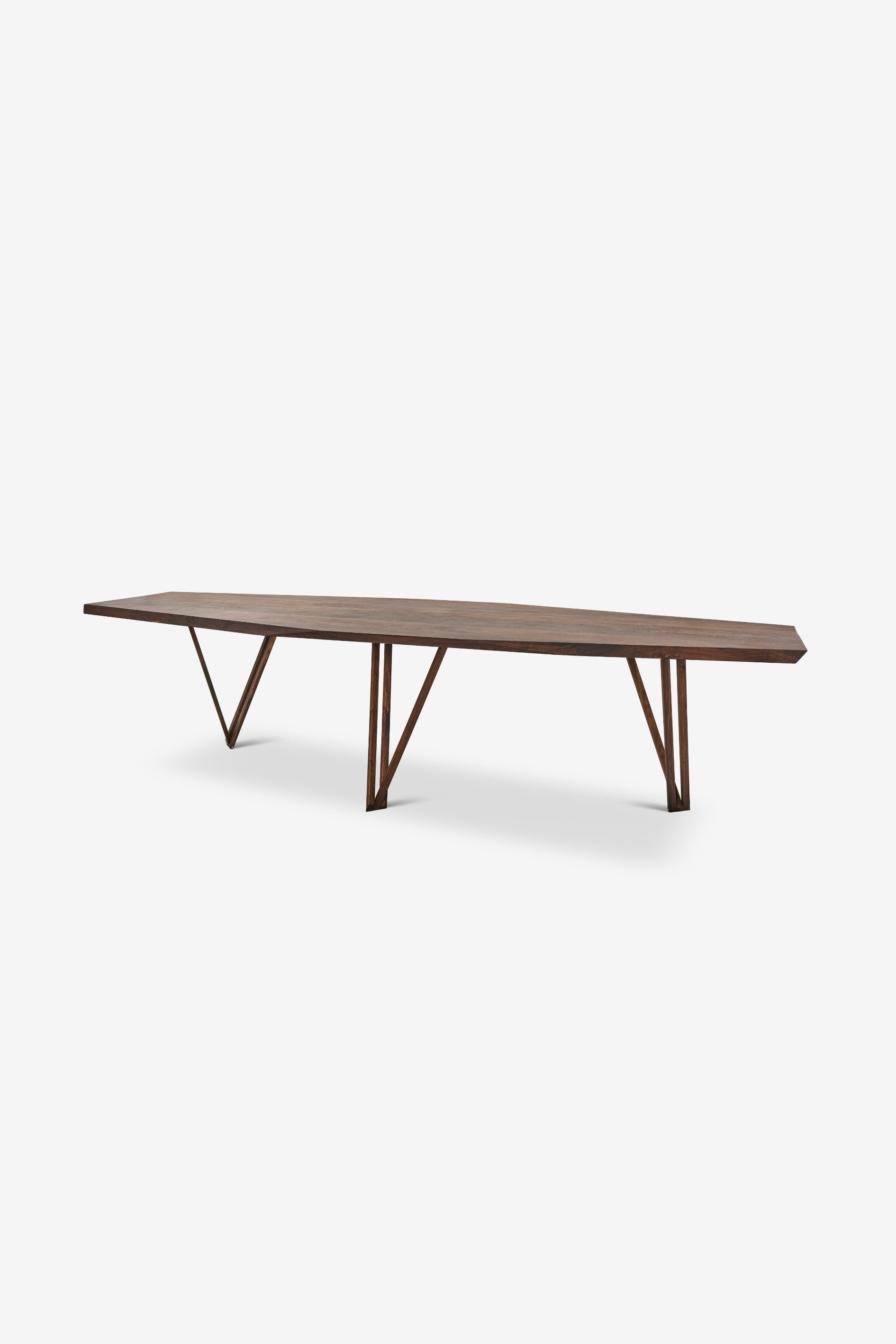
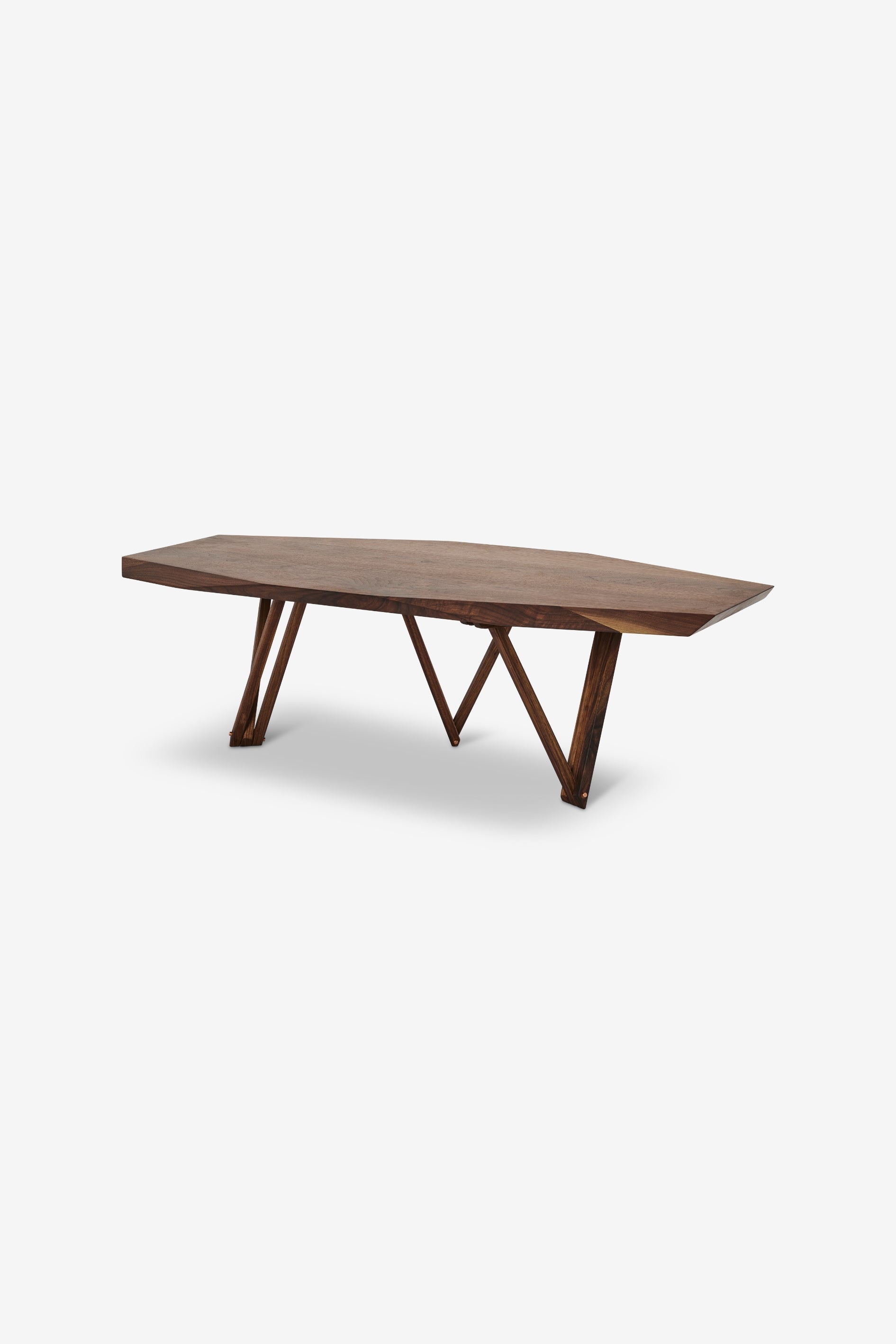
The profile of an edge determines how a piece settles into a room. In our Valby workshop, founded by Janus Larsen and Nikolaj Hviid, we craft solid walnut furniture with a focus on precise cuts. On the Dining table JN01 in walnut wood, the tabletop is octagonal, finished with opposing 45-degree beveled edges.
These opposing angles expose the cross-section of individual planks along the edge, allowing the timber's natural grain to stand out clearly.
A matching beveled profile shapes the Coffee table JN02 in walnut wood. When positioned near a window or in a well-lit area, daylight highlights the table's grain structure and angled edges.
Scale: From Wall Accents to Anchor Pieces
Working with walnut can begin with a small functional detail or center immediately on a prominent statement piece. Using the timber across varied scales creates a coherent interior without feeling repetitive.
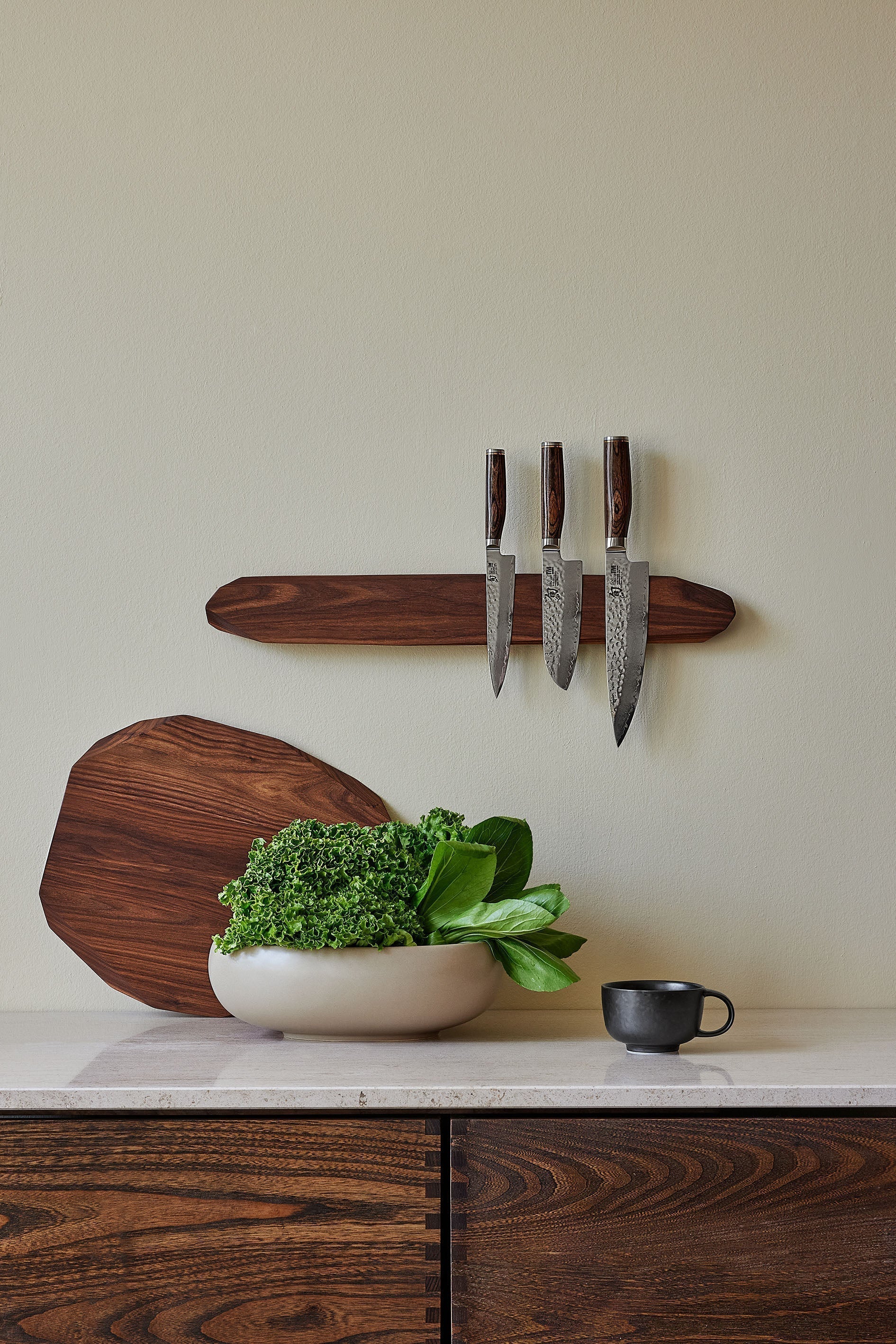
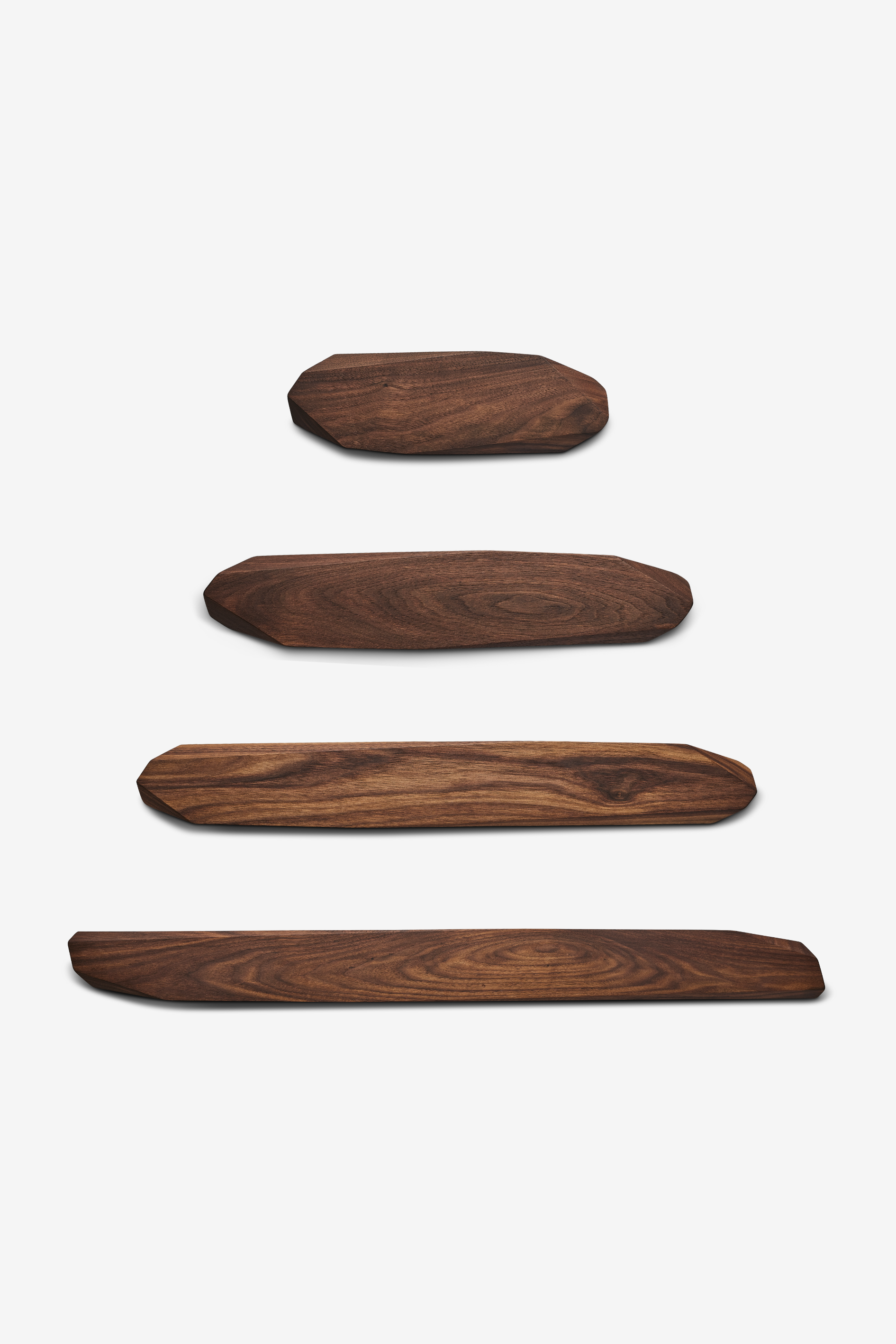
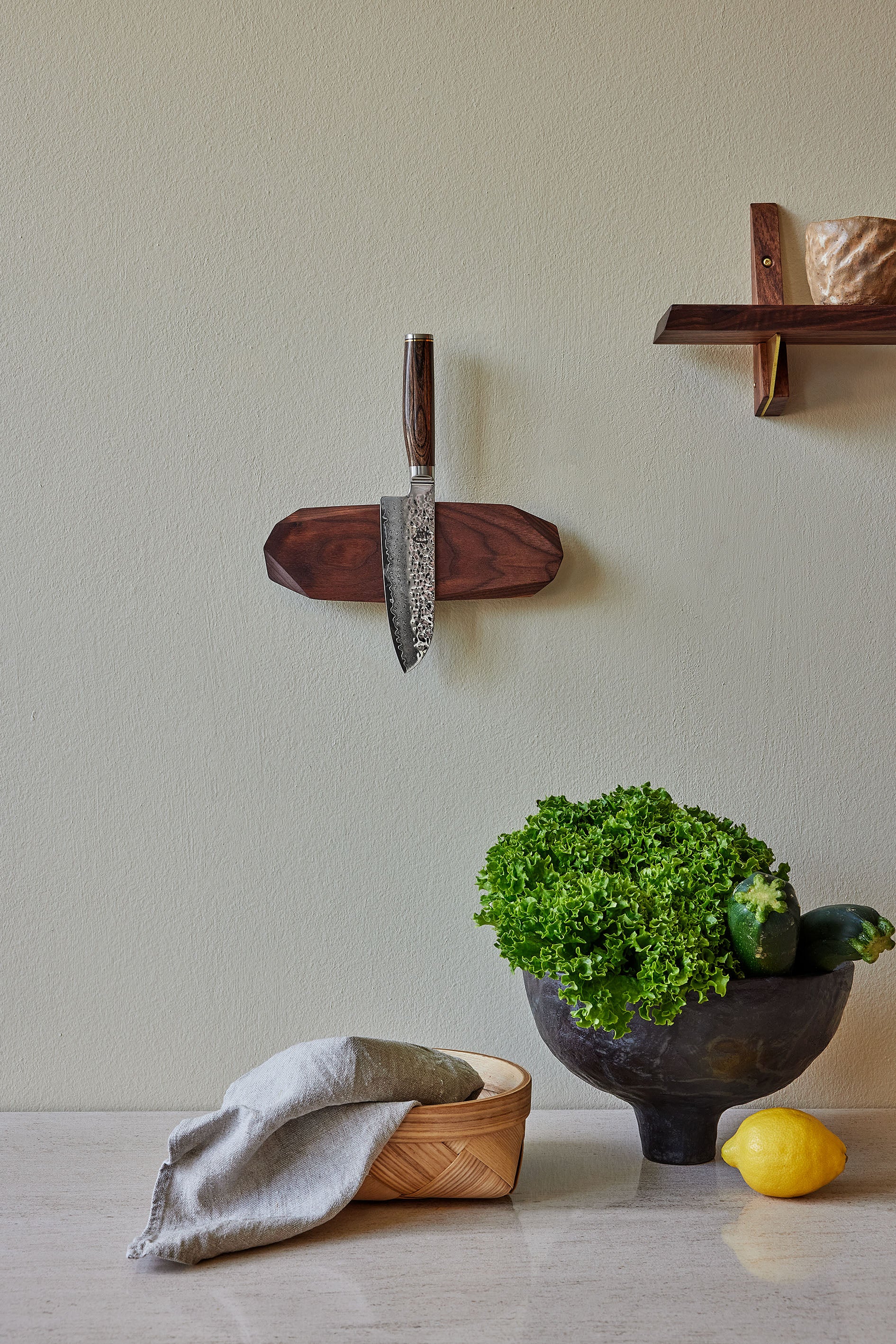
In a kitchen, a wall-mounted Magnetic knife rack walnut brings rich wood grain onto vertical surfaces. Mounted on a steel rail, it floats 3 centimeters from the wall, where the steel of kitchen knives provides a functional contrast to the dark timber. Repeating small walnut elements, such as cutting boards or accents in adjoining rooms, subtly ties living zones together.
When a dining area requires a central anchor, a solid walnut table commands the space on its own. Across our collection of tables, wide walnut planks are sorted and assembled with care to create a balanced grain pattern across the tabletop, with bespoke dimensions available on order.
Patina and Surface Care Over Time
Unlike light woods such as oak and pine, which typically darken with age, American walnut naturally lightens over years of sun exposure, gradually developing a warmer, golden patina. Treating solid walnut with curing oil saturates the wood pores, highlighting its depth and making the surface resistant to everyday spills.
For detailed guidance on treating and preserving solid timber surfaces, visit our guide to Care and Maintenance.
Whether introduced as a wall accent or a central dining table, solid walnut brings natural balance, deliberate contrast, and tactile warmth into the home.