An armchair is rarely just a piece of furniture placed in a corner. It is a promise of stillness, an architectural anchor in the living room, and a personal sanctuary where the tempo of the day finds its natural rhythm. When choosing a designer fabric armchair, one invites a specific kind of softness into the home, which, when combined with the right materials, creates a complete sensory experience. At Noyer, we view the lounge chair as an extension of the body’s need for rest, wrapped in a design language that challenges the conventional without compromising on comfort.
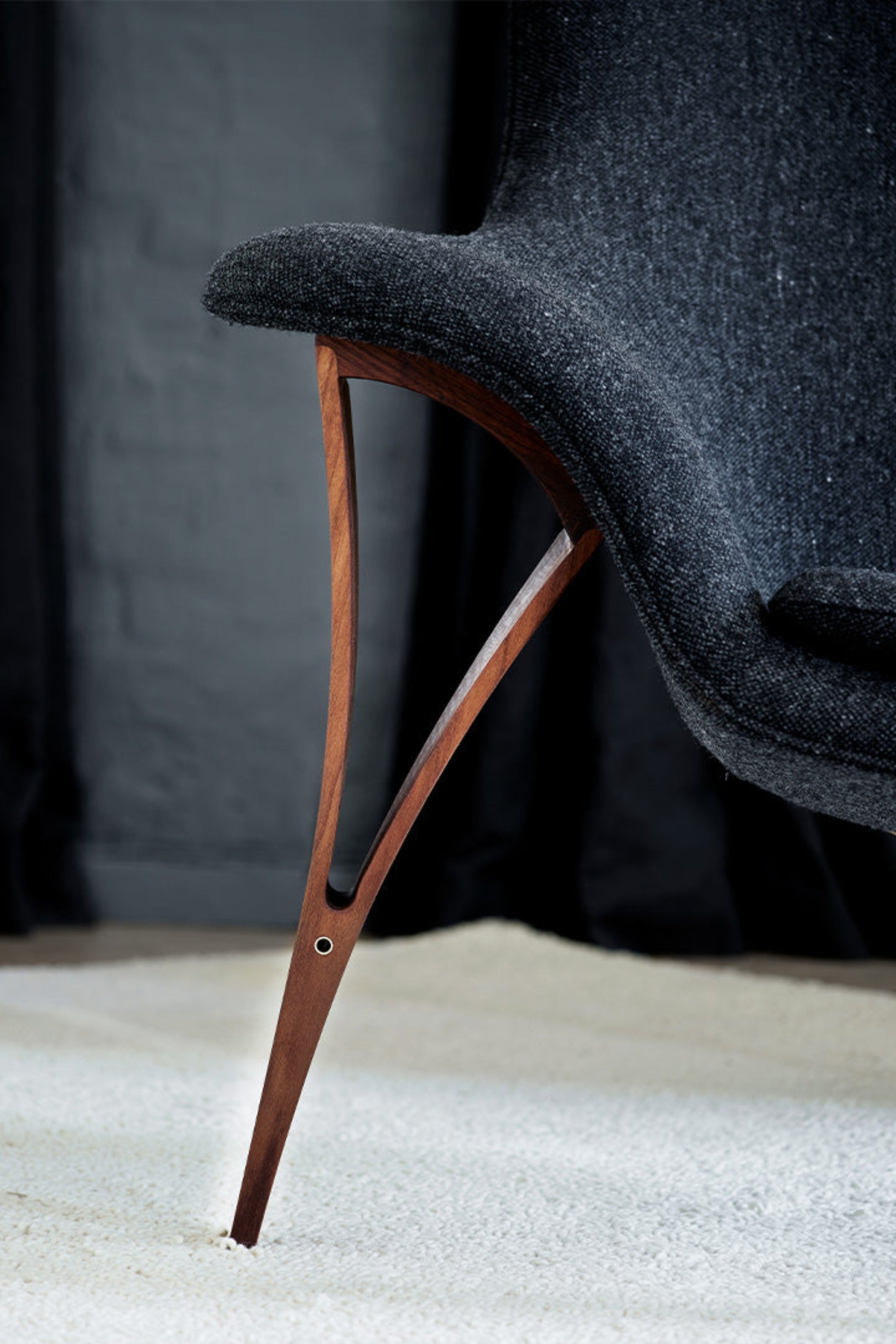
Our approach to design always begins with honest craftsmanship. In our workshop in Valby, we work with dark, characterful American walnut, which, with its warm glow and unique grain patterns, forms the perfect contrast to the soft texture of the textile. An upholstered walnut armchair from Noyer is not just a seat; it is a piece of artisanal art where every curve and joint is meticulously considered to create a balance between the sharp and the soft. This philosophy is rooted in our belief that furniture should be as functional as it is beautiful, a principle you can explore further on our page about us and our dedication to the cabinetmaker's trade.
The Sensory Dialogue Between Walnut and Textile
When we design a high-quality upholstered armchair, the interplay between materials is paramount. Walnut wood provides weight, history, and a natural robustness, while the fabric offers immediate comfort and warmth. This duality is the core of our aesthetic. It is about tactility: the feeling of the smooth, hand-oiled wood against the palm and the cozy texture of wool against the back. This combination embodies the concept of quiet luxury, where the quality of the materials speaks louder than flashy ornamentation.
A fabric lounge chair in walnut serves as a visual focal point. The dark tones of the wood give depth to the room, while the choice of textile can transform the chair's expression from minimalistic and rigorous to something more voluminous and inviting. We frequently work with wool, as it possesses natural properties that harmonize perfectly with our love for durable materials. Wool is not only beautiful to behold; it is also naturally soil-resistant, durable, and possesses a unique ability to regulate temperature, ensuring a comfortable seating experience regardless of the season.
For us, it is essential that the piece feels right before it looks right. We never let machines take over the work that only a pair of experienced hands and a sharp eye can perform to perfection. This commitment to the tactile experience ensures that every designer fabric armchair leaving our workshop carries the soul of the maker.
JN07: An Upholstered Walnut Armchair Defined by Freedom
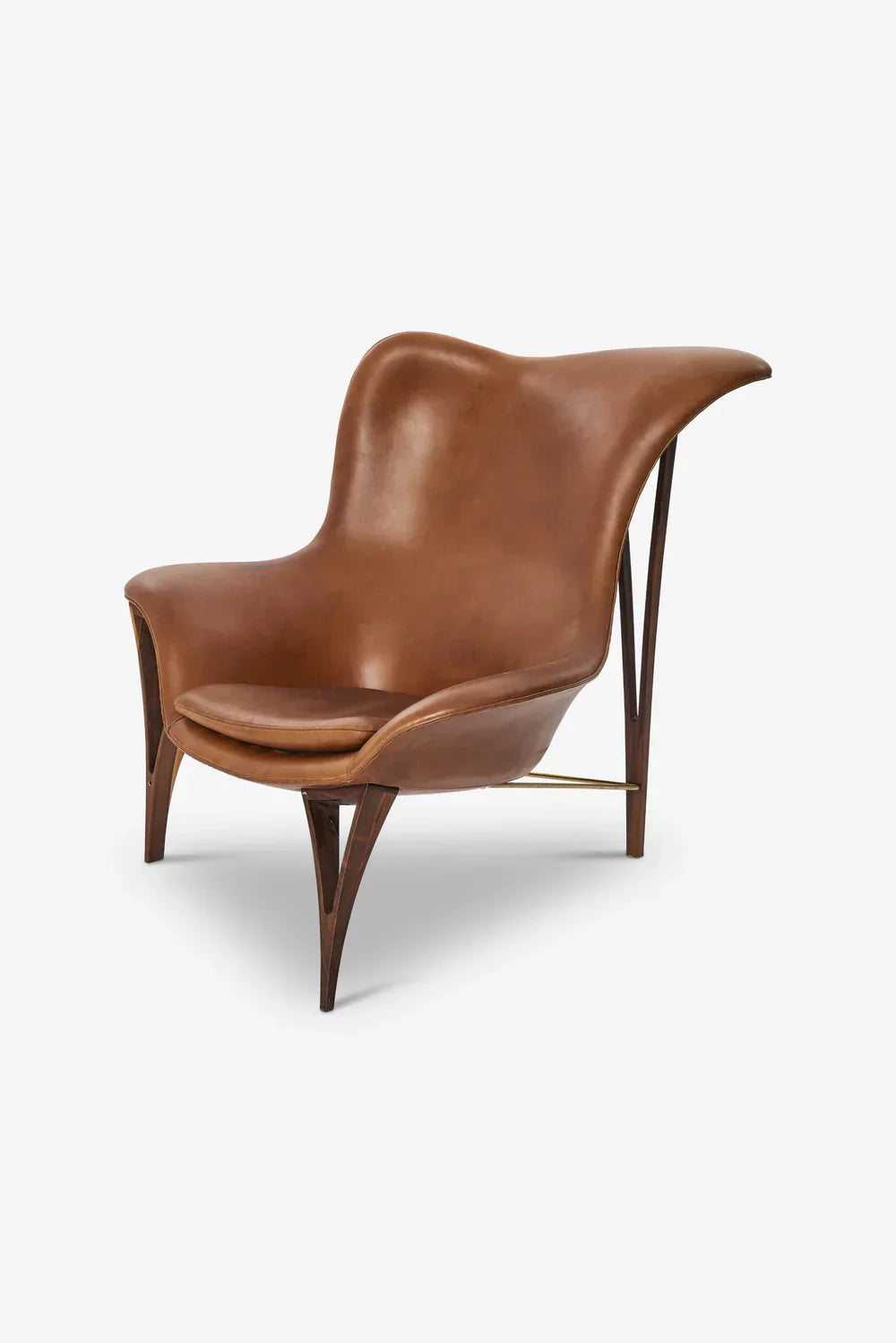
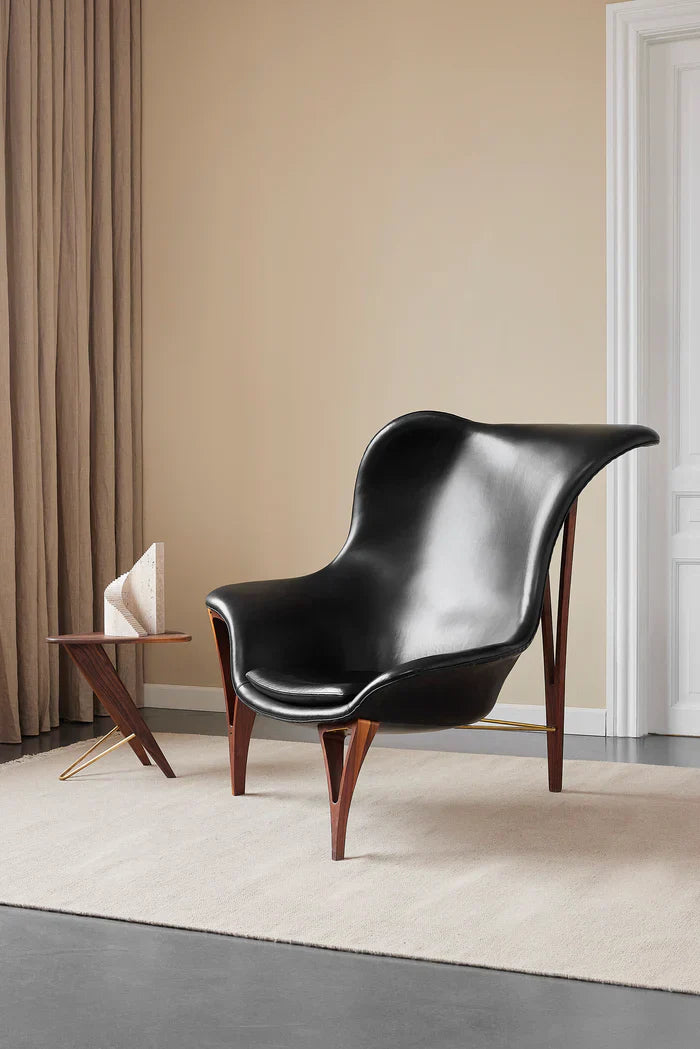
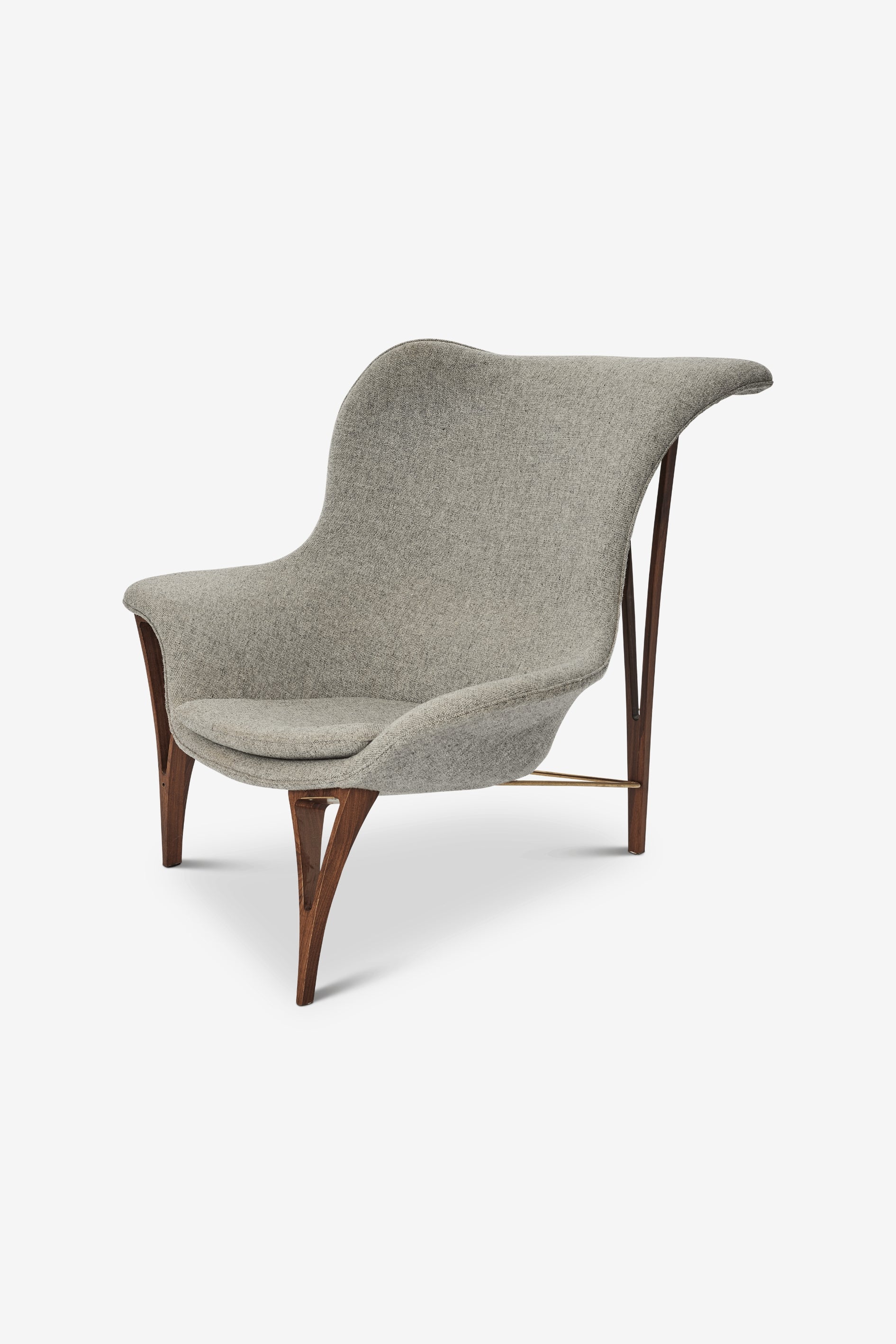
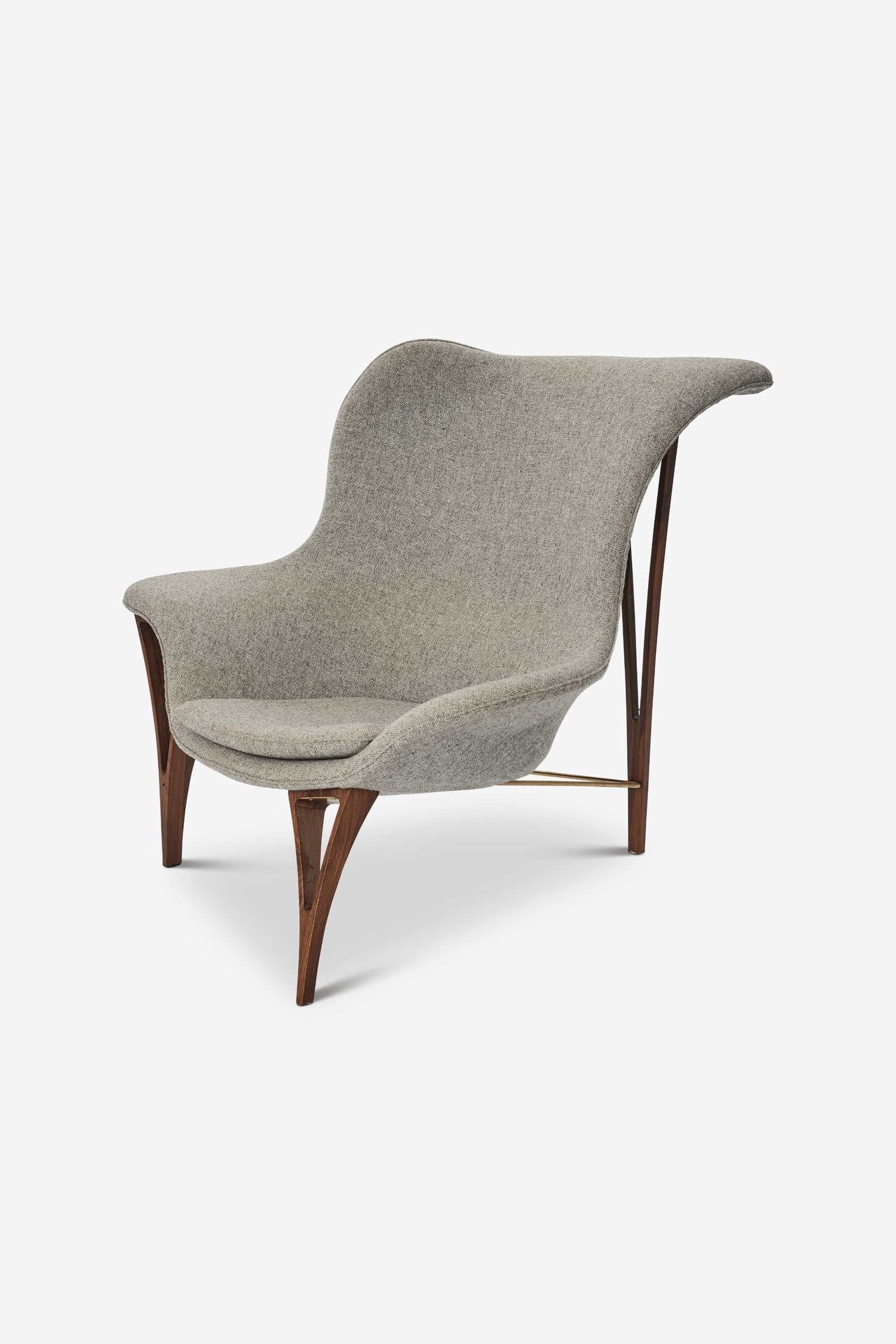
Among our most striking designs is the Armchair JN07 Wool. This chair was originally created for the television program "Denmark’s Next Classic," and the process behind it was characterized by a rare sense of total freedom. The vision was clear from the beginning: to create a chair that embraces the body in all its asymmetrical resting positions. The truth is that we rarely sit perfectly straight and symmetrical when we truly relax; we lean, we curl up, and we shift.
The JN07 is defined by its soft, almost organic lines, which are nevertheless held in check by a tight and modern expression. The three-legged construction in solid walnut gives the chair a lightness that makes the large, upholstered body appear almost to float above the floor. When choosing this model as your preferred designer fabric armchair, you receive a piece upholstered with Hallingdal wool. Hallingdal is renowned in the design world for its extreme durability and rich color depth, making it the ideal choice for a piece of furniture intended to be passed down through generations.
Every curve on the JN07 is intentional. It is a handcrafted lounge chair where you can feel the dedication to the craft in every detail, from the hidden joints to the way the wool is tensioned around the form. It is a chair that invites deep relaxation, whether placed in a bright, airy living room or a darker, more intimate library space.
JN15: Architectural Precision and Sculptural Form
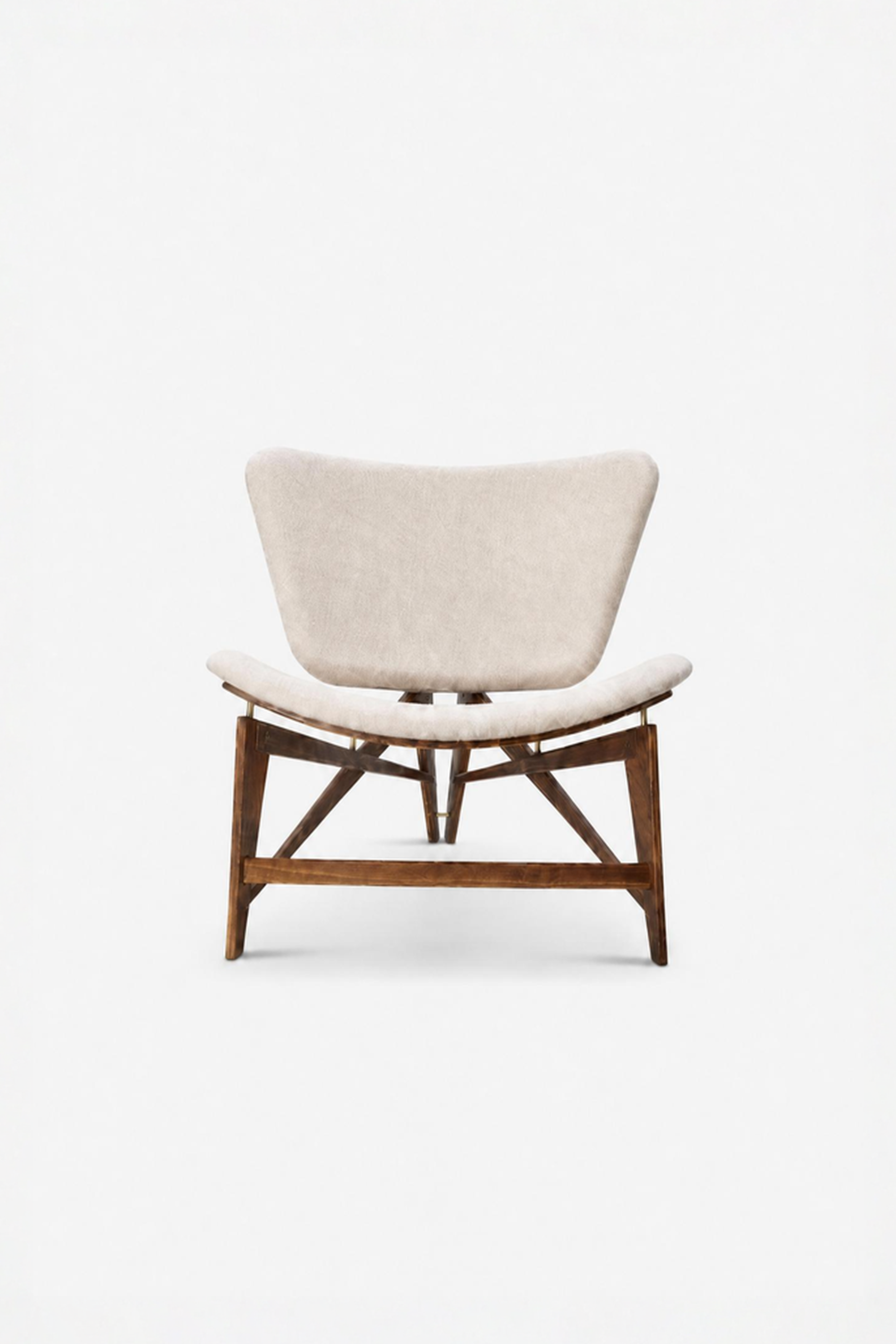
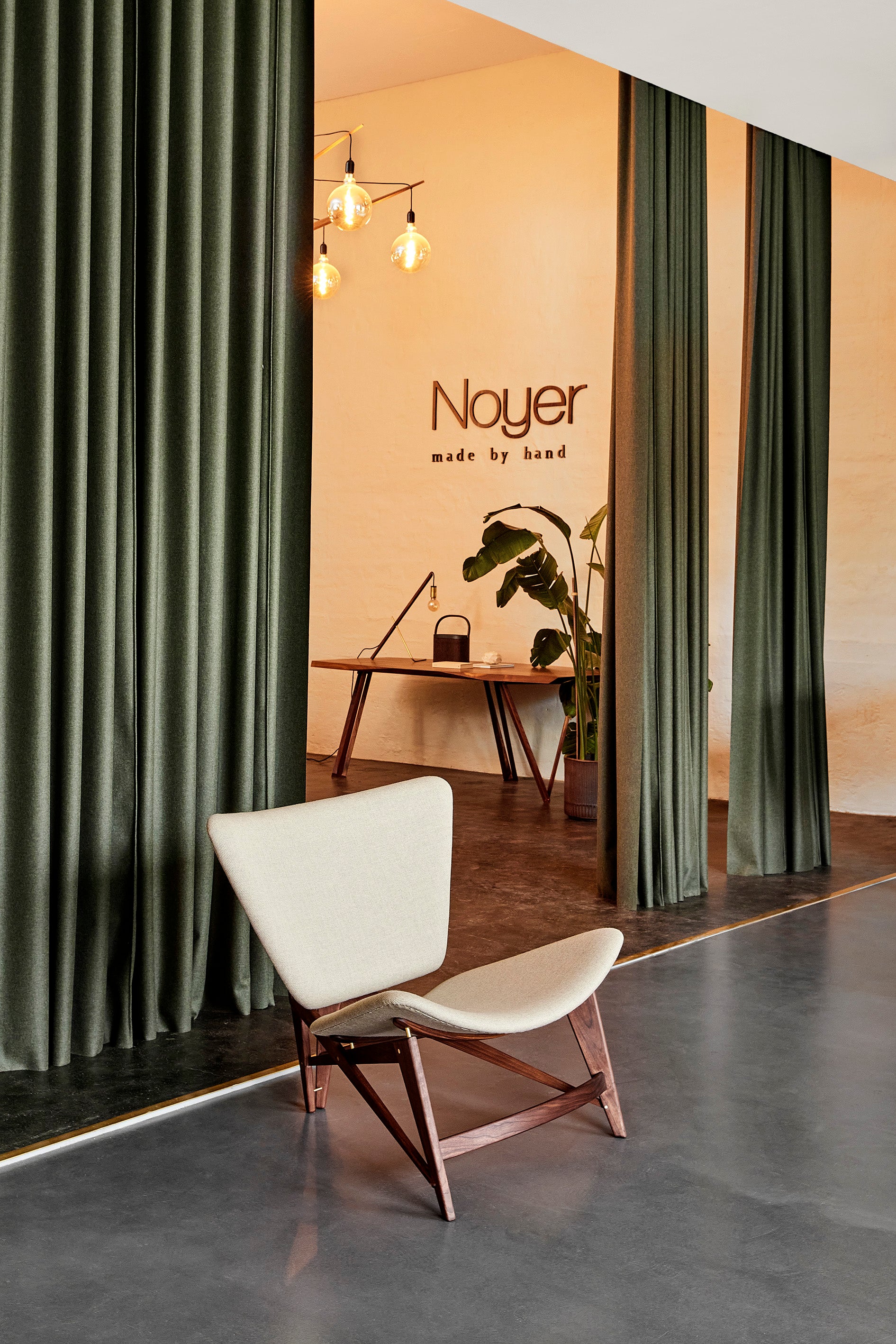
If you seek a more rigorous and clean expression, the Lounge chair JN15 Wool is an exceptional take on a modern fabric lounge chair. Here, the focus is on the slender yet incredibly strong leg construction, which is only possible thanks to the strength inherent in triangles. The JN15 utilizes form-pressed wood to create new facets, particularly evident in the detail-rich back of the backrest, which deserves to be seen from all angles.
Although the expression is lighter and more graphic than that of the JN07, the seating comfort remains top-tier. The angled back and soft wool upholstery ensure that you sit comfortably for extended periods. It is the ideal chair for a conversation nook or as a supplement to one of our tables, where it can function as an elegant resting post after dinner. The JN15 proves that a comfortable fabric lounge chair does not need to be heavy or dominant in its volume to offer sublime support. It is a testament to the power of minimalist Scandinavian design.
The Materiality of Wool: Why Textile Choice Matters
When investing in a designer fabric armchair, the choice of textile is as vital as the choice of wood species. At Noyer, we prefer wool for several reasons. Firstly, wool possesses a natural elasticity that allows us to upholster even the most complex curves without unsightly folds. Secondly, wool has a fantastic ability to resist dirt and stains thanks to its natural lanolin content, making it a sustainable choice for the long term.
In a busy daily life, it is essential that your furniture is practical. An armchair with wool fabric requires minimal maintenance; often, a light vacuuming is enough to keep it looking pristine for years. If you wish to learn more about how to best care for your furniture, we have compiled a guide to care and maintenance covering both wood and textiles. Here, you can find advice on everything from oiling walnut to stain removal on wool, ensuring your investment retains its beauty decade after decade.
Tactility and the Martindale Scale
For the quality-conscious buyer, the term Martindale is often an important indicator. It specifies the fabric's abrasion resistance, and in our choice of textiles, we always ensure the value is high enough for both private use and professional environments. However, beyond technical specifications, it is about the feeling. A designer fabric armchair must feel right against the skin. It should not be static or cold, but rather breathable and soft. It is this tactility that makes a chair a favorite piece of furniture.
Creating a Sanctuary: Styling Your Designer Fabric Armchair
An armchair can transform a room. It can create a zone of tranquility in an otherwise active living room, or it can add warmth to a bedroom. When decorating with a lounge chair from Noyer, we recommend thinking in holistics. For example, combine your chair with a Side table JN12 or a Side table JN05 to create the perfect reading nook, where there is space for both a cup of coffee and a good book.
The placement of the chair is also crucial. A lounge chair with a beautiful back, such as the JN15, deserves to be placed so that the craftsmanship can be admired from every perspective. Consider letting the chair stand freely in the room rather than pressing it against a wall. This gives the furniture air and allows the organic forms to come into their own. If you are in doubt about which model best suits your home, you are always welcome to visit our showroom, where you can feel the materials and test the comfort for yourself.
Choosing an armchair is an investment in quality of life. It is about giving oneself permission to take a break in a piece of furniture created with a love for the craft and respect for nature’s materials. At Noyer, we strive to create pieces that do not just fulfill a function but contribute beauty and character to the modern home. A designer fabric armchair from our workshop is a testament to the fact that Danish design can still surprise, challenge, and embrace all at once.