The entryway is the first room that greets you when you step inside, and the final space you see before leaving your home. It is here that the day's first impression is formed, and here that a sense of calm should settle after a long day. Despite this, hallway interior design is often overlooked or reduced to purely practical storage. At Noyer, we view the hallway as the home's calling card; a room that deserves the same aesthetic attention as the living room or the kitchen, but with a sharp focus on functionality and durability.
When working with hallway interior design, the challenge lies in finding the balance between the practical need to manage outerwear and shoes, and the desire to create an atmosphere that feels warm and inviting. By choosing materials with inherent tactility, such as solid walnut and brass, you can transform what is often a narrow and dark transitional space into an integrated part of the home's design profile. The goal is to move beyond simple utility and toward a curated introduction to your personal sanctuary.
The Home's Calling Card: Balancing Form and Function in Hallway Interior Design
A successful approach to hallway interior design requires a strategic mindset. This is a room that must withstand the wear and tear of daily life while simultaneously radiating a sense of calm and abundance. Many homeowners make the mistake of filling the hallway with heavy, closed cabinets that swallow the light and make the space feel cramped. Instead, one should consider furniture that allows the walls to breathe and the floor to remain visible, creating an immediate sense of openness.
By integrating artisan-made elements, you create a cohesive thread that runs through the entire residence. The deep glow of walnut wood and its characteristic grain patterns add a natural warmth that stands in beautiful contrast to the often hard surfaces found in an entryway, such as tiles or concrete. It is about creating a sensory experience: the feeling of smooth, oiled wood under your hand as you hang up your jacket, or the visual tranquility of a well-organized space where every object has its place. This philosophy of purposeful design ensures that the hallway is not just a transit zone, but a room you actually enjoy being in.
Small Hallway Interior Design: Optimizing Limited Square Footage
In many modern homes and urban apartments, space in the hallway is at a premium. Small hallway interior design therefore demands furniture that solves multiple problems at once without dominating the room visually. In these instances, vertical storage becomes your most valuable asset. By utilizing the wall space effectively, you can free up floor area, which instantly makes the room appear larger and more airy.
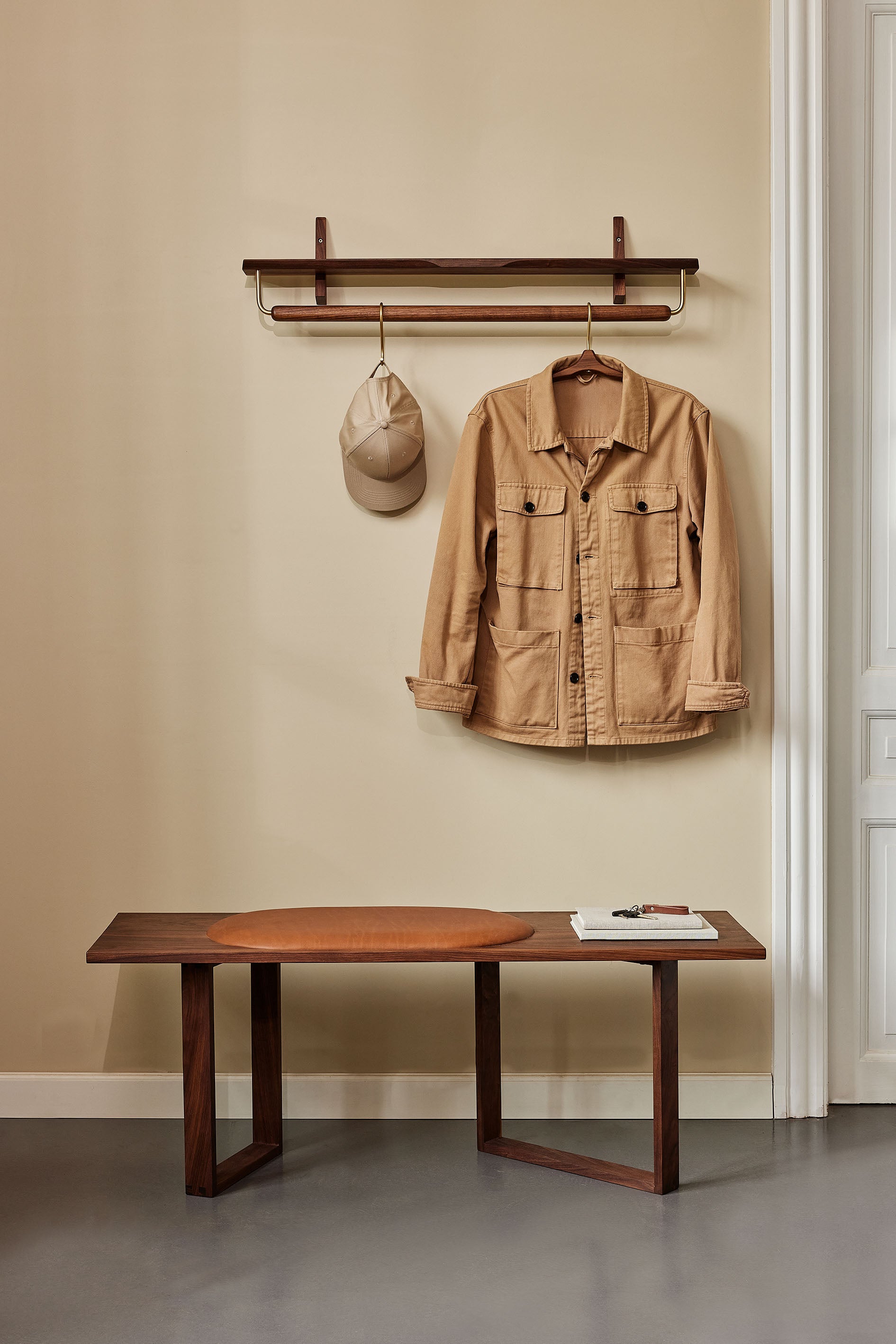
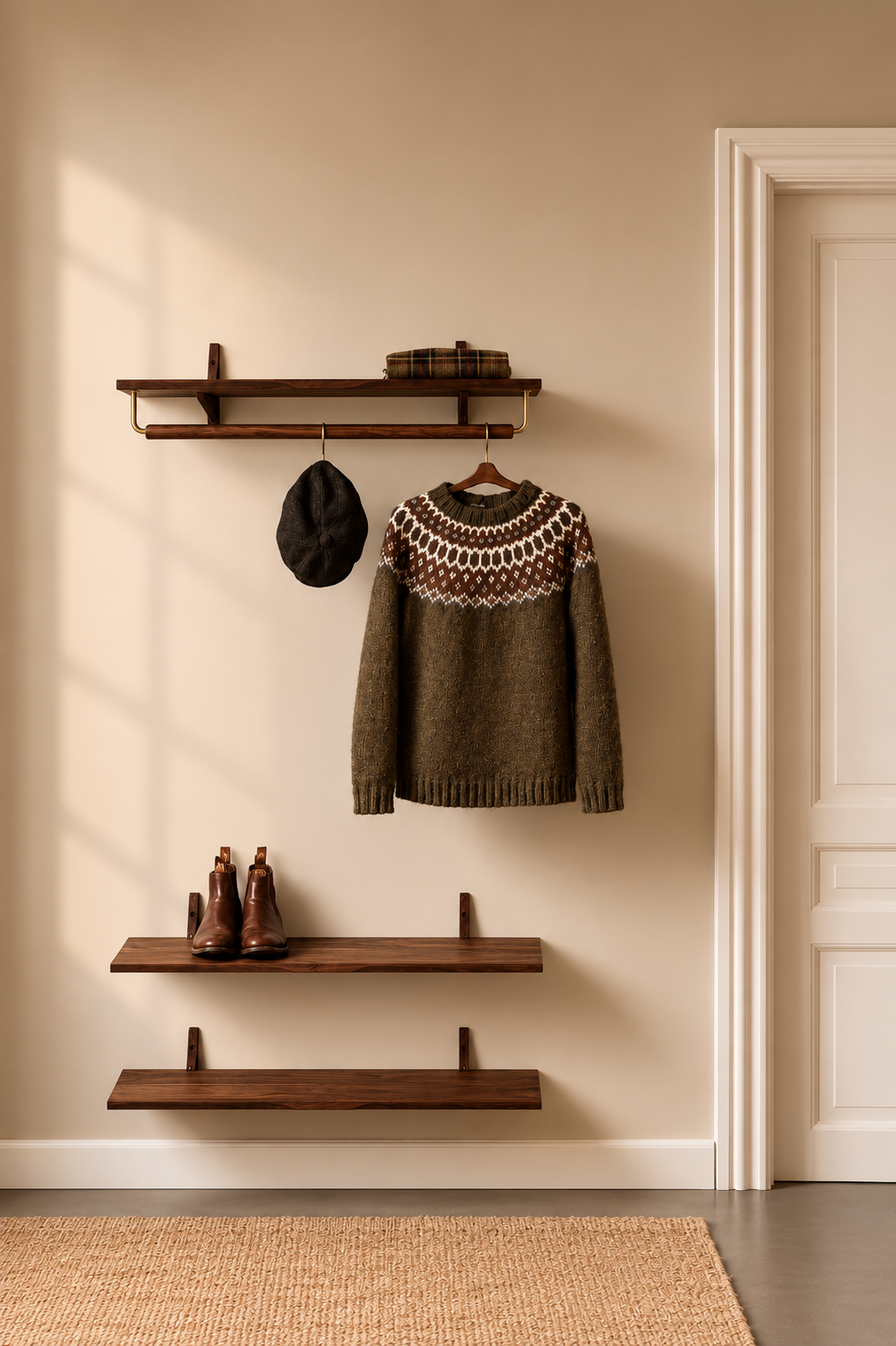
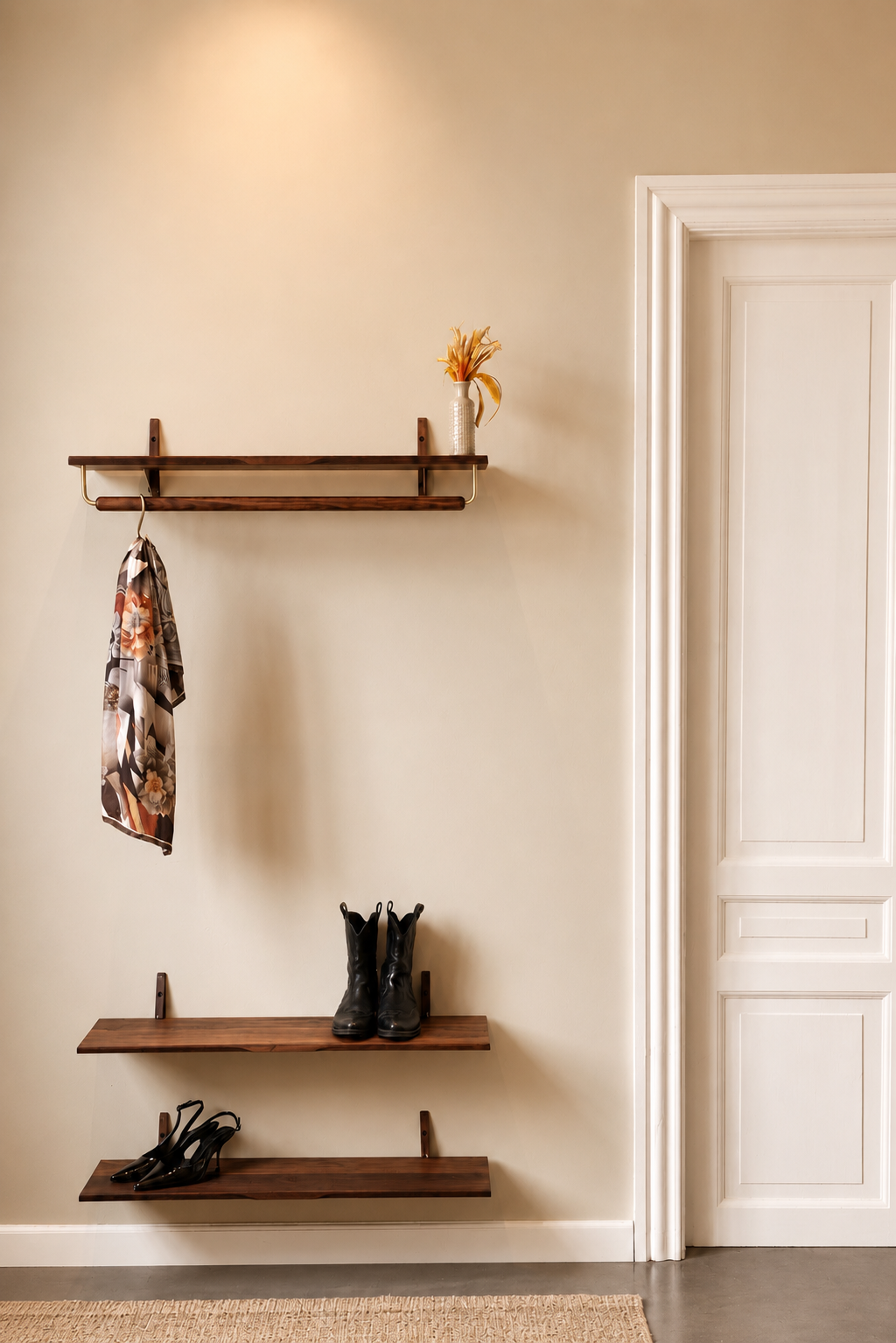
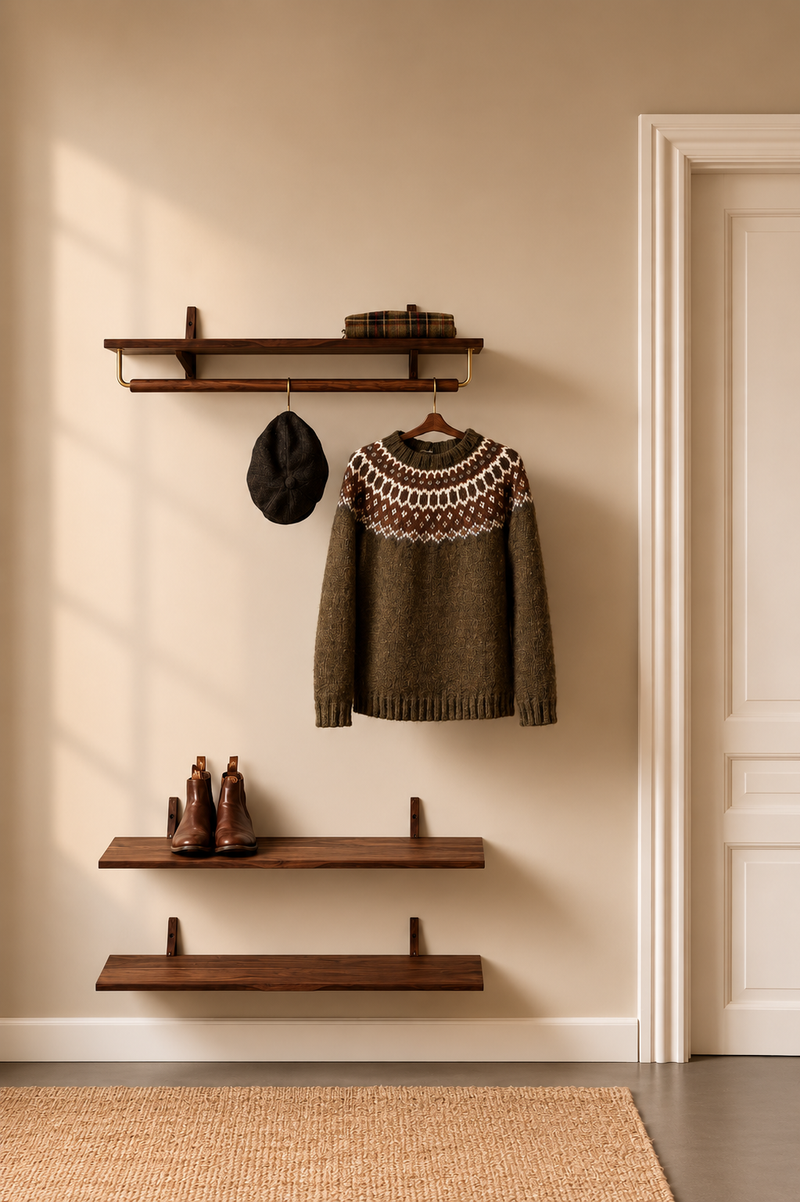
Our Coat rack with shelf JN24 was designed specifically for this purpose. It combines an elegant shelf for hats and bags with an integrated hanging rod for coats. By lifting the storage off the floor, you create a sense of floating lightness. The brass details and the sharp yet soft angles of the walnut ensure that the coat rack functions as a small piece of functional art on the wall. When selecting furniture for a narrow corridor, always look for this overlap between sculptural beauty and practical application. It is the difference between a cluttered entrance and a curated one.
Create Air with Floating Elements
One of the most effective ways to create visual calm in hallway interior design is to choose wall-mounted solutions. When the floor is visible all the way to the wall, the eye is tricked into believing the room is larger than it actually is. This principle applies not only to coat racks but also to shoe storage, which is frequently the primary source of clutter in the hall. Floating elements remove the heavy footprint of traditional furniture, allowing light to flow more freely through the space.
Elegance Underfoot: Curated Shoe Storage
Shoes have a tendency to pile up and create visual noise, disrupting the flow of the home. A thoughtful approach to storage is therefore essential to maintaining that vital first impression. Instead of hiding shoes away in closed boxes where they are forgotten, one can choose a solution that displays them in an orderly fashion. A shoe shelf does not have to be an anonymous piece of furniture; it can be a beautiful extension of the home's overall interior design.
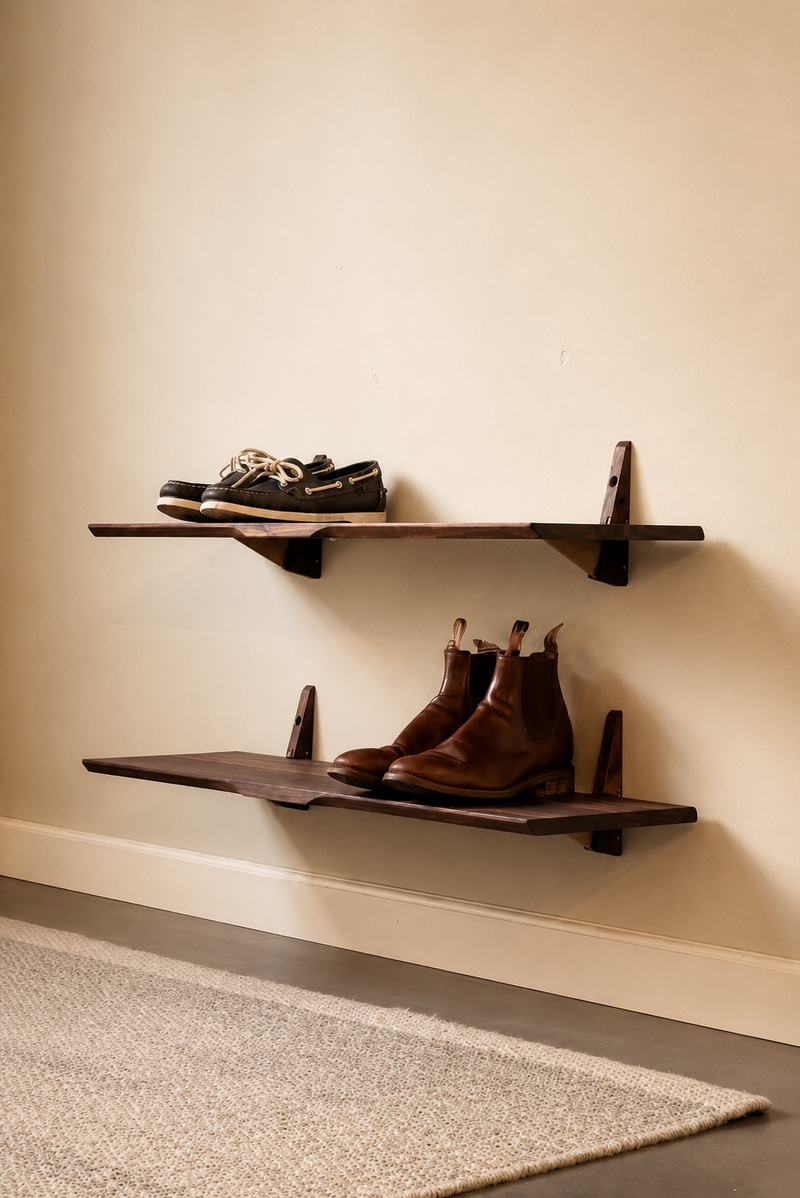
Our Shoe Shelf JN10 is crafted with the same design principles as our tables and chairs. The solid walnut and characteristic angled lines give the shelf a light expression, even though it is robust enough to carry the family's footwear. With a depth of 28 cm, it fits into most narrow hallways, and its open construction ensures that shoes can air out while being presented beautifully. It is a simple but highly effective way to upgrade your hallway interior design from the ground up.
Sculptural Rest: The Bench as a Focal Point
If space allows, a bench is one of the most luxurious additions you can make to a hallway. It provides a place to sit while tying laces, or a spot for guests to place their bags upon arrival. A bench introduces a horizontal line that creates balance in a room often dominated by the vertical lines of doors and closets. It signals that this is a place to pause, not just to pass through.
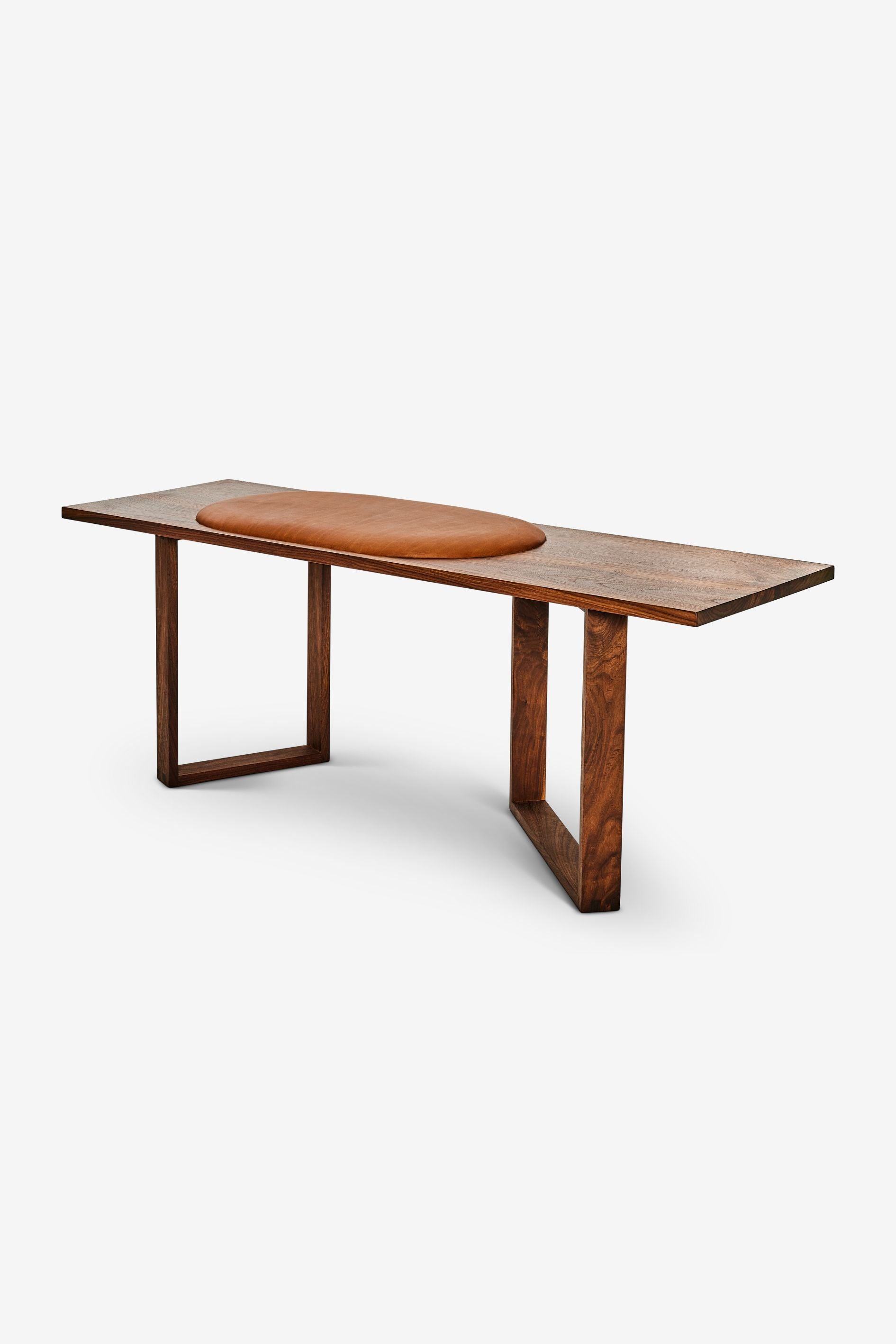
Our Bench JN22 is a study in asymmetry and materiality. The combination of warm walnut wood and a recessed leather seat invites touch and interaction. The legs of the bench have different dimensions and are placed asymmetrically, making it interesting to observe from every angle. In the context of hallway interior design, the bench functions not just as a practical seat, but as an anchor that defines the character of the room. You can read more about us and our approach to asymmetrical design to understand the philosophy behind these unique lines.
7 Tips for the Perfect Hallway
To summarize how to create the ideal welcome in your home, we have gathered seven concrete pieces of advice for your hallway interior design:
- Prioritize vertical space: Use the walls for storage to keep the floor clear and create a sense of airiness.
- Choose multifunctional furniture: A coat rack with an integrated shelf saves space and centralizes functions.
- Create visual consistency: Use the same high-quality materials, such as walnut and brass, throughout the room.
- Integrate seating: A small bench or stool makes the room more user-friendly and inviting for guests.
- Consider the lighting: Use multiple light sources to highlight the texture of the wood and avoid dark, forgotten corners.
- Keep surfaces clear: Ensure there are designated spots for keys and small items to prevent daily clutter from accumulating.
- Choose quality over quantity: A few well-chosen artisan pieces will last longer and look better than a multitude of mass-produced solutions.
If you are unsure how these pieces might fit into your specific home, you are always welcome to visit our Showroom in Valby, where you can feel the materials and see the craftsmanship up close.
Maintenance of Your Hallway Furniture
Since the hallway is a high-traffic area exposed to moisture from wet coats and shoes, it is important to take good care of your wooden furniture. Walnut is an incredibly durable material, but it requires the right care to maintain its glow over time. We recommend that you regularly wipe down your furniture and apply oil as needed to keep the wood nourished. You can find a detailed guide to Care and Maintenance on our website, ensuring your furniture can be passed down through generations.
Ultimately, hallway interior design is about creating a space you look forward to returning to. By choosing furniture with soul, history, and sublime craftsmanship, you are not just investing in storage; you are investing in the daily joy of beautiful design. When the door opens and you are met by the warmth of natural wood and a sense of order, you know you are truly home.