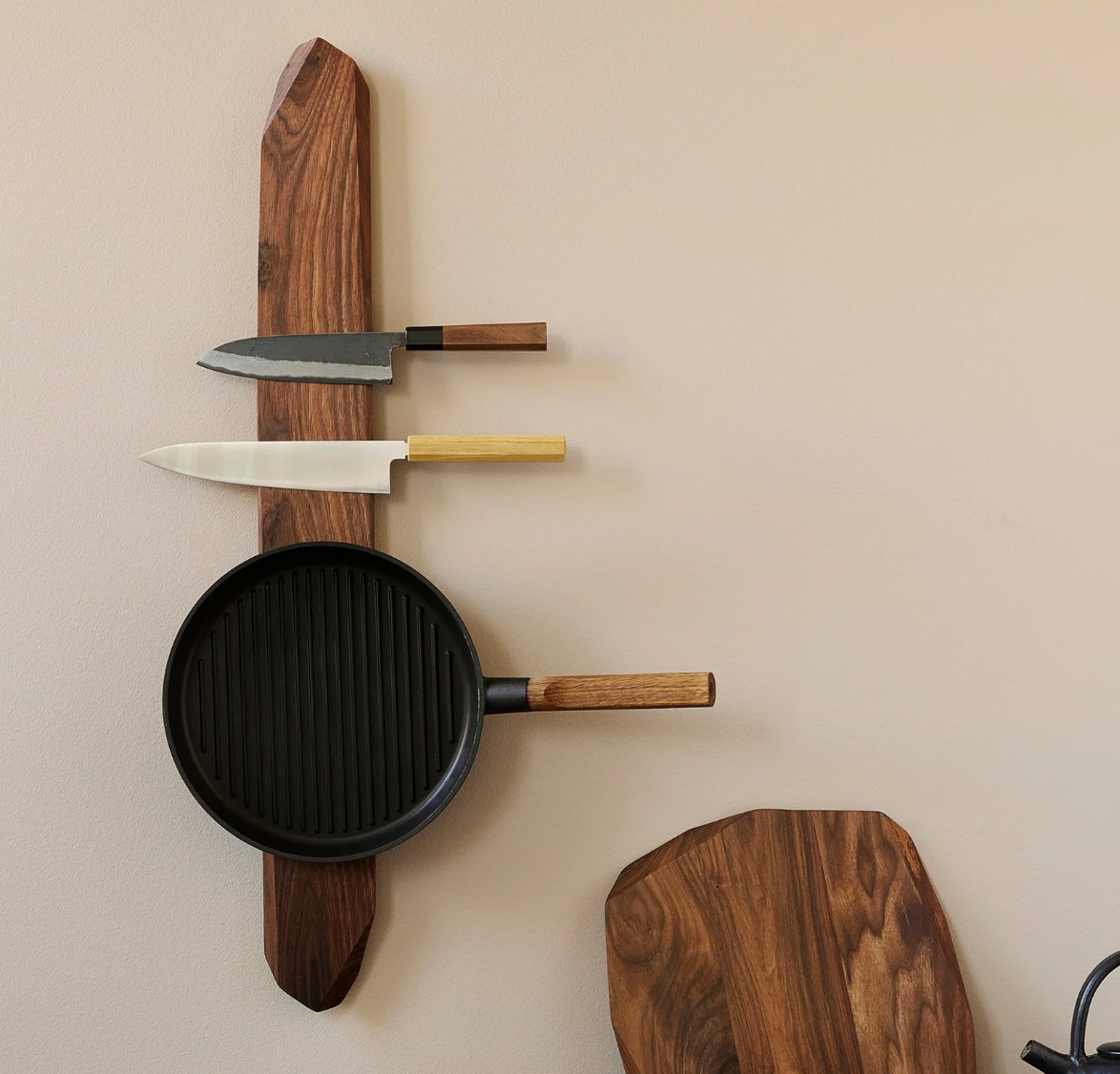
At the intersection of Eastern restraint and Northern warmth, a unique harmony emerges. This aesthetic, known as Japandi interior design, has become a cornerstone of the modern home, offering a sanctuary from the noise of the outside world. It is far more than a passing trend: it is a philosophy that celebrates intentionality, functionality, and the raw beauty of natural materials. By fusing the minimalist rigor of Japan with the Scandinavian devotion to comfort, spaces are created that invite both stillness and deep reflection.
For us at Noyer, this movement feels like a natural extension of our own design DNA. Our work with dark walnut wood, sharp yet soft angles, and uncompromising artisan joinery speaks directly to the Japandi mindset. In this philosophy, every object in a home must have a purpose, serving both a functional need and an aesthetic soul. In this guide, we explore how to integrate Japandi interior design into your own living space and why dark wood plays a pivotal role in achieving the perfect balance.
The Philosophy of Balance: Wabi-Sabi and Hygge
Japandi is a fusion of two geographically distant but spiritually kindred design traditions. From Japan, we borrow the concept of wabi-sabi, which finds beauty in the imperfect, the transient, and the weathered. It is about stripping away the superfluous, removing the visual clutter, and allowing individual elements to breathe. From Scandinavia, we add hygge: that essential sense of security, warmth, and tactility that makes a minimalist room feel lived-in and welcoming.
When working with Japandi interior design, one seeks a delicate equilibrium. Where pure Japanese minimalism can sometimes feel clinical or ascetic, the Nordic influence softens the edges with rich textures, soft textiles, and living materials. The result is a "warm minimalism" that feels both exclusive and grounded. Here, the choice of materials becomes paramount: it is not about the quantity of furniture, but the enduring quality of the few pieces you choose to surround yourself with.
Why Walnut is the Essential Element of Japandi Interior Design
While many associate Scandinavian design exclusively with light oak and white surfaces, a true Japandi context often requires deeper tones to provide necessary contrast and depth. Walnut is, in this regard, the ideal medium. The dark, chocolate hues of the wood provide a visual weight and elegance that complements the neutral color palettes typically found in these homes.
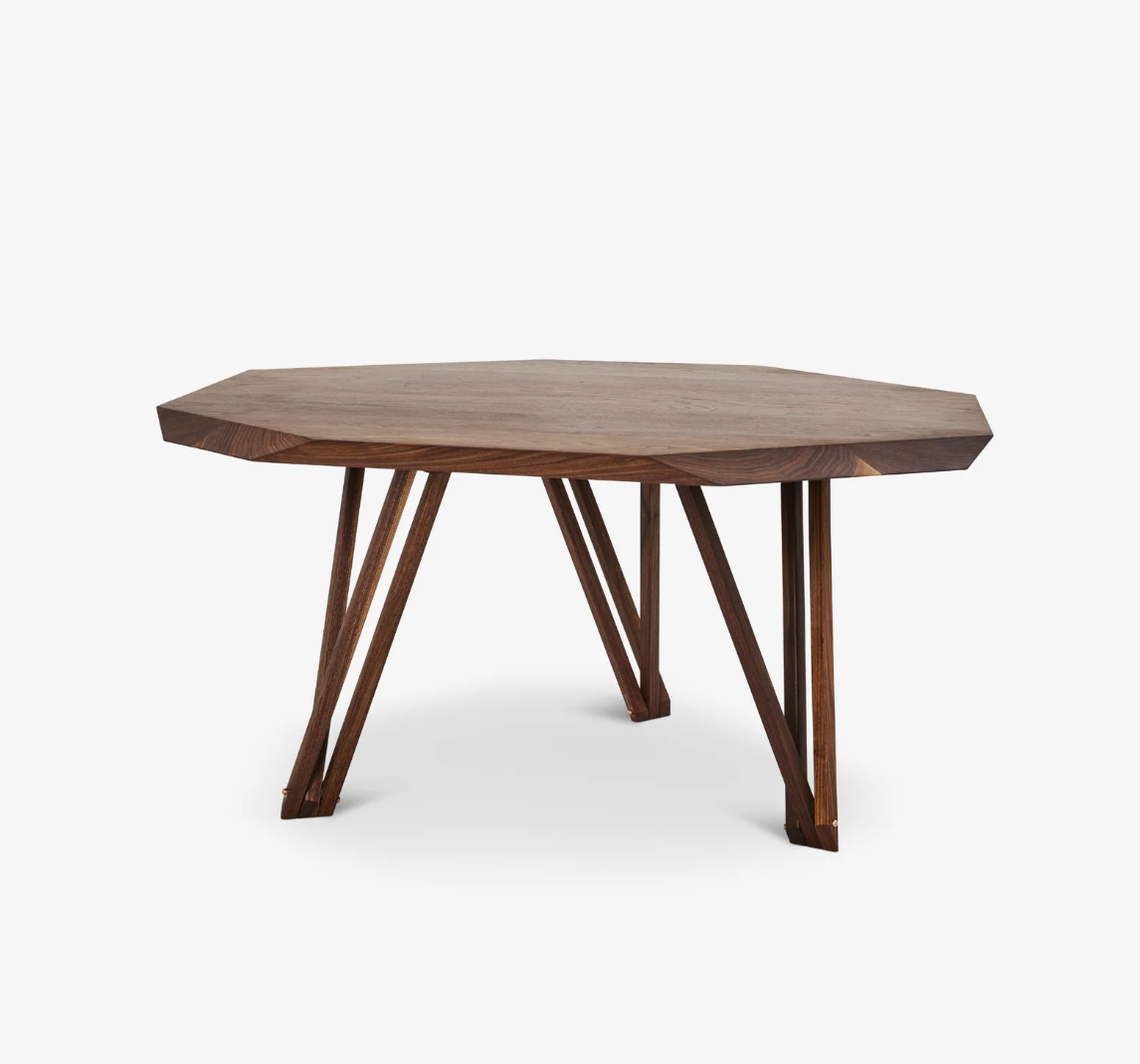
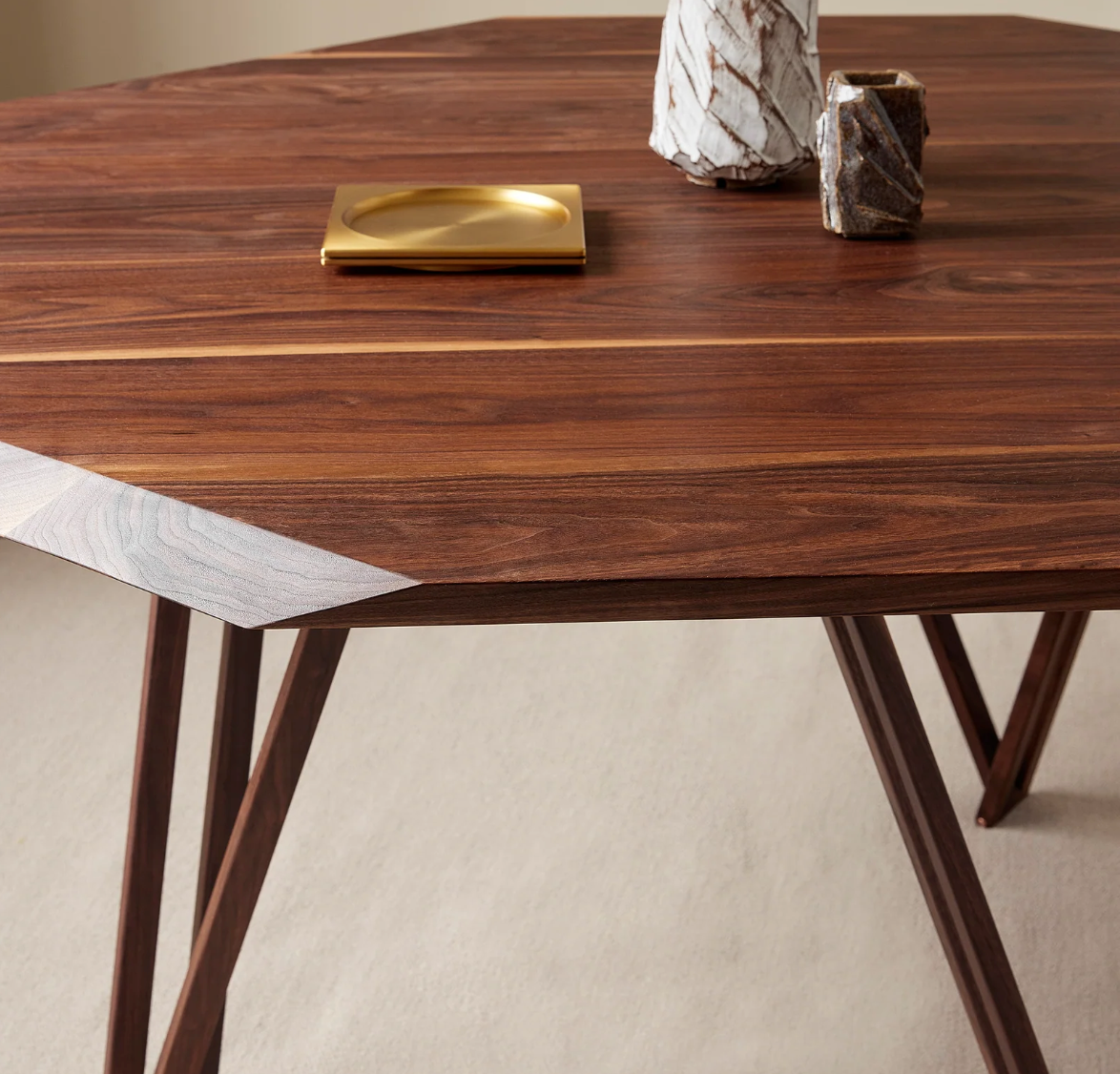
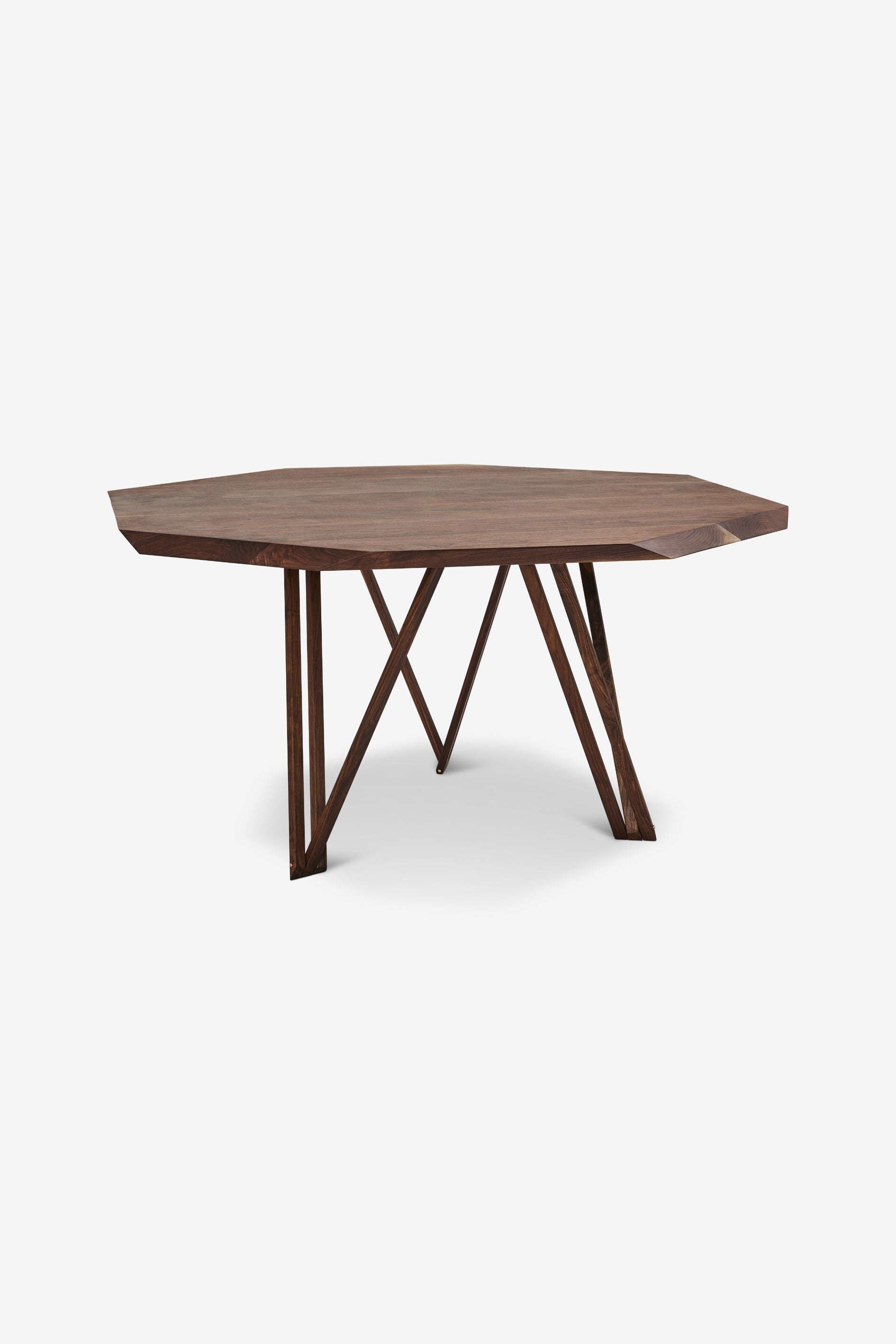
In Japan, there is a long-standing tradition of using dark woods and charred surfaces to create visual calm. When this is combined with Danish woodworking traditions, a unique expression is born. The dark wood acts as an anchor in the room. A Dining table JN01 in walnut wood is a prime example of how the natural glow of the material and the complex grain patterns can stand as a piece of art in themselves, requiring no further decoration. This honesty in the material is what defines the authentic Japandi style.
The Power of Tactility
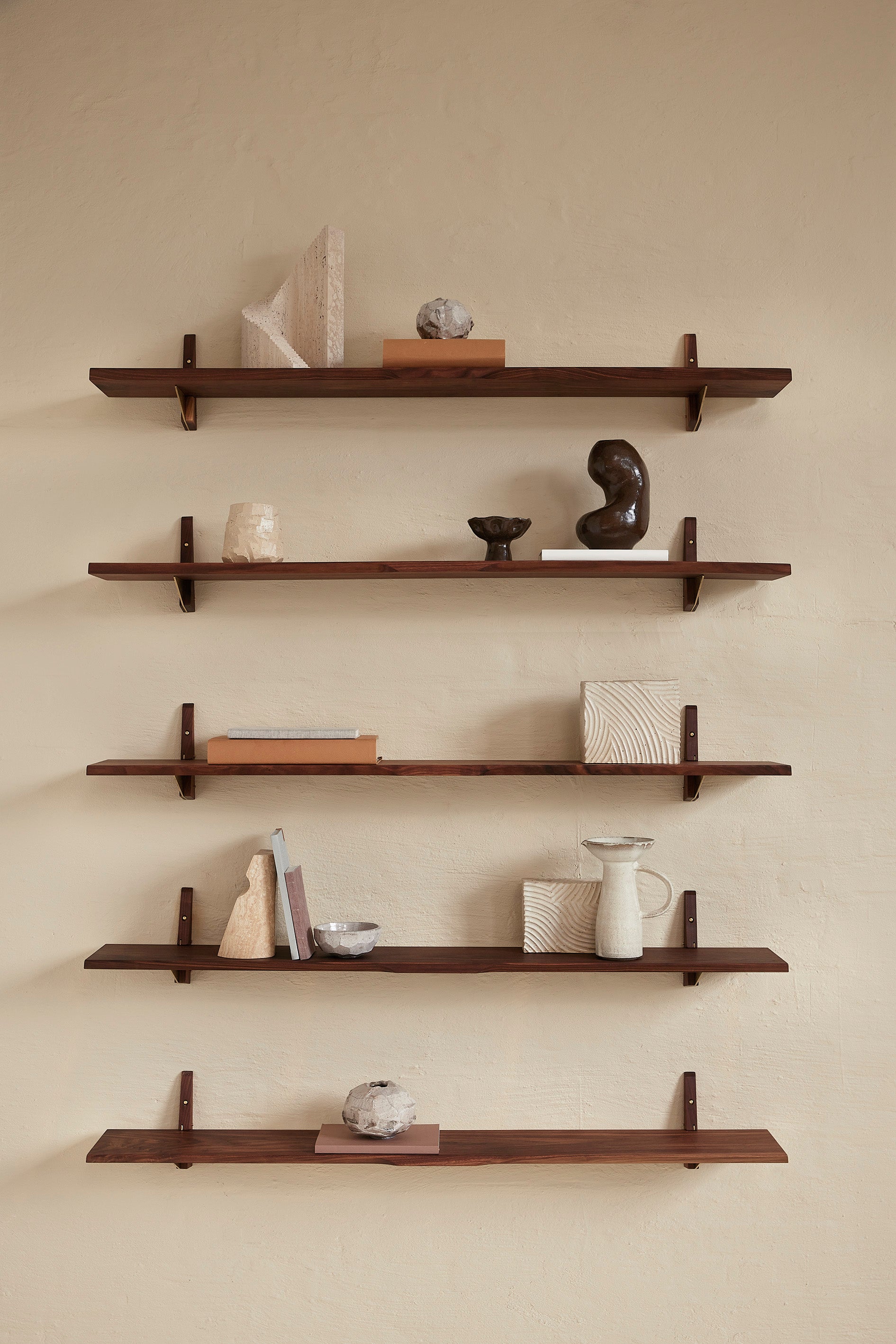
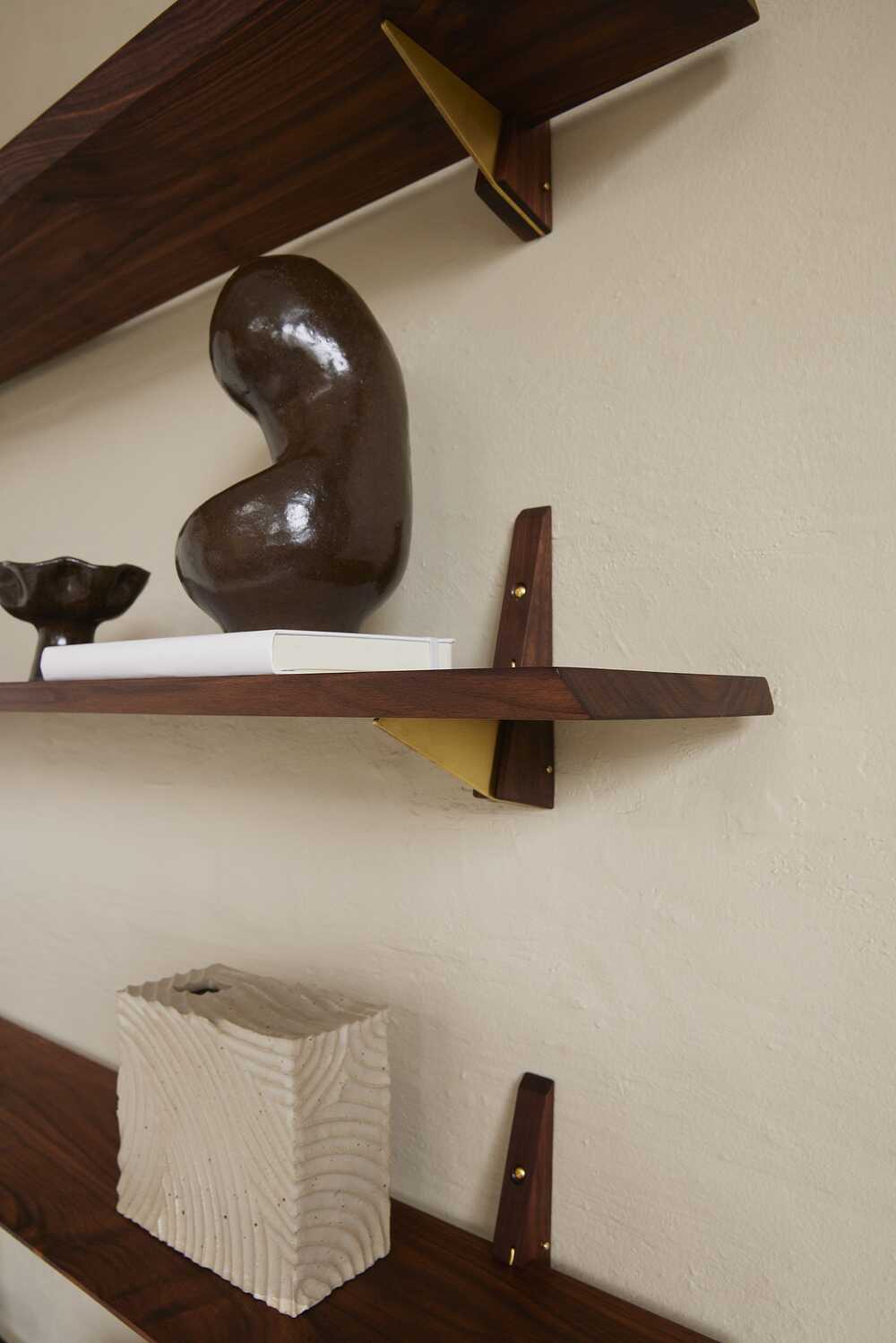
Japandi is as much about how a room feels to the touch as how it looks to the eye. It is not enough for a space to be photogenic: it must speak to the senses. The surface of a hand-polished shelf or the gentle curve of a backrest invites interaction. By selecting furniture with high tactility, such as our Wooden shelf JN10, you bring the irregularities of nature into the home. This is essential for achieving the right balance between the structured and the organic.
Curating the Japandi Home: From Centerpieces to Details
When designing according to Japandi principles, one should start with the larger architectural lines and then curate accessories with extreme care. It is a practice in considered simplicity. Every piece of furniture must be given the space to be seen, with plenty of "air" around each object to prevent a sense of crowding.
The Sculptural Dining Table
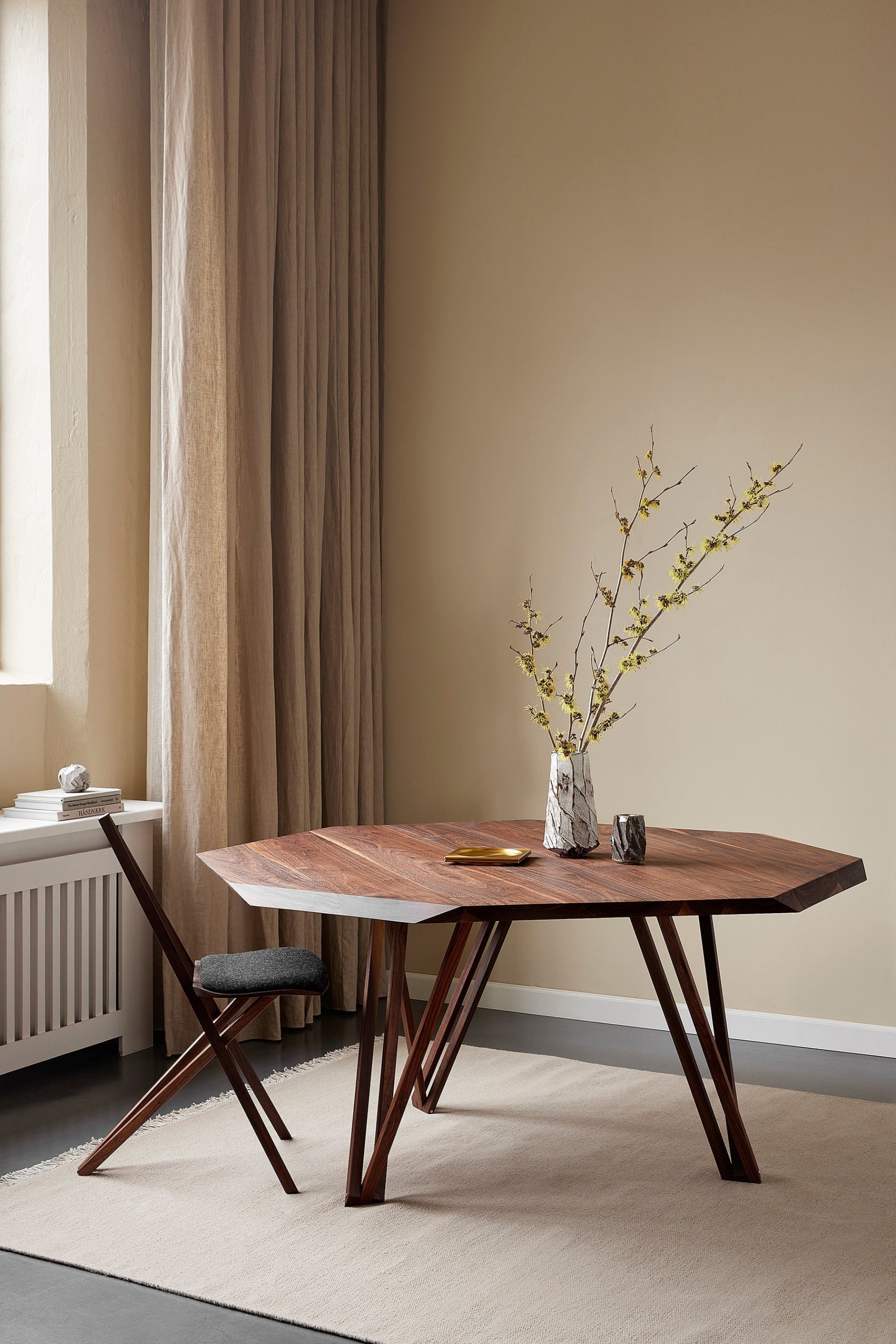
The dining table is often the heart of the home, and in a Japandi interior, it serves as the central element that grounds the entire room. Our octagonal dining tables, available in both elongated and round versions, play with the geometric forms so characteristic of Japanese architecture. The opposing 45-degree angles provide a sharpness that is softened by the inherent warmth of the walnut. It is a piece that invites both the practicalities of daily meals and the slow, deep conversations that define Nordic hygge.
A Sanctuary for Rest
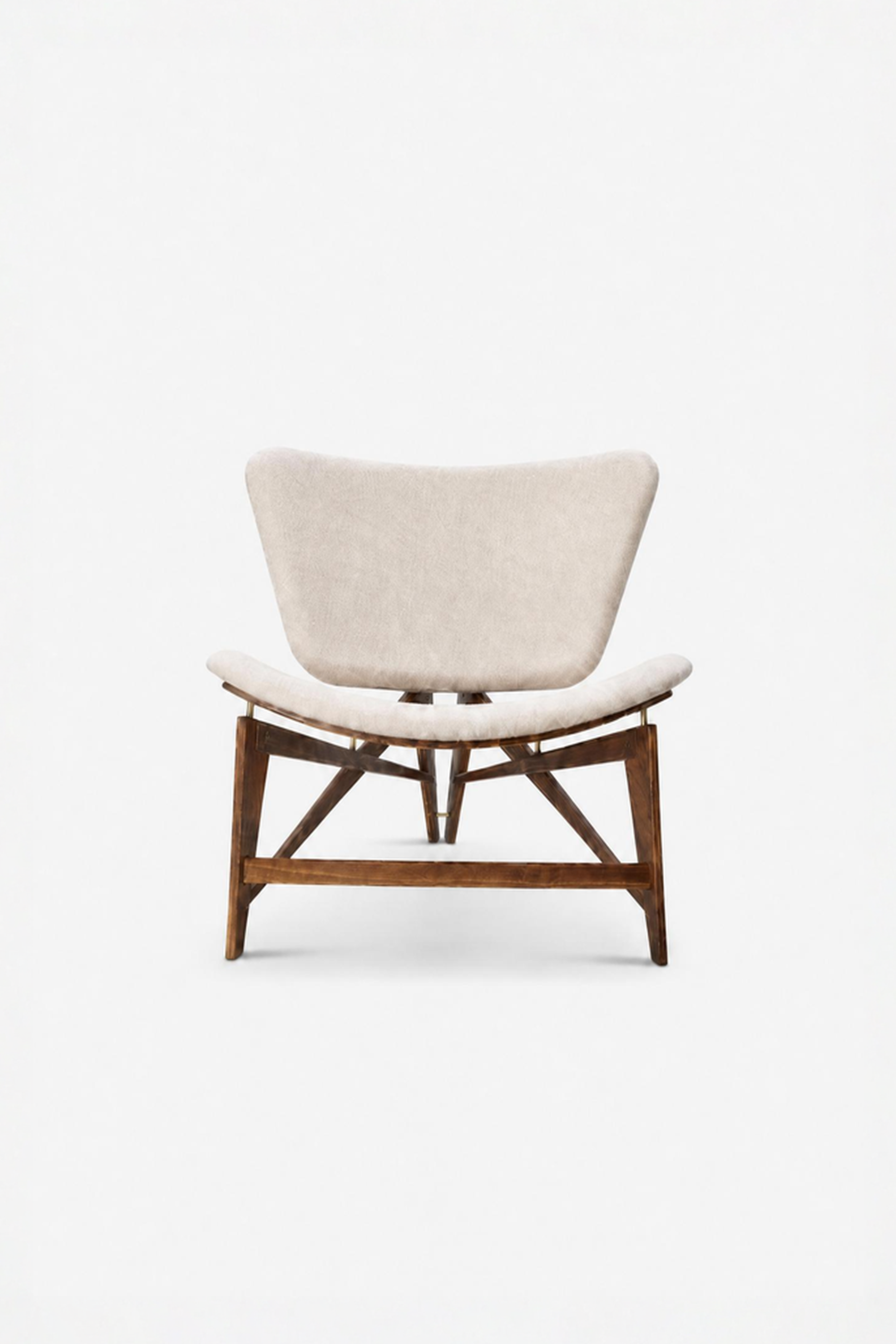
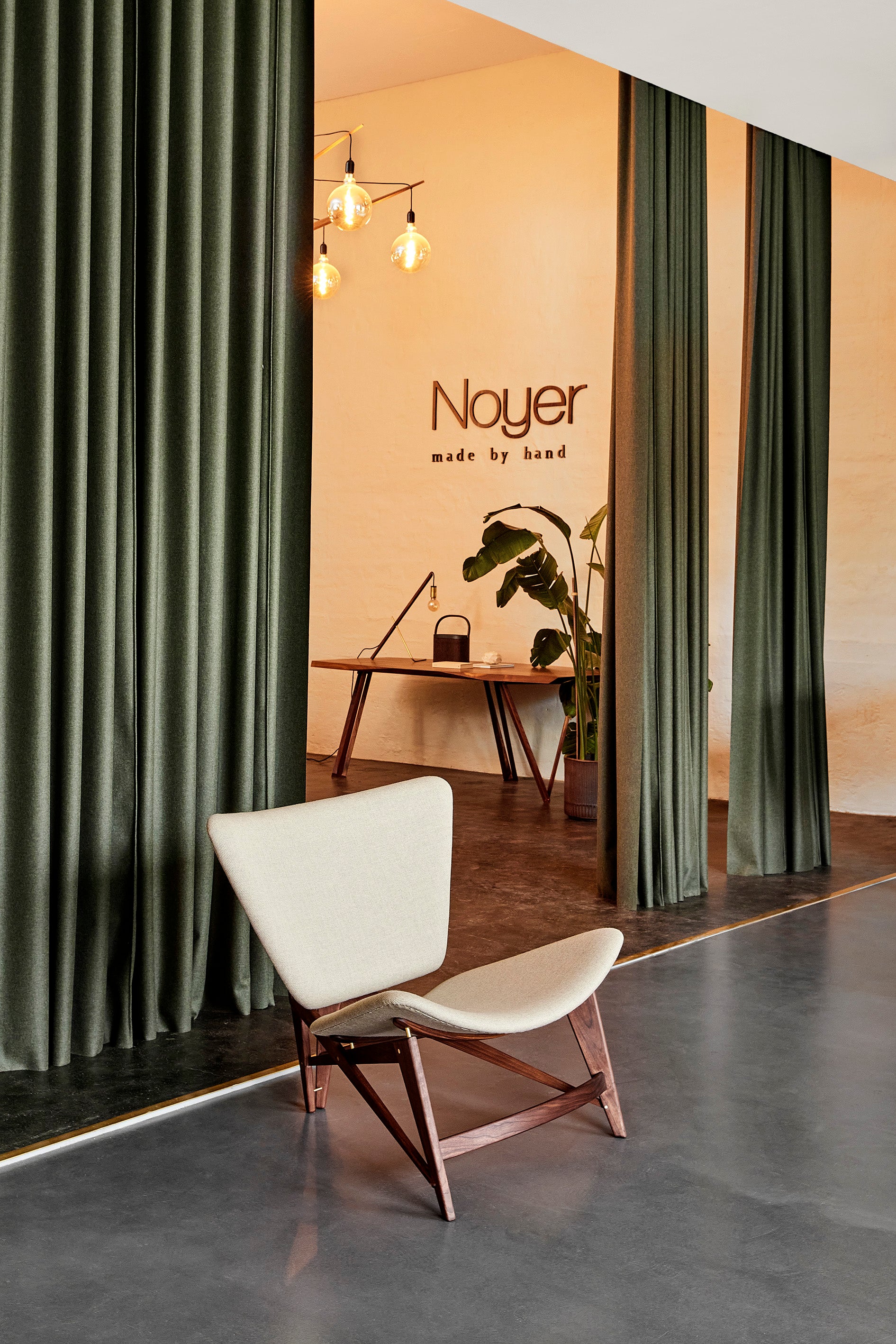
A vital part of Japandi interior design is the creation of zones dedicated to relaxation. A lounge chair is not merely a place to sit, but an invitation to pause. The Lounge chair JN15 Wool merges a slender, geometric leg construction with soft, high-quality upholstery. The combination of molded walnut wood and durable wool is a textbook example of how to unite the functional with the beautiful. The chair maintains a light visual footprint, yet its master craftsmanship gives it an authority in the room that is impossible to ignore.
The Art of "Ma" and Creating Coziness
One of the most frequent questions we encounter is how to prevent minimalism from feeling cold. The answer lies in the Japanese concept of Ma: the beauty of empty space. In Japandi interior design, the space between objects is just as important as the objects themselves. This emptiness allows the mind to rest.
To prevent this emptiness from feeling clinical, we layer textures. Even within a strict palette of beige, grey, and earth tones, warmth is created through contrast. Combine the hard, smooth surfaces of walnut with soft rugs, linen curtains, and ceramics with a raw, matte finish. Lighting also plays a critical role. In both Japanese and Danish cultures, we value soft, atmospheric light over harsh overhead sources. Position your lamps to highlight the grain of the wood and create small islands of light, supporting the sense of mental clarity that Japandi strives for.
Functionality as Beauty
In the Japandi philosophy, clutter is the enemy of peace. Therefore, intelligent storage solutions are essential. However, rather than hiding everything behind closed doors, use open shelving to display a few, carefully selected items. A single handmade vase or a small stack of books on a walnut shelf gives the home personality without creating visual noise. It is about curating your life and keeping only what provides true value.
A Timeless Investment in Craftsmanship
Choosing Japandi interior design is, in essence, a choice to buy less but buy better. It is a counter-reaction to disposable culture and a tribute to longevity. When we select the specific planks for a table or chair at our workshop in Valby, we do so with the knowledge that the piece should last for generations. The ability of walnut to grow more beautiful over time, developing a unique patina, aligns perfectly with the wabi-sabi belief that the passage of time only adds value.
If you wish to experience these materials firsthand and feel the quality of our joinery, you are always welcome in our showroom. Here, you can see how dark walnut interacts with light and space, and receive guidance on how to integrate these elements into your own home. We believe that a good home is built on a balance between the functional and the soulful: a balance that the Japandi style masters to perfection.
Decorating with a Japandi mindset is a journey toward a simpler, more meaningful life. It is about creating a base where you can breathe freely and find rest amidst the busyness of the modern world. By combining Nordic warmth with Japanese precision, we create the framework for a life well-lived, one piece of furniture at a time.