A living room finished with smooth drywall, broad window sections, and plain fabrics can feel flat when surfaces lack variation in texture and tone. Bringing natural wood into the space provides a grounded anchor. The grain patterns, organic shifts in color, and tactile surfaces break up uniform planes and introduce warmth to everyday seating areas.
Using wood effectively does not mean matching every piece in the room. Balance comes from working intentionally with contrast between light and dark wood tones, balancing proportions around your seating, and selecting handcrafted pieces that serve as defined focal points.
Dark Walnut on Light Floors: Contrast and Balance
A common hesitation is whether dark wood like walnut will absorb too much daylight or appear heavy against pale oak flooring. In practice, the pairing works in your favor. Solid dark wood furniture offers a deliberate counterweight to pale floors and white walls. Rather than blending into the floorboards, high contrast accentuates the silhouette of each piece.
Different wood species do not need identical stains or tones to sit together comfortably. As long as their undertones do not clash with the rest of the interior—such as matte mineral paint, concrete, or woven textiles—the meeting of light and dark creates depth. Pale floorboards reflect incoming natural light, while dark, oil-treated walnut creates clear contours against those lighter surfaces.
The Coffee Table as an Anchor
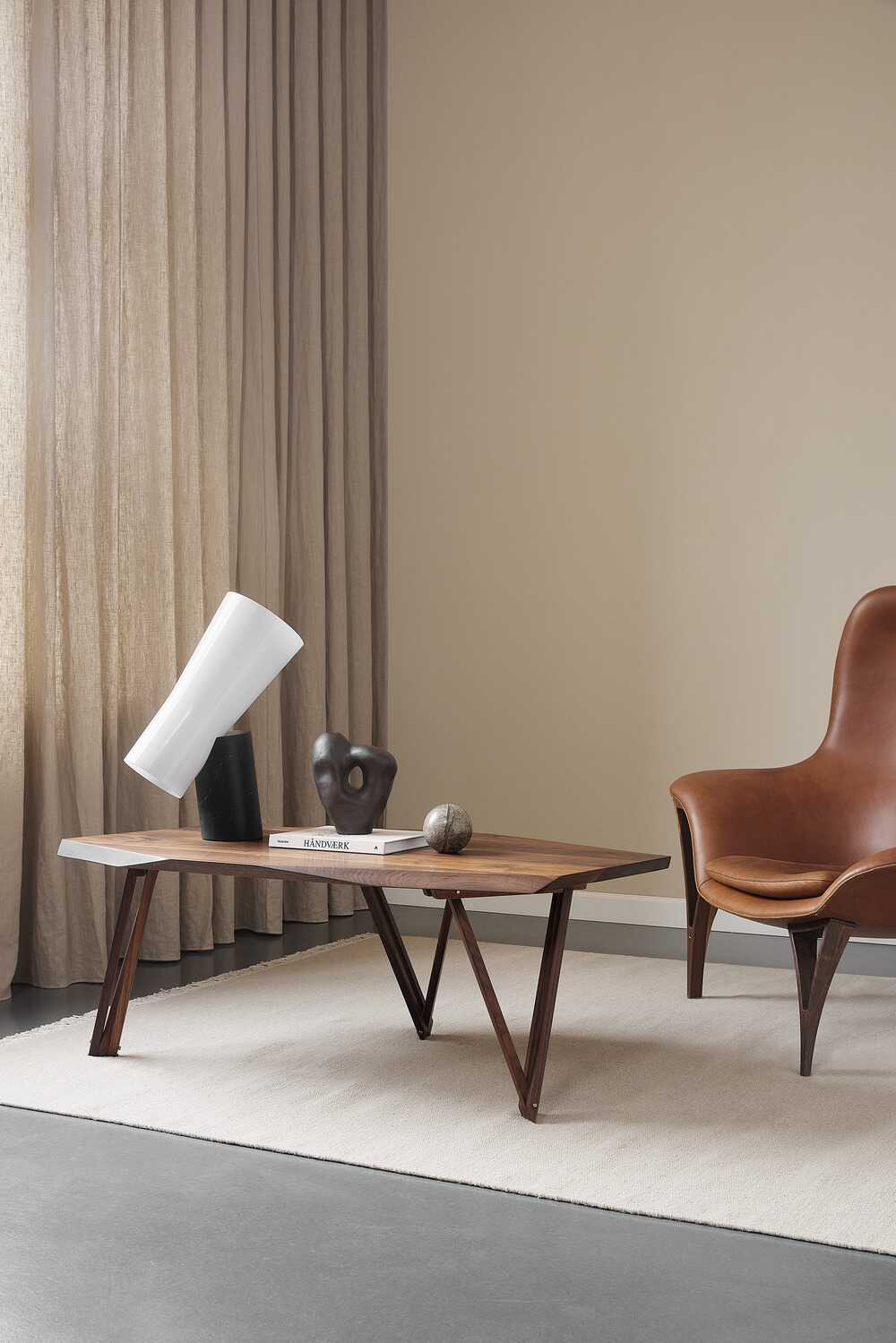
In a central seating area, the coffee table serves as an everyday anchor where books, cups, and daily items gather. Choosing solid timber introduces a durable surface designed for regular touch and use.
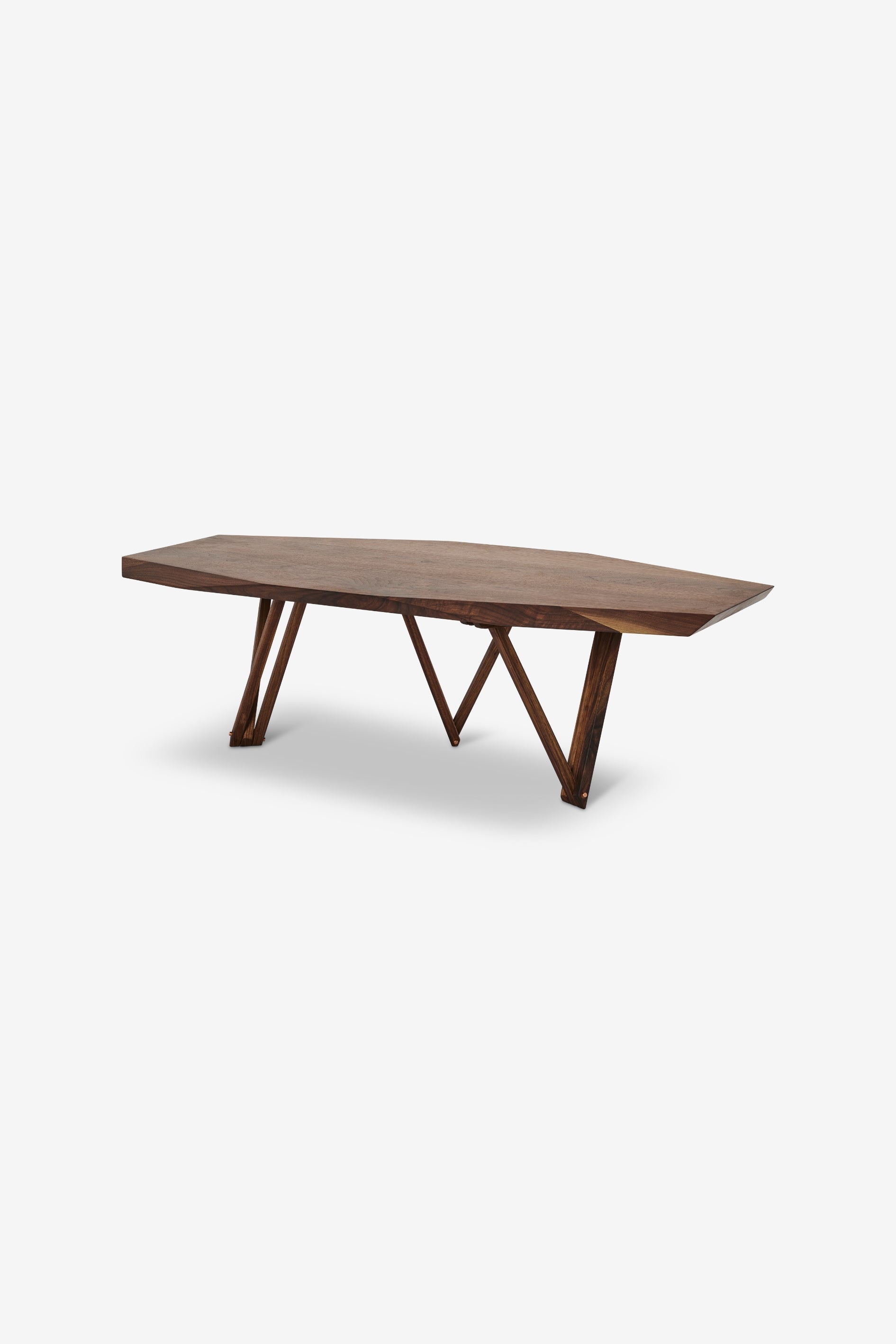
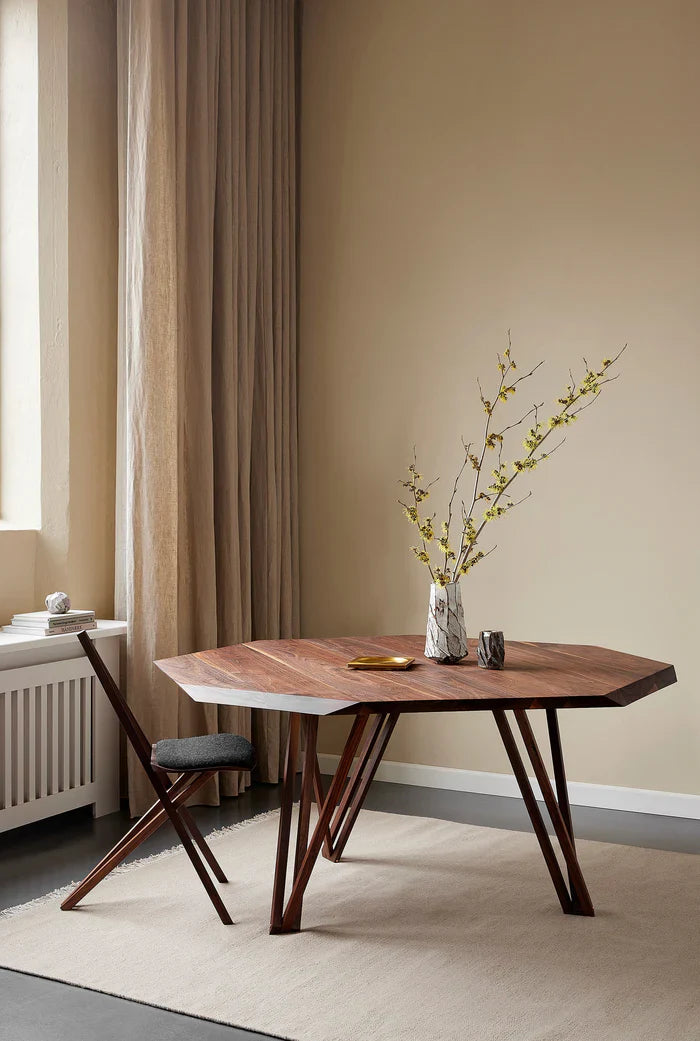
The Coffee table JN02 in walnut wood is built from selected walnut planks joined into an octagonal tabletop. The edges are cut with opposing chamfers that expose the cross-section and dense grain patterns along the sides. Supported by custom-designed wooden legs, its geometric profile contrasts with the soft contours of upholstered sofas and rugs. For living rooms that require specific dimensions, the table can be built to order in our Copenhagen workshop.
Carrying Wood Finishes onto the Walls
Restricting wood to the floor level can leave a room feeling visually bottom-heavy. A cohesive living room layout distributes material interest across different eye levels by carrying timber onto the walls.
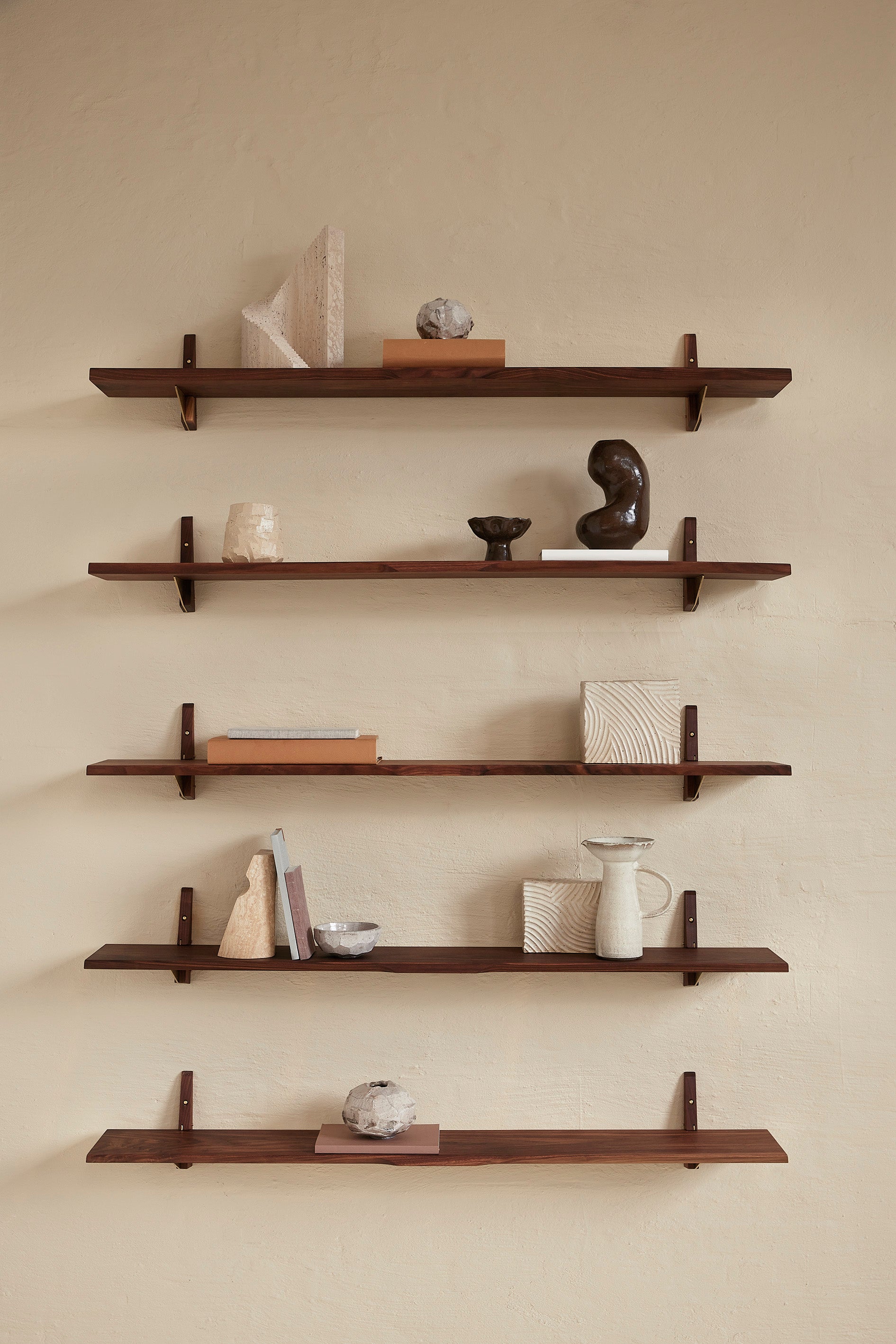
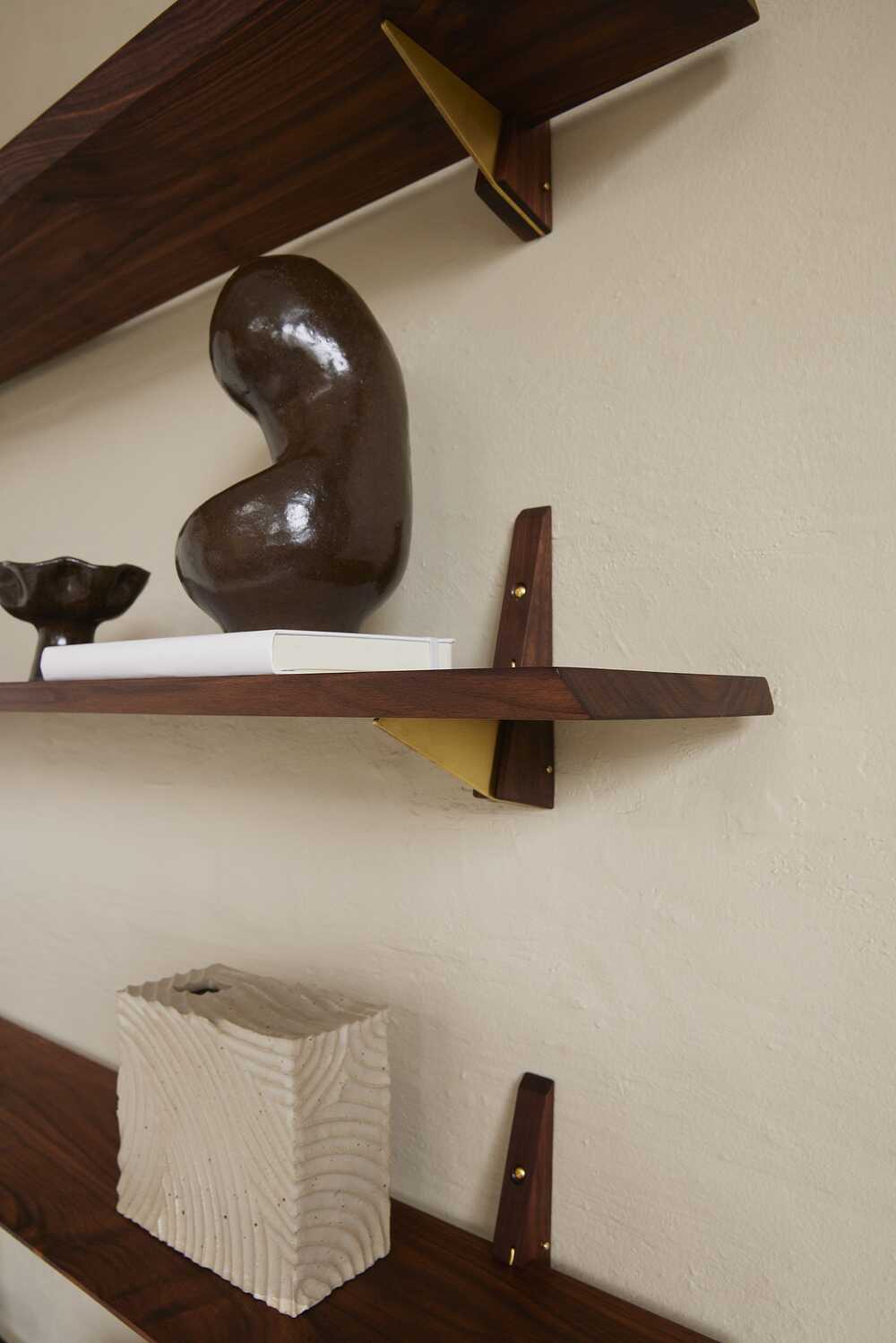
Repeating a secondary wood tone on vertical surfaces ties the room together without clutter. The Wooden shelf JN10 in solid walnut features subtle milling along its front edge and custom brass mounting brackets. Mounted on a plain wall, it provides a dedicated ledge for ceramics, books, or framed art, repeating the warmth of dark walnut at eye level while preserving clear floor space.
Flexible Accent Tables and Unused Corners
Compact corners, reading chairs, and modular sofa ends benefit from smaller, movable furniture. An accent table provides practical surface area right where you sit.
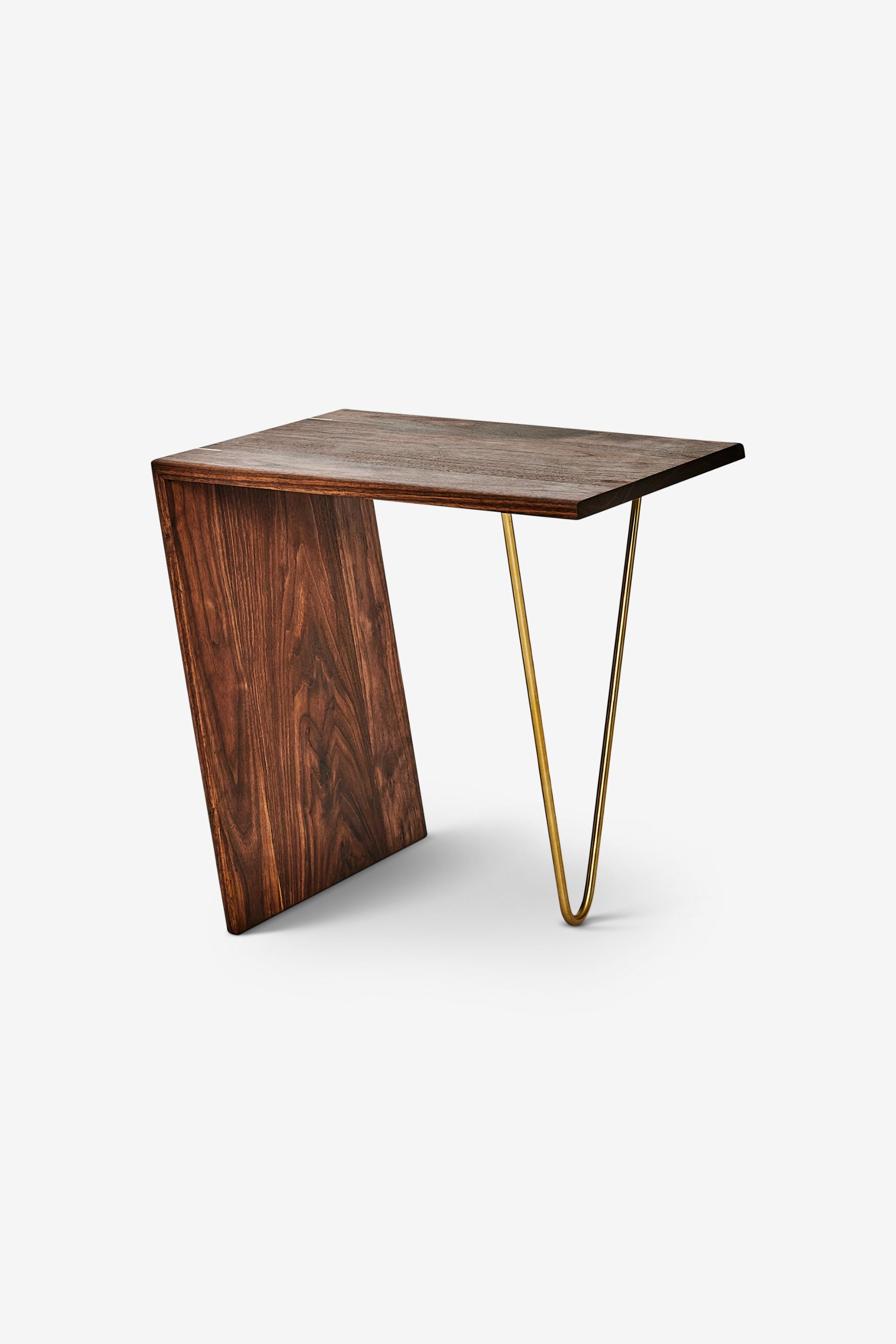
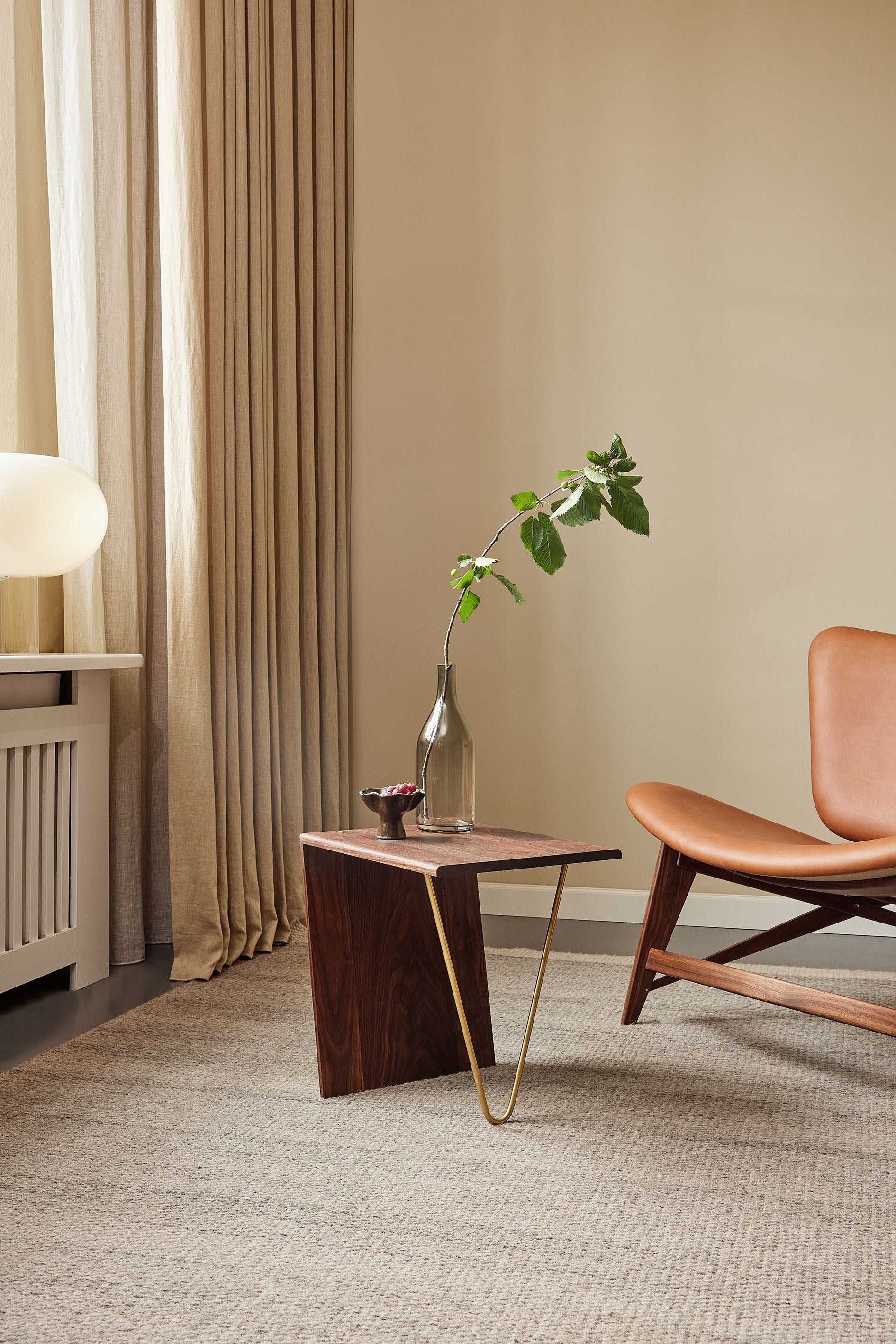
The Side table JN20 balances substance and open space using two distinct support structures: one leg is a solid walnut board angled at 80 degrees, while the other is a perpendicular brass brace. Brass details at the joints reinforce the assembly while introducing a clean metal contrast against the dark timber. Its small footprint allows easy placement beside an armchair or tucked along a sofa arm.
Patina and Ongoing Care
Furnishing with solid timber means choosing a material that evolves with everyday use. As wood ages, it develops a natural patina across its surface. If the surface begins to look dry or shows ordinary signs of wear, oiling refreshes the wood.
To learn more about everyday cleaning and routine oiling, visit our guide on Care and Maintenance.