Open kitchen shelving changes how a kitchen functions and looks. Replacing a row of upper cabinets with solid wood shelves lightens the wall, keeps frequently used tableware within reach, and introduces the warmth and visible grain of natural timber alongside tile, stone, or painted surfaces.
The Balance Between Open Shelves and Closed Cabinets
Moving entirely to open storage is rarely practical for every item in a working kitchen. Small appliances, bulk provisions, and specialized cookware are best kept inside lower drawers and closed cupboards. Open shelving works best as an intentional zone: above a prep counter, near the coffee station, or alongside everyday work areas.
Keeping everyday items on open shelves prevents dust and cooking film from settling. Dinner plates, bowls, drinking glasses, and coffee mugs that cycle through daily use are washed frequently, so they stay clean on the shelf.
What to Place on Open Kitchen Shelves
How you arrange an open shelf determines whether the wall feels orderly or crowded. Combining everyday utility with distinct materials keeps the space functional:
- Everyday dinnerware: Stacks of ceramic plates and bowls keep daily table settings easy to reach.
- Spices and dry goods: Glass jars and spice containers place cooking essentials close at hand while adding visual order.
- Cookbooks and prep tools: A neat row of frequently consulted recipes alongside a mortar or pepper mill keeps work surfaces clear.
- Glassware and mugs: Clear glasses and ceramic mugs break up heavier stacks of plates and catch natural light from nearby windows.
The Character and Durability of Solid Walnut
Kitchen surfaces experience daily handling, heat, and shifting humidity. Choosing dense, solid hardwood provides reliable resistance to wear and tear over time.
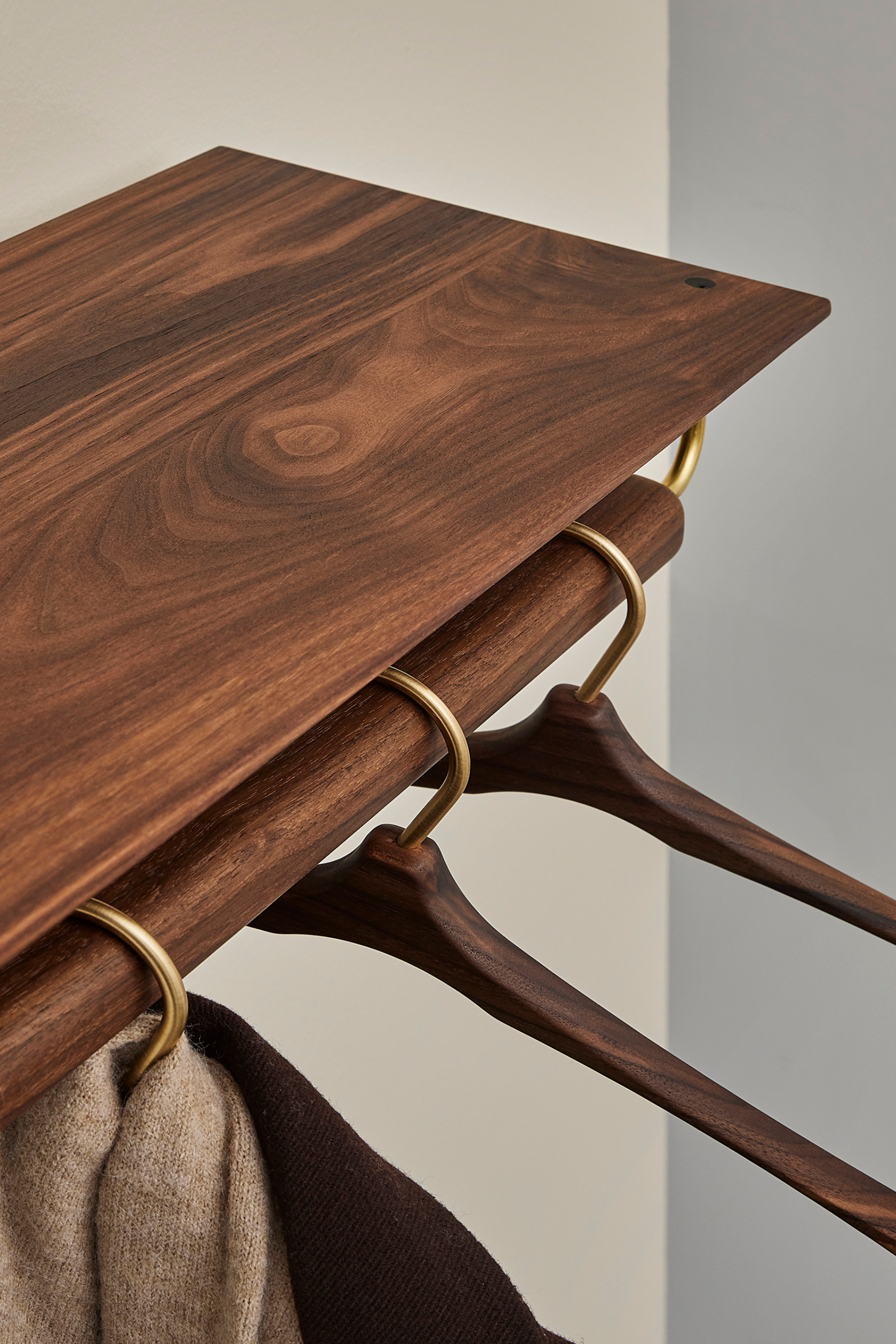
Walnut offers a distinct material quality in the kitchen. Its deep, warm tones and varied grain patterns bring tactile contrast to light backsplashes and stone countertops. Because it is solid hardwood throughout, the timber ages with a natural patina and can be maintained with periodic oiling over years of daily cooking.
Crafted Details: The JN10 Wall Shelf
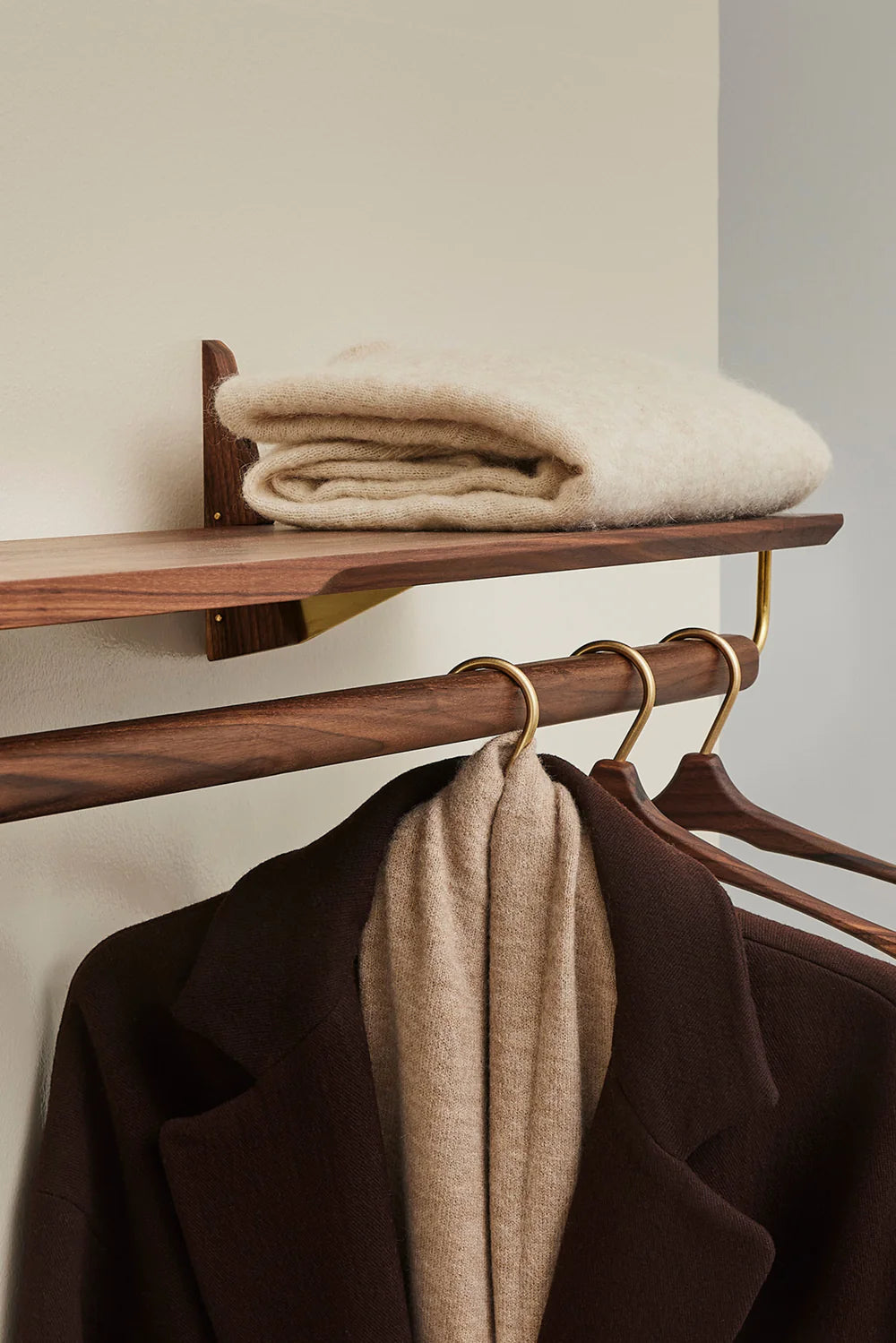
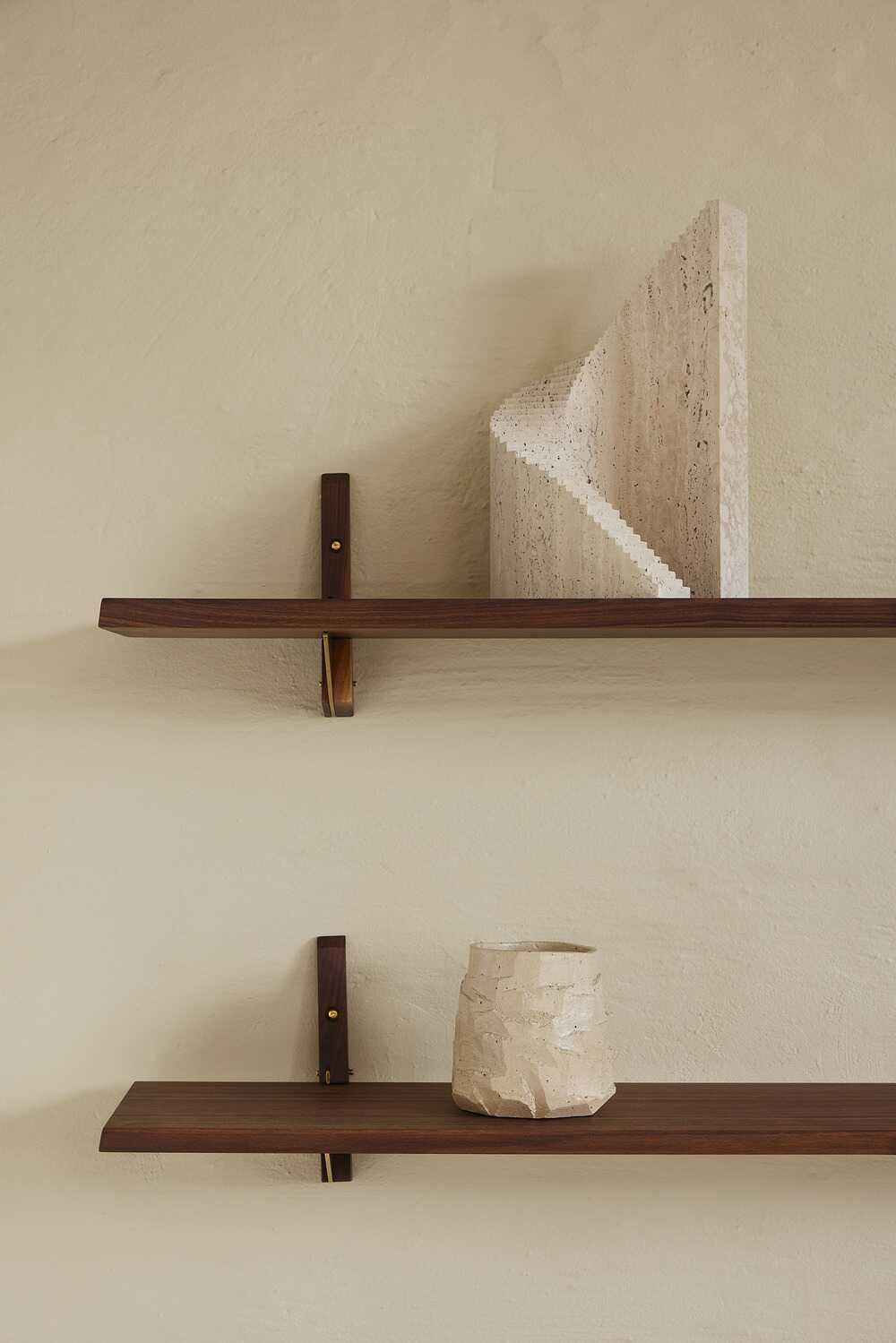
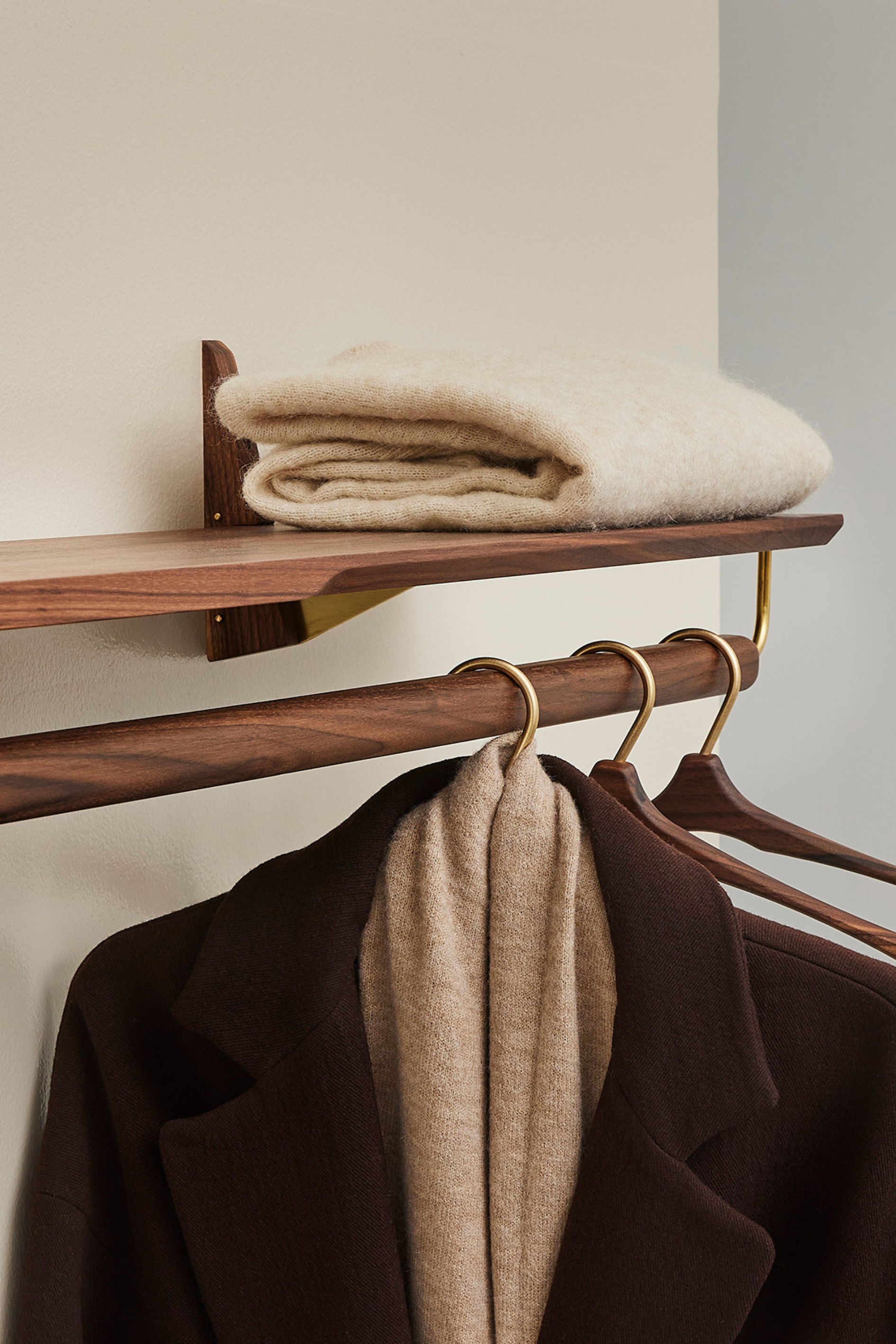
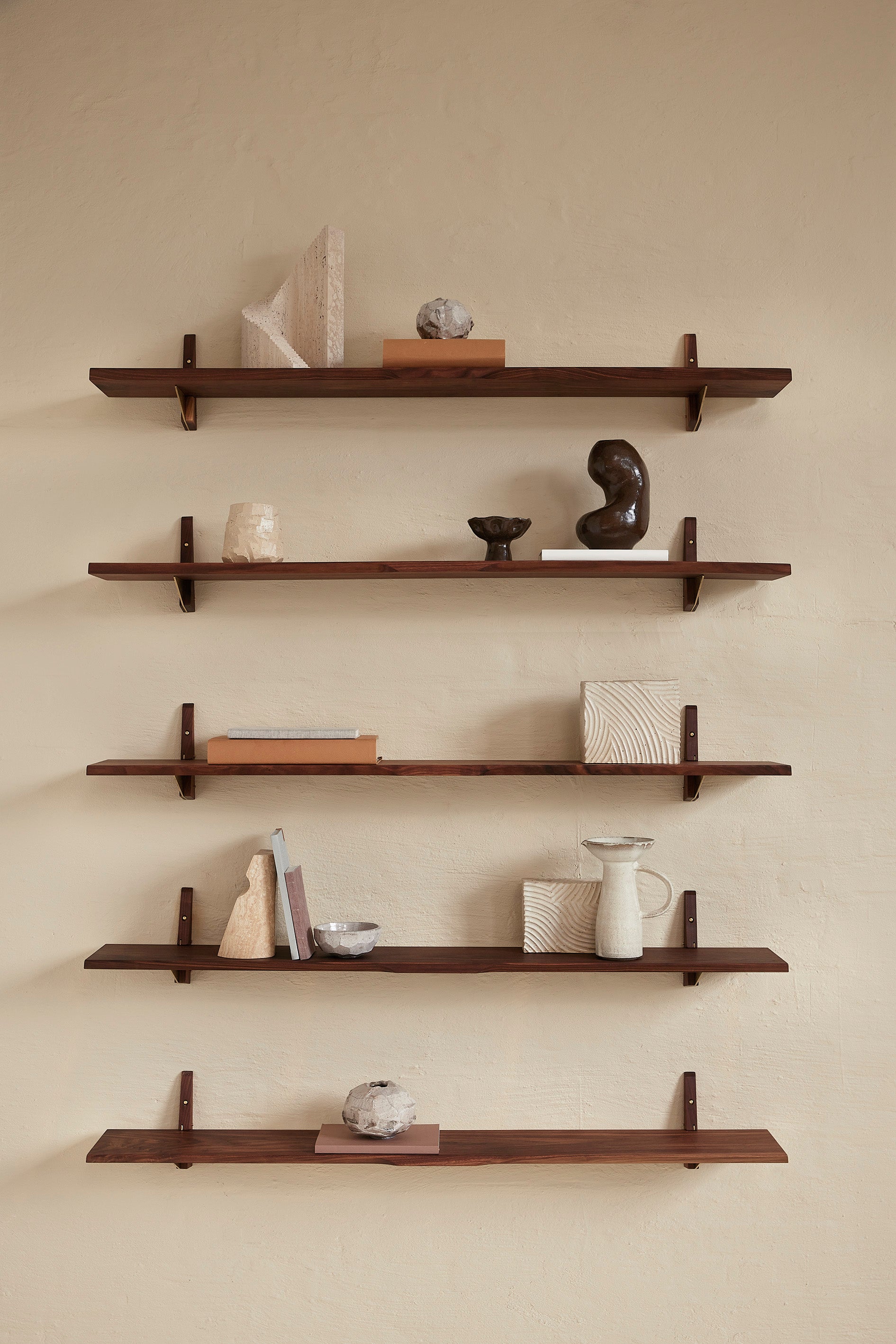
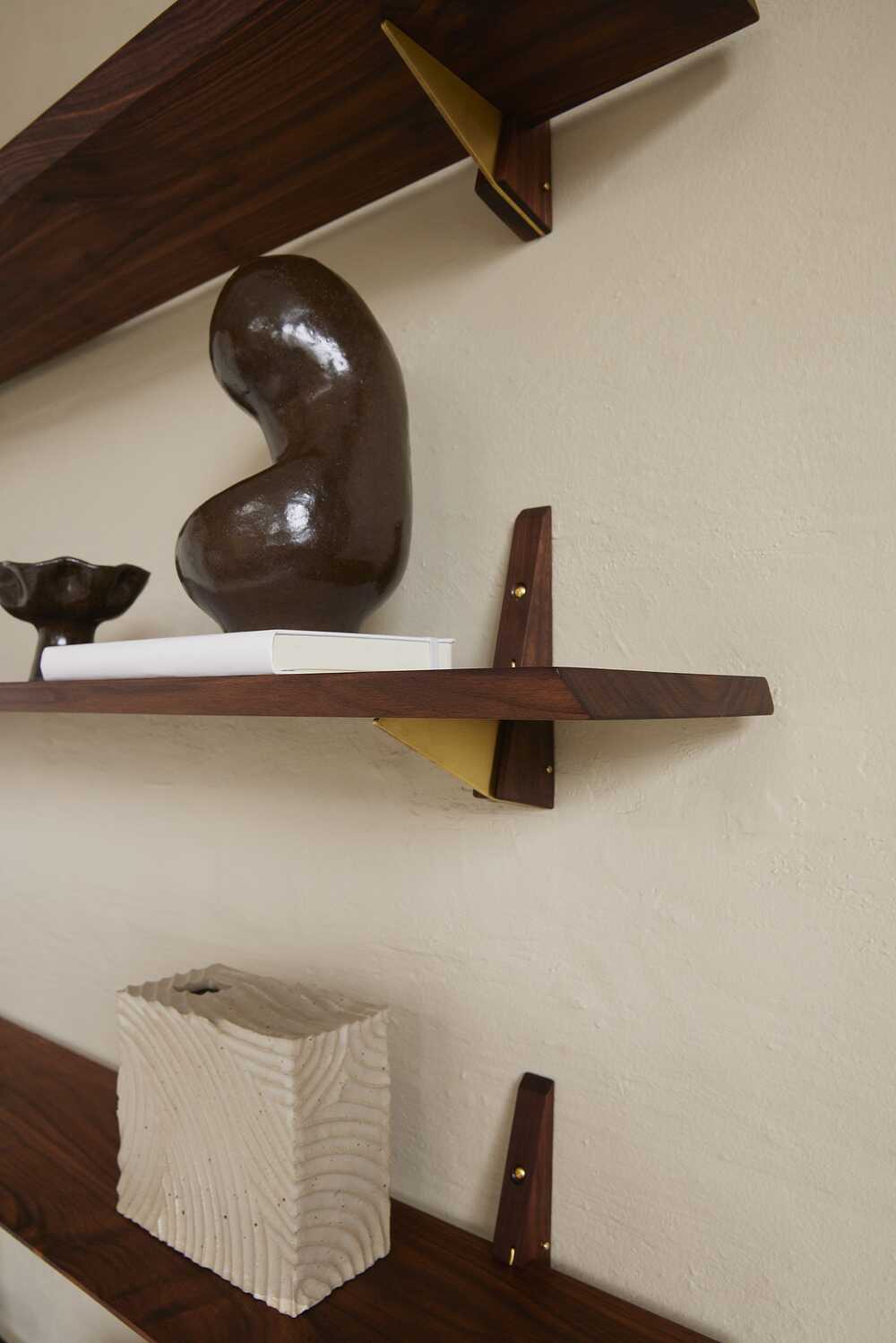
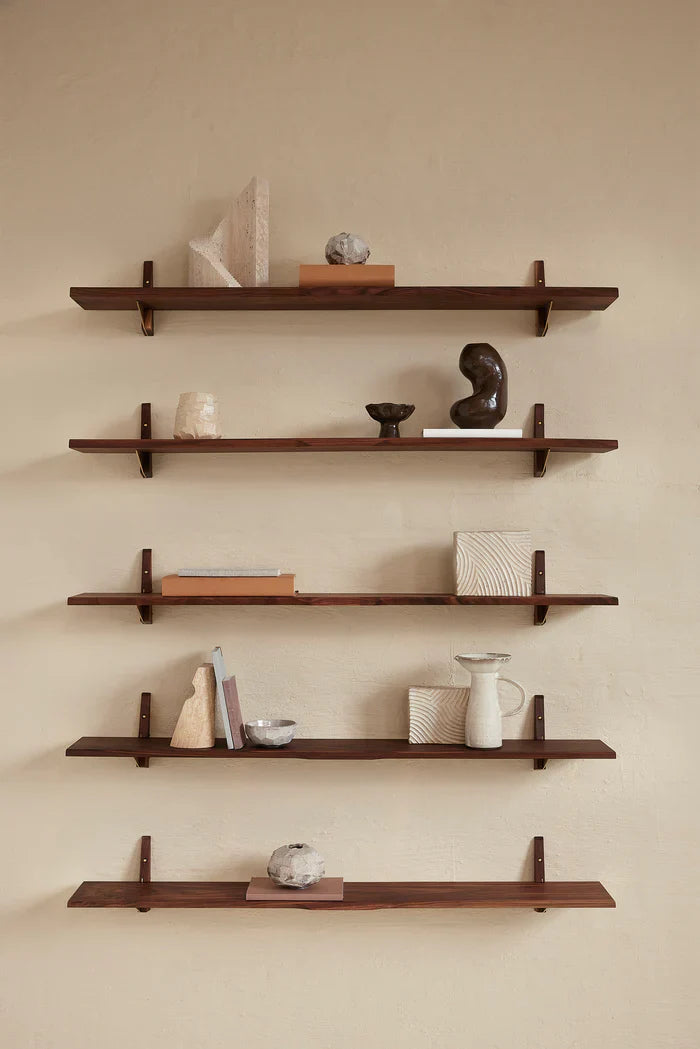
When storage sits out in the open, the proportions and craftsmanship of the shelf itself become a permanent part of the room. At Noyer, we craft each Wooden shelf JN10 by hand from solid walnut in our Copenhagen workshop. The shelf features subtle angled milling along the front edge and mounts with custom-designed brass brackets that contrast with the dark wood.
Whether installed as a single spice ledge or arranged in rows for dinnerware, the solid walnut construction provides stable support for kitchen essentials while adding clear horizontal lines to the wall.
Care and Protection in the Kitchen
Open wood shelves in a cooking space require straightforward maintenance to preserve the surface:
- Dusting and wiping: Dust shelves regularly with a soft, clean cloth. To remove cooking residue, wipe with a lightly dampened cloth and dry immediately with a clean cloth to prevent water marks.
- Gentle cleaning: Avoid harsh cleaning agents and scouring pads that can damage the wood's surface.
- Surface protection: Avoid placing very wet or hot cookware directly onto the wood. Placing felt pads beneath heavy ceramic or metal objects protects against scratches.
- Periodic oiling or waxing: Apply a suitable wood oil or wax periodically when the surface appears dull or dry to maintain the wood's natural sheen and protection.
- Thoughtful placement: Position open shelves away from the cooktop to reduce direct exposure to cooking grease and intense steam.
With balanced placement and simple care, open walnut shelves turn everyday kitchen storage into a durable, functional part of the home.