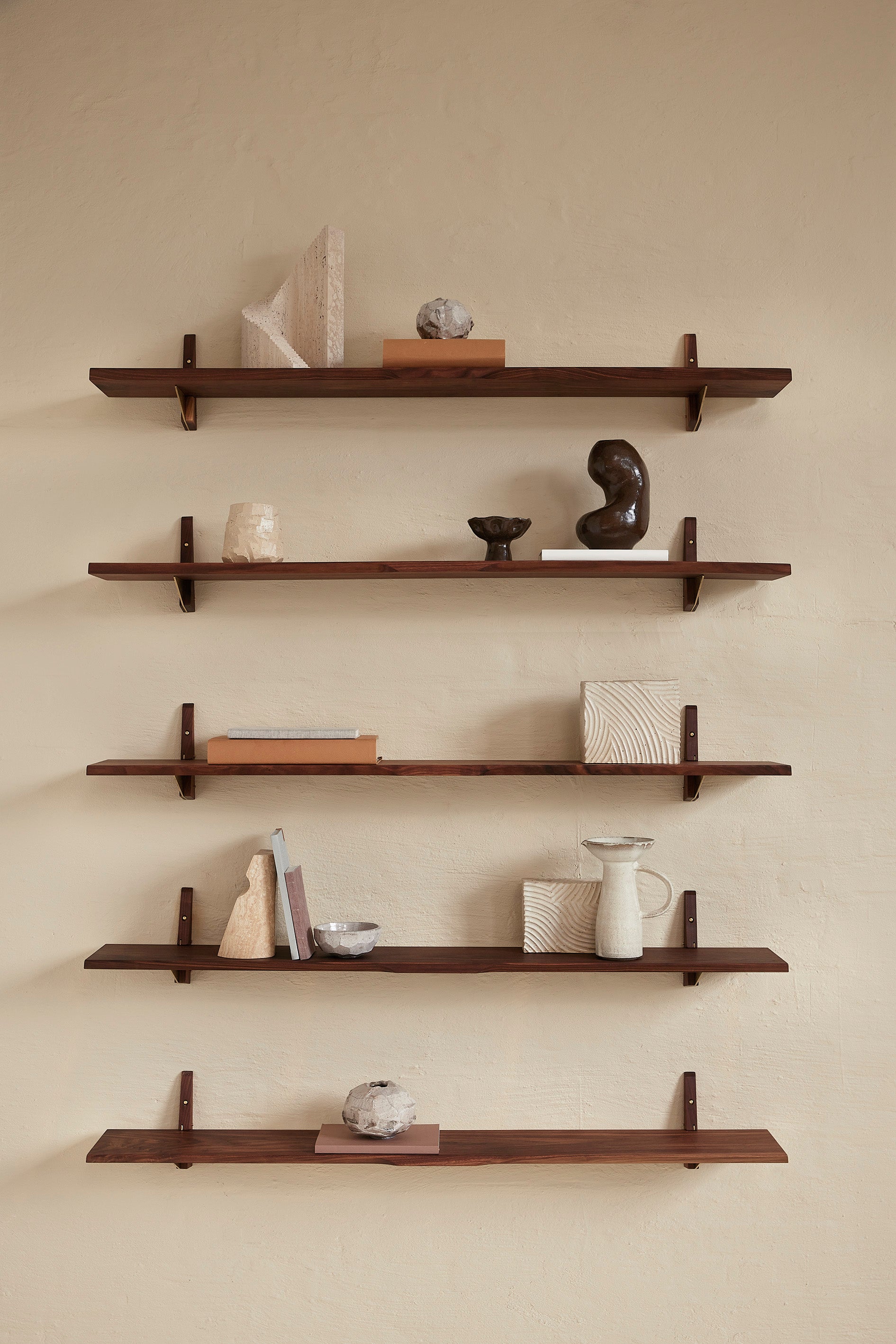
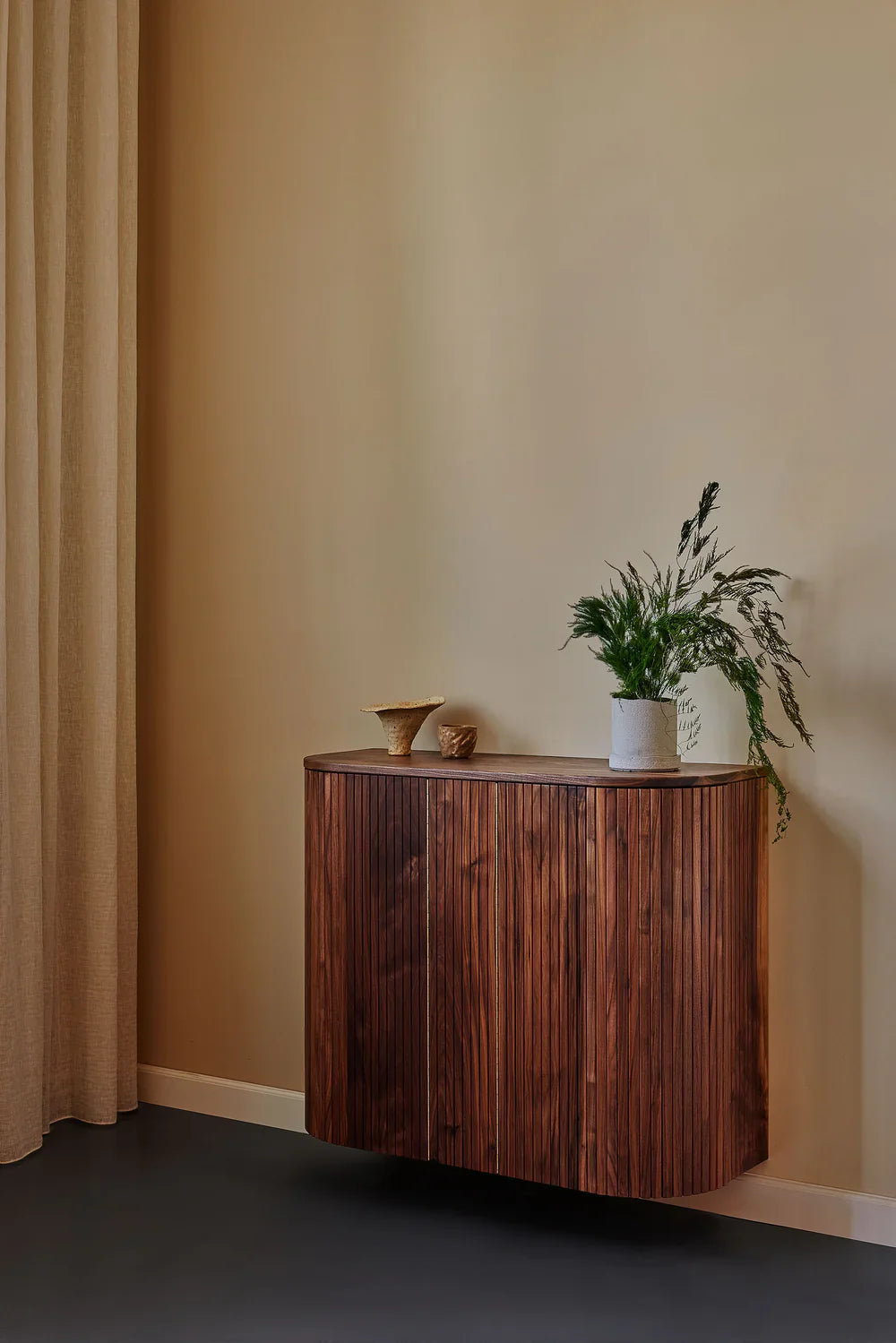
A wooden shelf serves a dual purpose in a home. Where closed cabinets conceal everyday items, open solid wood shelving and wall-mounted shelves display the objects you choose to keep in view: books, ceramics, glassware, and personal pieces. At the same time, solid hardwood introduces a warm, tactile contrast against plain walls and hard floor surfaces.
Choosing the right configuration involves balancing room proportions, daily use, and the structural support of your walls. Here is how to evaluate wall-mounted versus freestanding options and integrate open shelving across different rooms.
Wall-Mounted Shelves vs. Freestanding Storage
When planning your layout with shelves and storage, mounting style directly impacts floor space, load limits, and visual weight:
- Wall-mounted shelves: Lifting storage off the floor creates visual openness and makes vacuuming and cleaning underneath straightforward. This works well in compact entryways, smaller living rooms, or above a desk. However, wall mounting requires careful attention to the wall structure. Solid masonry or timber wall studs offer the highest weight capacity, whereas hollow drywall relies on specialized anchors and carries lower load limits when holding heavy stacks of books.
- Freestanding units: A freestanding bookcase transfers weight directly to the floor through gravity, making it suited for large book collections and heavy binders. In return, it occupies dedicated floor area and requires adequate clearance to avoid crowding a room.
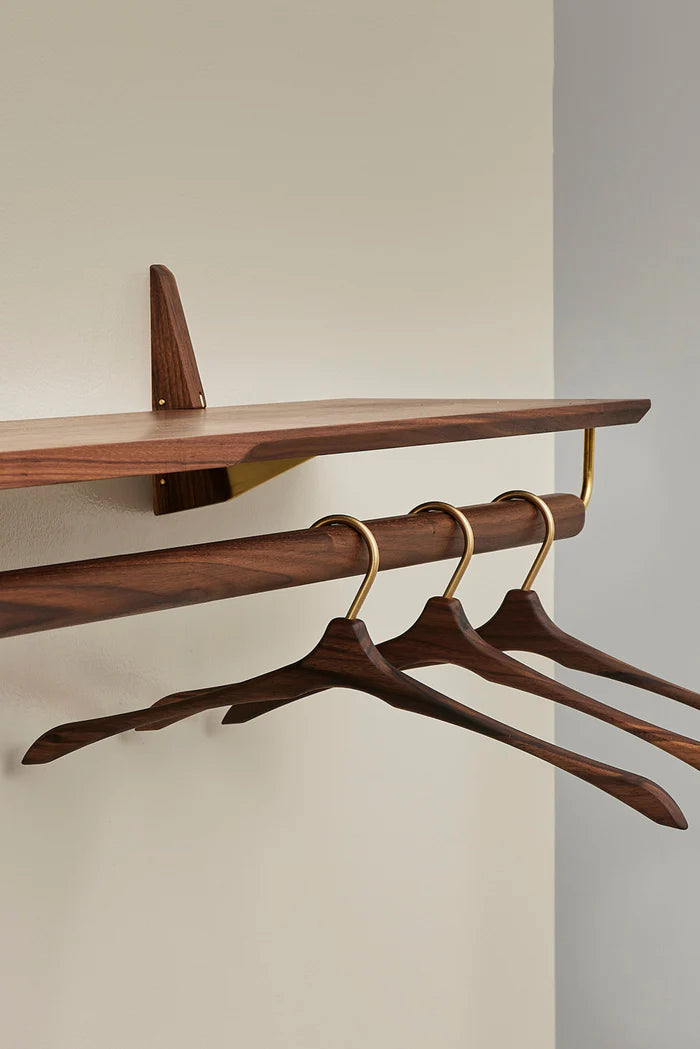
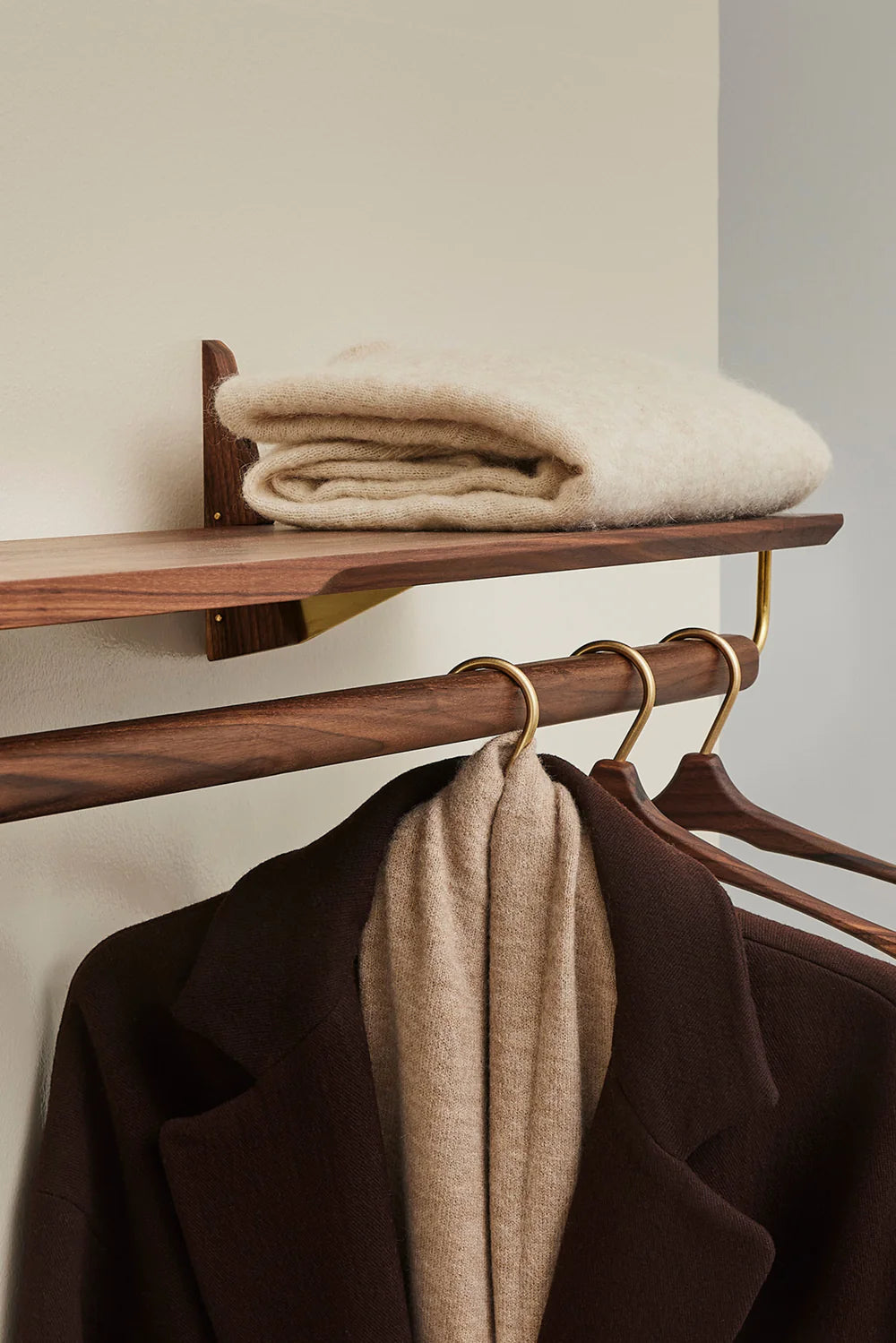
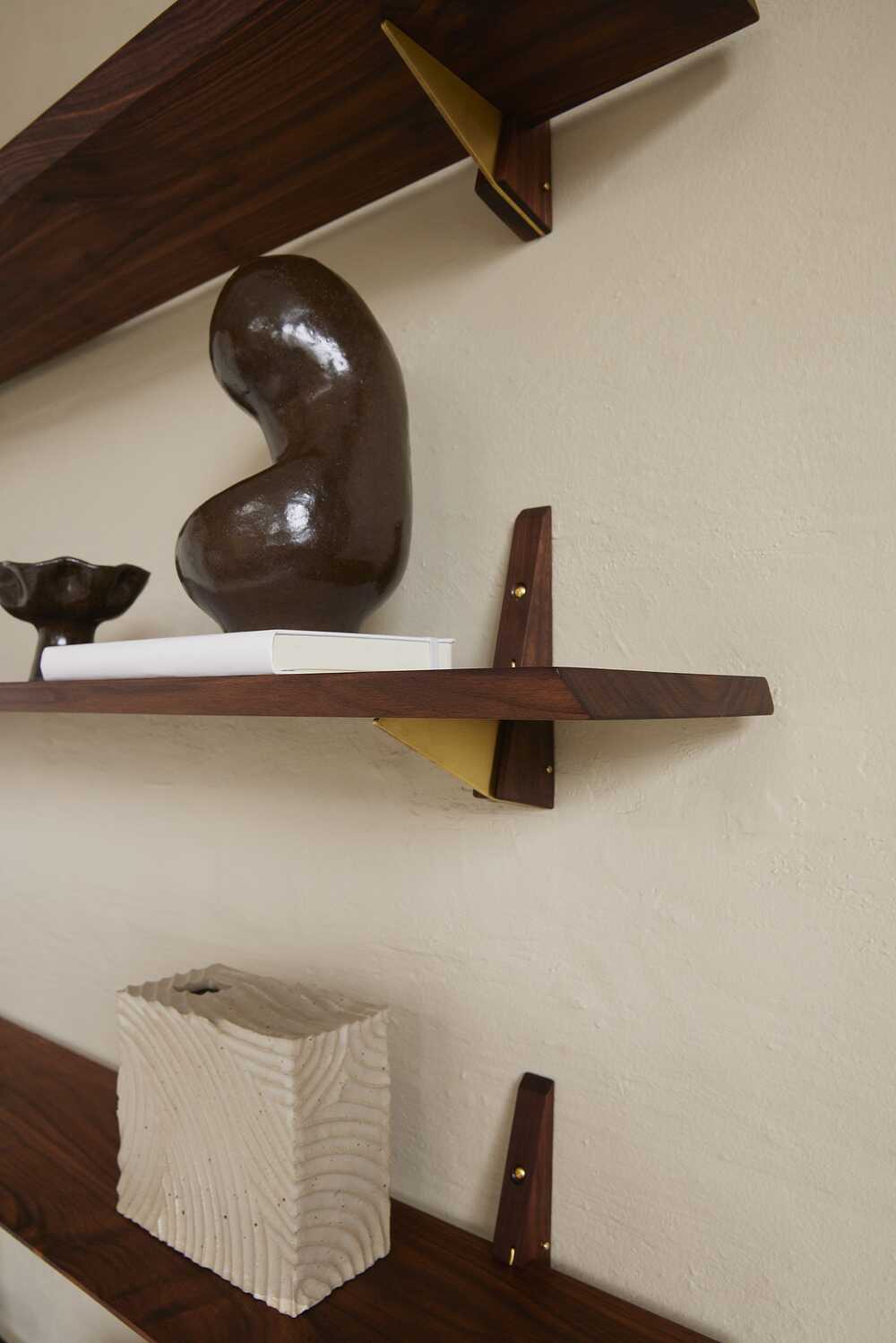
If you want the visual lightness of wall storage paired with visible joinery, a wall-mounted design like the Wooden shelf JN10 in solid walnut holds books and display objects, framed by custom brass brackets and a precision-milled front edge.
Solid Walnut as a Material
The choice of wood species determines both shelf durability and visual character. Solid walnut features a dark tone and distinct grain patterns that remain visible across the shelf surface and along the edges.
Unlike thin veneer sheets over particle board or MDF, which can chip or sag under prolonged loads, solid hardwood offers high structural rigidity. It patinates naturally over time and responds to shifts in light and humidity, maintaining its structural integrity through years of daily use.
Shelving Across Different Rooms
Open shelving adapts easily to the practical needs of specific spaces:
Living Rooms and Home Offices
In a living room, open shelves serve as a curated display. Alternating dense rows of books with open gaps for ceramic objects or framed art keeps the wall looking balanced rather than cluttered. In a home office, mounting shelves directly above a desk keeps reference books and tools within reach without taking up desktop workspace.
Kitchens
Open kitchen shelving provides quick access to daily dinnerware, spice jars, or cookbooks. The natural warmth of oiled wood also balances utilitarian surfaces like stainless steel, glazed tiles, and stone worktops.
Entryways and Hallways
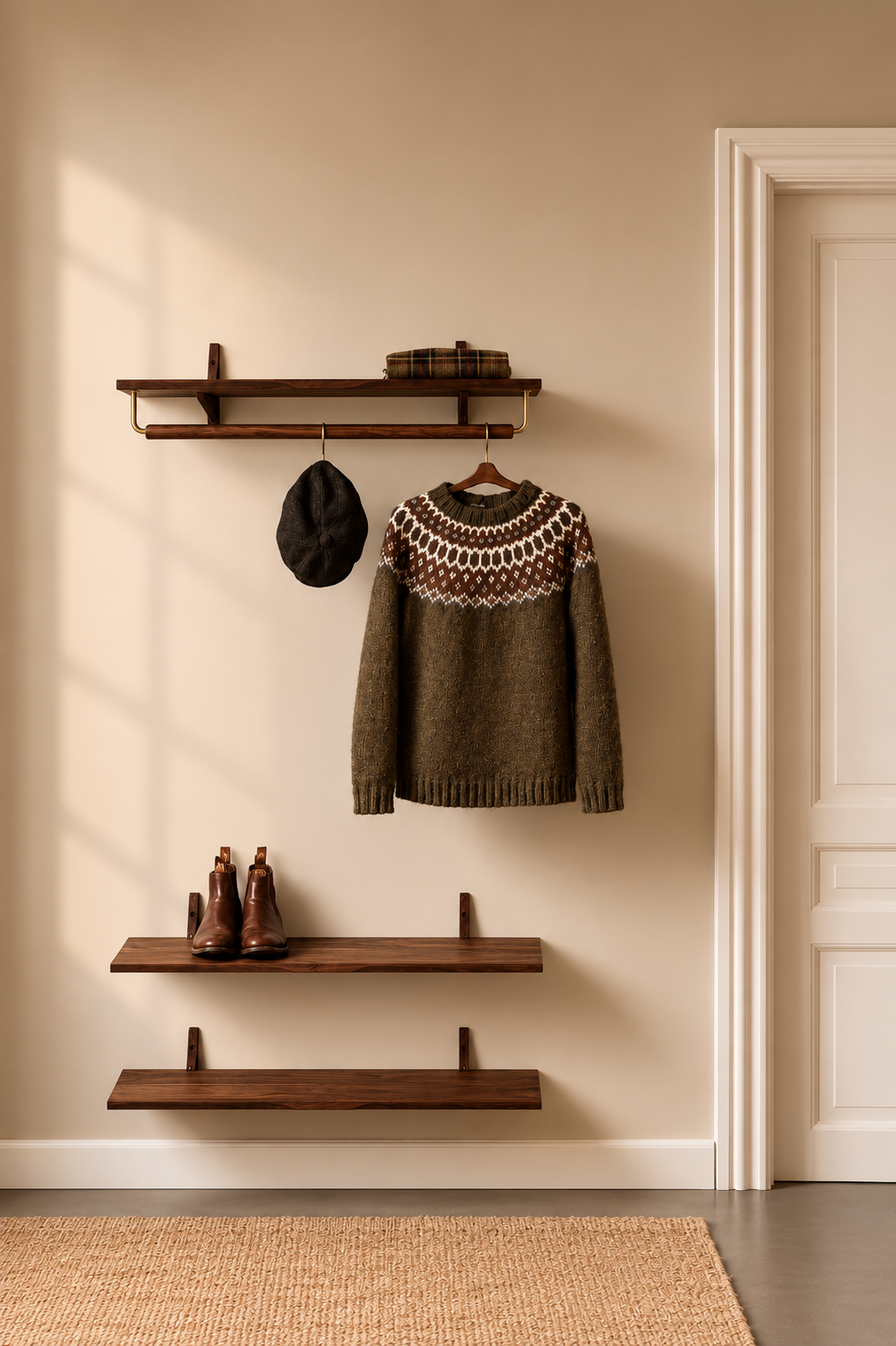
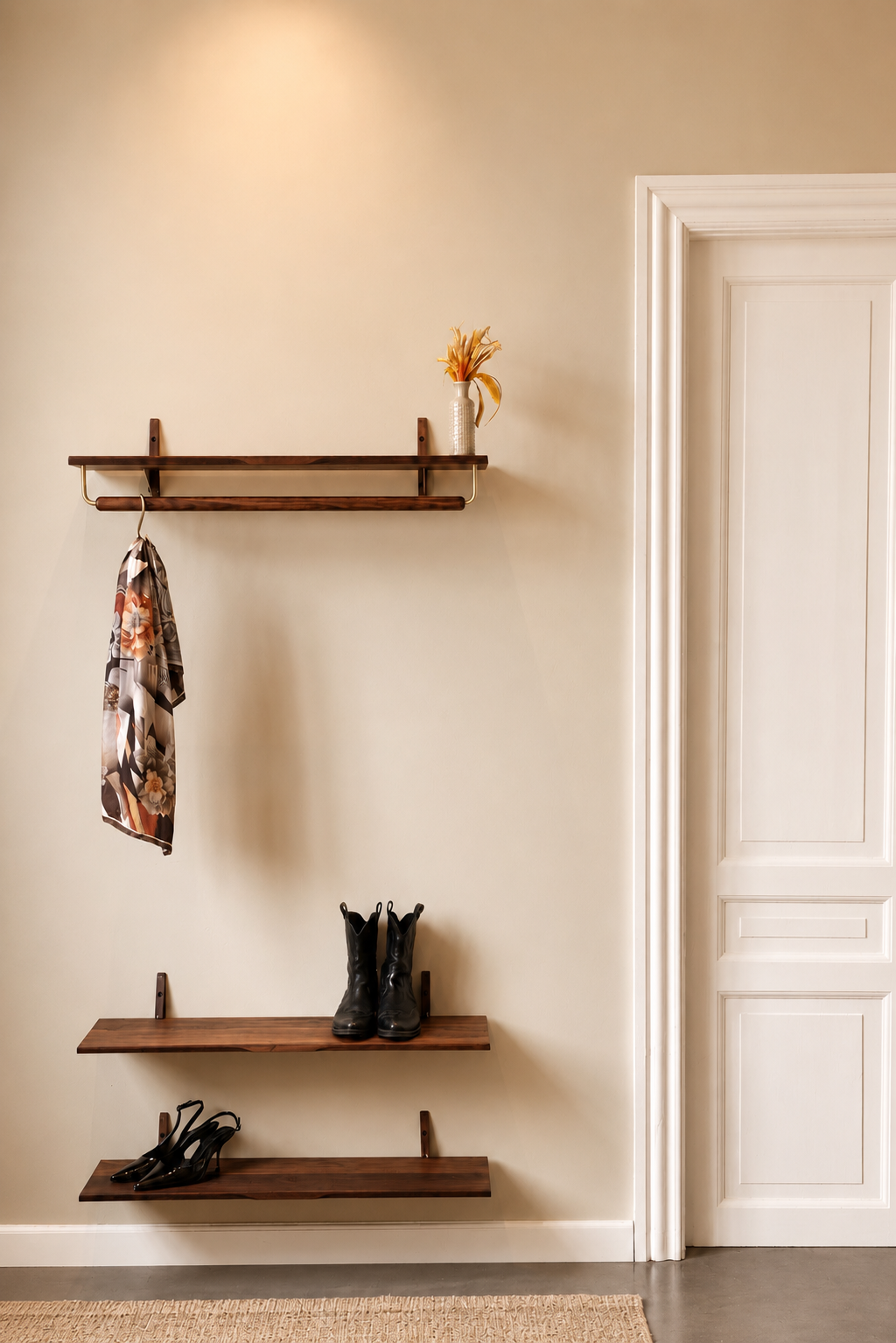
Entryway floor space is often tight. Dedicated wall-mounted storage like the Shoe Shelf JN10, designed with a depth of 28 cm, organizes footwear off the ground to keep walkways and floor lines clear.
Care and Maintenance
Maintaining the finish and surface quality of solid hardwood requires only simple, routine steps:
- Routine dusting: Wipe the surface regularly with a soft, dry cloth. For light marks, use a well-wrung, damp cloth and immediately dry the wood with a clean cloth to prevent standing moisture.
- Surface protection: Avoid placing wet or hot items directly onto raw wood, and consider using felt pads under coarse ceramic pieces.
- Oil treatment: If the wood begins to look dry or matte over time, refresh the surface with a suitable furniture oil. See our guide to care and maintenance for specific instructions.
Careful measurement and proper wall fastening ensure your wood shelves remain secure, functional, and dependable for years to come.