In the modern home, it is often the smallest details that create the most profound sense of cohesion. We surround ourselves with furniture that defines the architecture of a room, yet it is the tactile, everyday objects we touch that truly bring soul into a living space. A walnut serving tray is one of those rare objects: simultaneously a practical tool and a miniature piece of furniture that can transform a mundane routine into a quiet ceremony.
At Noyer, we do not view a tray as merely a flat surface with edges. For us, it is an exercise in balance, material exploration, and ergonomics. When you choose a walnut serving tray, you are choosing a material that lives, breathes, and develops a graceful patina over time. Walnut wood, which sits at the very heart of our workshop in Valby, Copenhagen, offers a depth and warmth that neither plastic nor metal can ever emulate. It is within this intersection of raw natural material and precise artisanal craftsmanship that true finesse is born.
Tray JN23: A Study in Materiality and Balance
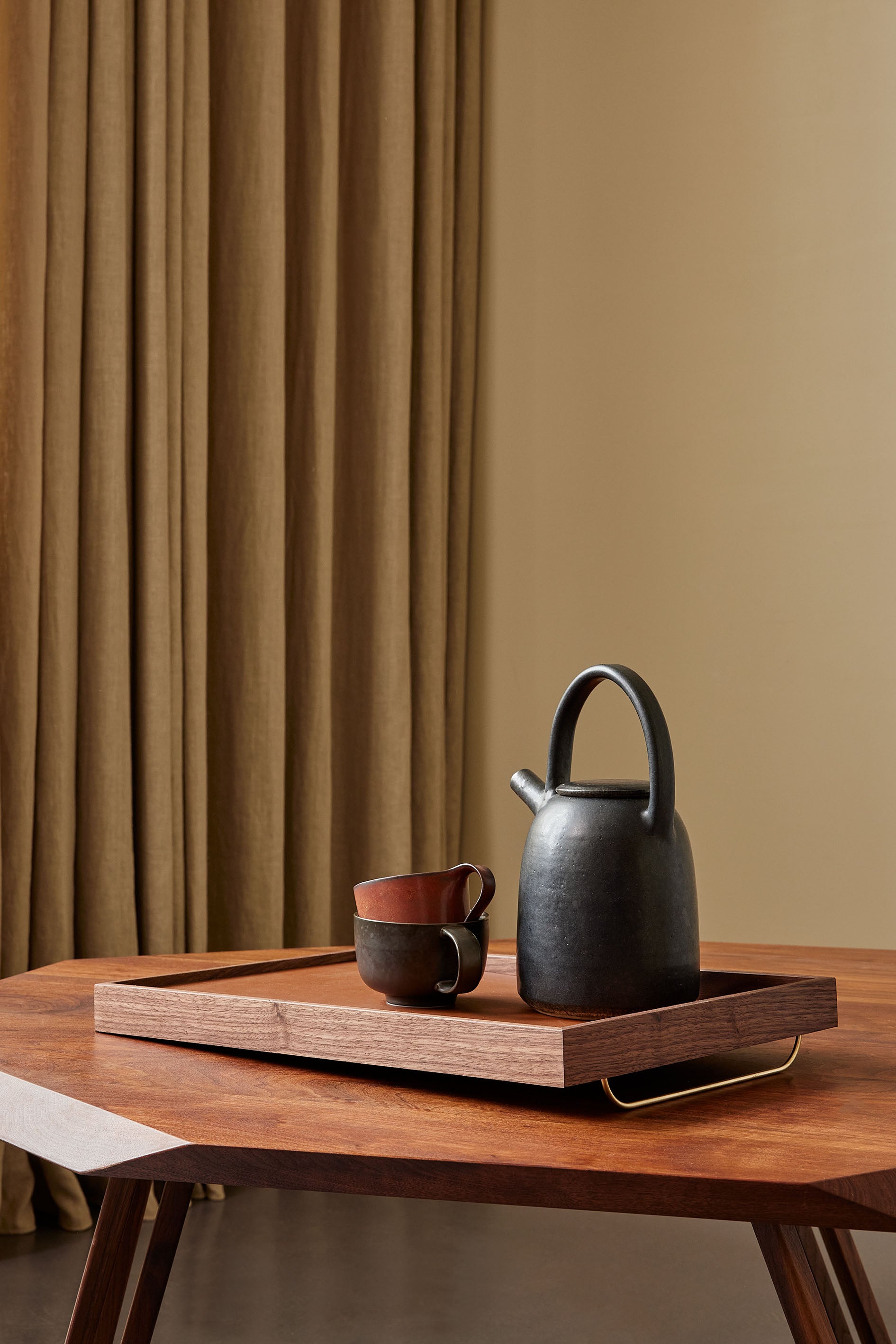
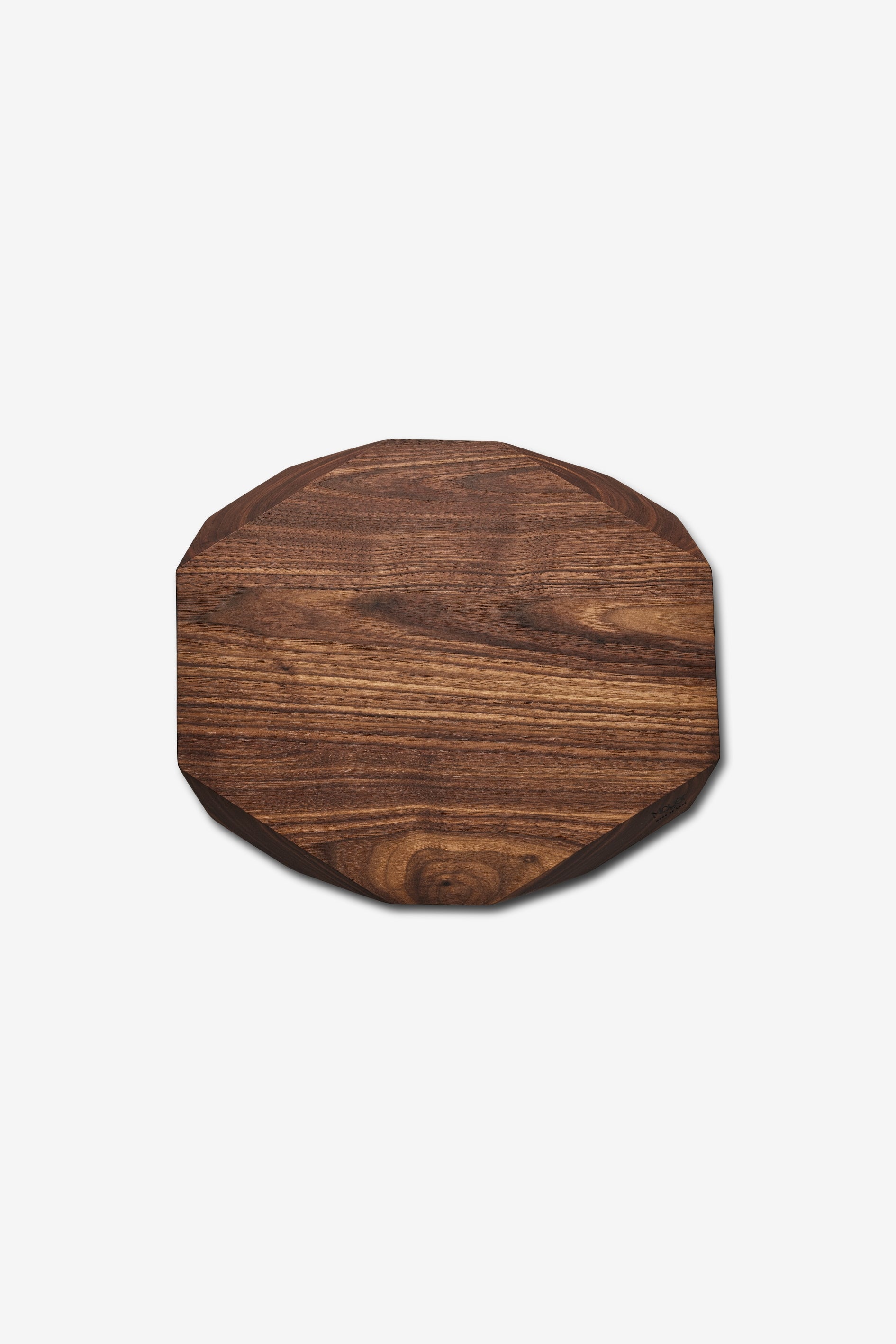
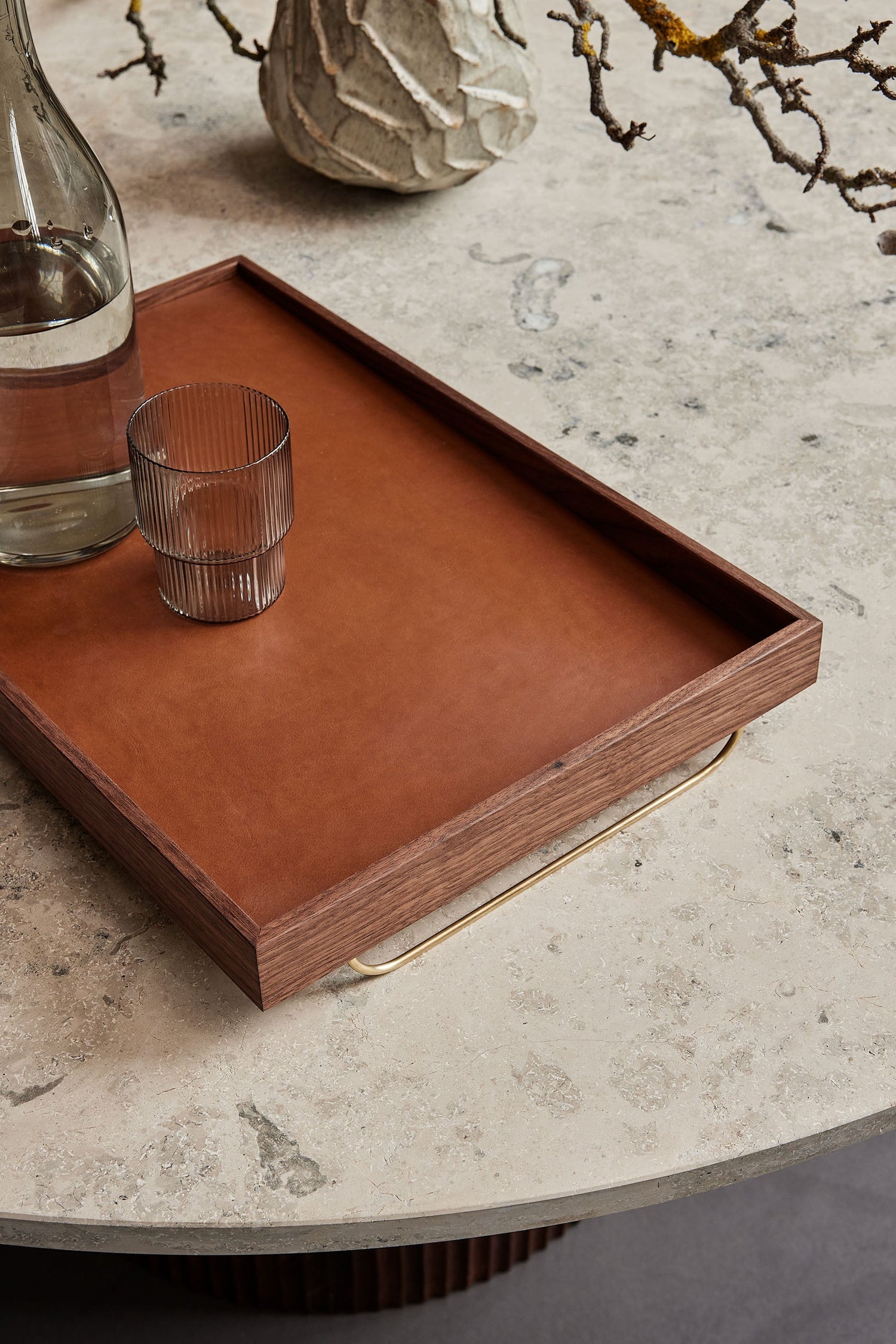
Our interpretation of the classic serving vessel, the Tray JN23, is created with the same uncompromising approach as our larger dining tables. It is not merely designed to carry, but to be carried. The frame, crafted from solid walnut, is cut with the characteristic angles that define the Noyer design language: sharp to the eye, yet remarkably soft to the touch. It is a design that invites the fingertips to explore the grain of the wood and the precision of the joinery.
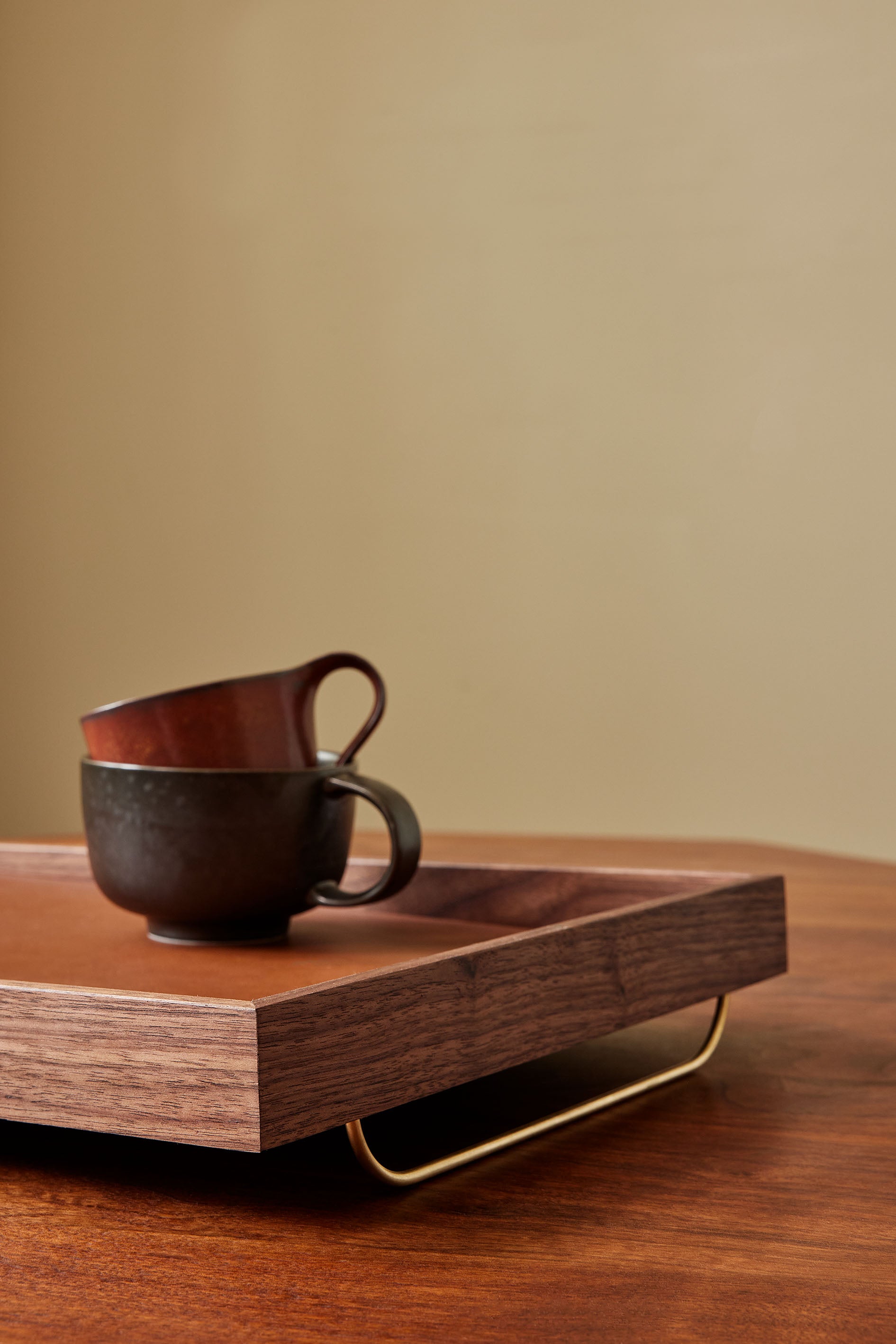
What makes this walnut serving tray unique is its sophisticated combination of materials. The base is lined with soft, vegetable-tanned leather, creating a naturally non-slip surface. This ensures that glassware remains stable, even as you move through the house. The contrast between the dark, structural wood, the supple leather, and the elegant brass handle creates a visual hierarchy that makes the tray a conversation piece in its own right. The brass handle is not just a decorative flourish; it serves as an ergonomic grip, allowing the user to carry the tray securely with one hand while keeping the other free to open doors or carry a newspaper.
The Optical Illusion and Functional Intent
At first glance, the JN23 may appear almost asymmetrical, as if the surface is tilting. This is a deliberate choice that reflects our playful approach to design. However, this sloping profile is not merely a visual game; it is a functional masterstroke. The angle allows you to easily slide your fingers under the tray even when it sits on a perfectly flat surface, eliminating that clumsy moment of trying to pry a heavy tray off a table. It is this type of considered detail that distinguishes a master-joined walnut serving tray from mass-produced alternatives.
From Service to Vignette: The Tray as an Interior Element
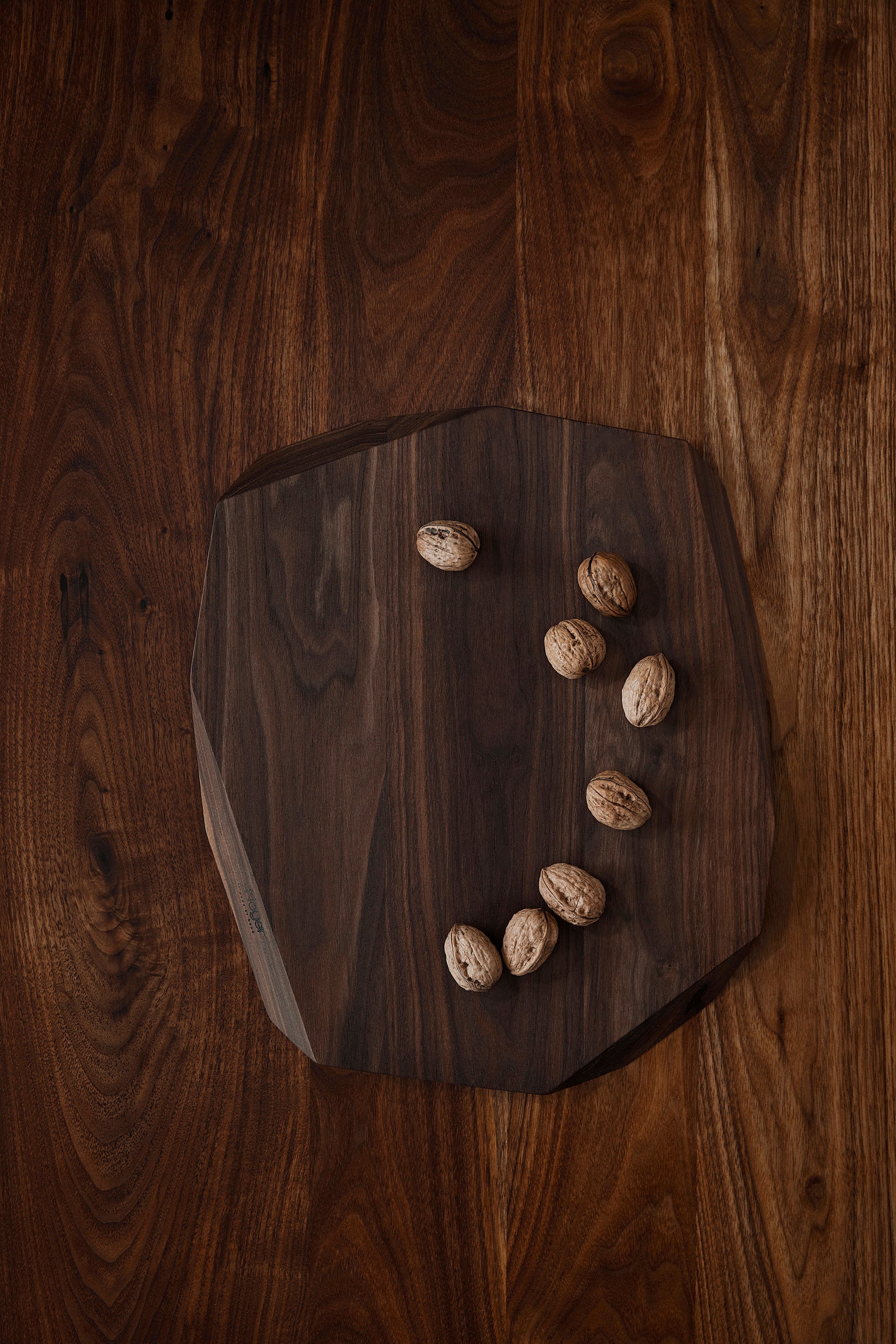
While the name suggests a specific utility, an exclusive wooden tray serves a purpose far beyond transporting coffee and tea. In contemporary interior design, the tray plays a central role as a base for small curated displays, often referred to as vignettes. By gathering your favorite objects onto a defined surface, you create a sense of calm and structure within a room.
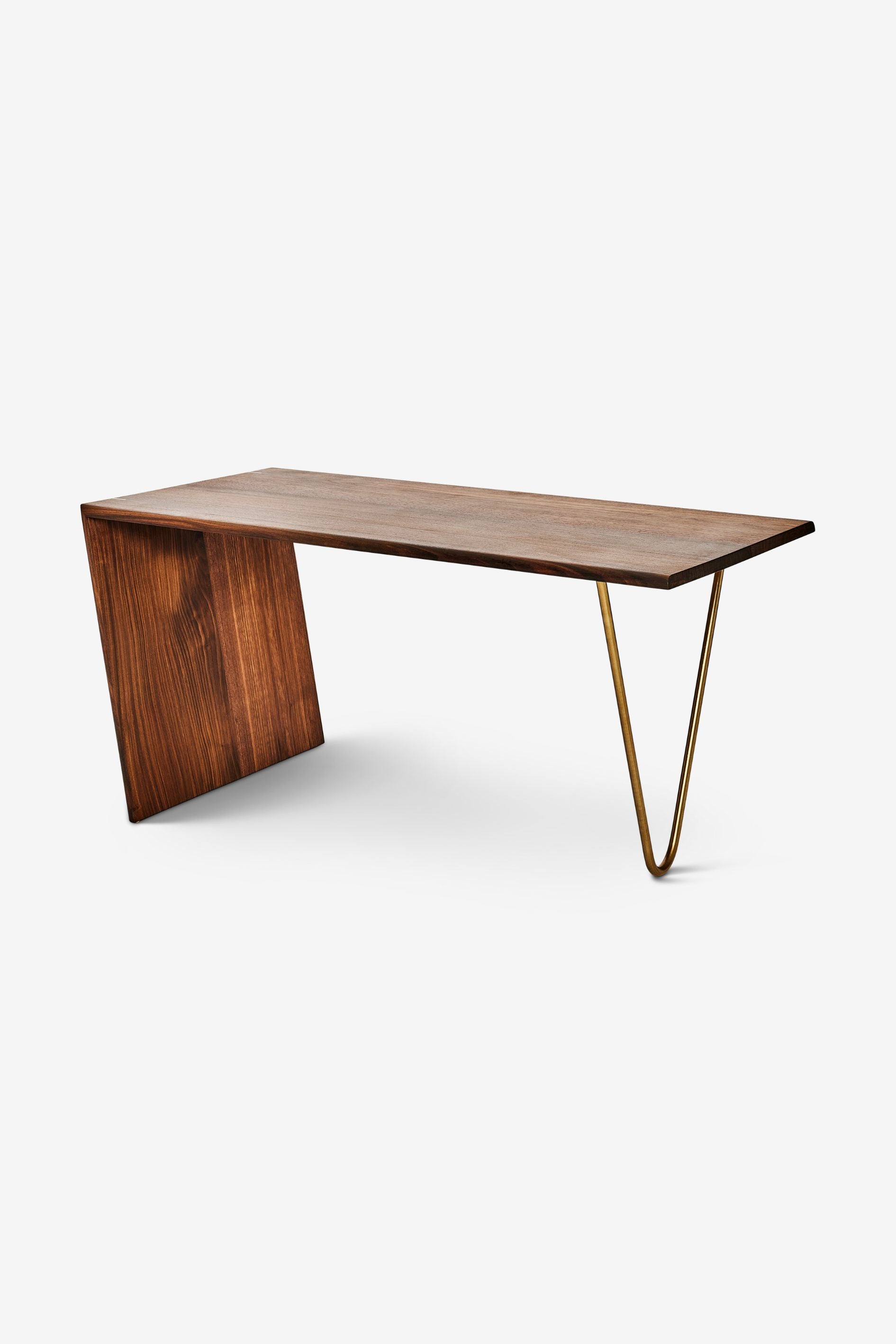
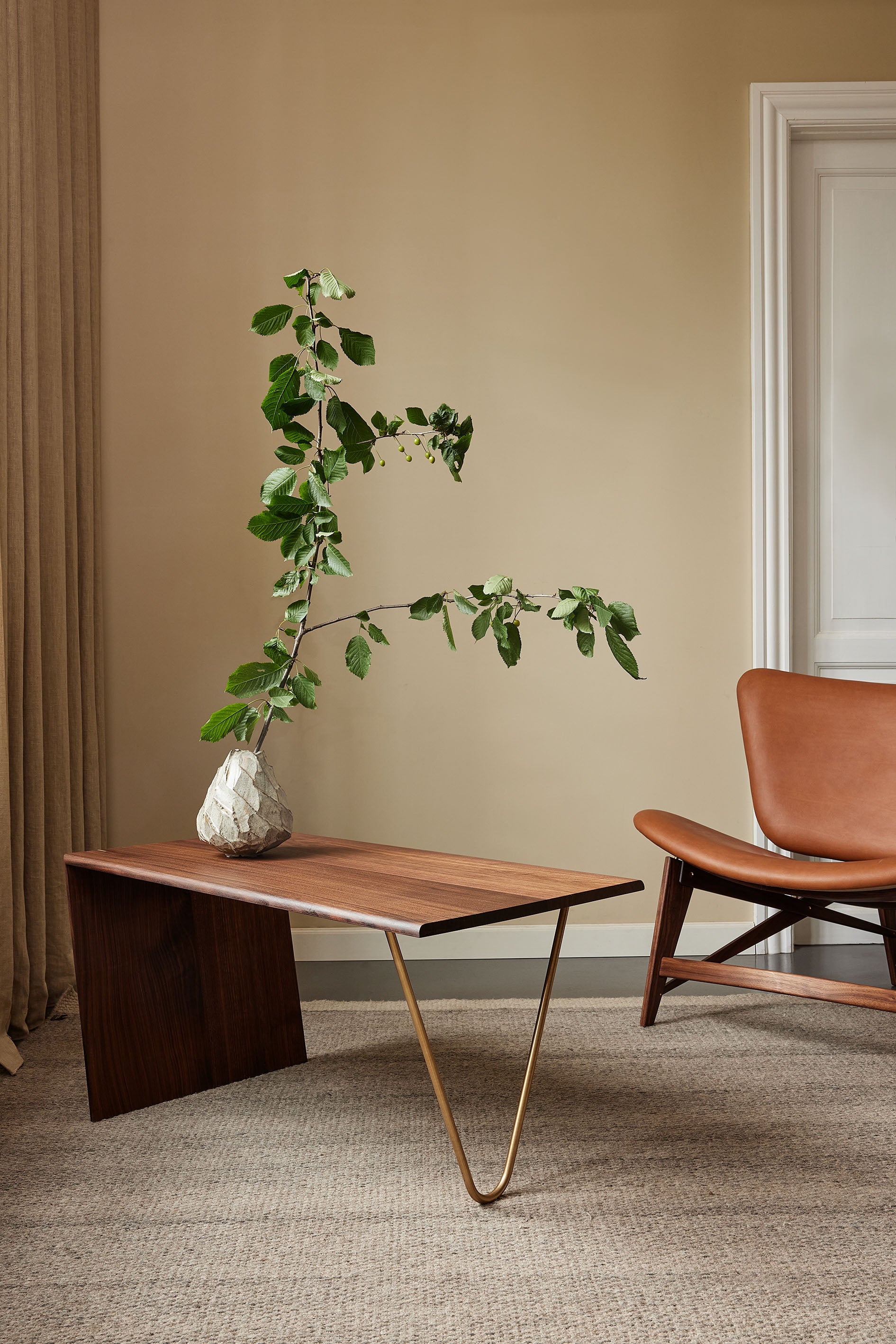
Placing your walnut serving tray on a Coffee table JN21 or a sideboard creates a visual anchor. Here, it can hold anything from a sculptural ceramic vase and a scented candle to your daily essentials like remote controls or reading glasses. The dark glow of the walnut acts as a perfect frame, highlighting the objects placed upon it and lending them a sense of importance. It is a simple yet effective way to bring order and aesthetic intentionality to the living room without the space feeling stiff or over-arranged.
Serving with Character
When the tray is eventually called upon for its original purpose, it adds a layer of discrete luxury to the moment. Whether it is breakfast in bed on a slow Sunday morning or serving cocktails to guests on a Friday evening, the tray frames the scene. For those occasions requiring a more robust surface for arranging tapas or charcuterie, one might complement the tray with a walnut Chopping Board. Our boards are created with the same reverence for the wood's natural structure and work excellently as serving planks, sitting side-by-side with the tray to create a cohesive visual experience at the table.
How to Maintain a Walnut Serving Tray
A walnut serving tray is an investment designed to last for generations. However, as wood is a natural, living material, it requires a small amount of care to maintain its luster and resilience. At Noyer, we treat all our products with cold-pressed linseed oil, which penetrates deep into the fibers to protect against moisture and dirt without sealing the wood behind a cold, plastic-like lacquer.
To maintain your tray, we recommend the following steps:
- Cleaning: Wipe the tray with a damp cloth after use. Avoid harsh detergents, as they can strip the natural oils and dry out the wood.
- Oiling: When the wood begins to look dull or feels dry to the touch, it is time for a refresh. Apply a high-quality food-safe oil, such as cold-pressed linseed oil, with a lint-free cloth. Let it sit for 15-20 minutes before wiping off any excess.
- Leather Care: The leather base in the JN23 will develop a beautiful patina over time. If it becomes marked, wipe it gently with a slightly damp cloth. Avoid soaking the leather, as this can alter its shape and color.
You can find a more comprehensive guide on our Care and Maintenance page, where we detail how to ensure your walnut pieces age with grace.
Which Wood is Best for a Serving Tray?
The choice of wood species is not merely a question of color; it is a matter of weight, durability, and tactile sensation. While oak and ash are popular choices in Scandinavian design for their light, airy expression, walnut occupies a unique position. It is a dark, noble hardwood that exudes a natural exclusivity. Walnut is dimensionally stable and possesses a closed-grain structure, making it ideal for objects that are handled frequently.
A Danish design tray in walnut brings a certain weight and warmth to an interior, providing a sophisticated contrast to the often white walls and light floors found in Nordic homes. It is a material that speaks to the senses: the scent of the oil, the sight of the complex grain patterns, and the feel of the silk-smooth surface. At Noyer, we select every piece of timber with care to ensure that each tray tells its own story through the natural variations of the wood.
A Gift for a Lifetime
A handcrafted walnut serving tray is an ideal gift for life's major milestones, such as weddings, anniversaries, or as a significant housewarming gesture. It is an object that transcends fleeting trends, intended for daily use for decades to come. In a world often characterized by disposable culture, a piece from Noyer represents the opposite: long-lasting craftsmanship that only grows more beautiful with the passing of time.
If you wish to experience our materials and design philosophy firsthand, you are always welcome to visit our Showroom in Valby. Here, you can feel the weight of a JN23 tray, observe the various nuances of the walnut, and discuss how our furniture and accessories are brought to life. We believe that good design must be felt before it can be fully understood.
Whether you use your walnut serving tray to serve coffee on the terrace or as an elegant base for your most cherished belongings, it stands as proof that functionality and beauty need not be opposites. It is the finesse of the everyday, carved from solid walnut.