A clothes rail quickly carries substantial weight once heavy coats, knitwear, and everyday jackets accumulate. When brackets are undersized or spans are unsupported, rails can bow at the centre or pull away from the wall. Choosing the right clothes rail bracket, rail profile, and fixing method ensures your hanging storage remains secure and practical over time.
Whether you are fitting out a narrow entryway, configuring an open wardrobe alcove, or building custom shelving, stable hanging storage depends on matching your hardware to the available wall structure and the weight of your wardrobe.
Mounting types for hanging rails
The layout of your room and the surrounding joinery determine how a rail should be supported:
- End sockets and side flanges: Installed between two facing cabinet panels or opposing walls in an alcove. These enclose the ends of the rail, keeping the mounting hardware hidden within the recess.
- Wall-mounted projection brackets: Secured directly into the rear wall to hold the rail outward. To allow hangers to hang straight without pressing garments against the plaster, maintain a clearance of 25 to 30 cm from the wall to the centre of the rail.
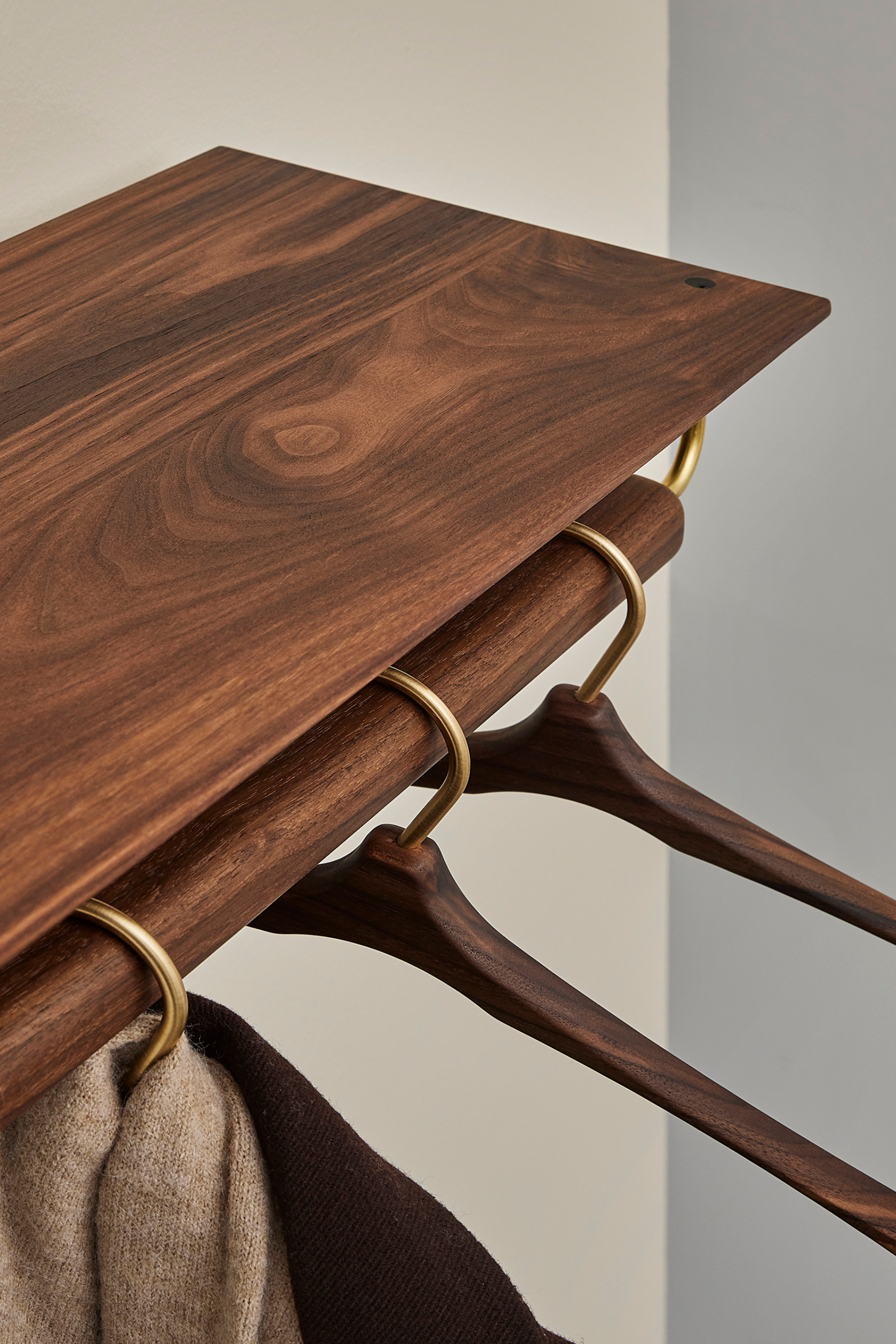
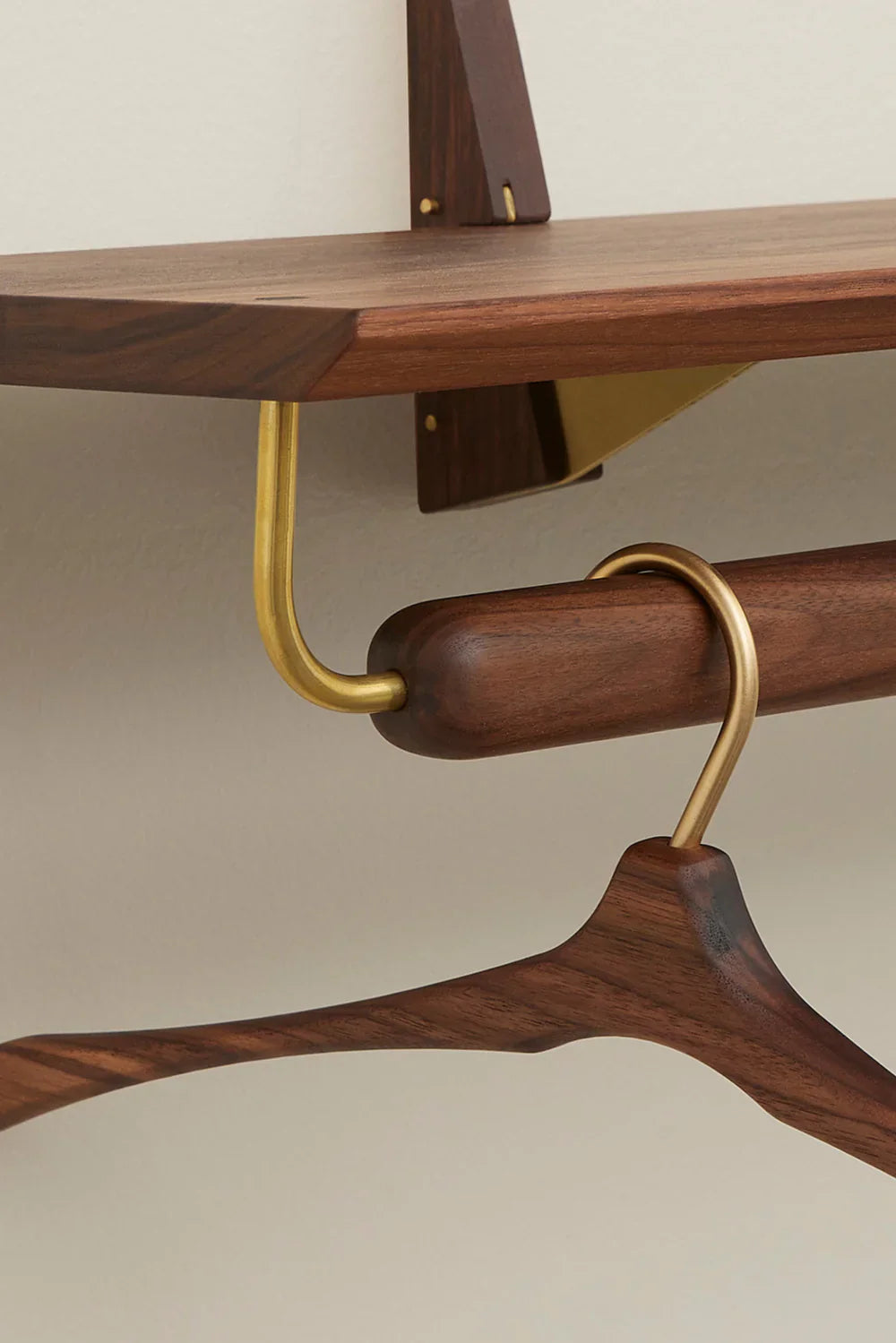
- Under-shelf brackets: Suspended from the underside of an overhead shelf. This configuration keeps wall space below the shelf open and creates a lighter profile. Leaving roughly 50 to 65 mm of vertical clearance between the bottom of the shelf and the rail provides enough room to hook and remove hangers comfortably.
For rail spans exceeding 120 cm, adding a centre support bracket prevents noticeable sagging under the concentrated weight of heavy wool coats and tailoring.
Rail profiles and weight distribution
Hanging rails and matching brackets generally use one of two cross-sectional profiles:
- Round tubes: Standard diameters such as 25 mm allow hanger hooks to slide smoothly across the rail. Brackets must match the outer diameter precisely to eliminate rattling or wobble under shifting weight.
- Oval rails: Common dimensions such as 15x30 mm orient the wider edge vertically. This profile offers greater resistance to downward deflection along longer spans and prevents the rail from rotating when loaded unevenly.
Solid walnut and brass in open wardrobes
While closed wardrobes often conceal utility hardware behind doors, an open hallway or dressing area leaves brackets and joinery in plain sight. Using tactile, durable materials turns structural fixings into a deliberate part of the interior.
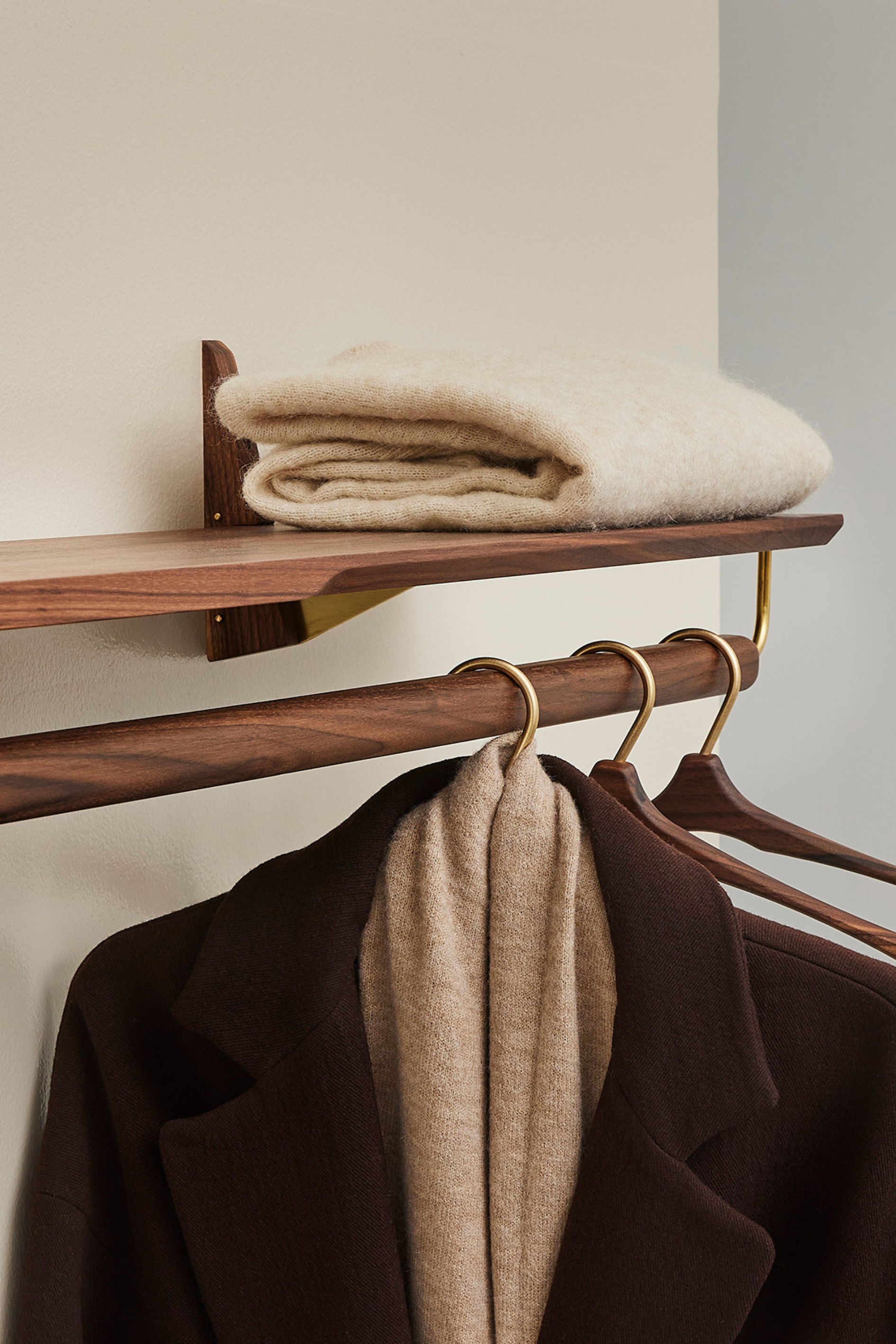
In our Valby workshop, we combine solid American walnut with brass details. The Hallway Shelf with Coat Rack JN14 integrates the hanging rail directly into walnut brackets and an overhead shelf, providing structured storage for coats, hats, and bags within a single piece. It is crafted in widths of 60, 70, 90, and 120 cm with a depth of 28 cm.
For narrower corridors, compact entryways, or kitchens, the Coat rack with shelf JN24 offers a streamlined footprint. Installed with two brass wall screws, its suspended rail accommodates standard hangers as well as S-hooks for lighter daily items.
Wall anchoring and stability
The overall load capacity of any hanging rail depends fundamentally on the wall behind it. Solid masonry and concrete provide the firmest anchor points for standard wall plugs and screws. For stud walls faced with plasterboard, brackets should be anchored directly into timber studs or secured with heavy-duty hollow-wall fixings rated for hanging loads.
You can review detailed mounting recommendations across our assembly guides, or explore complementary hallway pieces in our storage collection.