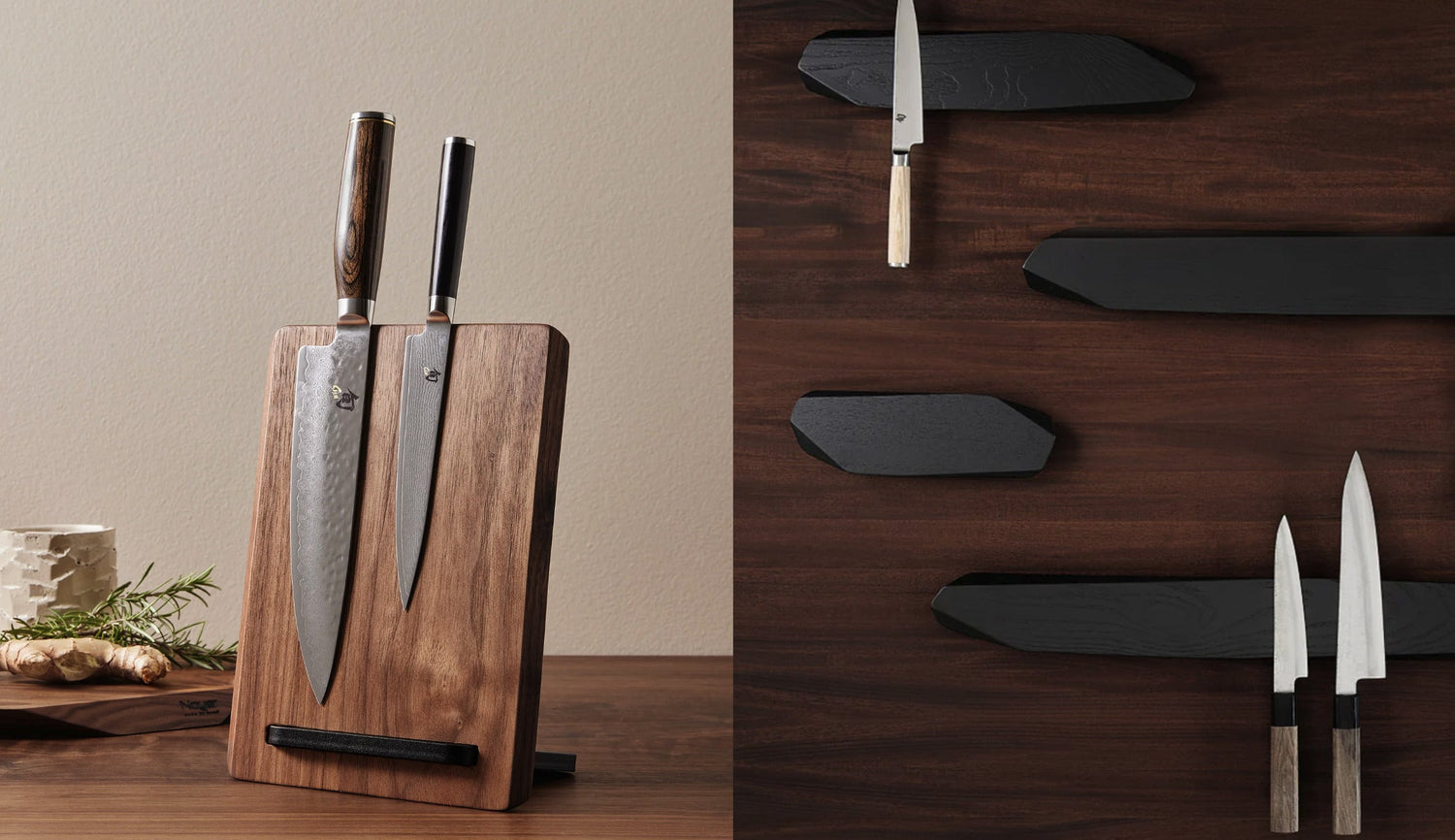
In the heart of every home lies the kitchen, a space where raw ingredients and refined craftsmanship converge in a daily rhythm. For the passionate cook, a knife is more than a tool; it is an extension of the hand that requires respect and meticulous care. Yet, once the day’s preparations are complete, a fundamental question remains: what is the best way to store kitchen knives? The choice between a knife block vs. magnetic knife strip is not merely a matter of organization: it is about preserving the soul of your tools and maintaining the aesthetic balance of your culinary sanctuary.
The Art of Edge Retention
Why should knives never be kept loose in a drawer? It is a question we often hear at our workshop in Valby, and the answer is essential for anyone who values their equipment. When knives are stored in a drawer, they collide with one another every time the drawer is opened or closed. These repeated, micro-impacts dull the edge and can, over time, create small chips in the steel. Proper storage is, first and foremost, about isolating each blade to ensure its longevity.
At Noyer, we view the kitchen as a functional gallery. The tools we use most frequently deserve a place where they are both protected and easily accessible. Whether you lean toward the minimalist expression of a wall-mounted solution or the classic presence of a freestanding block, the choice of material is paramount. Wood is naturally forgiving and soft against metal, making it the ideal medium for protecting sharp edges. By choosing timber over plastic or bare metal, you are choosing a material that respects the precision of the blade.
The Magnetic Knife Strip: A Floating Gallery
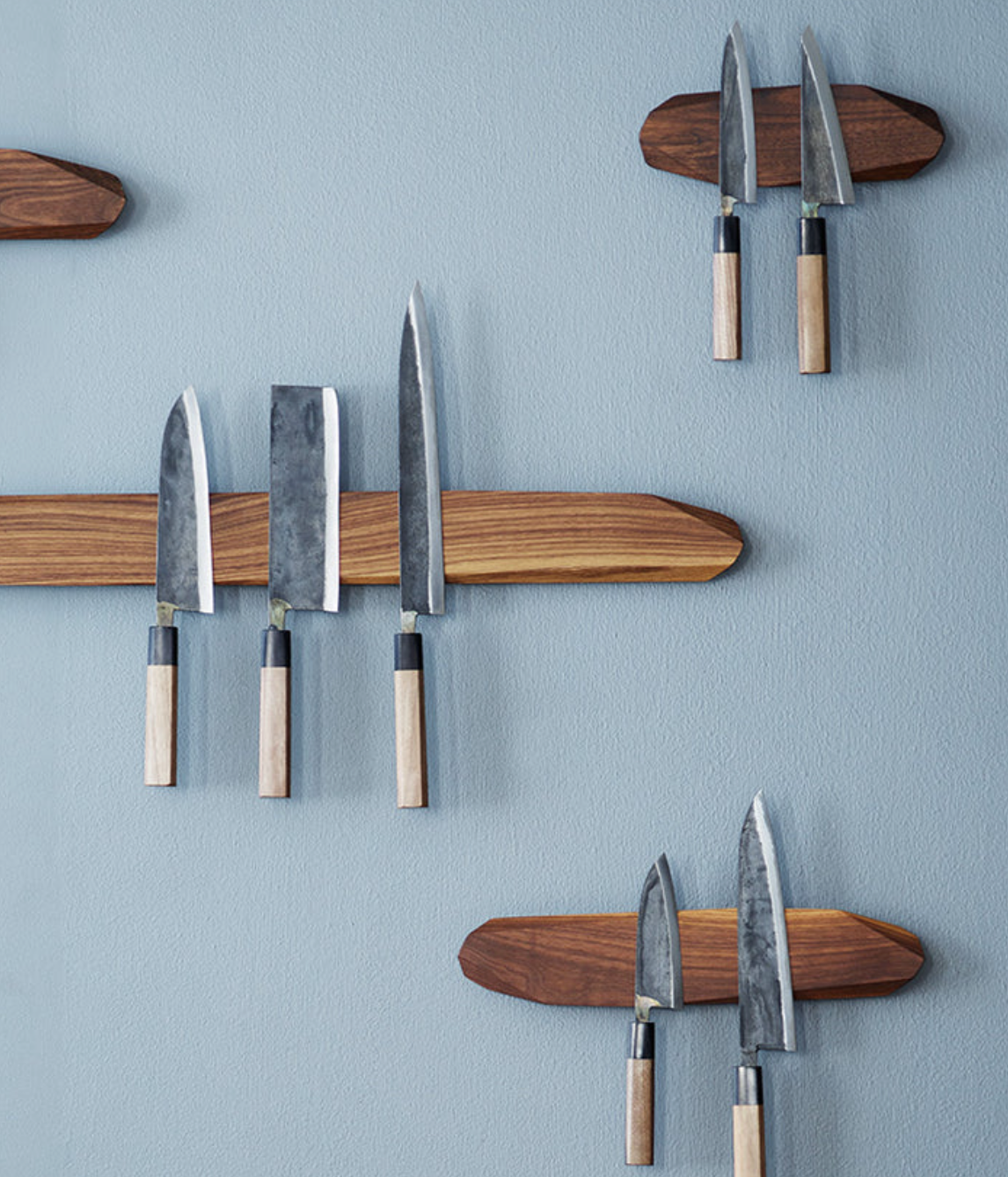
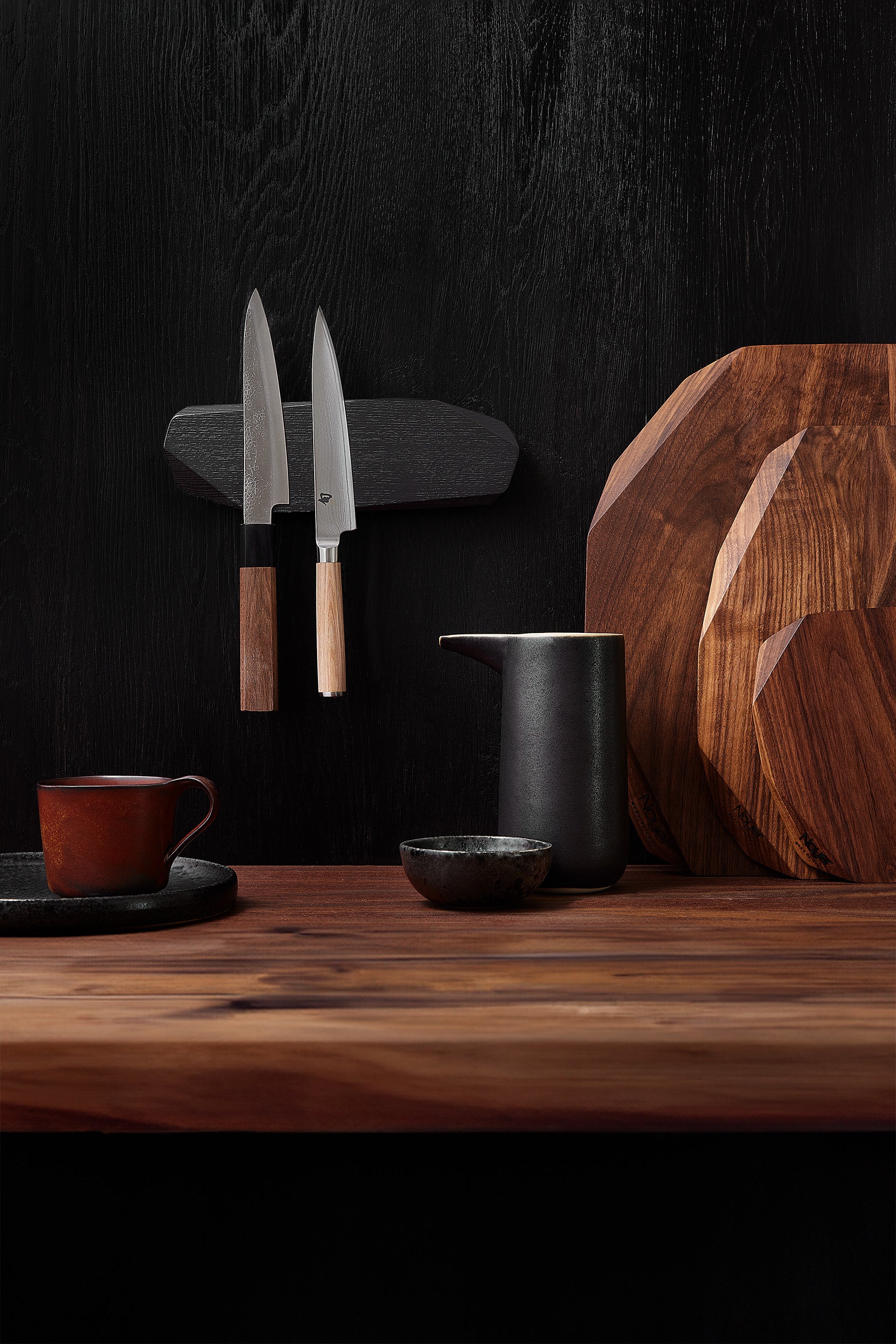
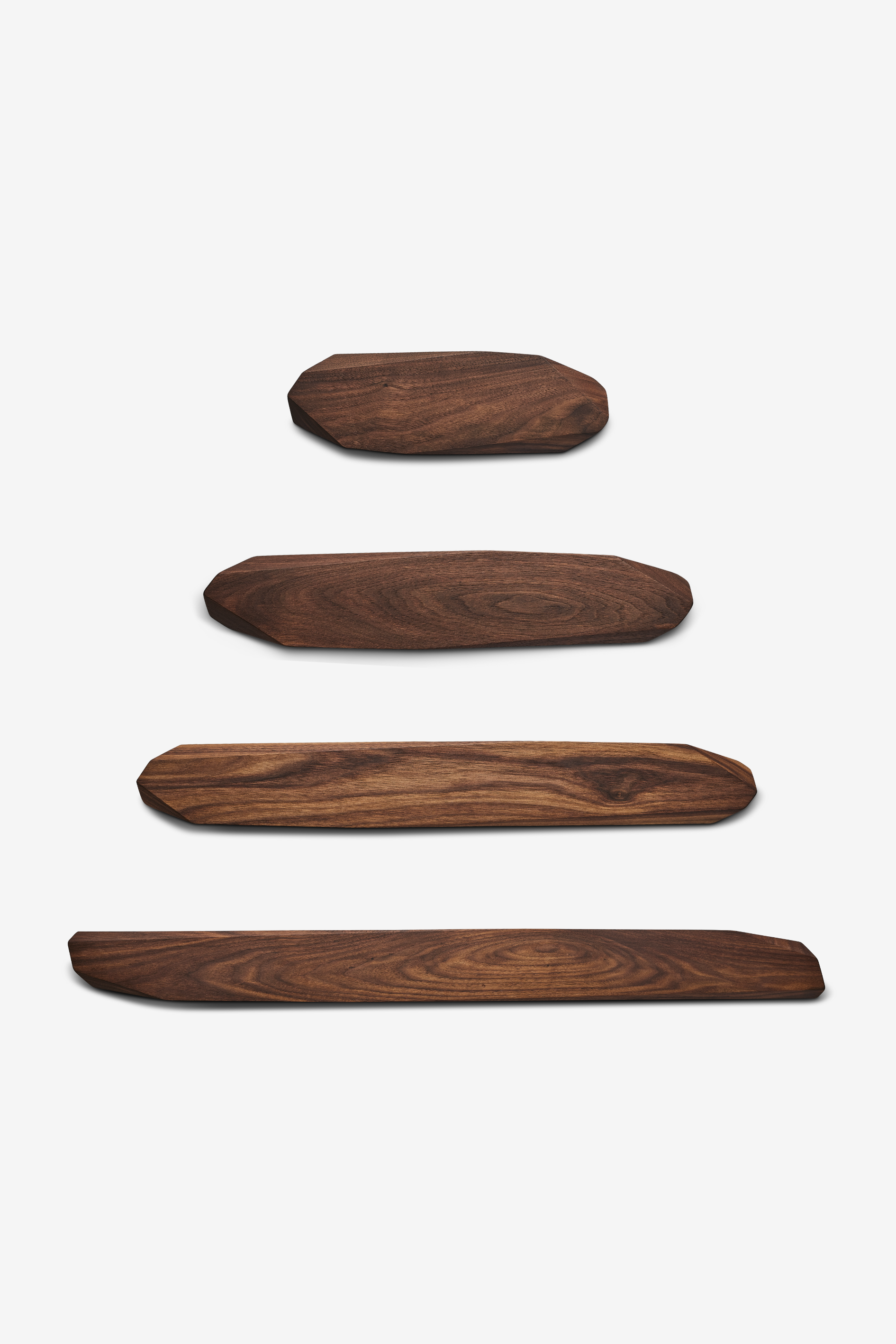
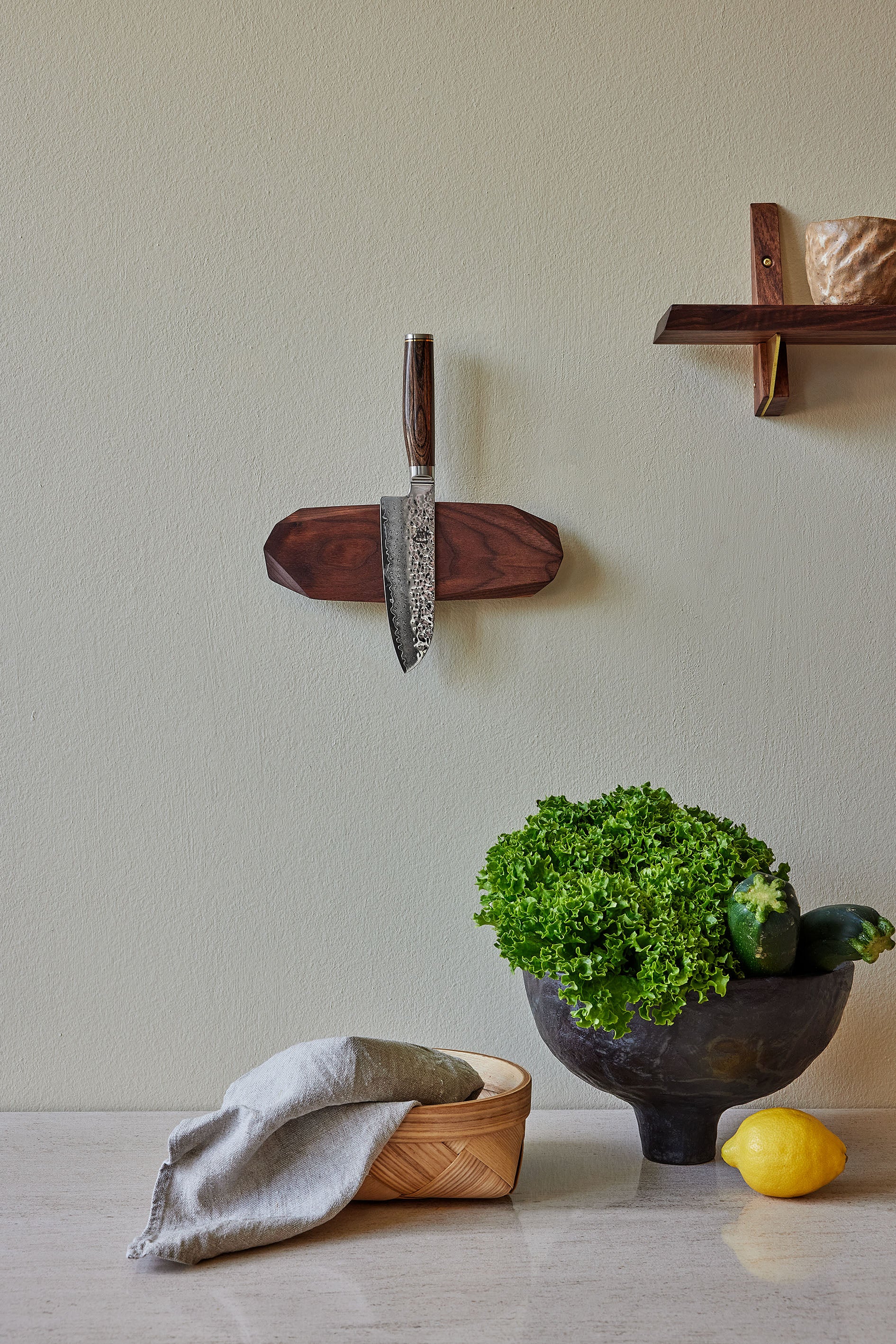
For many, a magnetic knife rack walnut represents the ultimate union of form and function. By lifting the knives from the countertop, you reclaim valuable workspace, a significant advantage in smaller kitchens or for the minimalist chef. A wooden knife rail acts as a visual anchor on the wall, where the varied shapes and handles of your collection can be admired as part of the interior design.
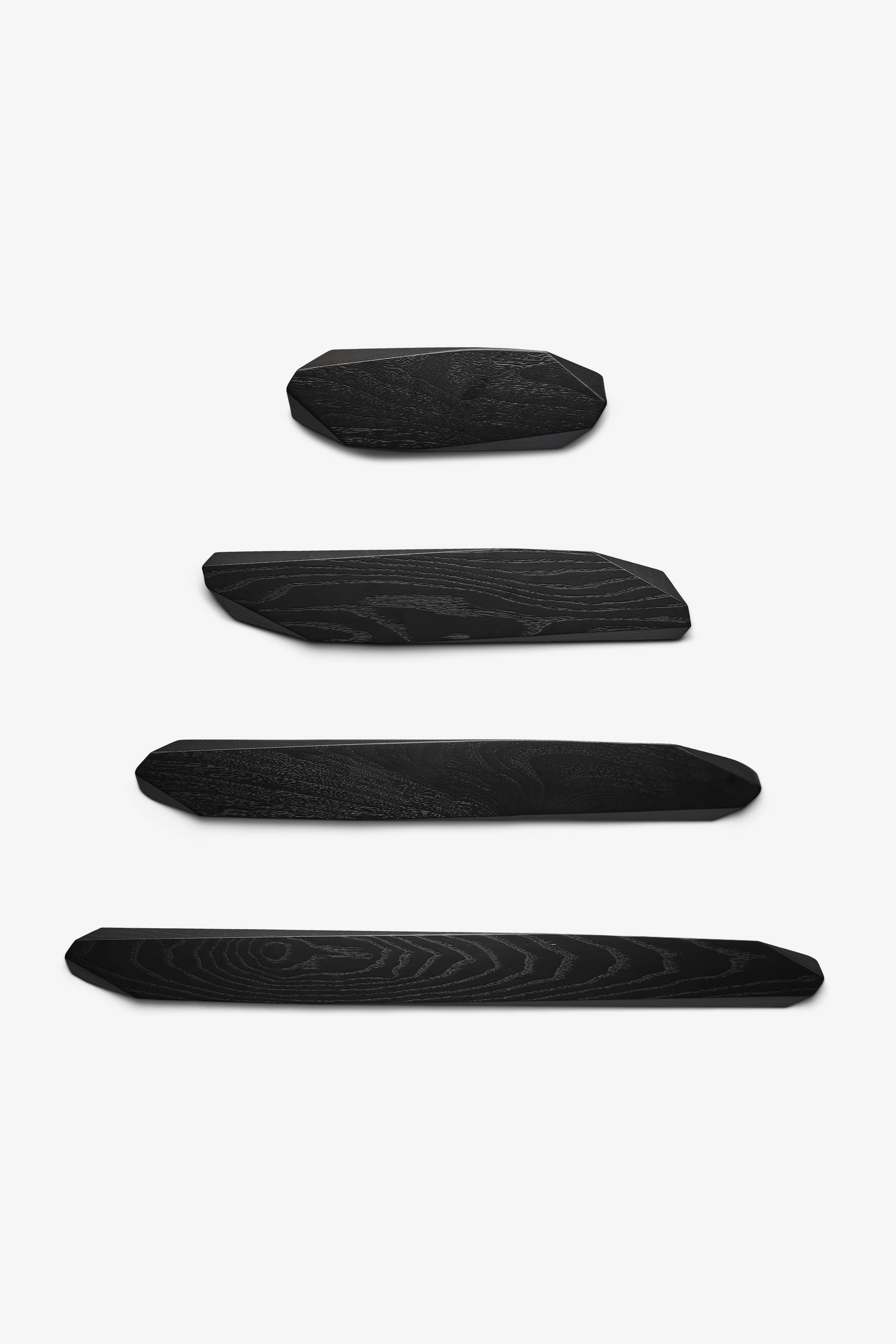
Our approach to the design of a magnetic strip is rooted in our love for sharp angles and tactile quality. Each piece is handcrafted with our signature 45-degree cuts, allowing the natural grain of the walnut to emerge with dramatic depth. It is not merely a utility; it is a small piece of furniture that appears to float three centimeters from the wall on a discreet steel rail. For those seeking a more monochromatic or contemporary look, the magnetic knife rack black preserves the organic texture of the wood while adding a modern edge to the kitchen wall.
Do Magnetic Holders Damage Knives?
A common concern among enthusiasts is whether a magnetic strip might harm their blades. The answer lies in the surface material. A raw metal rail can scratch the steel if the knife is not handled with extreme care. By encapsulating powerful magnets behind a layer of solid walnut, we ensure that only the soft wood comes into contact with your knives. This creates a silent, gentle experience every time a knife is reached for or returned to its place. It is a solution that prioritizes the health of the steel as much as the beauty of the room.
The Magnetic Knife Block: Sculptural Stability
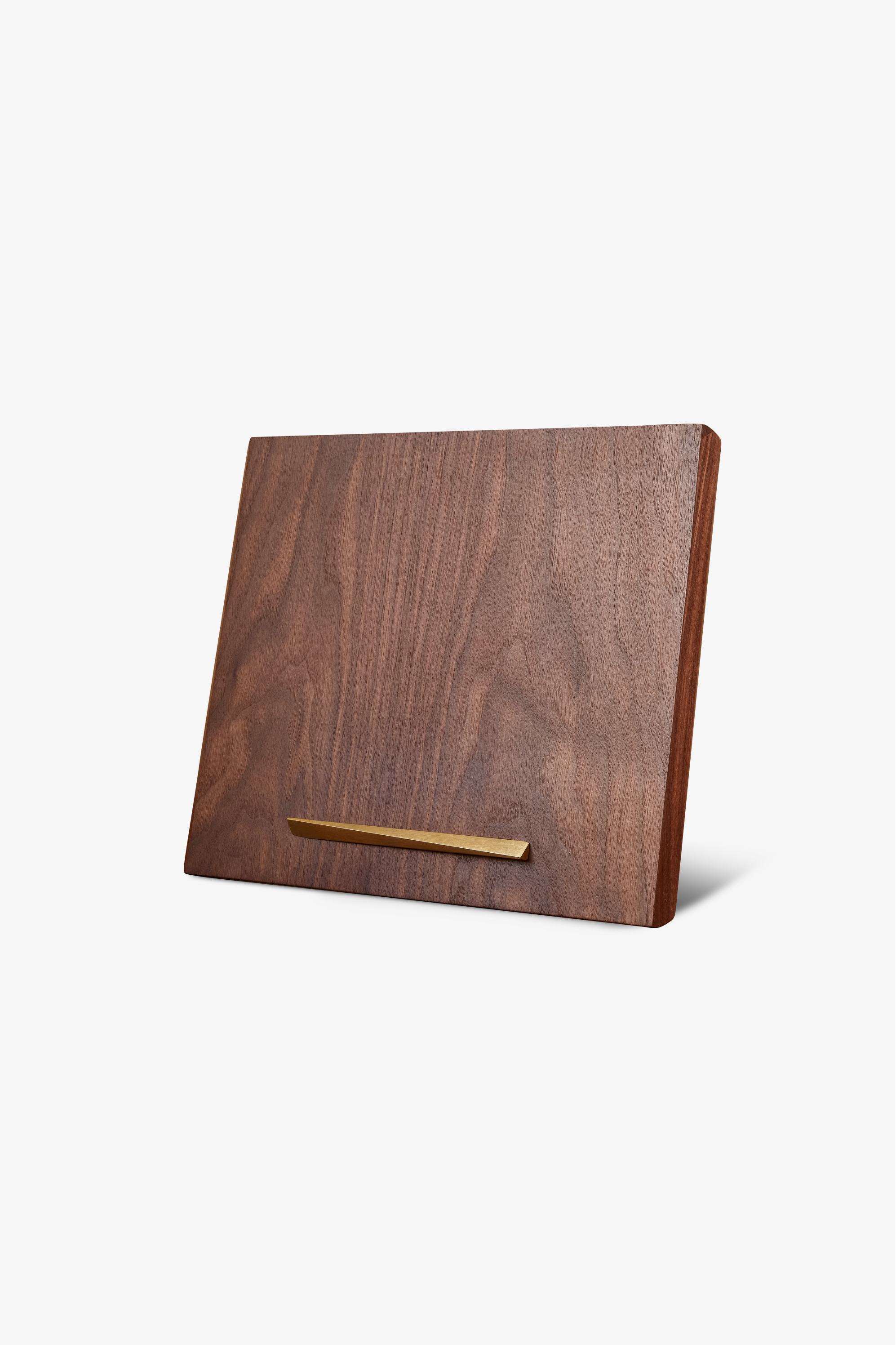
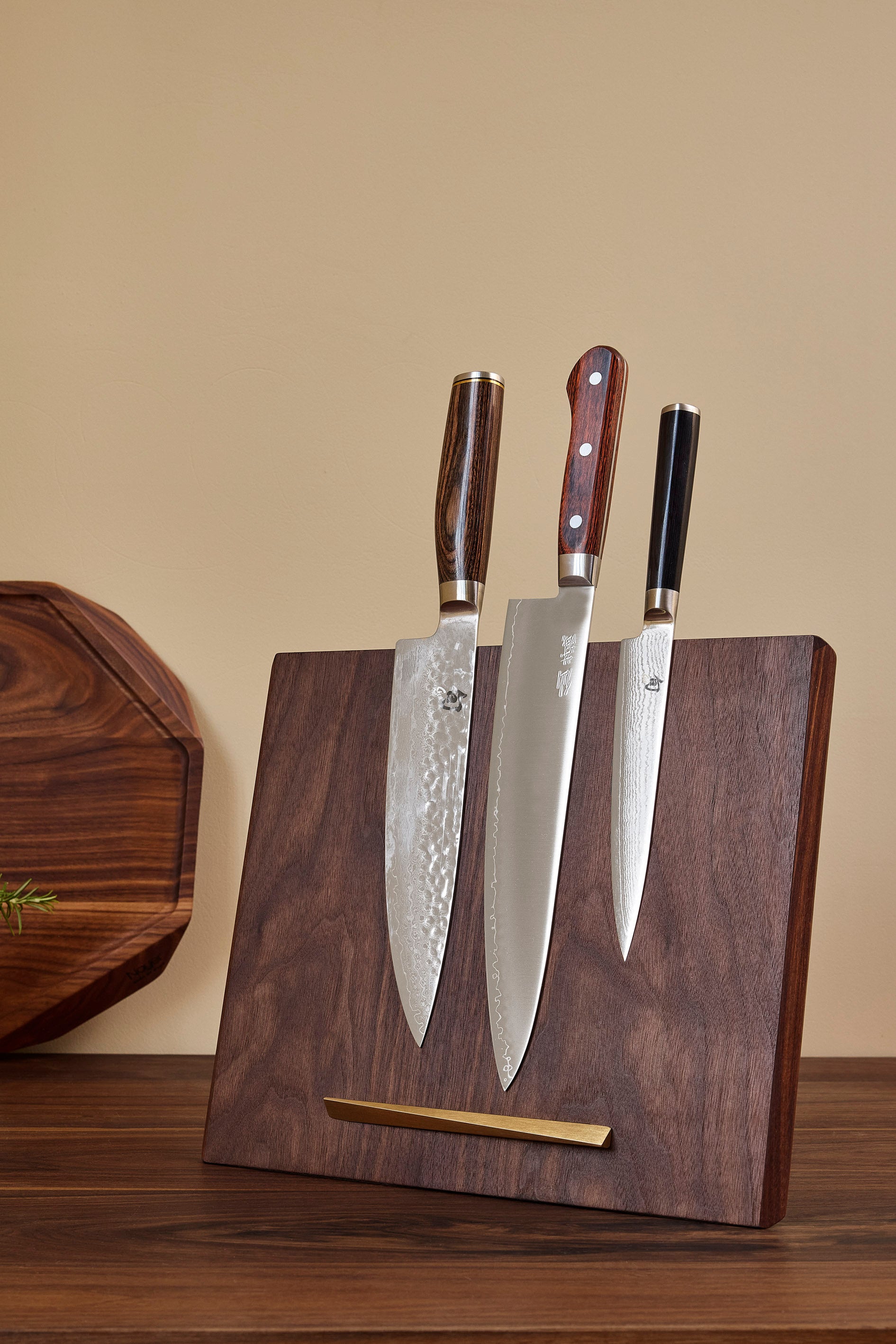
If you prefer to have your tools within reach on a kitchen island, or if you reside in a space where drilling into walls is not an option, a knife block is the ideal solution. Traditional slotted blocks can often feel heavy, closed, and difficult to clean. At Noyer, we have reimagined this concept as a magnetic block that combines the best of both worlds: the visibility of a strip with the presence of a freestanding object.
Our interpretation consists of a solid walnut slab resting on a heavy brass base. This construction provides sublime stability and a sense of luxury. The advantage of this type of storage is its inherent flexibility; you can move your workstation as needed, and the knives remain presented with their blades visible. This ensures you never have to guess which handle belongs to which tool, a common frustration with traditional designs.
Accommodating the Collection
When selecting your storage, consider the diversity of your collection. A large bread knife or a heavy chef’s knife requires significant surface area and strong magnetic contact. Our blocks and racks are engineered to handle even the heaviest blades, provided they are placed correctly. It is about balance and giving each instrument the space it deserves to breathe and be seen.
Vertical vs. Horizontal: Defining Your Workflow
When deciding between a knife block vs. magnetic knife strip, consider your personal workflow. A magnetic strip placed directly above the primary prep area allows for a fluid motion from wall to cutting board. It is a solution for those who value a clean, uninterrupted workspace. To create a cohesive aesthetic, many of our clients pair their wall-mounted racks with our chopping boards in the same warm walnut tones.
Conversely, the knife block offers a more stationary and present experience. It becomes a focal point on the counter, an object that invites touch and admiration. This is often the choice for those who view cooking as a ritual act, where every element in the kitchen has its fixed, unshakeable place. Whether your kitchen centers around a large dining table or a compact prep station, the storage you choose should enhance the way you move through the space.
Preserving the Craft
Regardless of the solution you choose, maintenance is the key to a beautiful kitchen over time. The walnut wood in our products is a living material. With time, it will develop a deep patina that tells the story of the meals prepared in its presence. We recommend visiting our guide on Care and Maintenance to ensure your storage solutions remain as striking as the day they left our workshop.
Choosing the right storage is ultimately a personal decision about how you wish to interact with your kitchen. It is about finding the point where the practical need for organization meets the aesthetic joy of fine craftsmanship. At Noyer, we strive to create the framework for a good life in the kitchen, where every detail, from the smallest magnet to the largest table, contributes to a sense of wholeness and quality.
When a knife finds its place on the magnetic surface or rests against the wooden block, it is not just the end of a task. It is the preparation for the next meal, the next gathering, and the next sensory experience in the most important room of the home.