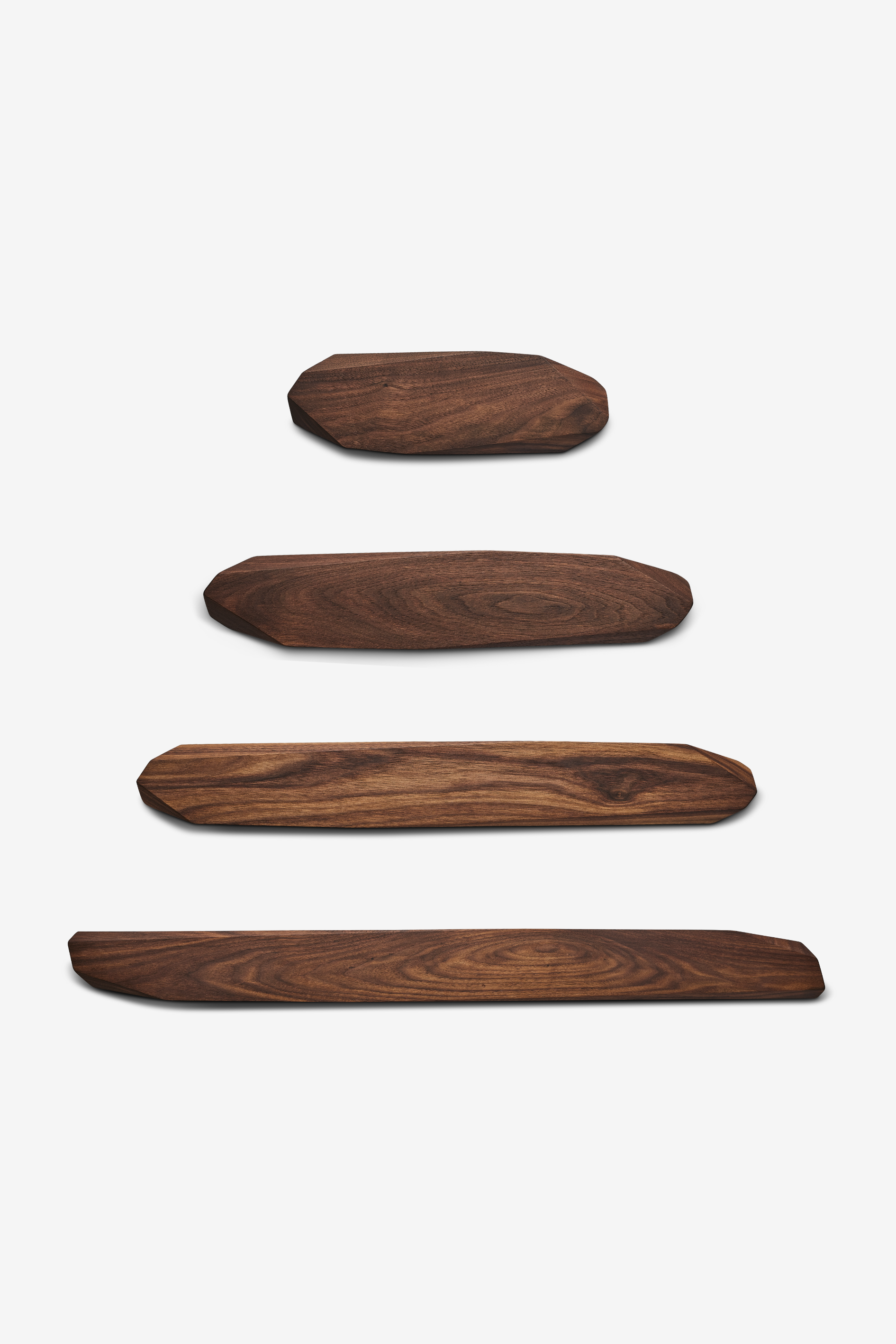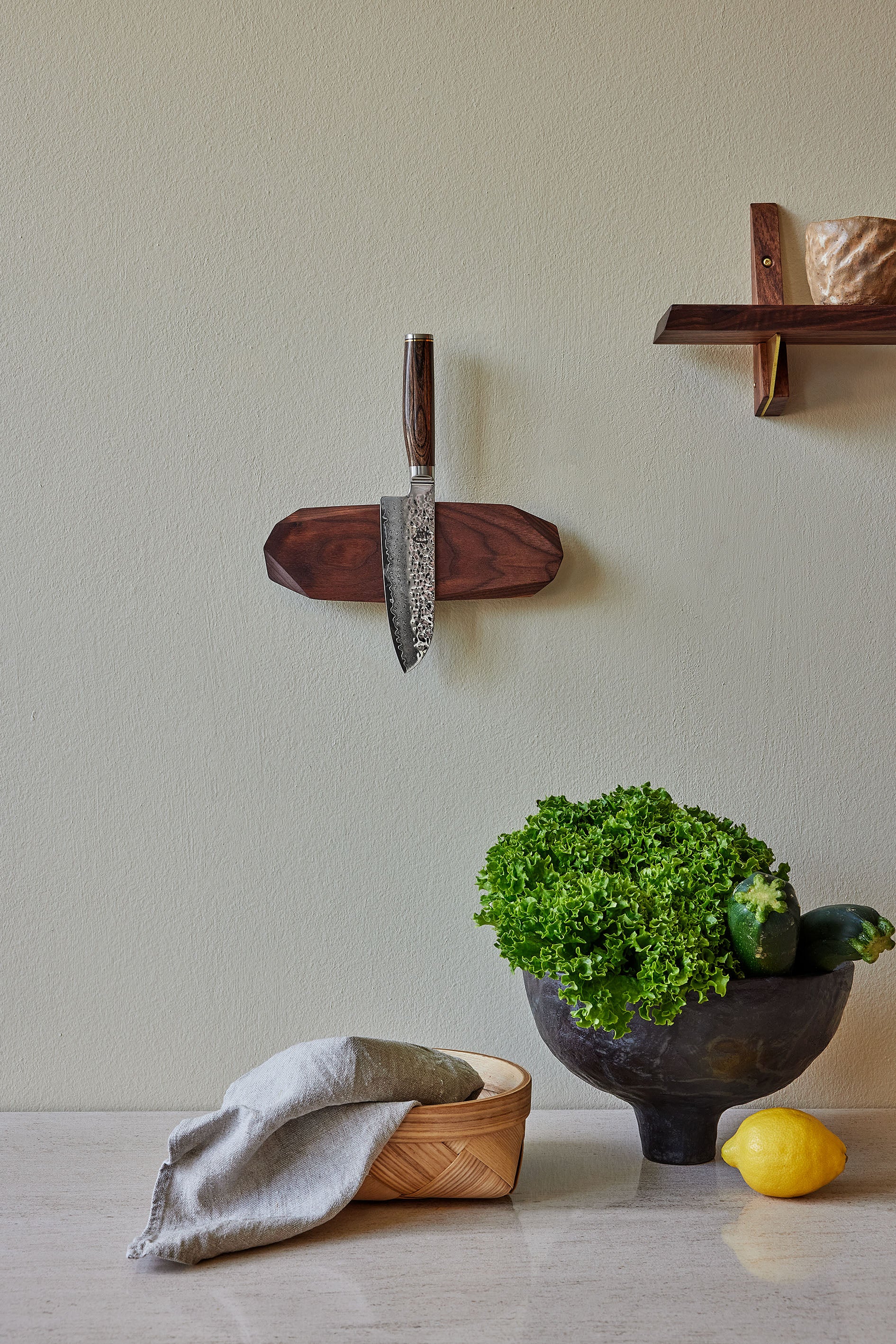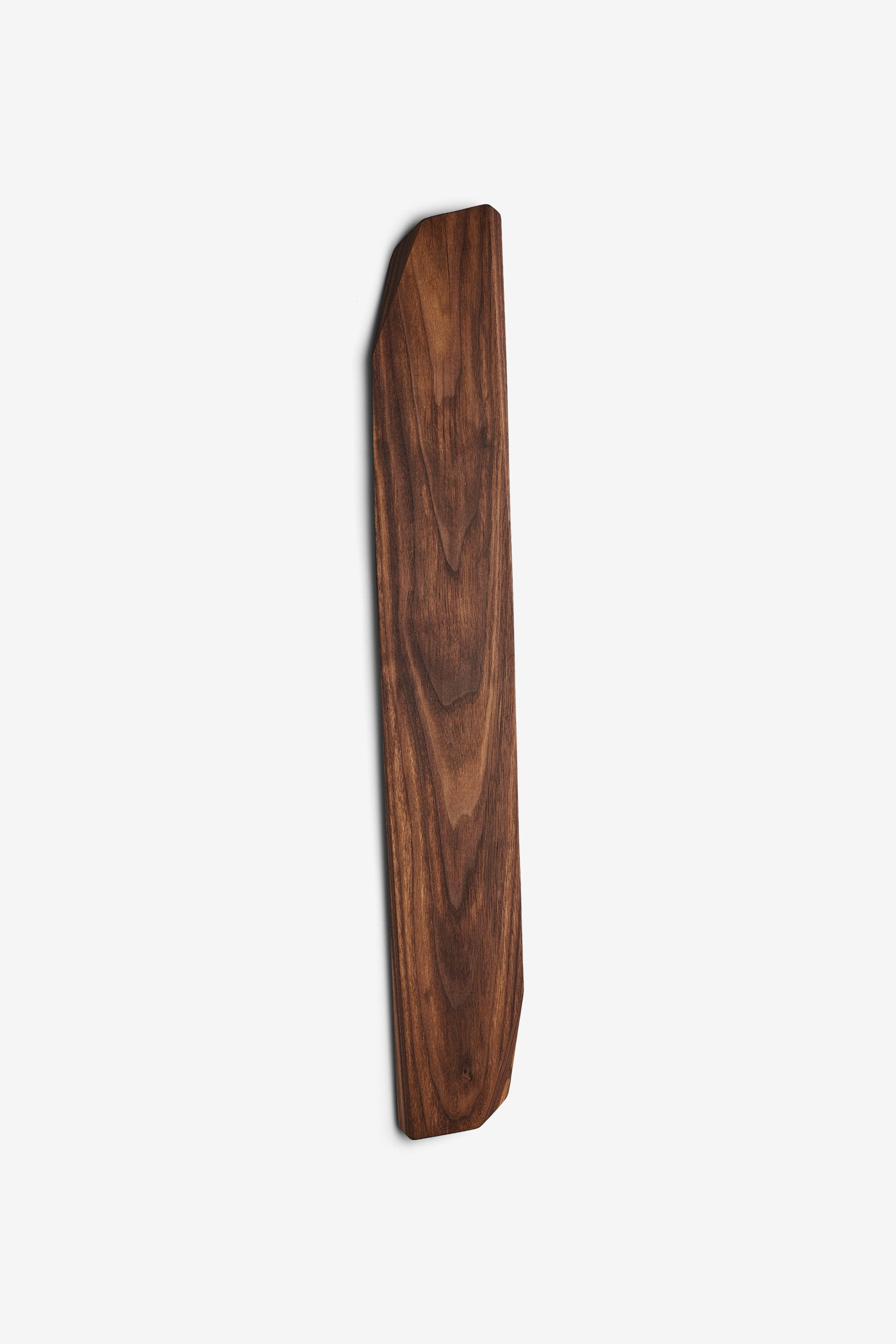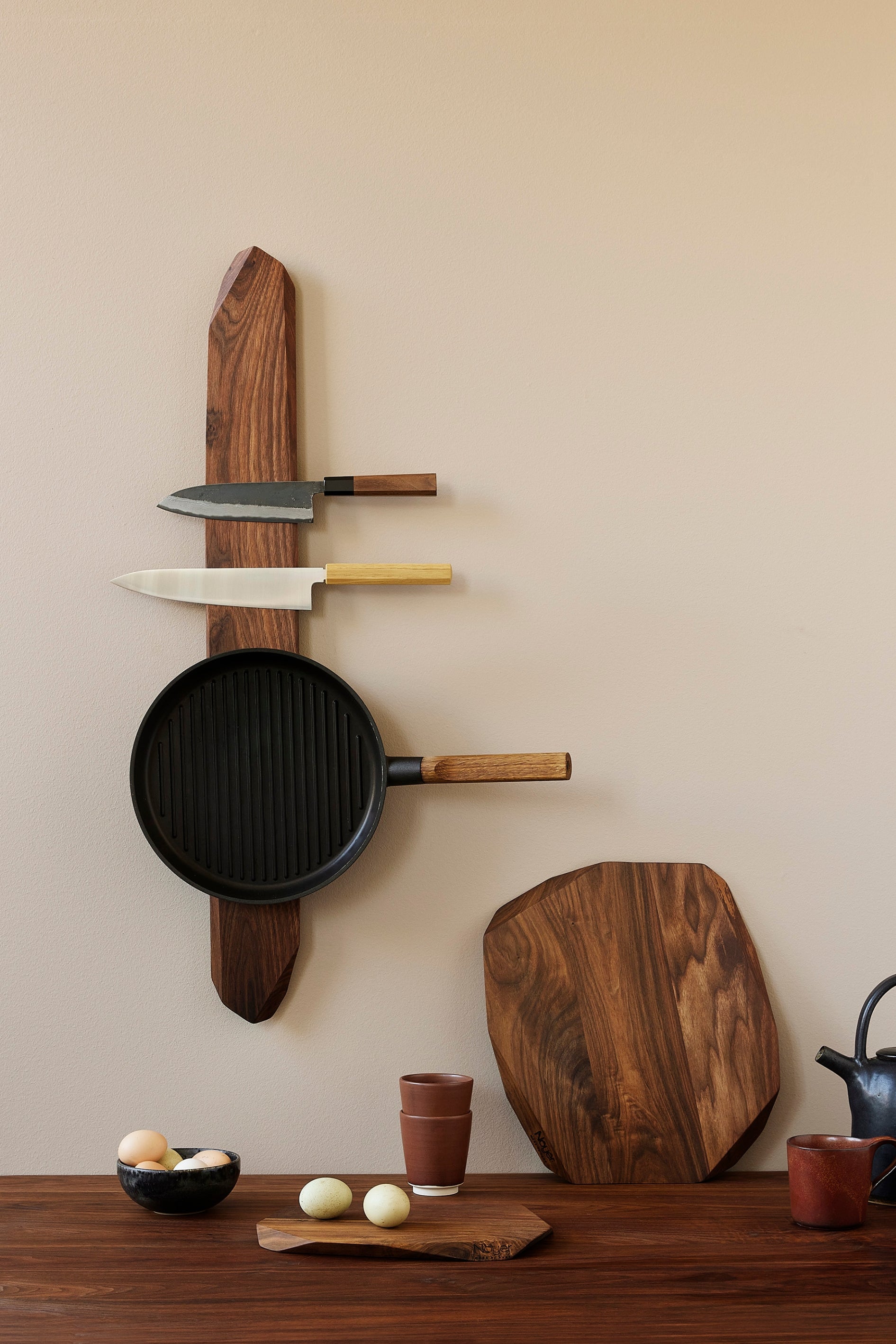
The kitchen is the home’s workshop, a place where precision meets passion. For anyone who appreciates culinary craftsmanship, knives are the most vital tools in the repertoire. Yet, how one stores these precision instruments is often an afterthought. Choosing the right storage is not merely about organization; it is about honoring the materials and ensuring that the blade remains as sharp as the day it was forged. A wooden magnetic knife strip is the ideal solution, seamlessly merging the practical with the aesthetic.
When faced with the question of which knife storage solution to choose, one enters a realm where material selection, magnetic strength, and design philosophy converge. At Noyer, we do not view a knife rack as a simple kitchen accessory, but as a piece of functional sculpture designed to complement both the room and the knives it carries. In this guide, we explore the essential considerations for selecting a storage solution that protects your investment and elevates your daily rituals.
The Functional Artwork: Why Choose a Wooden Magnetic Knife Strip?
Traditionally, many have relied on knife blocks or drawer inserts, but these solutions carry inherent limitations. A knife block occupies valuable counter space and can be notoriously difficult to keep hygienically clean inside the slots. Drawers are perhaps even more detrimental to a blade’s health; as knives slide back and forth, the delicate edges can strike one another, leading to dullness and microscopic chips in the steel. A wall-mounted solution is, therefore, the most logical choice for the serious cook.
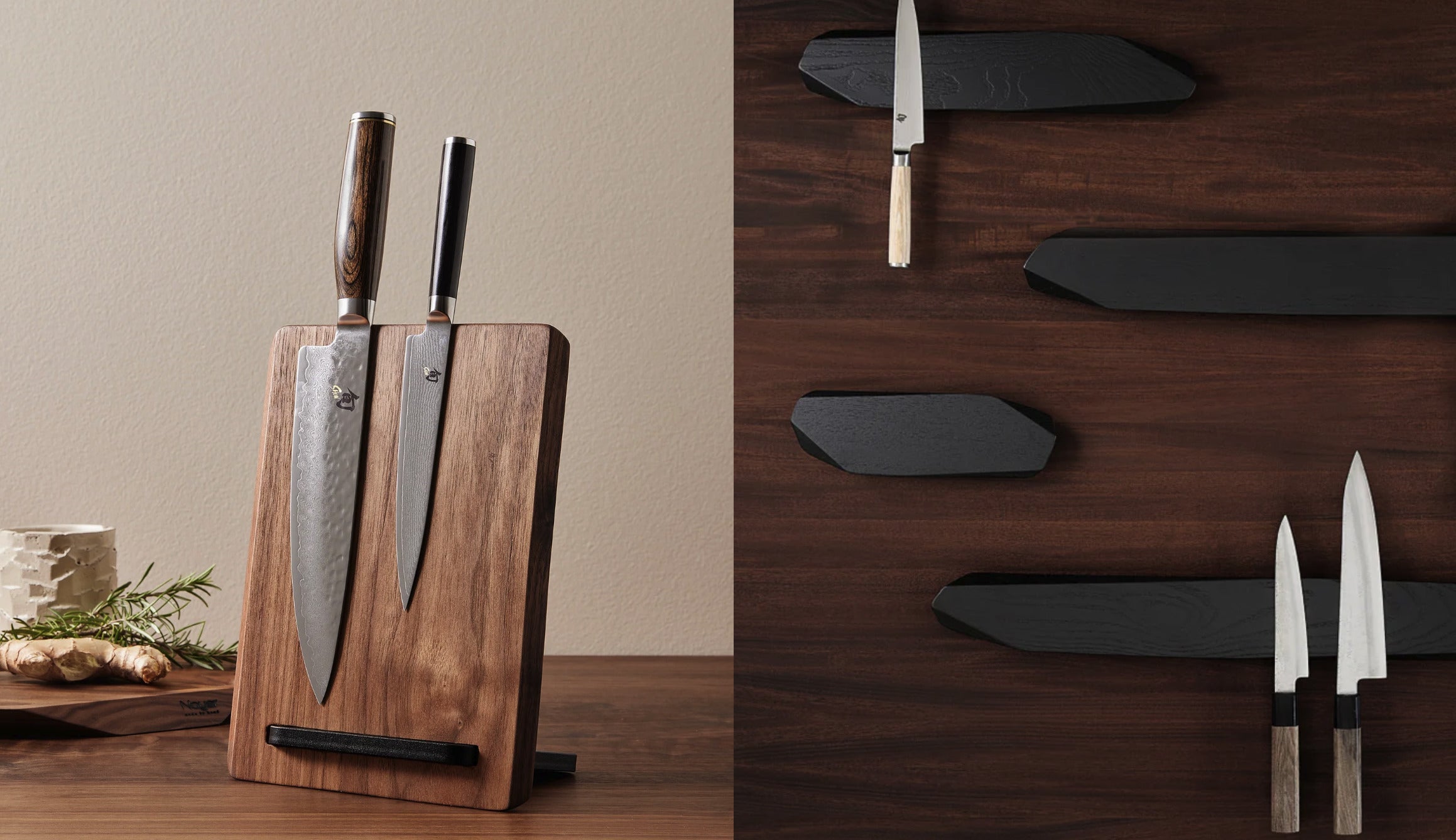
The decision to choose a wooden magnetic knife strip over a metal one is primarily a matter of protecting the knife’s edge. When a steel blade meets a metal rail, the hard contact can scratch the surface or, in the worst cases, damage the sharp edge. Wood is a living, softer material that receives the knife with a gentle touch. At Noyer, we work almost exclusively with walnut because it possesses a natural density combined with incredible durability and a deep, warm glow.
Beyond the practical benefits, wood introduces a tactile quality to the kitchen. In a space often dominated by cold surfaces like stainless steel, stone, and tile, a walnut knife rack acts as an organic counterpoint, bringing warmth and texture into the interior design. It transforms a utilitarian tool into a focal point of the room.
Walnut vs. Steel: Protecting the Blade’s Edge
When you invest in high-quality chef’s knives, you are paying for the hardness of the steel and the precision of the edge. It would be a shame to let that craftsmanship deteriorate due to improper storage. A high-end wooden magnetic knife strip conceals powerful magnets behind a thin front of solid hardwood. This means the knife never comes into direct contact with the metal of the magnet, only with the forgiving surface of the wood.
This construction requires a delicate balance. The magnet must be powerful enough to penetrate the wood and hold the knife securely in place, yet not so aggressive that it becomes a struggle to release the blade. Our designs are developed with this exact equilibrium in mind. By using rare earth magnets, we ensure that even heavy chef’s knives remain steadfast, while the smooth walnut surface allows you to tilt the knife away from the rack effortlessly without straining your wrist or the blade.
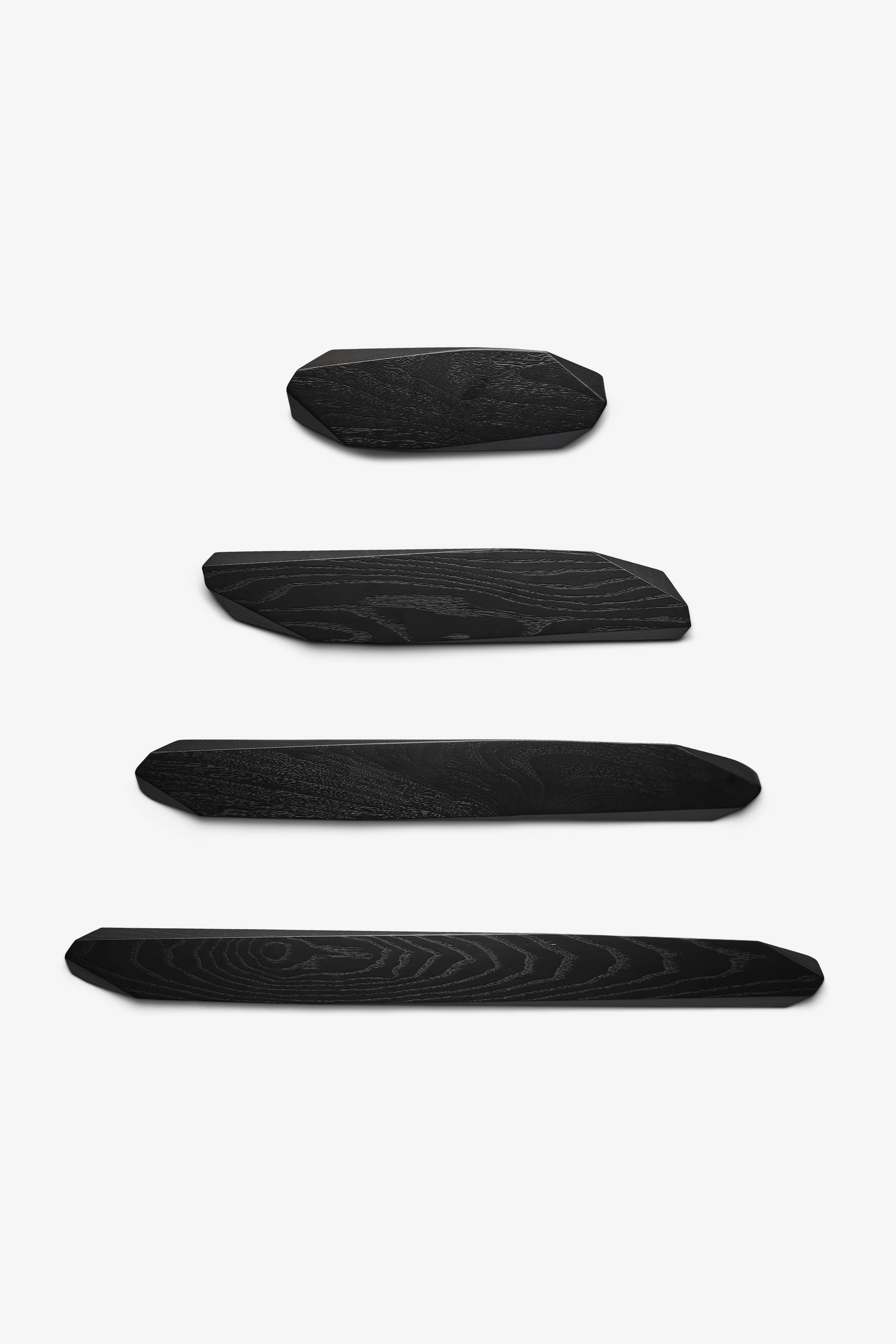
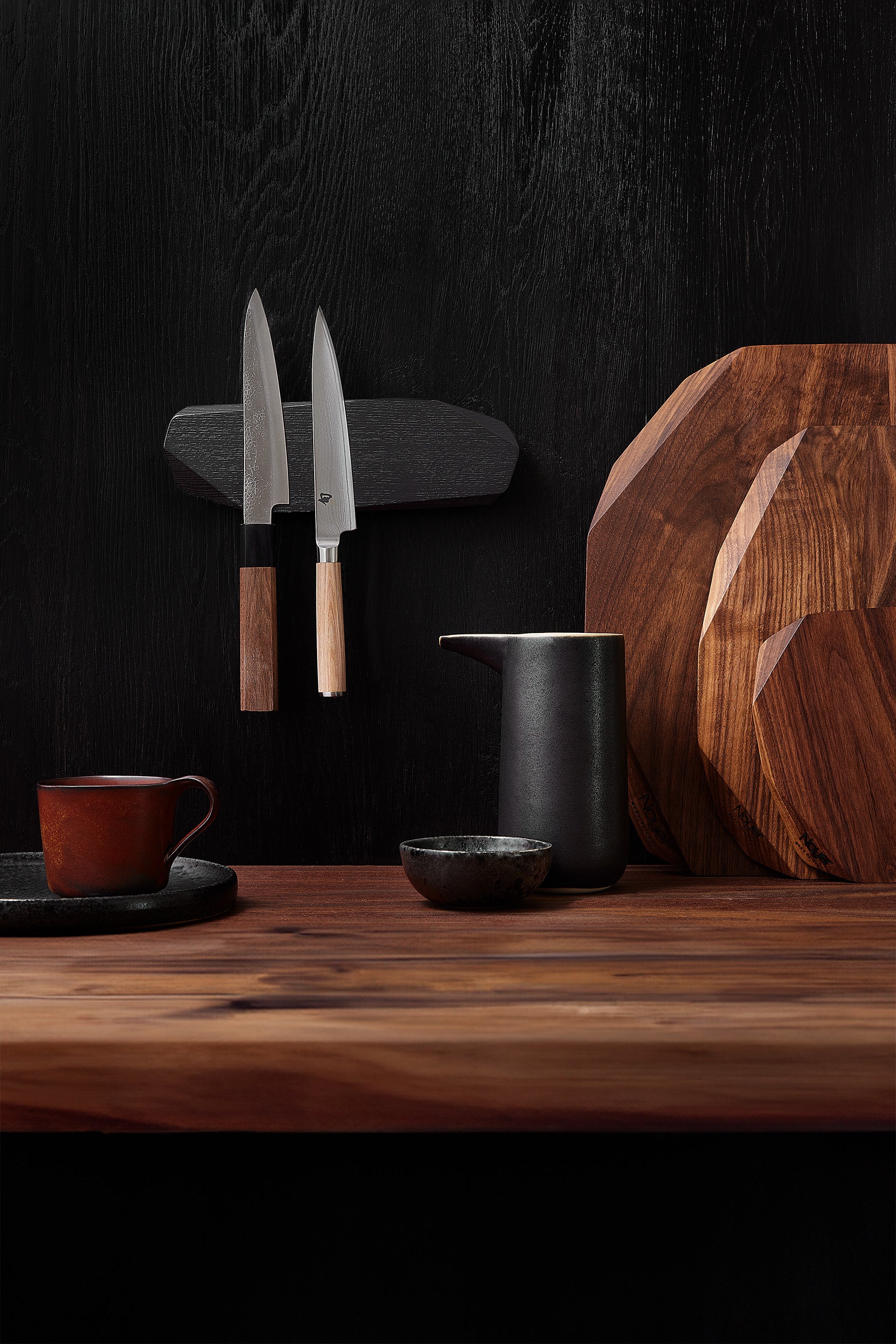
For those who prefer a more monochrome or contemporary aesthetic, we have developed a magnetic knife rack in black. This variant retains all the protective qualities of the wood and the beautiful visible grain, but offers a look that fits perfectly into minimalist kitchens where black accents are mirrored in faucets or cabinetry handles.
Are magnetic knife holders bad for knives?
A common concern among enthusiasts is whether magnetism can damage the steel. The short answer is no. The magnetic field does not alter the molecular structure of the steel. However, the *physical contact* with a metal strip can be harmful. This is why the wooden barrier is so essential. It provides the magnetic pull required for safety while offering a soft landing for the blade, ensuring your knives stay sharper for longer.
Finding the Right Size and Strength for Your Collection
Which size should you choose? This naturally depends on your knife collection, but also on your available wall space and your workflow. A good rule of thumb is to choose a rack that allows for a few centimeters of space between each knife. This makes it easier to grasp the handle without knocking into the neighboring blade.
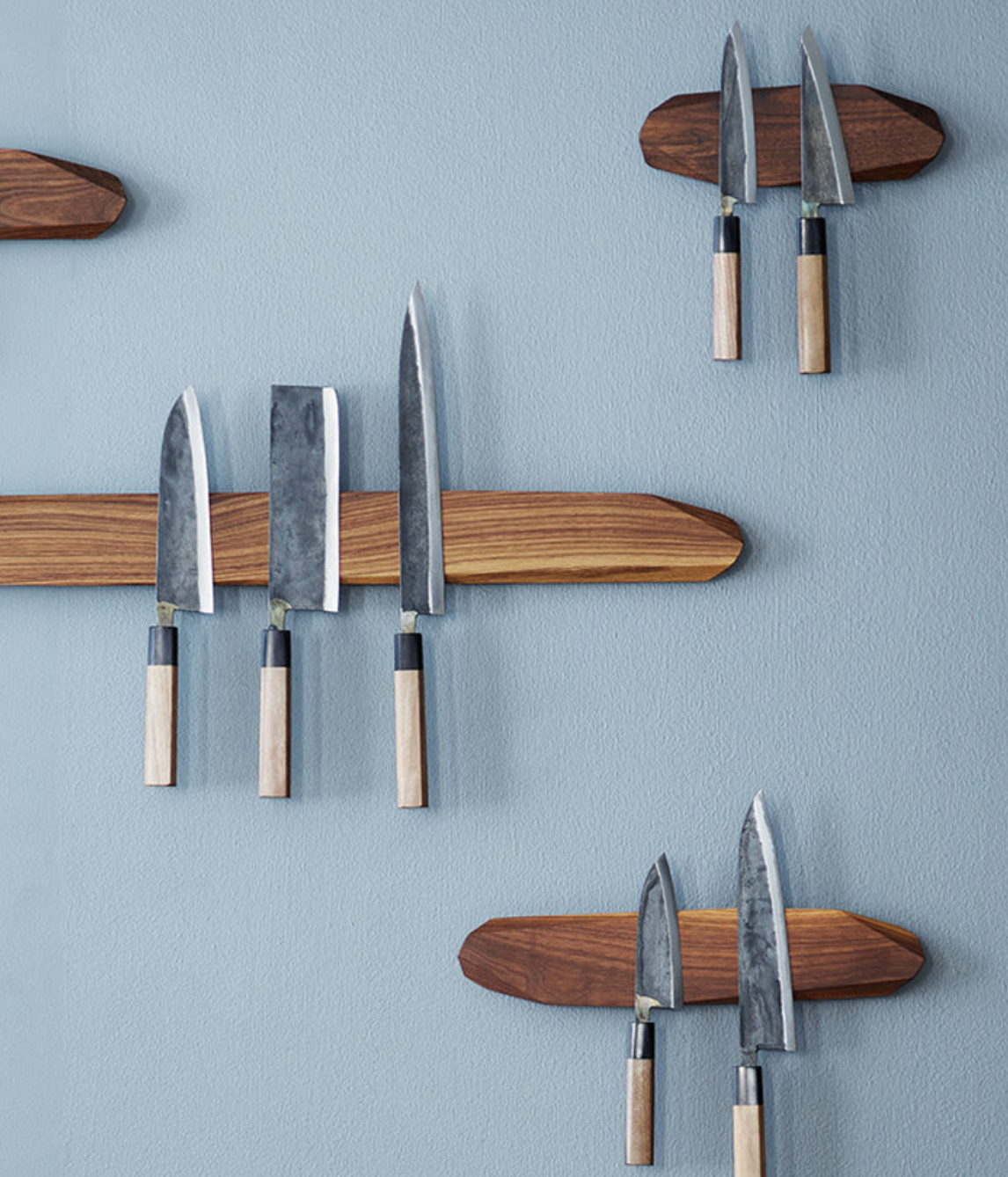
- The Classic Collection: A rack of 40 or 60 cm covers most needs, providing ample space for everything from a large chef’s knife to a small paring knife.
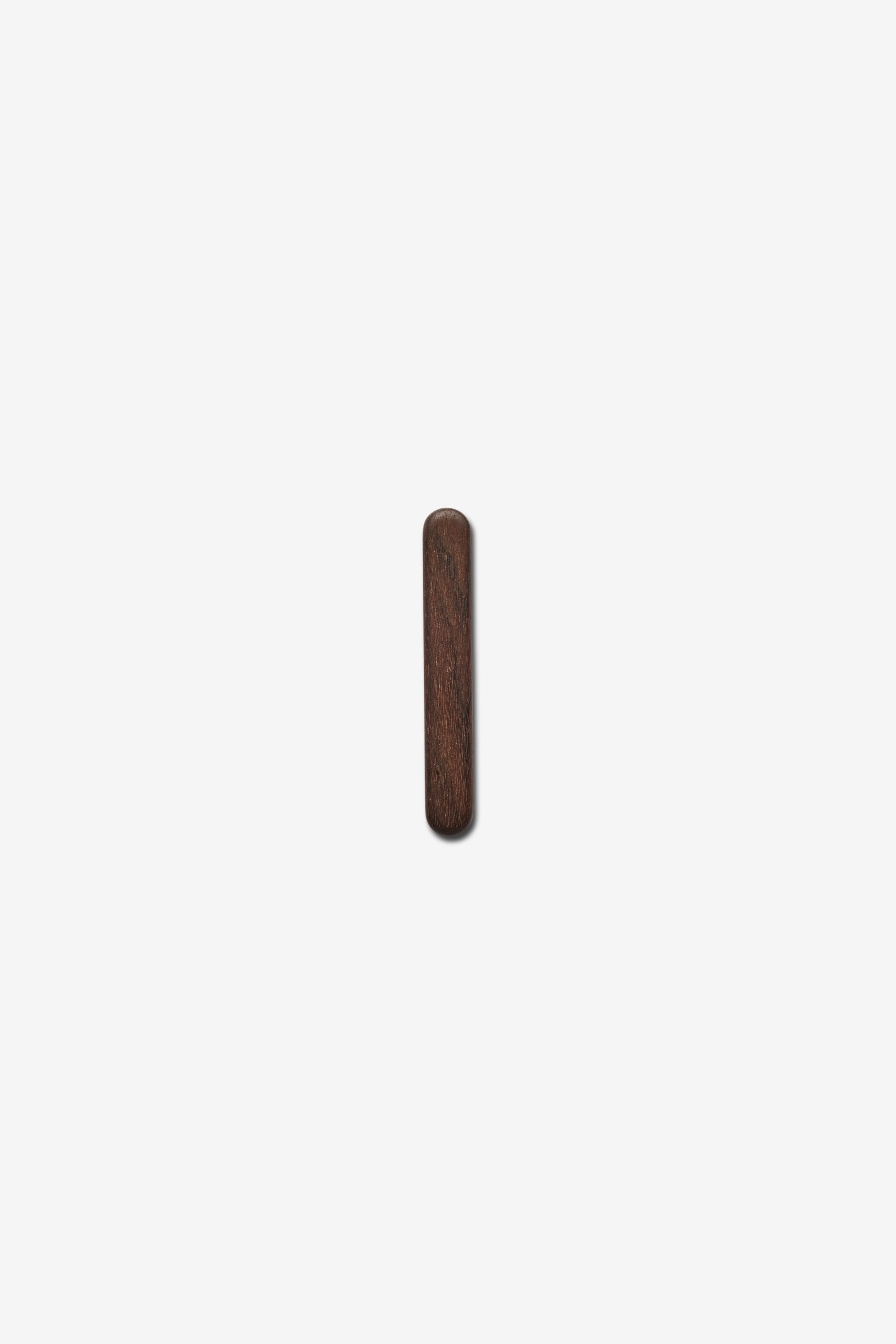
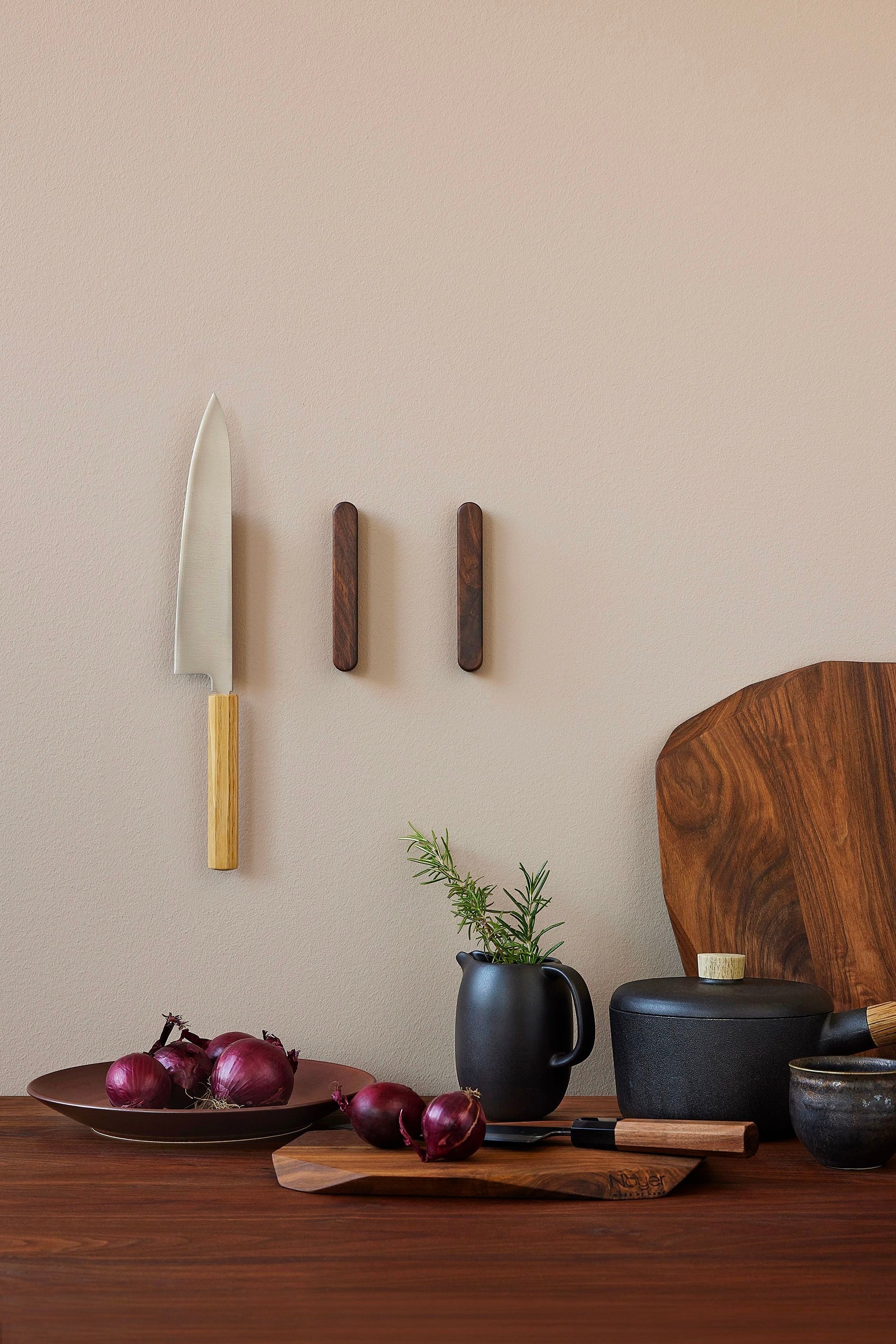
- The Minimalist Solution: If you only use your absolute favorites, a Single magnetic knife rack might be the perfect choice. It allows each knife to float individually on the wall, giving you the freedom to place them exactly where you work best.
- The Professional Solution: Do you need to store heavier tools like meat cleavers or perhaps even small cast-iron pans? Our Power magnetic knife rack is geared for tasks where standard magnets might falter.
The unique element of Noyer’s design is the signature 45-degree angled cuts. This is not merely an aesthetic detail; it is a design choice that allows the walnut grain to stand out with extra vibrancy and creates a visual lightness. The rack is mounted on a hidden steel rail, which makes it appear to "float" three centimeters from the wall. This gap is crucial as it allows your fingers to wrap completely around the knife handle before you pull it away, significantly increasing usability in a busy cooking environment.
Placement and Installation: Creating Harmony
Where should the knife strip be placed? The most intuitive location is directly above the area where you prepare your ingredients. Often, this is next to the stove or above the counter where your chopping boards are kept ready. By having your knives at eye level and within arm’s reach, you optimize your workflow and make the act of cooking a more fluid, rhythmic experience.
Safety is, of course, a primary factor. A magnetic strip should be placed at a height where adults can reach easily, but where curious young hands cannot. Because our knife racks are mounted with a solid metal rail, they sit immovably on the wall, whether it is plaster, brick, or tile. You can find our detailed guide to assembly and mounting on our website to ensure a perfect, secure result.
When choosing the location, consider the light. The structure of walnut wood changes character depending on how the light hits the hand-cut facets. It is in these subtle details that a functional object is transformed into a piece of Danish design heritage that lasts for decades.
A Choice for the Future
Choosing the right wooden magnetic knife strip is ultimately about choosing quality that endures. A walnut rack from Noyer is not a product you replace after a few years. It is an object that develops a beautiful patina over time, becoming a permanent part of the kitchen’s soul. By selecting materials like walnut and combining them with thoughtful functionality, we create products that transcend fleeting trends.
Whether you choose the classic walnut, the striking black variant, or the flexible single-rack solution, you are investing in the lifespan of your tools and your own joy in the kitchen. It is the small, daily interactions with honest materials that make a difference in everyday life. When you reach for your favorite knife and feel the warm, smooth surface of the wood, you know you have made the right choice.
We invite you to explore our full range of accessories and furniture, all of which share the same dedication to craftsmanship. If you have questions about the longevity of your wooden products, you can always read more about care and maintenance to ensure your knife rack remains beautiful for many years to come.