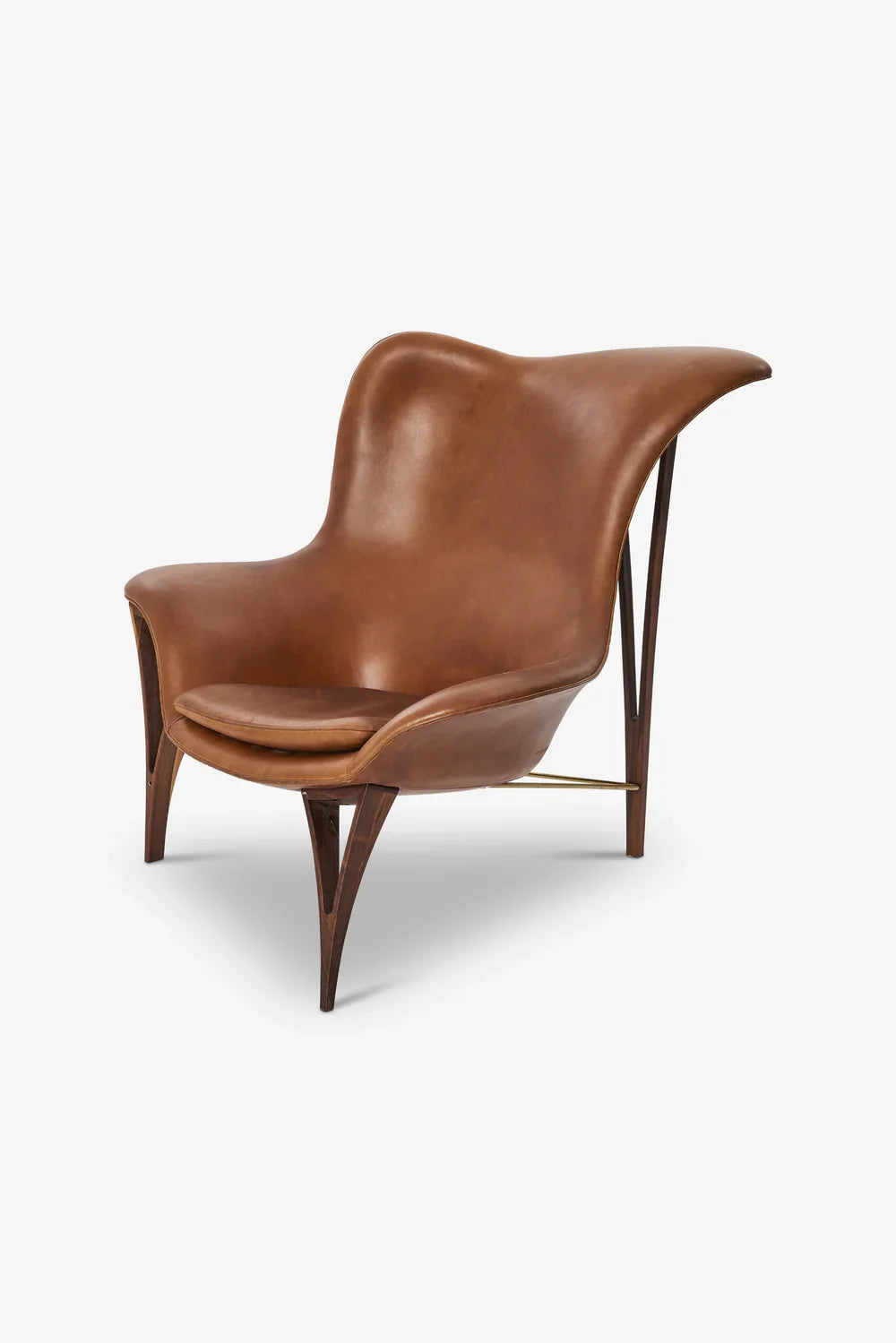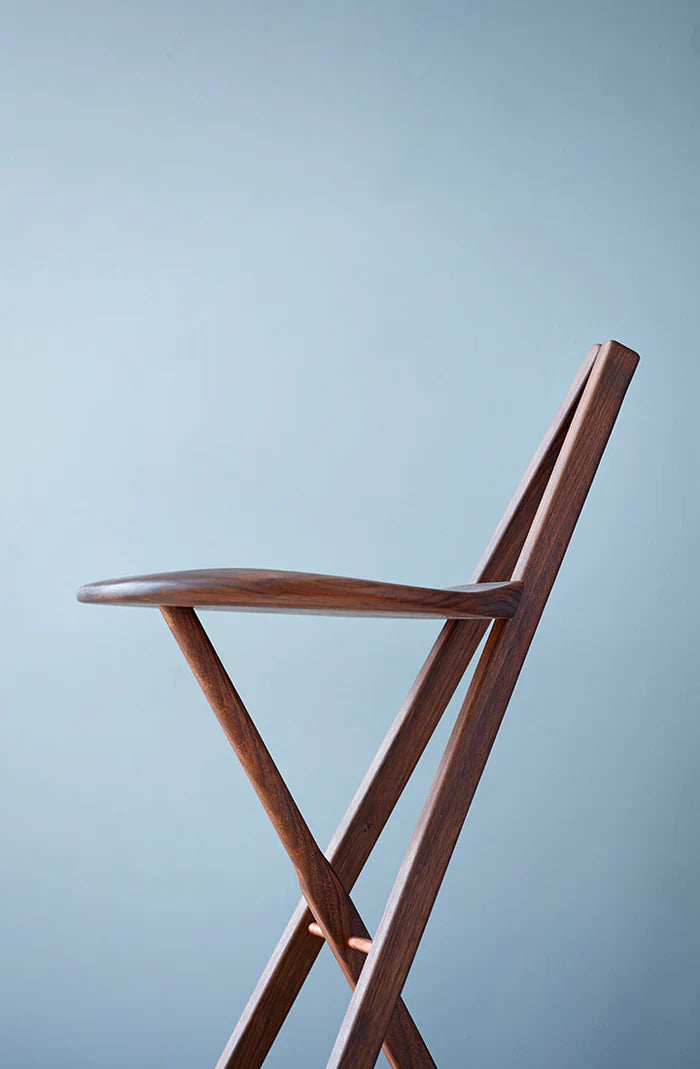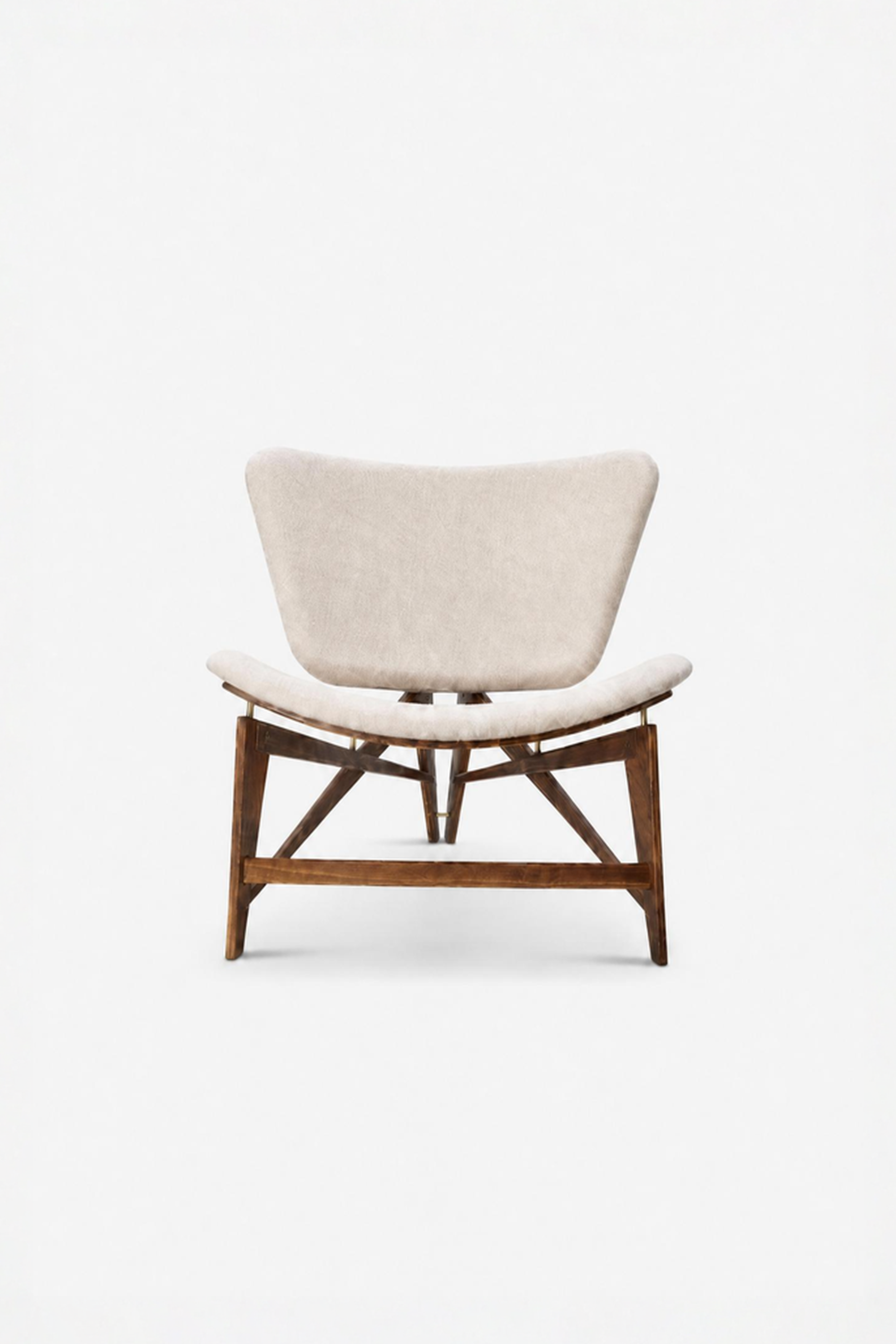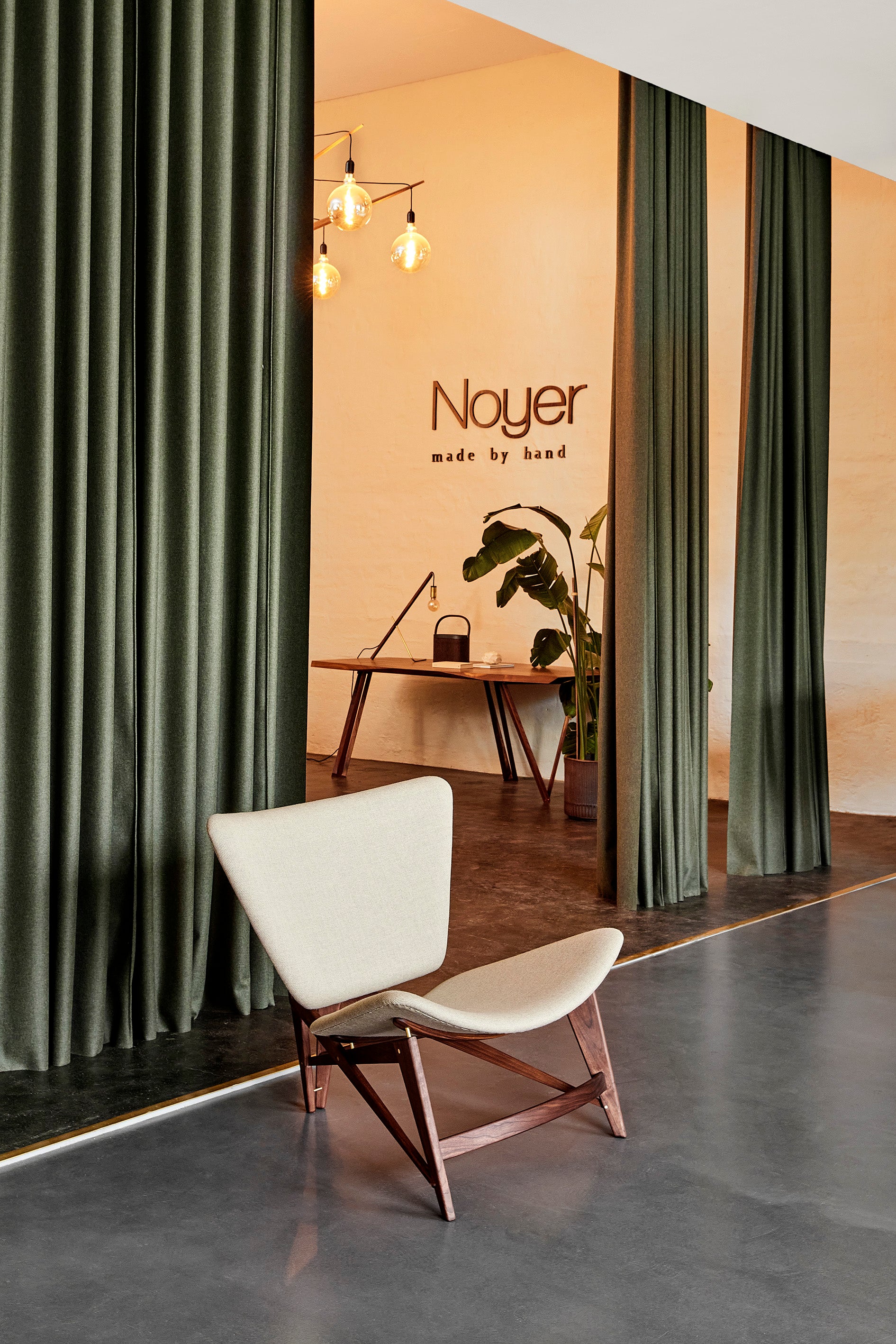
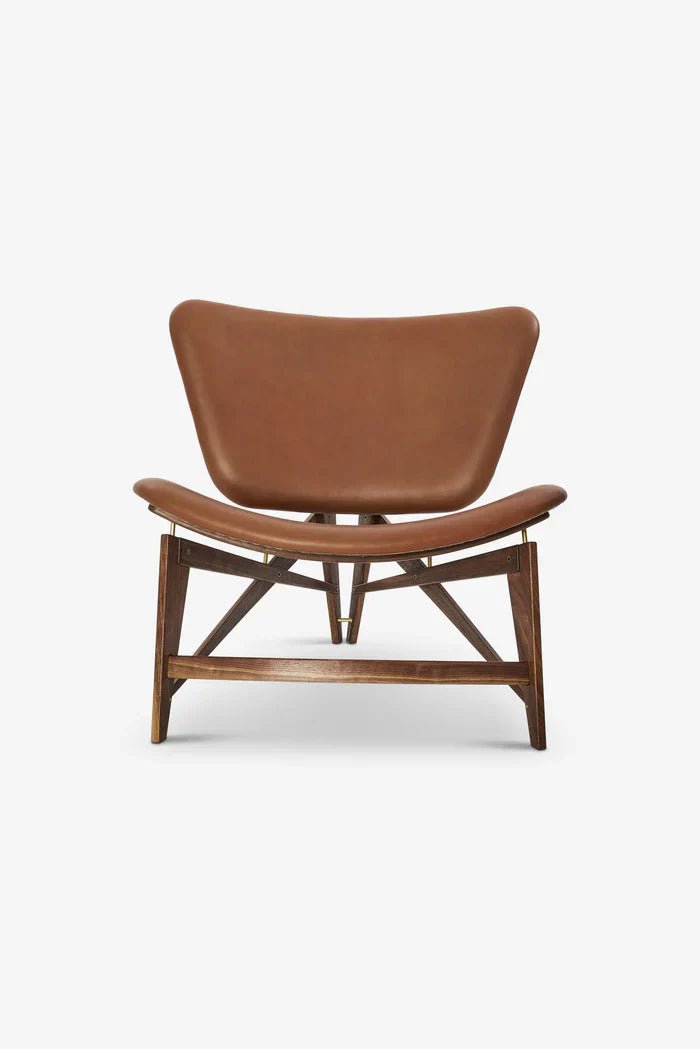
A lounge chair serves a different purpose in a living room than an upright dining chair or a traditional armchair. Where a conventional armchair often features a high back and a solid, fully upholstered silhouette, a lounge chair relies on a lower centre of gravity, a reclined seat angle, and an open frame. This geometry offers comfortable seating for reading and conversation while keeping sightlines clear and daylight moving through the room.
Combining leather upholstery with an open wooden frame brings two natural materials into daily contact. Both respond over time to ambient light, touch, and regular use. Choosing the right design comes down to understanding seat angles, leather types, and how the chair relates to the surrounding space.
Seat Angles and Scale: Lounge Chair vs. Armchair
The difference between an upright chair and a dedicated lounge chair is largely geometric. In a lounge chair, the seat sits closer to the floor and angles gently backward, distributing body weight across the entire seat and backrest. This rake angle relieves pressure without demanding the bulky footprint of an oversized recliner.
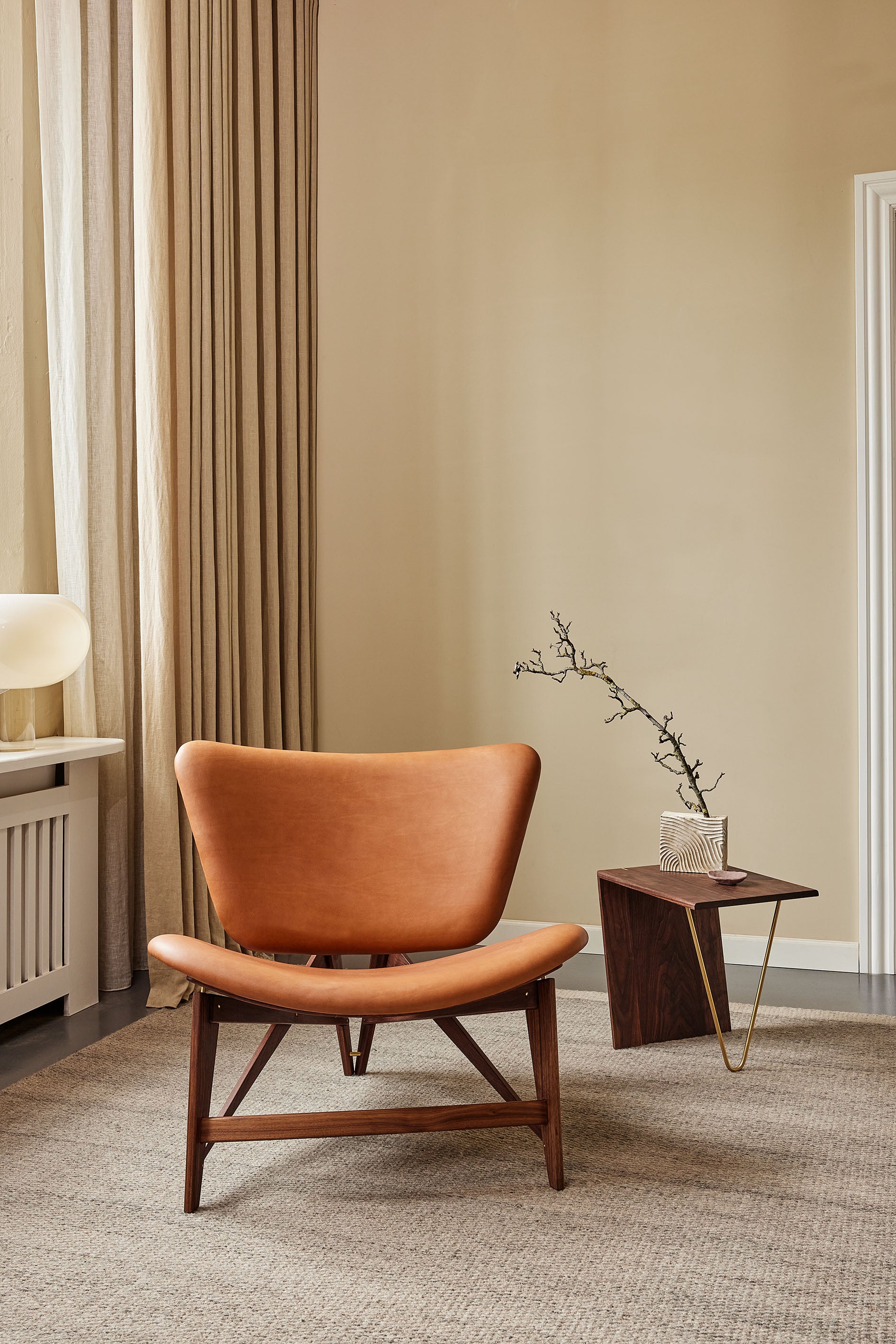
An open wooden construction also makes the chair straightforward to position away from perimeter walls. While a bulky armchair often ends up backed against a corner to avoid dominating the floor plan, an open-frame chair can stand angled beside a sofa or between living zones. You preserve unbroken sightlines across the interior because daylight passes cleanly under and around the timber base.
Selecting Leather: Surface Finish, Wear, and Patina
Leather adjusts quickly to body temperature and provides a supple surface to sit on. How that surface responds to sunlight, liquids, and everyday contact depends primarily on the tanning and finish method:
- Aniline leather: Dyed through with transparent dyes and left without a pigmented surface coat, aniline preserves the hide's natural pores and breathability. It yields a soft hand and develops a pronounced organic patina over time, as natural marks and handling darken the surface. Because its pores remain open, it absorbs spills, oils, and direct sunlight more readily.
- Semi-aniline leather: This leather receives the same transparent base dye but is finished with a micro-thin topcoat. The subtle finish retains the hide's natural grain and suppleness while offering greater resistance to spills, light wear, and surface marks in busy living rooms.
Patina is a natural characteristic of quality leather. Over months and years, the material yields slightly to the body, and regular contact deepens the tone at primary touchpoints. Rather than signaling wear, this shift reflects the natural maturation of an organic material.
Solid Wood Craftsmanship: The JN15 Design
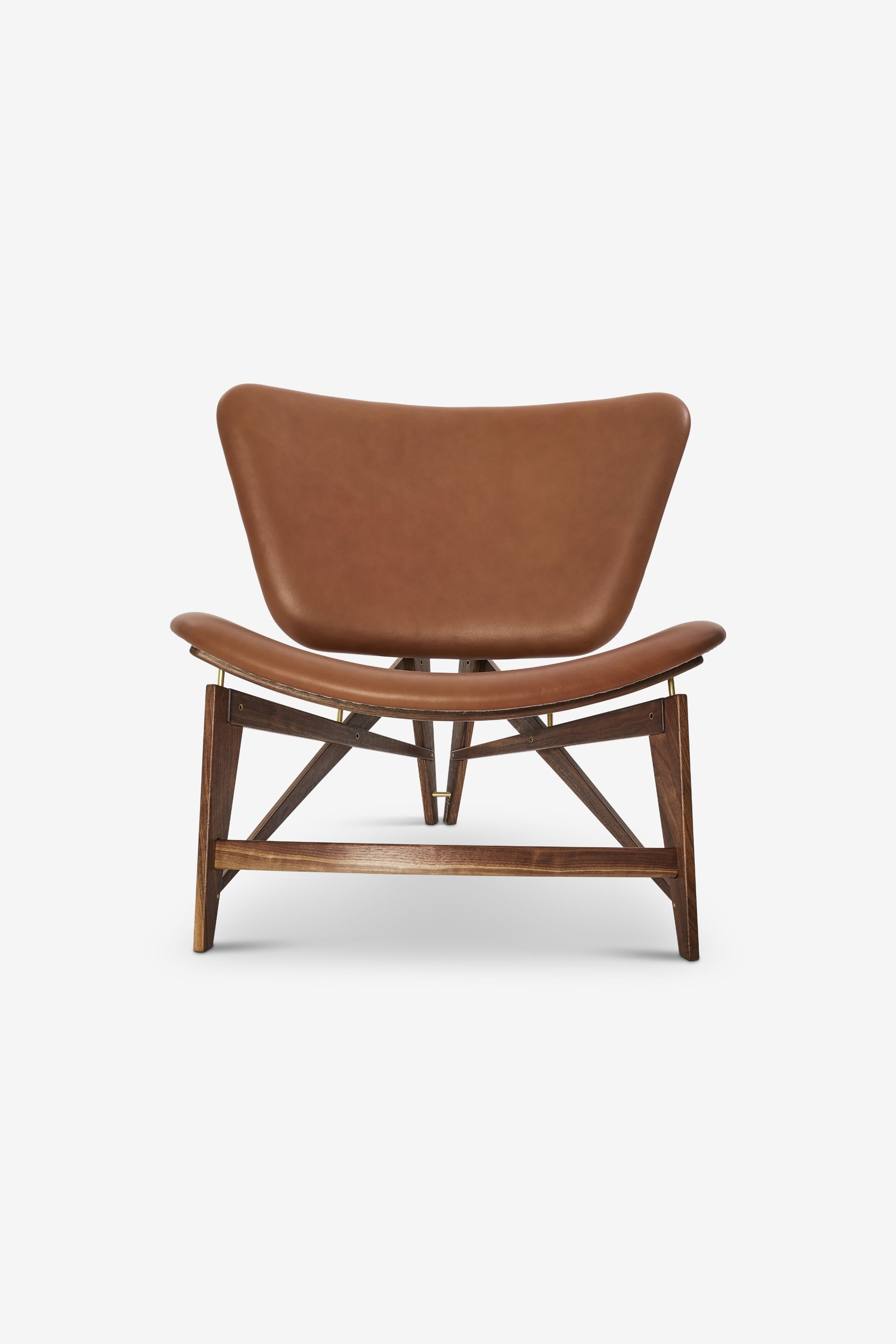
A light visual footprint requires structural stability beneath the seat. In our Lounge chair JN15 Leather, the seat and backrest rest on a frame crafted from solid walnut. The slender leg construction draws its load-bearing strength from geometric triangles that distribute weight evenly across the base.
Curved molded wood introduces refined surfaces to the design, visible across the backrest so the chair presents clean angles from every side of the room. For those who prefer a woven surface over leather, the same frame is available as the Lounge chair JN15 Wool within our wider range of chairs.
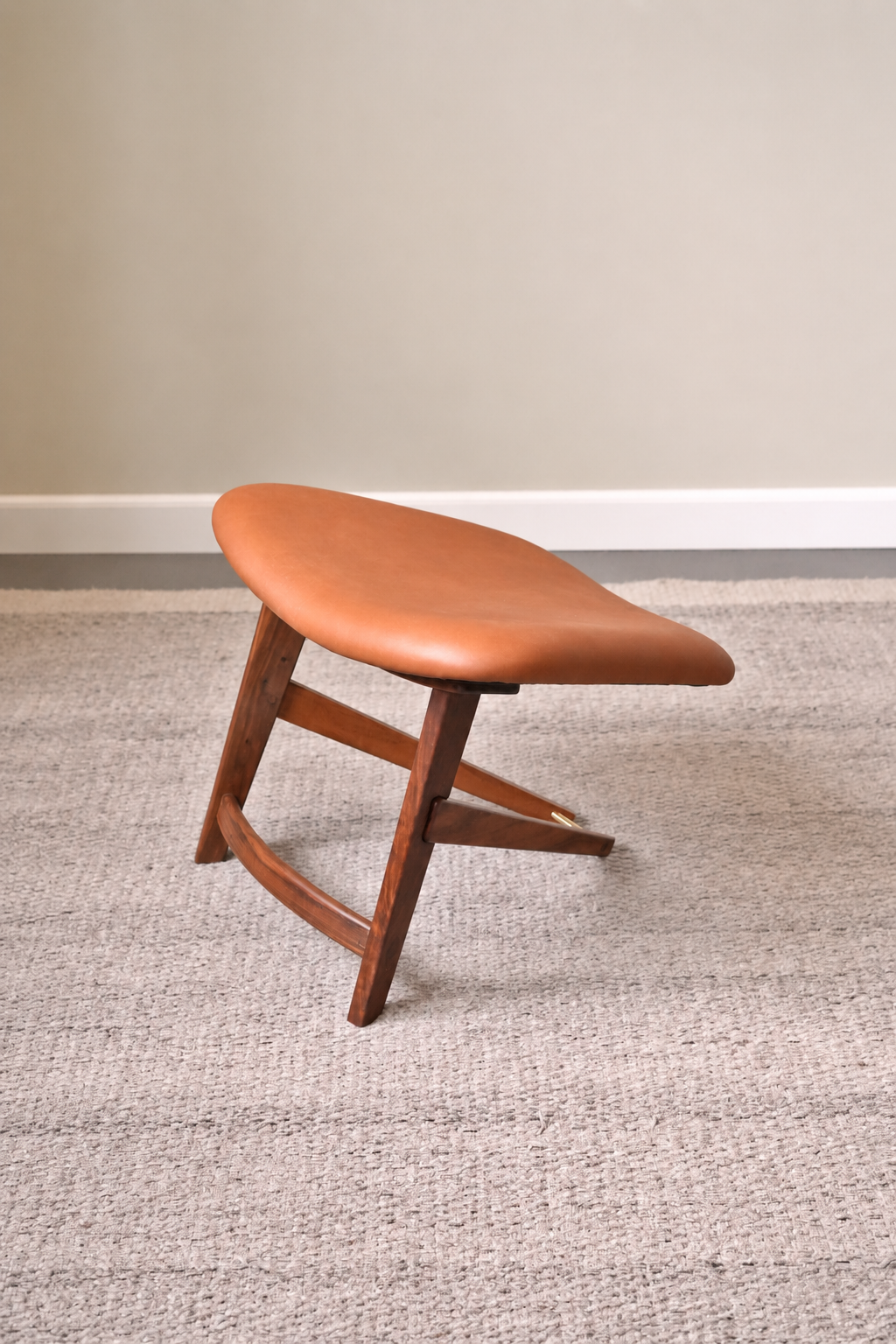
To support a deeper recline, the chair pairs with the Footstool JN15. Built in solid walnut with an upholstered leather cushion, the footstool aligns with the seating geometry to extend support for the legs during quiet evenings.
Placement and Clearances in the Living Room
To integrate a leather lounge chair smoothly into everyday routines, position it with attention to walkways, heat sources, and natural light:
- Distance from heat sources: Furniture leather dries out when exposed to sustained dry heat. Position leather seating at least 30 cm (12 inches) away from radiators, heat vents, and baseboard heaters to keep the hide from stiffening or cracking.
- Direct sunlight: Intense, unfiltered UV light fades natural leather dyes and accelerates moisture loss. Angle the chair away from windows that catch direct, unshaded afternoon sun.
- Walking clearance: A reclined seat requires more floor depth than an upright chair. Leave sufficient clearance around the frame and any matching footstool so people can pass freely without navigating awkward pinch points.
Routine Care for Leather and Walnut
Caring for natural leather and walnut frames requires straightforward, regular attention. Dust the leather regularly with a soft cloth to keep particles from gathering in the grain. Applying a dedicated leather conditioner or lotion once or twice a year helps preserve suppleness and prevent surface dryness.
Wipe the walnut frame periodically with a soft, clean cloth. For practical guidance on caring for solid wood and natural upholstery over the seasons, explore our guide to Care and Maintenance.