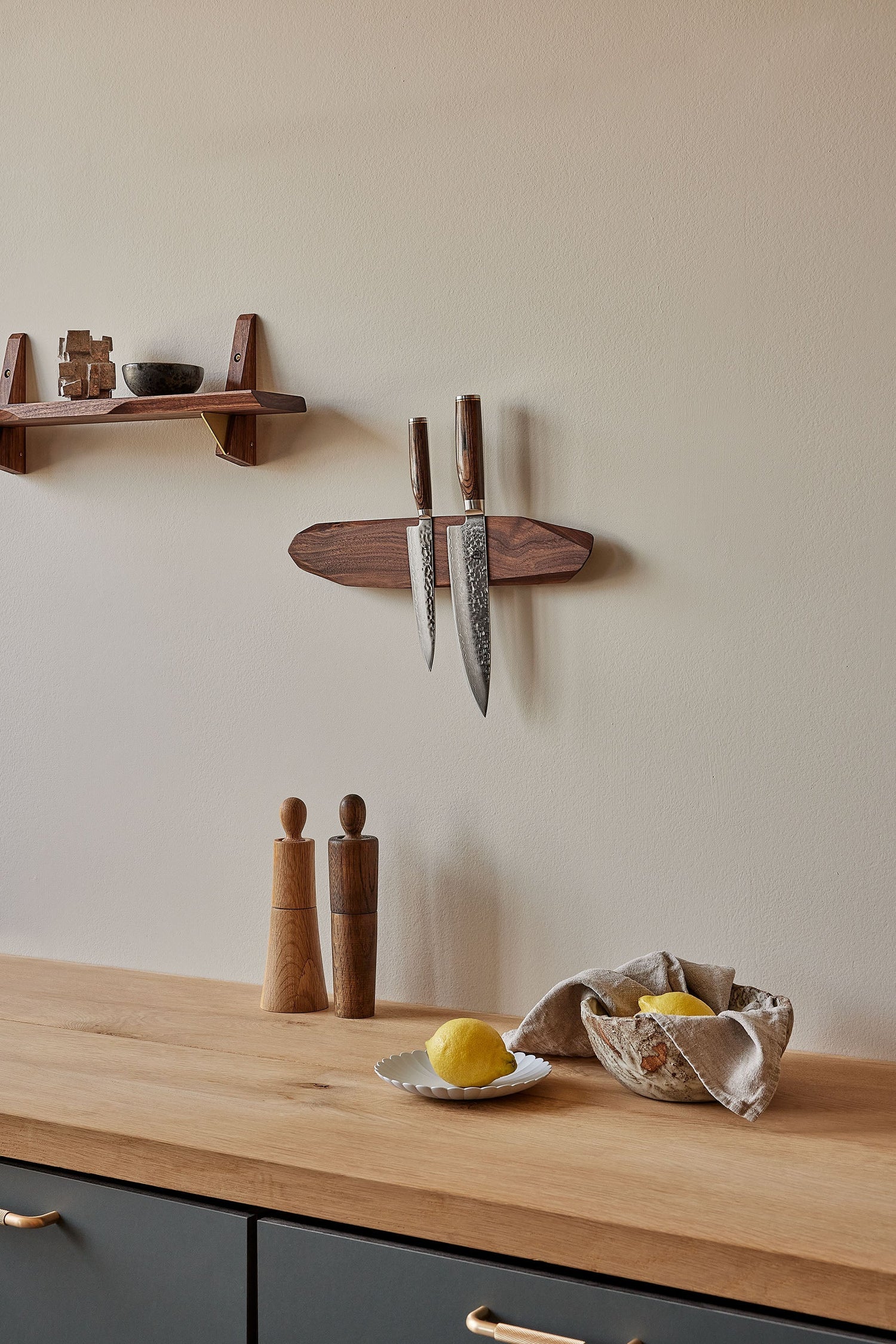
When a kitchen knife loses its edge ahead of time, the cause is rarely prep work on a cutting board. Wear happens far more often in storage. Stored loose in a drawer, blades strike one another and adjacent utensils each time the drawer slides open and shut. Those collisions create microscopic chips and roll fine cutting edges. Well-considered kitchen knife storage protects the steel, keeps the cutting edge clear of impact, and places tools within immediate reach of your prep area.
The Contact Surface Against Steel
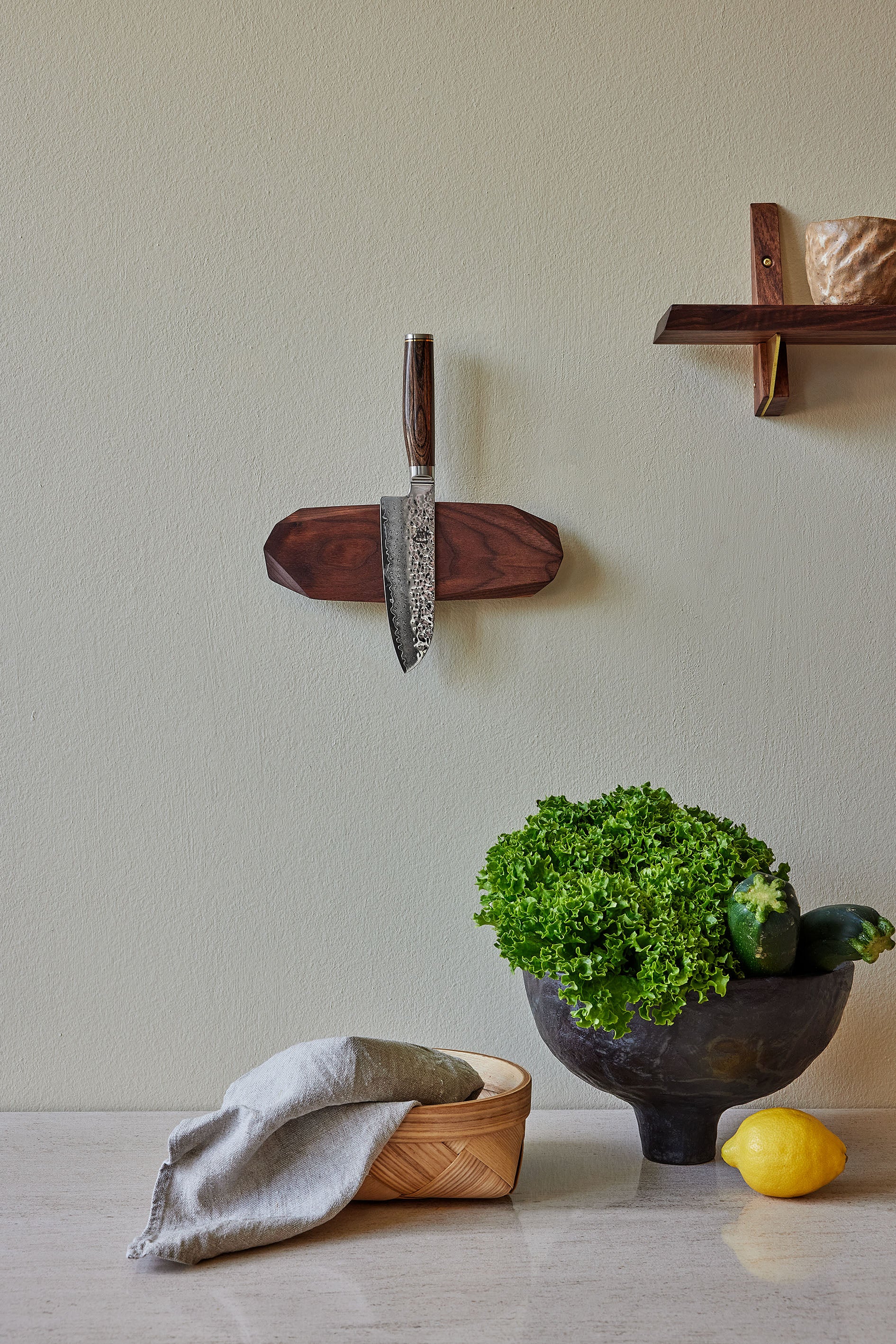
How a blade meets a storage mount directly affects edge retention and blade condition. Bare metal magnetic strips hold steel firmly, but direct metal-on-metal contact can scratch blade faces and stress the cutting apex over repeated placements. Hardwood offers a softer alternative. Storing knives against a wood-faced magnetic surface protects blade finishes from metal-on-metal contact and reduces the risk of scratches during daily use.
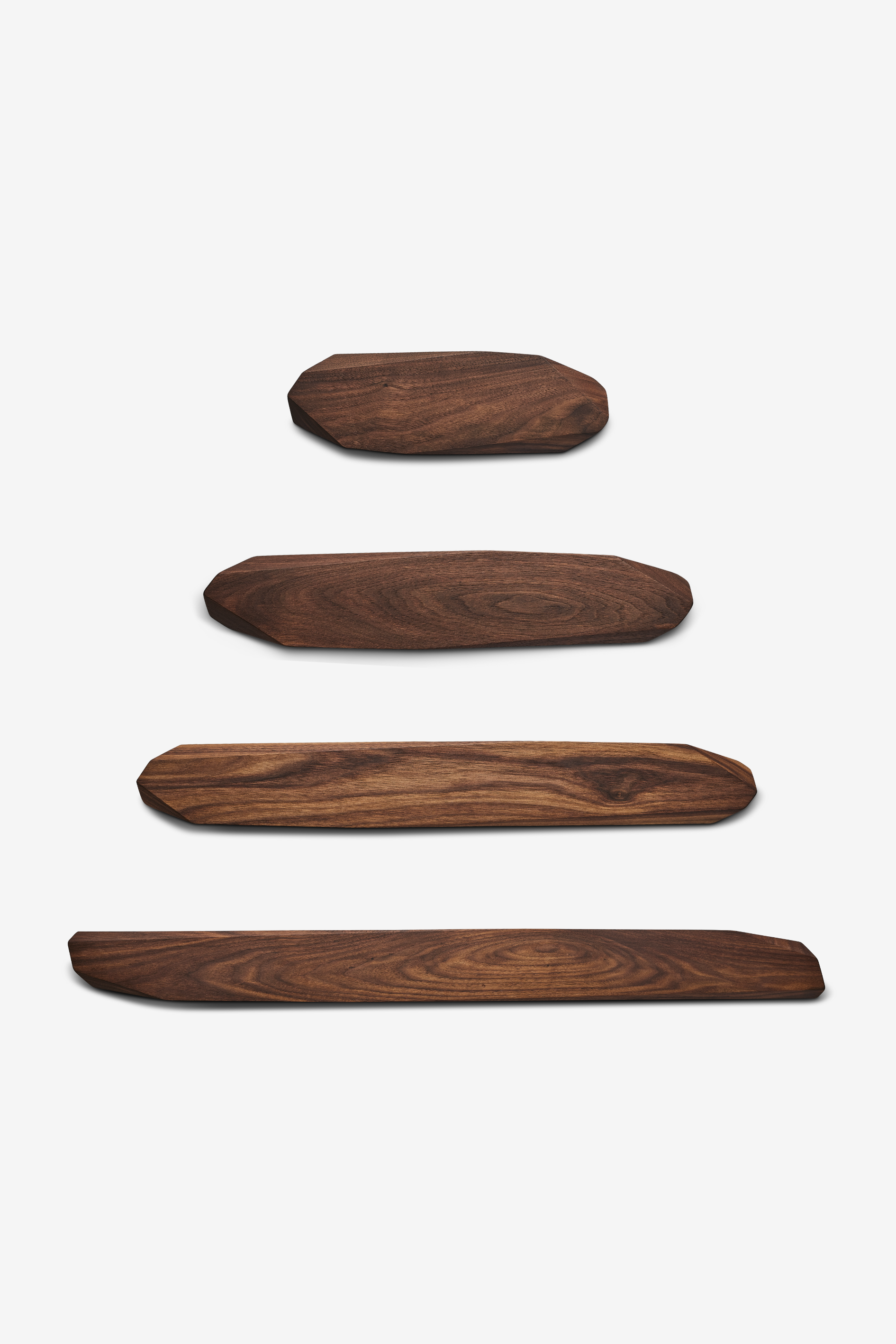
Solid walnut provides a deep tone and varied grain that creates clear contrast against pale splashbacks, light stone, and brushed metal fixtures around the prep area.
Wall-Mounted Knife Strips: Freeing Counter Space
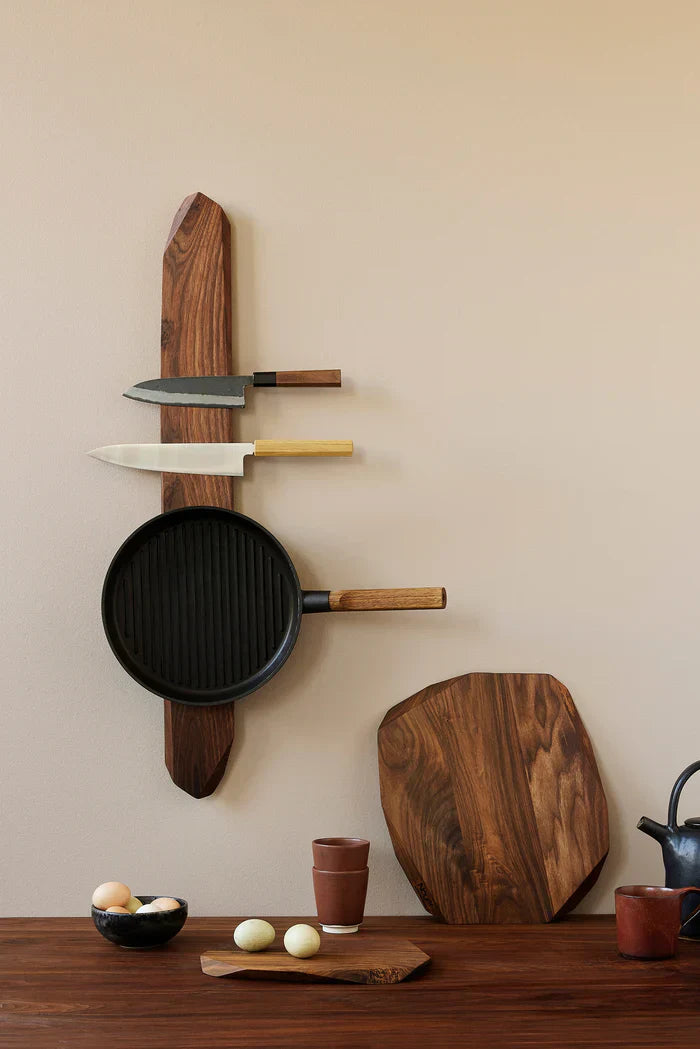
In kitchens where counter space is limited, wall mounting is often the most practical choice. Raising knives onto the wall leaves work surfaces clear for prep bowls and chopping boards, while keeping chef knives, bread knives, and paring knives identifiable at a glance.
Wall mounting requires thoughtful clearance. If a magnetic strip sits flush against the wall, knuckles press into the tiles or plaster when gripping the knife handle. On Noyer's Magnetic knife rack walnut, the walnut face features hand-cut 45-degree angles and mounts to a steel rail that holds the wood three centimetres off the wall surface. That standoff creates open clearance for hands to grasp knife handles comfortably.
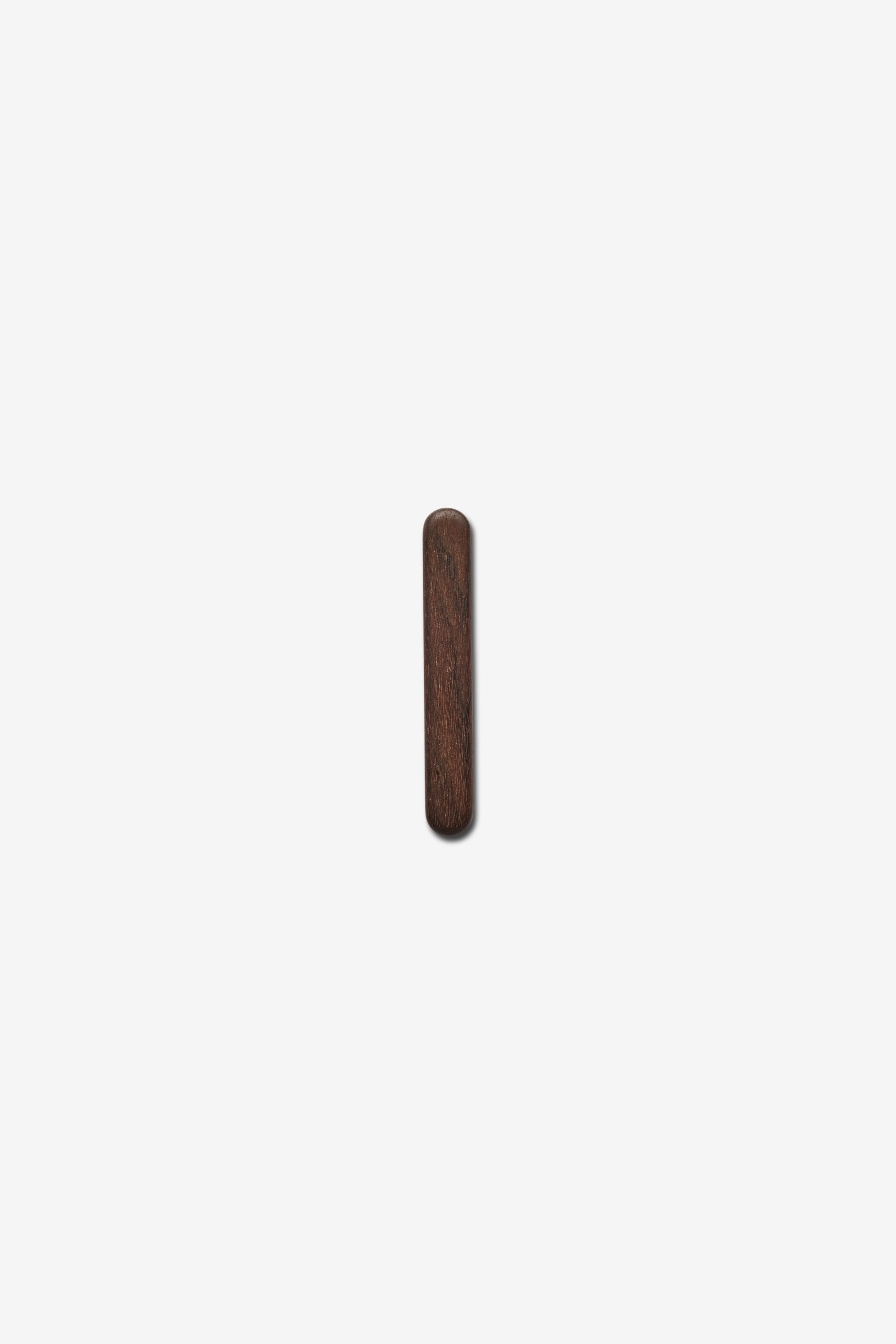
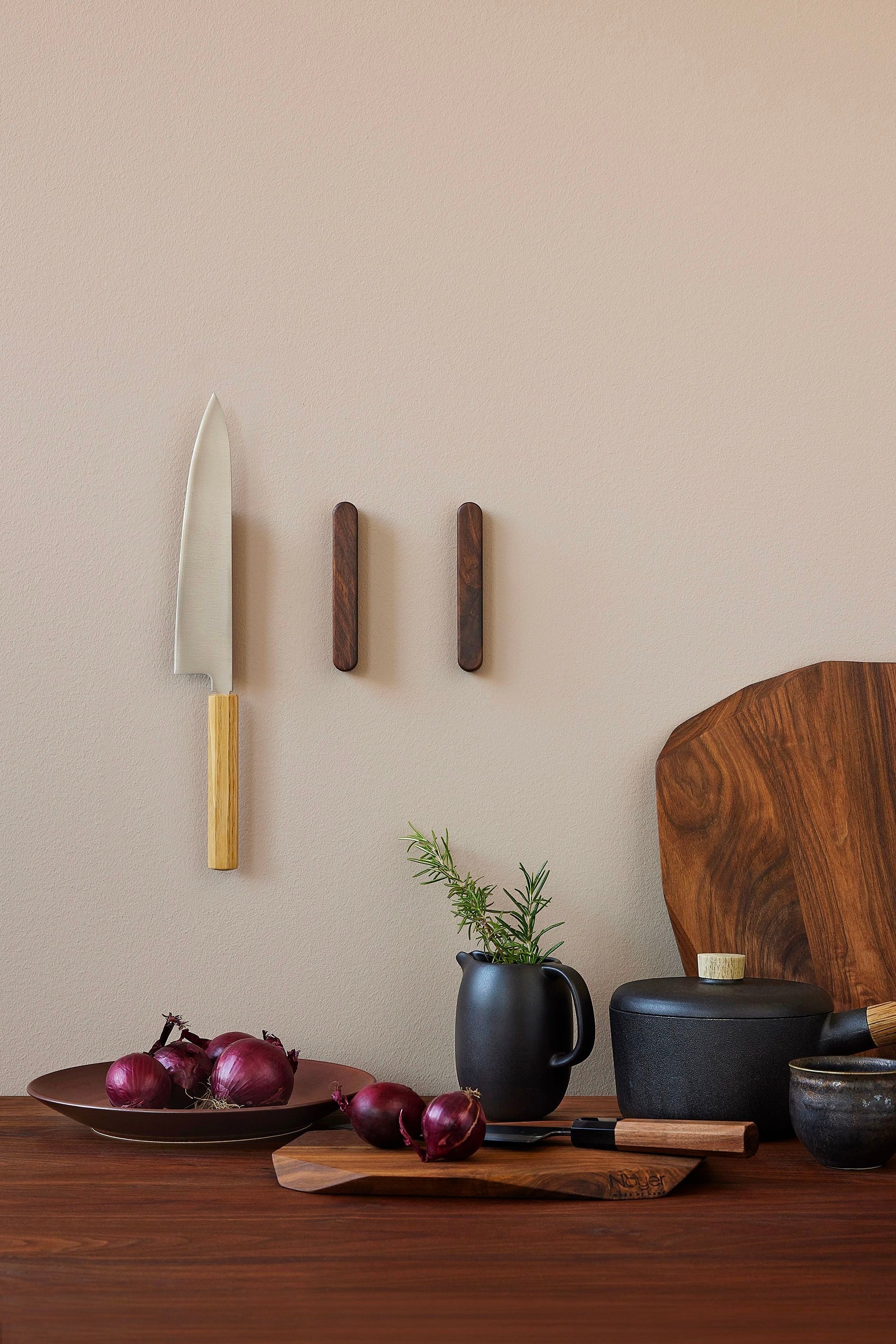
Where wall space is narrow, or when you prefer a staggered layout over a continuous horizontal line, the Single magnetic knife rack mounts each knife independently. Measuring 14 cm long, 2 cm wide, and 2 cm deep, it secures an individual blade across a compact footprint.
Freestanding Magnetic Blocks: Countertop Flexibility
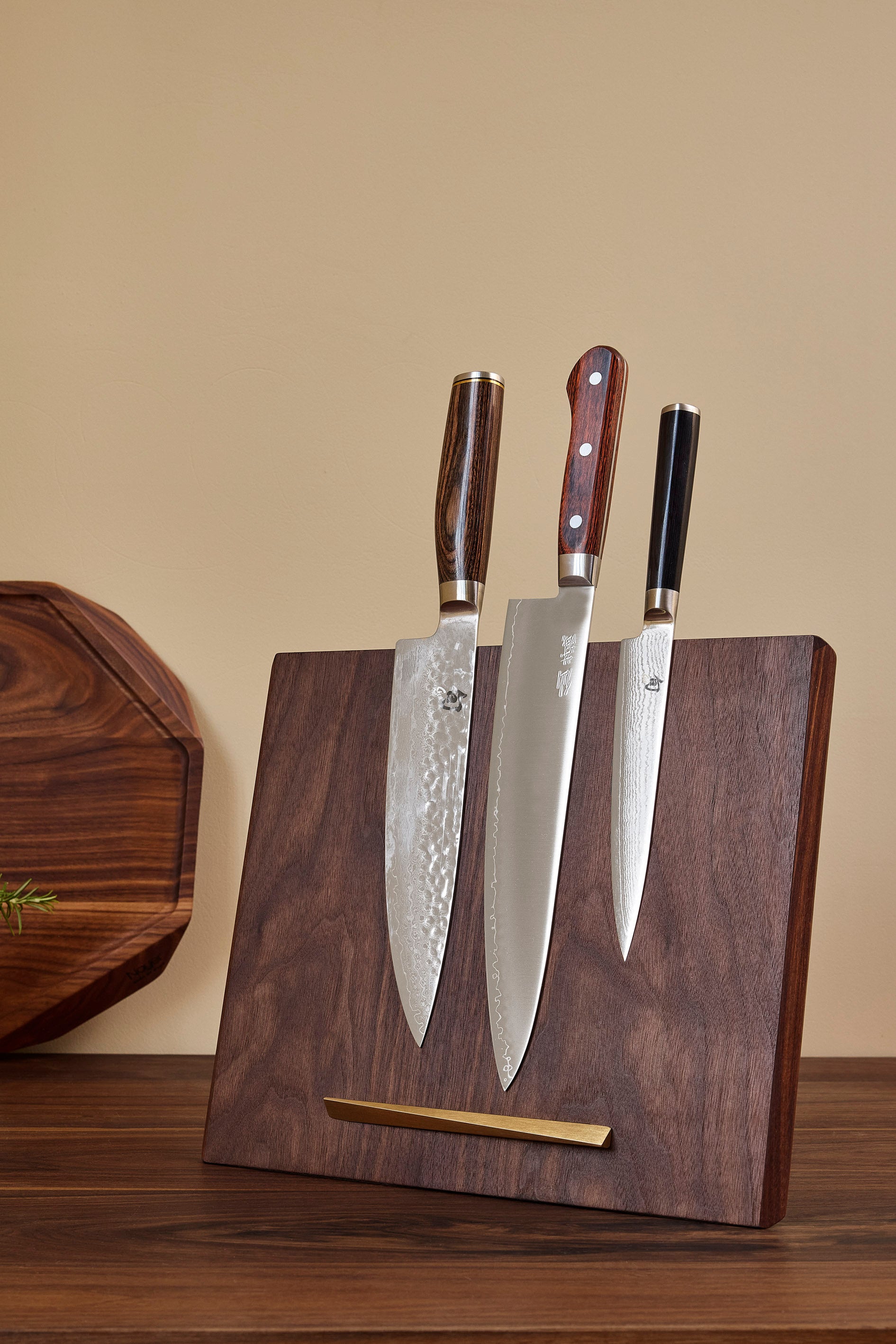
Traditional wooden knife blocks with narrow, enclosed slots protect blades from loose impacts, but deep slots can collect crumbs and moisture that are difficult to reach and clean. An open magnetic knife block eliminates hidden cavities, resting knives on a flat exterior face that wipes clean with a cloth.
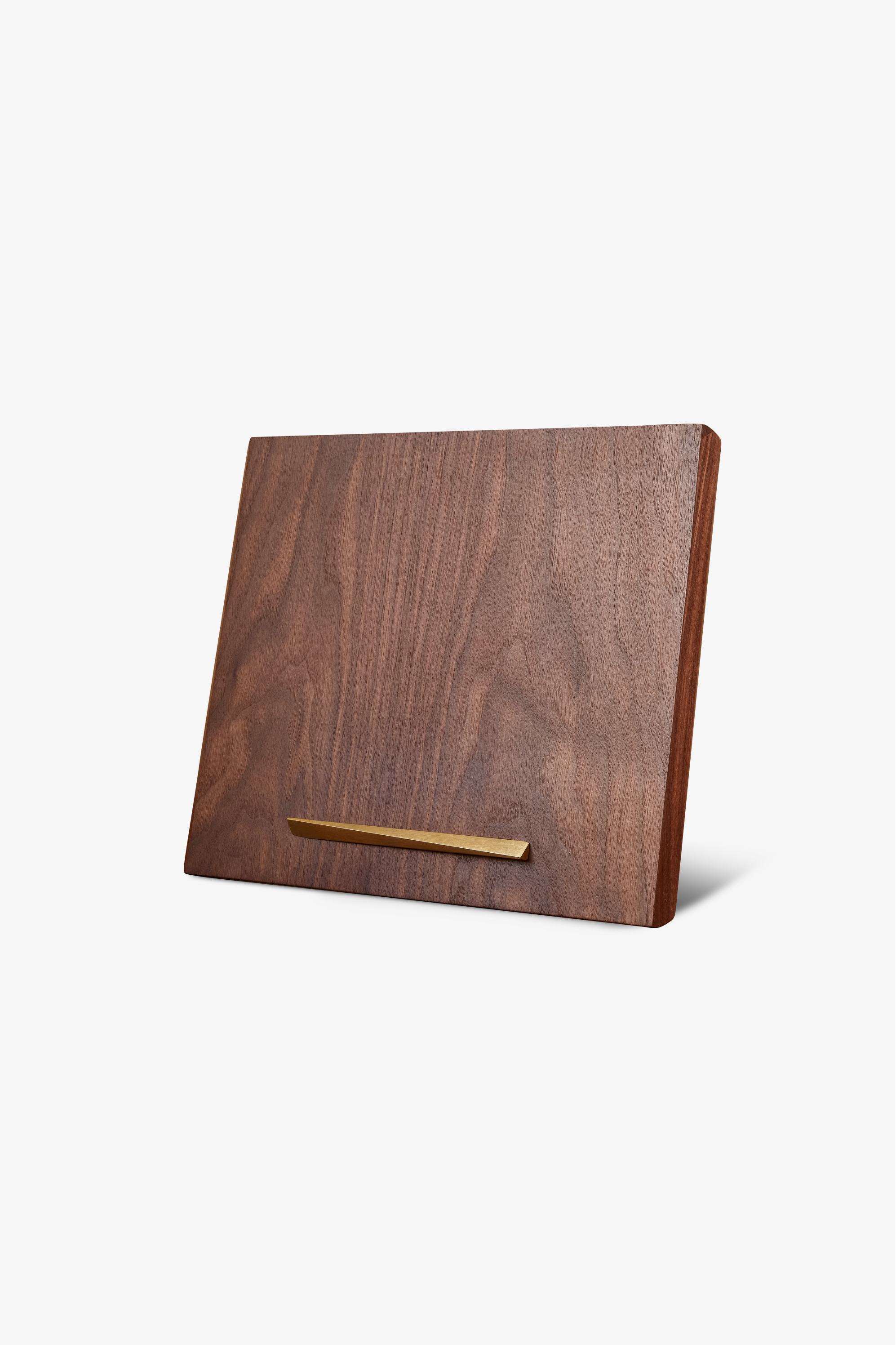
A freestanding Knife block also suits kitchens where drilling into wall tiles, marble splashbacks, or rental walls is impractical, or where primary cooking prep takes place on a central island. Noyer's freestanding block pairs solid walnut with a heavy brass base that stays firmly planted when lifting knives away, allowing the block to be moved between prep stations as needed.
Choosing the Right Storage Setup
Deciding between a wall-mounted rack and a countertop stand comes down to three practical considerations:
- Wall surface and counter area: If you have open wall area beside your cutting board, a magnetic strip frees valuable counter space. If you work on an island or cannot drill into tile, a weighted freestanding block avoids wall fixings entirely.
- Number of blades: A standard strip or block accommodates a standard rotation of chef, bread, and utility knives, whereas individual magnetic mounts allow you to install exactly the number of stations your collection requires.
- Mounting requirements: Review wall materials and fixing steps before installing a wall rail. Step-by-step guidance is available in our assembly guide.
Proper storage protects against premature dulling and keeps working edges organized at your prep station. Explore all handcrafted wall and countertop options in our collection of magnetic knife racks.