A dining table anchors daily routines, evening meals, and extended gatherings, but the chairs around it determine how the room feels and functions. A dining chair must provide stable seating support through hours of conversation while maintaining a balanced profile when pushed in against the tabletop. Achieving long-term appeal comes down to disciplined construction, where every timber joint, clearance, and angle serves a clear purpose.
Structure and the Strength of Walnut
At Noyer, chair design begins with joinery that tests the natural strength of solid walnut in the frame itself.
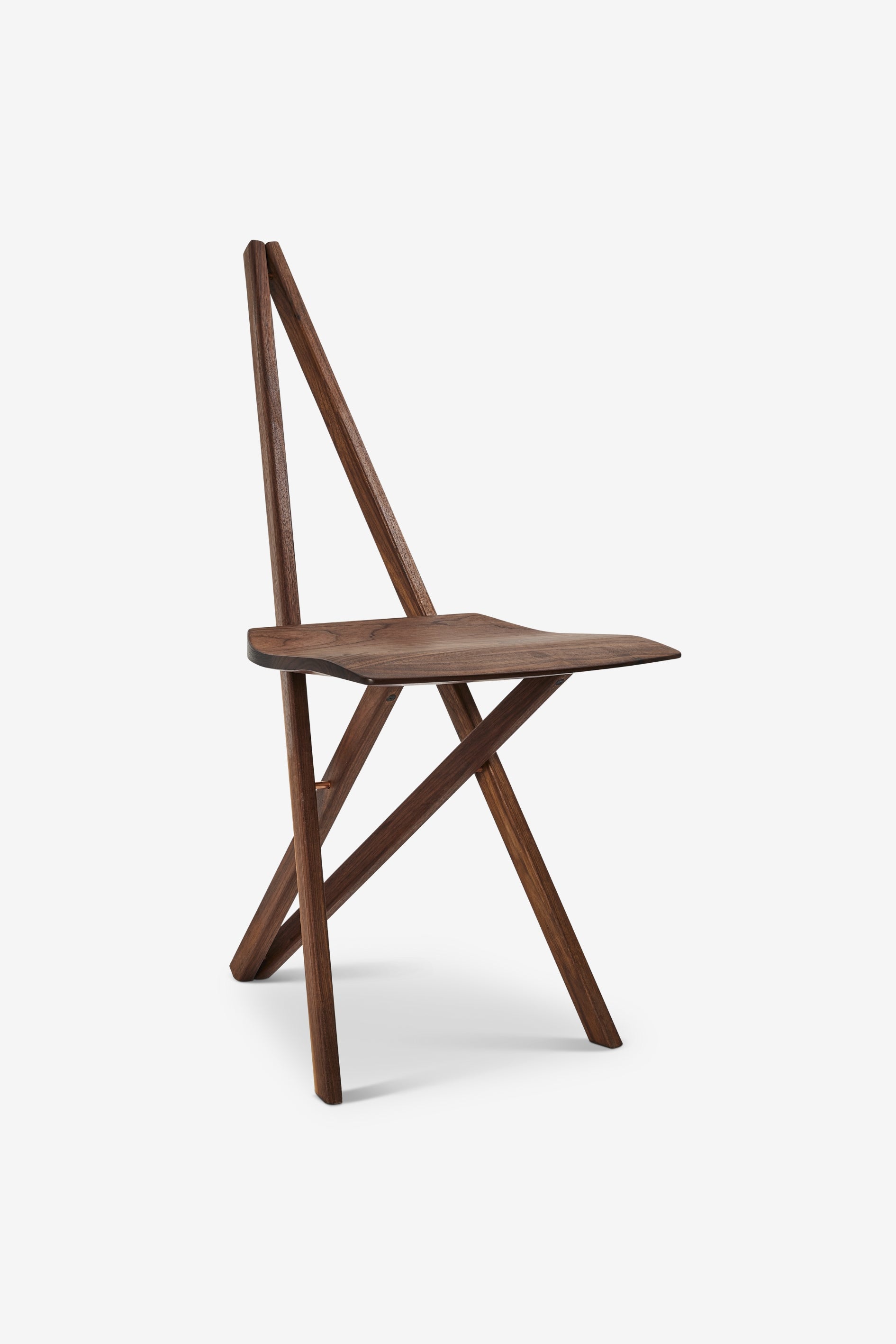
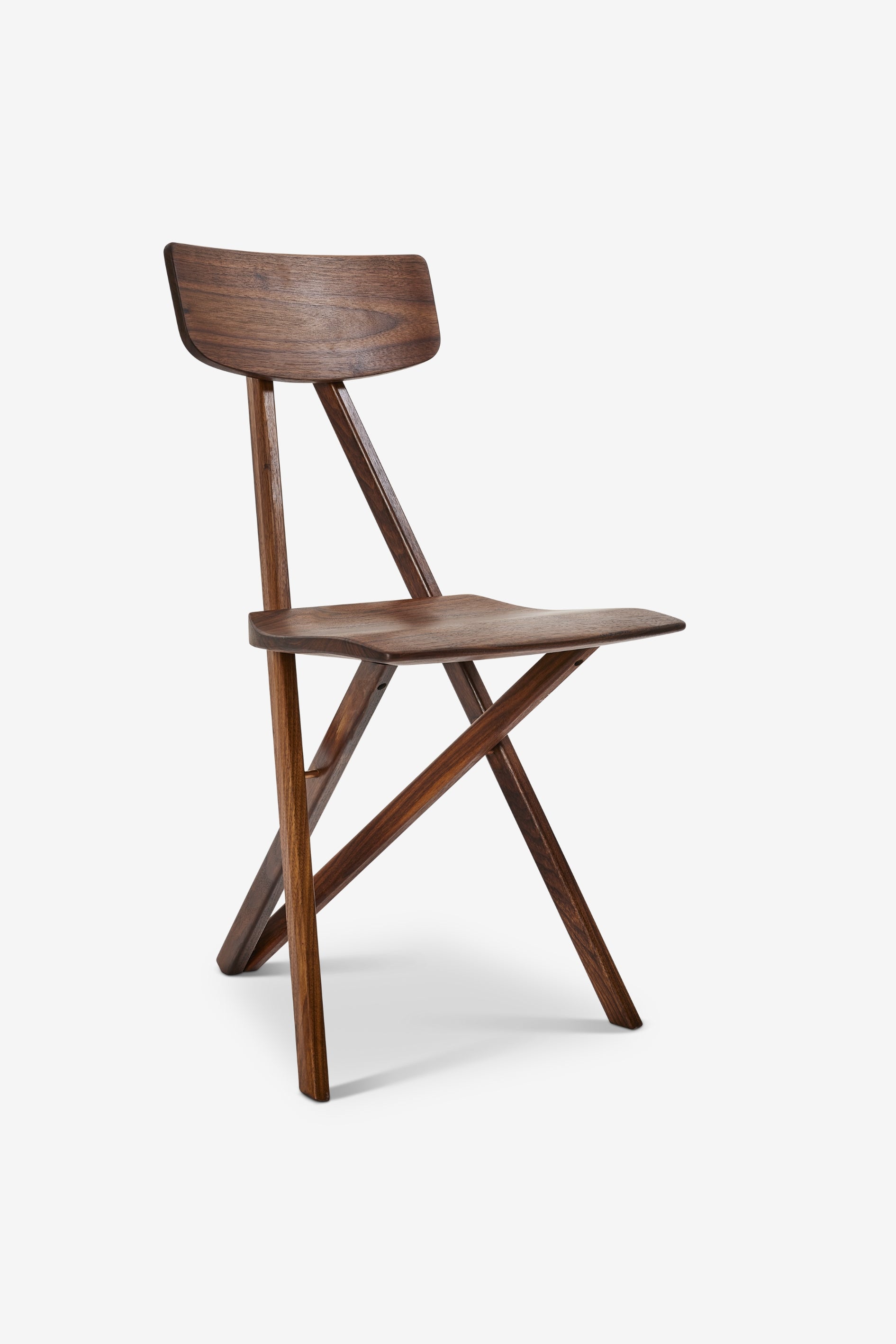
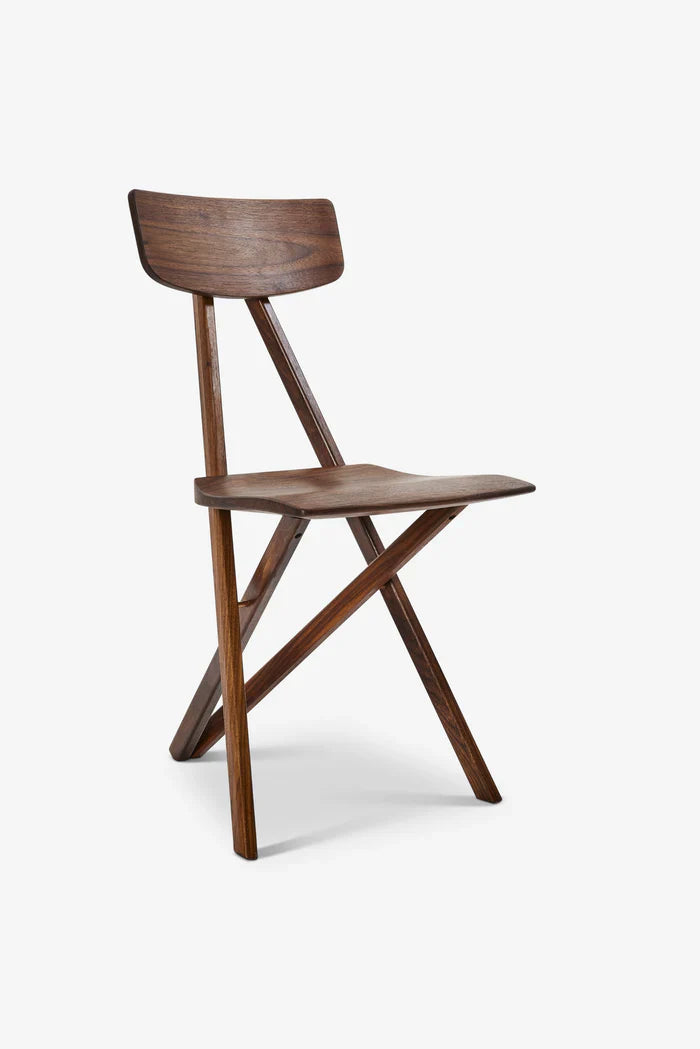
The Dining table chair JN11 originated as a prototype developed for the Danish television design competition Danmarks Næste Klassiker (Denmark’s Next Classic). Its continuous legs converge beneath the seat at sharp angles. Built without a solid backboard, the chair maintains an open sightline across the room, allowing the dark walnut grain to register without visually crowding the dining area.
Pairing Walnut with Different Table Surfaces
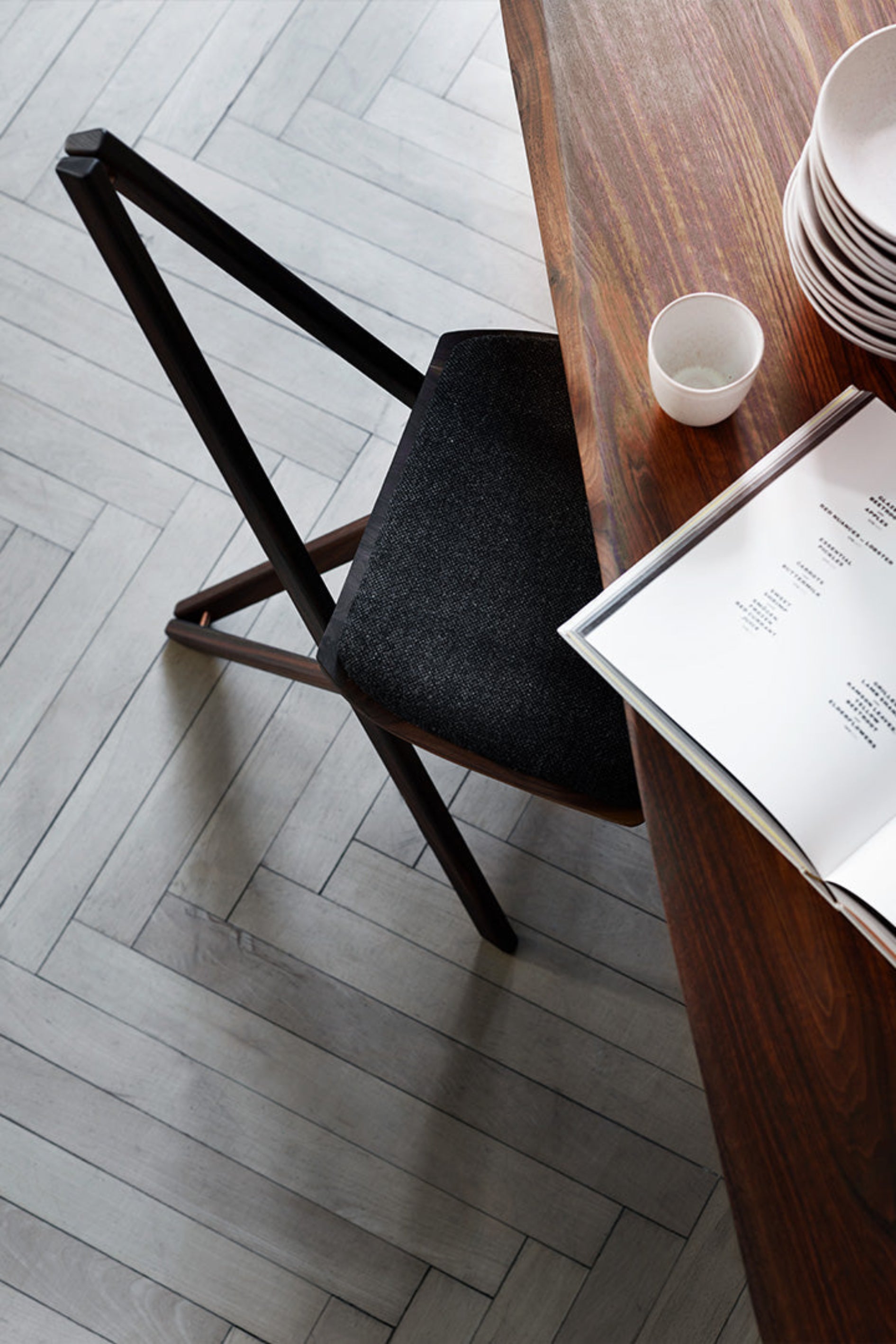
Dining rooms do not require matching furniture suites. Solid walnut has a dark glow and a distinct grain that creates a calm contrast against light oak floorboards, cast concrete, or neutral linoleum table surfaces.
When placed beside pale oak or natural stone, the dark lines of the walnut frame stand out clearly. Alternatively, continuing walnut onto the tabletop by pairing chairs with the Dining table JN01 creates visual continuity through shared angular geometries, as JN16 shares the same design family as JN01.
Seat Materials: Solid Timber, Wool, and Leather
Sitting comfort must accommodate quick morning coffees and dinner parties that last several hours. Different seat surfaces offer distinct functional characteristics:
- Solid walnut: A solid walnut seat lets the natural grain pattern and warm glow of the timber stand forward in their purest form.
- Hallingdal wool: Cold foam upholstered in Kvadrat Hallingdal wool provides cushioned support and a durable seating surface for everyday use.
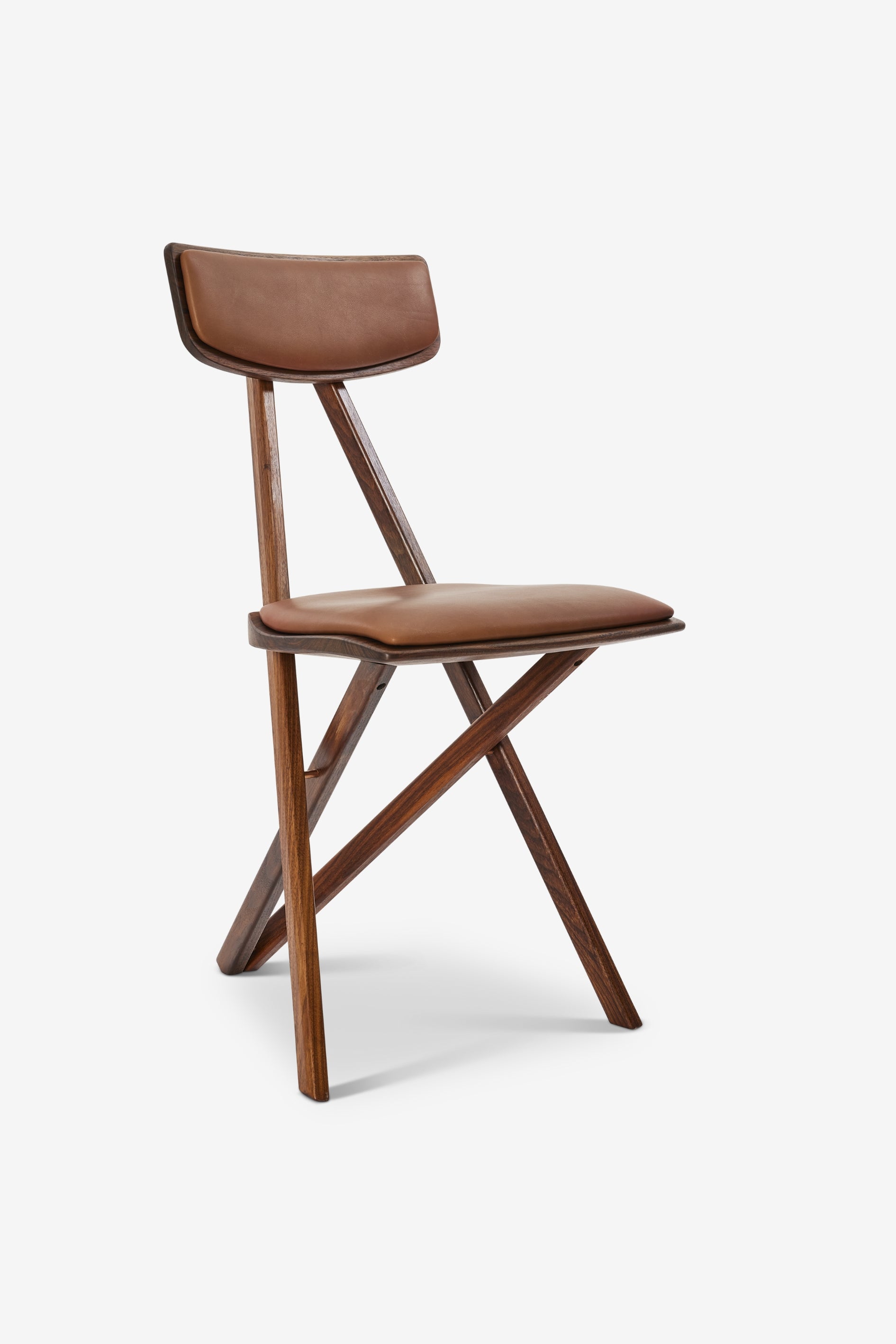
- Leather: Cold foam upholstered in leather provides a supple surface that adapts to the body's use over time.
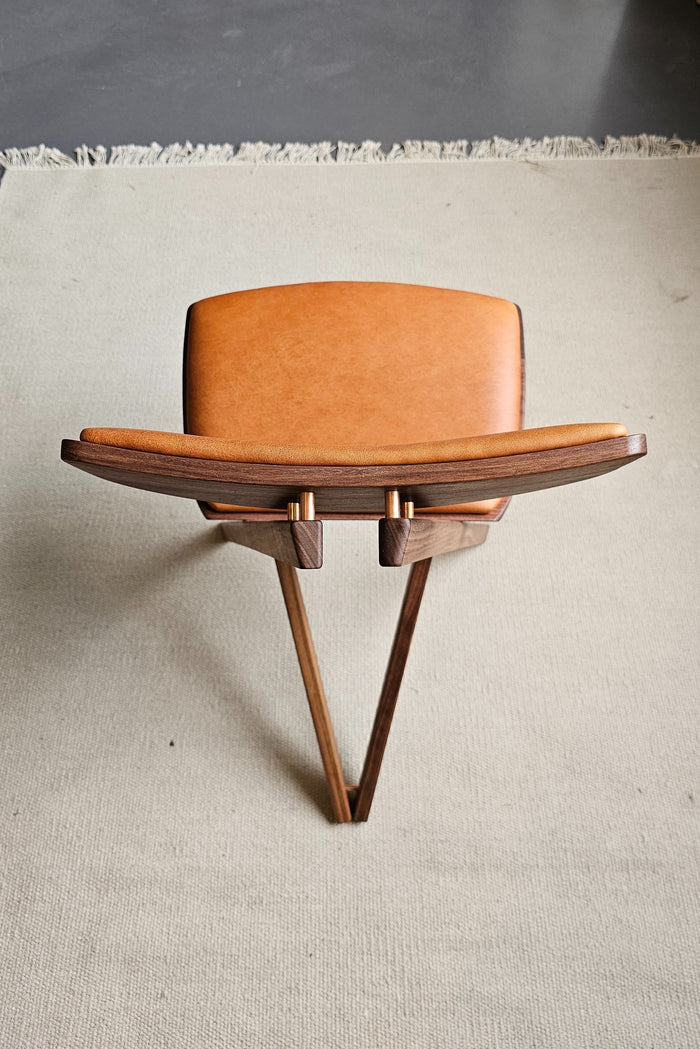
For settings where meals extend late into the evening, the Dining chair JN16 in walnut wood builds upon the structural principles of the JN11 by incorporating a backrest. The JN16 is available in three versions: with a solid walnut seat and backrest, or with cold foam cushioned in Hallingdal wool or leather to provide back support during long dinners.
Clearances and Circulation Around the Table
Selecting dining chairs requires careful attention to the space around the table. In open-plan kitchen and dining spaces, chairs with open frames take up less visual space. Practical comfort also depends on standard spatial clearances:
- Vertical clearance: Maintain 25 to 30 cm between the top of the chair seat and the underside of the table to leave comfortable legroom.
- Table-edge clearance: Allow at least 90 cm (36 inches) between the table edge and the nearest wall to let diners push back and stand up comfortably.
- Circulation paths: Where a primary walkway runs behind seated guests, keep 100 to 120 cm (39 to 48 inches) of clearance to allow easy passage.
- Seat width: Plan for a minimum width of 60 cm per diner along the table perimeter to provide adequate elbow room.
Both the JN11 and JN16 are made to order with a workshop lead time of 4 to 6 weeks. Explore our full collection of chairs to review seating options, or visit our showroom to examine the timber details, leather, and upholstery fabrics in person.