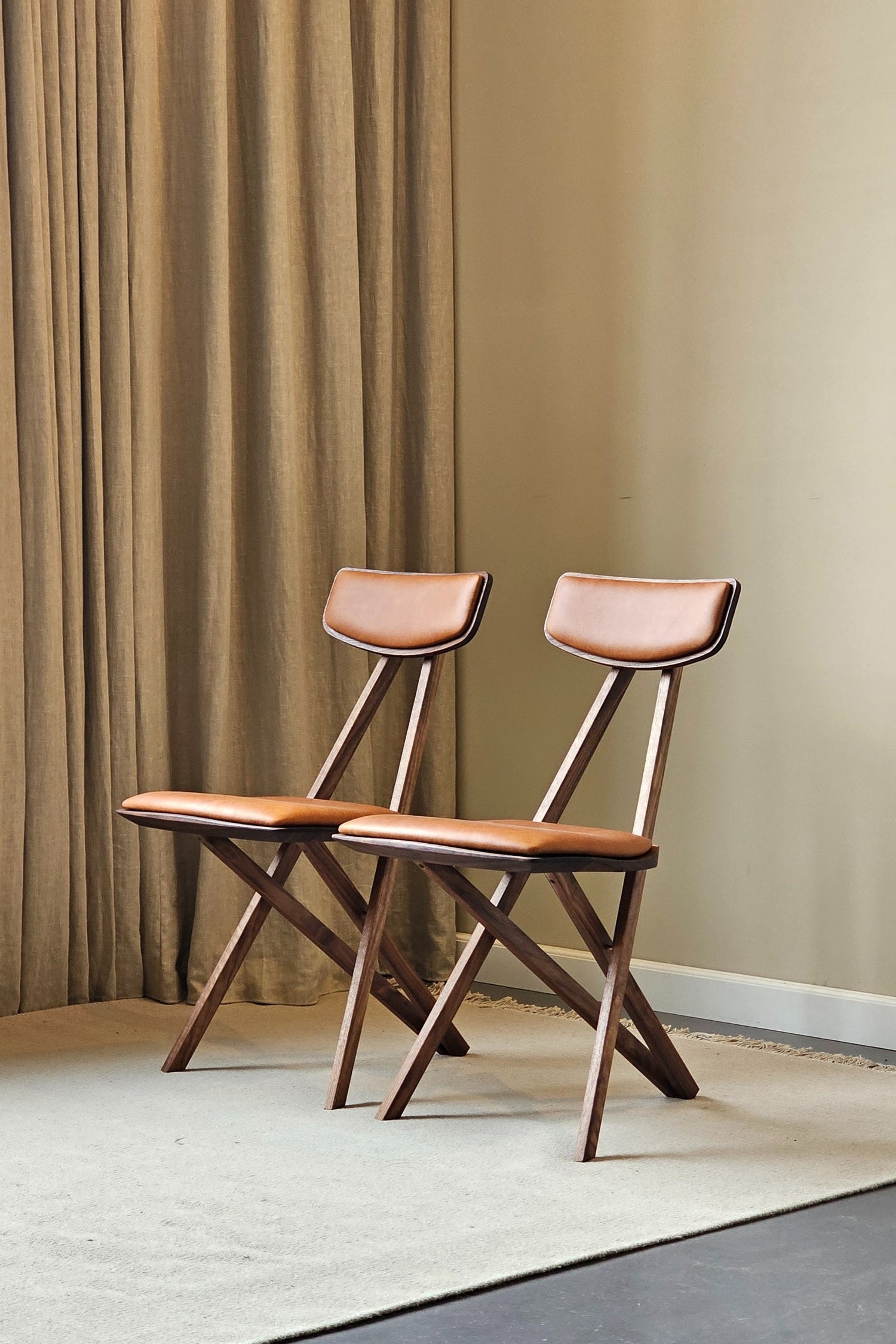
The dining room is often described as the heart of the home, but a heart cannot beat in isolation. It requires a companion that not only complements its form but invites one to remain long after the final course has been served. Selecting solid walnut dining chairs is a decision that transcends mere utility; it is an investment in atmosphere, tactile quality, and an ergonomic grace that respects the body during those long, lingering conversations that define our most cherished evenings. At Noyer, we view the chair as one of the most complex objects to design. It must bear weight, facilitate movement, and maintain a visual lightness that does not overwhelm the room. Our approach is rooted in the use of American walnut, a timber whose deep, chocolatey glow and unique grain patterns provide a warm, organic contrast to the sharp lines of modern interiors.
A Tactile Synthesis of Wood and Leather
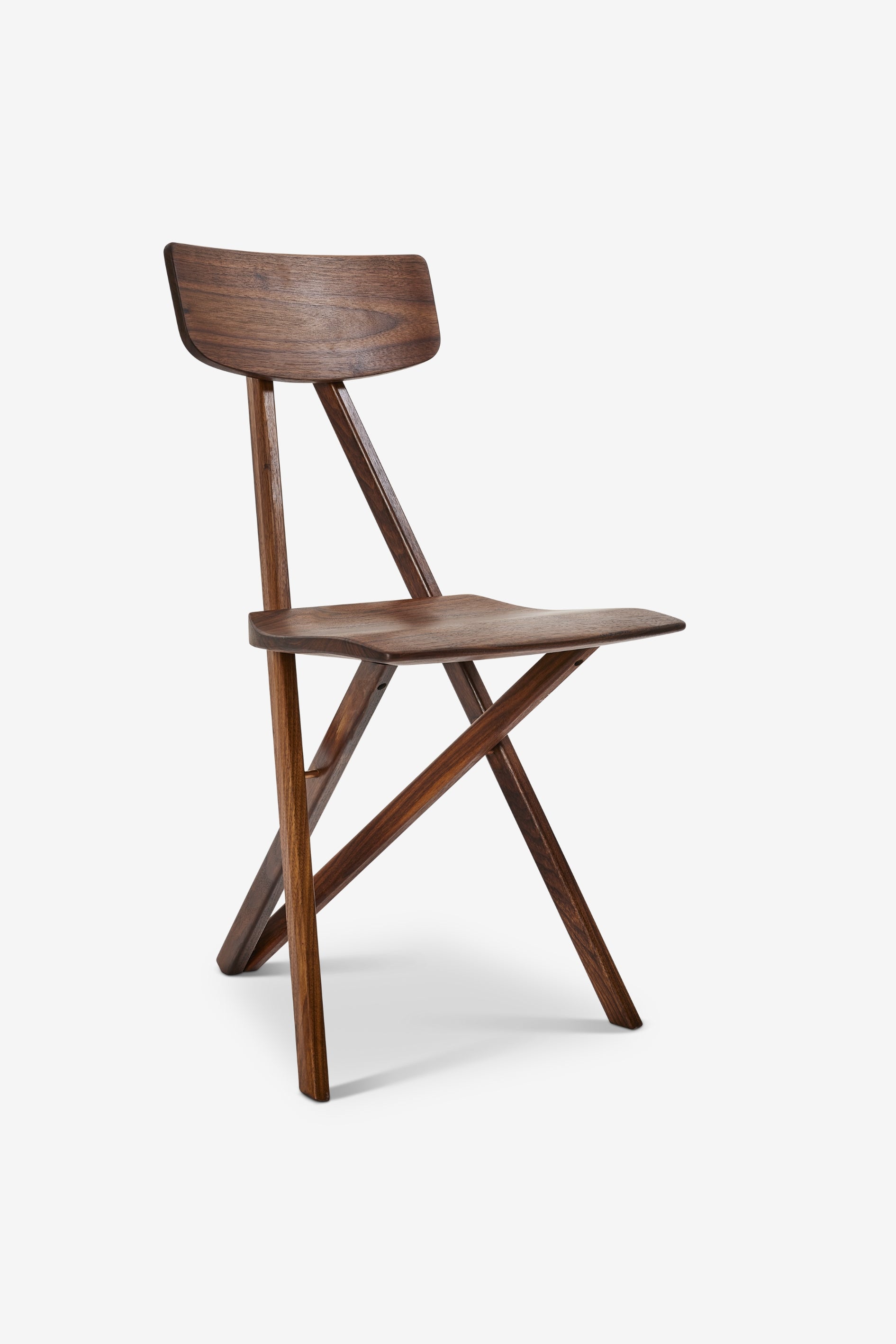
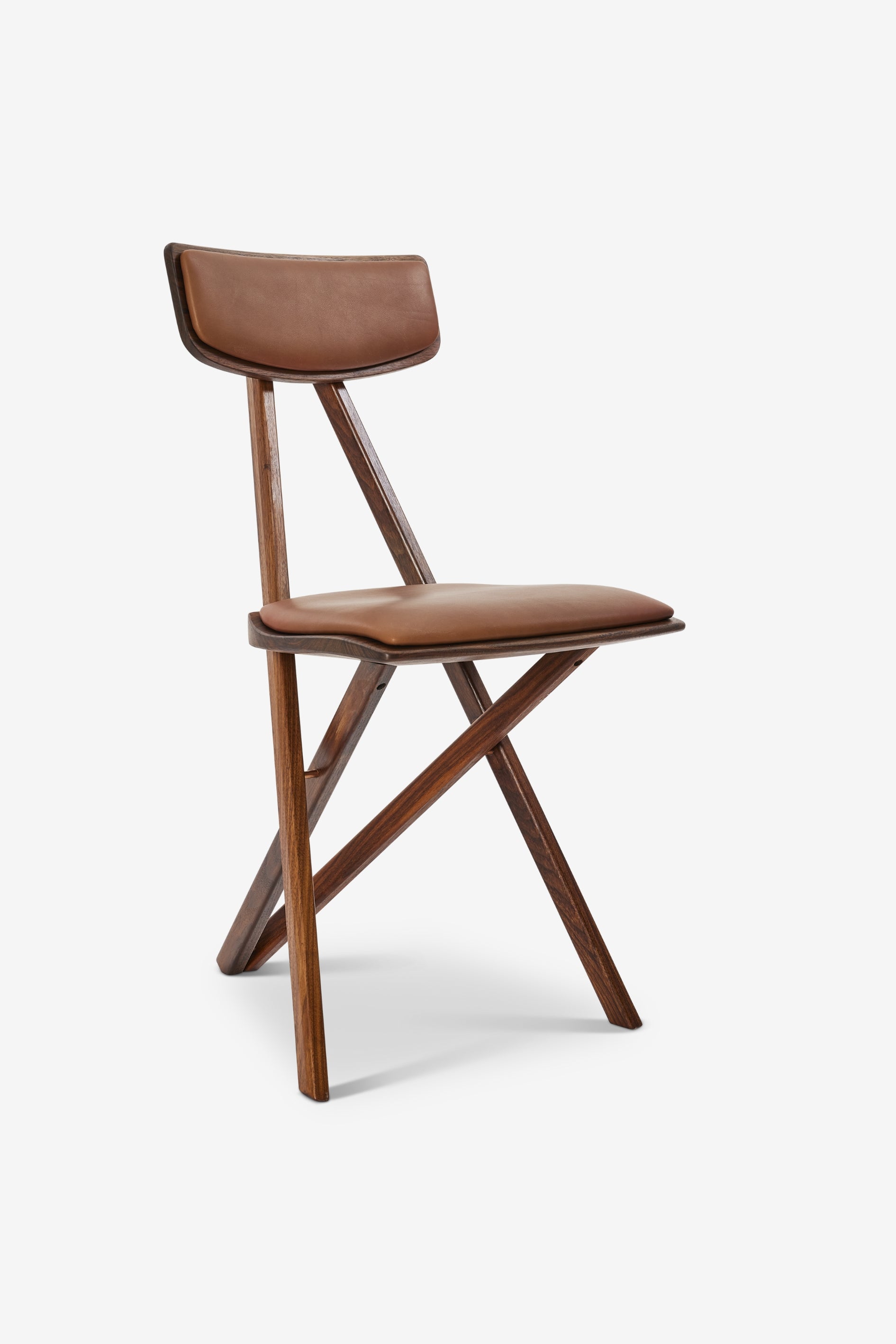
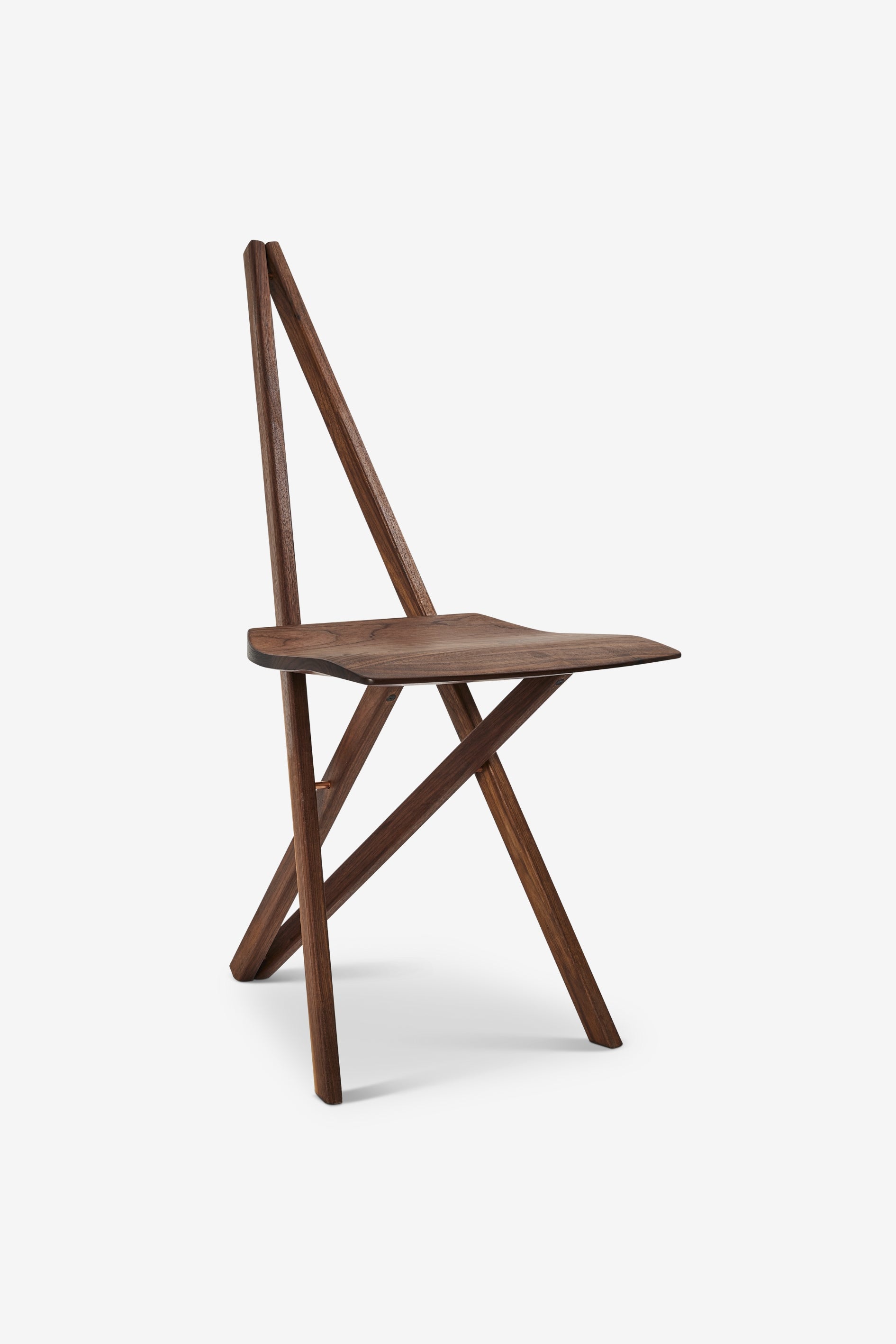
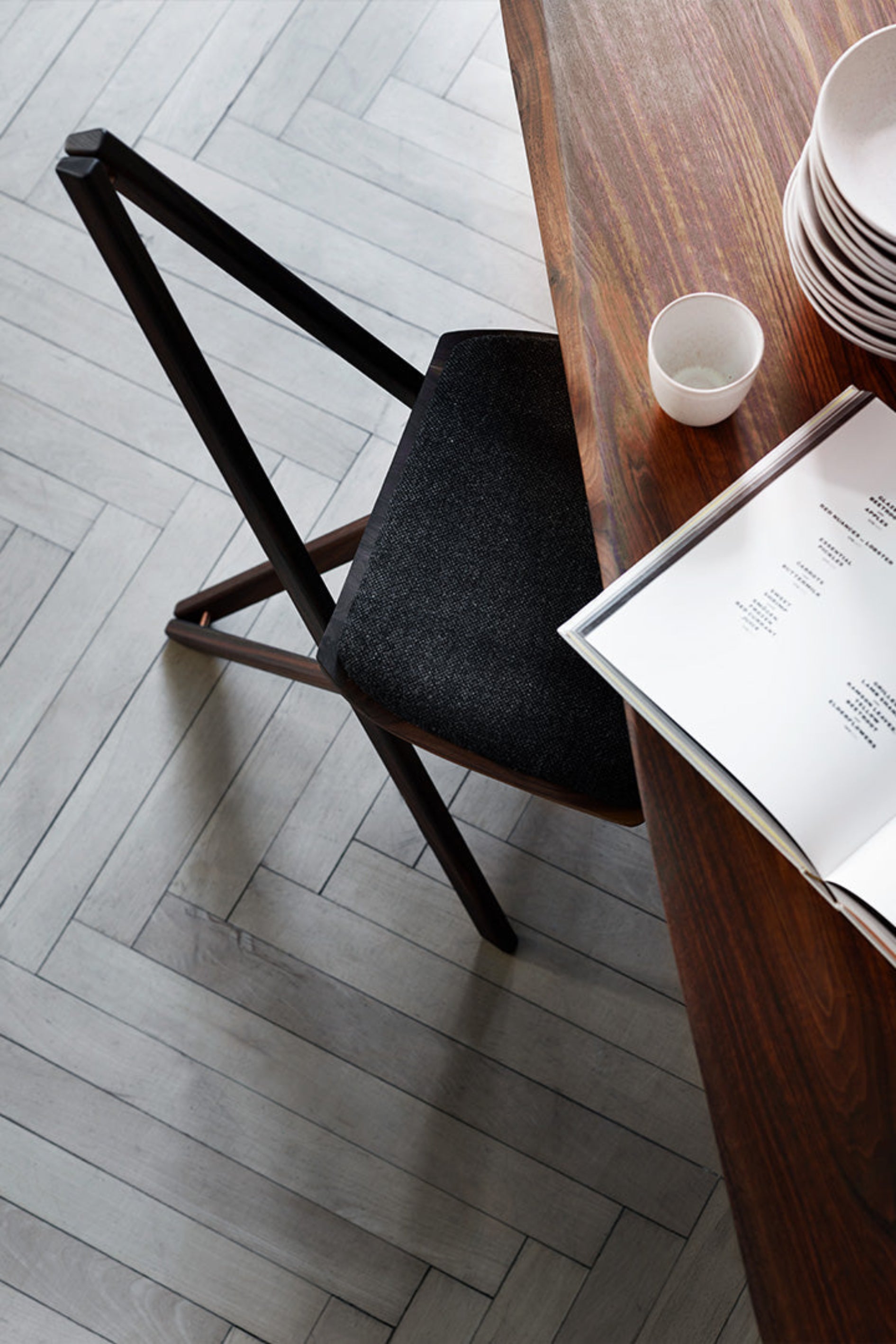
When you run your hand along the frame of a chair from our workshop in Valby, you immediately sense the distinction between mass-produced furniture and genuine master joinery. We work exclusively with solid walnut, a species renowned for its structural integrity and its remarkable ability to develop a rich patina over time. It is a material that speaks to the senses, becoming more soulful with every touch and every passing year. For us, seating comfort is found in the delicate balance between the firm and the soft. Our JN11 dining chair and its evolved counterpart, the JN16 dining chair in walnut, are offered with various seat and backrest options to suit individual preferences.
Whether you prefer the cool, honest sensation of solid wood or the luxurious suppleness of black or cognac aniline leather, the objective remains the same: to create a chair that demands to be touched. Aniline leather is the highest grade available, chosen because it retains the natural characteristics of the hide, allowing it to breathe and age in harmony with the walnut frame. This combination of materials creates a sensory experience that is both grounded and elevated, ensuring that the chair is as much a pleasure to behold as it is to sit in.
The Art of Seating: Why Solid Walnut Dining Chairs are a Lifetime Investment
The Noyer design language is defined by our signature 45-degree angles. To the eye, these lines appear sharp and architectural, yet in contact with the body, the design reveals an unexpected softness. Every angle is meticulously calculated to provide the correct support where it is needed most. In the JN16 model, we have integrated a backrest that follows the natural curvature of the spine, making it an exceptional choice for evenings where dinner flows into late-night discussion. This is where functionality meets our playful approach to construction: creating a chair that looks like a sculpture but feels like a sanctuary.
Choosing solid walnut dining chairs is also a commitment to longevity. In a world increasingly dominated by disposable trends, we advocate for the heirloom. Because we use solid timber rather than thin veneers, these chairs possess a physical weight and a structural honesty that allows them to endure. They are not merely objects for the present; they are intended to be passed down, carrying the stories of a thousand dinners within their grain. This durability is a core value of Danish design, where the beauty of an object is inseparable from its ability to last.
Master Craftsmanship: From Prototype to Icon
Many of our most celebrated designs began as experiments on the workshop floor. The JN11 chair, for instance, has its origins in the prestigious television program Denmark's Next Classic (Danmarks Næste Klassiker), where the challenge was to create a dining chair that could redefine existing norms. The result was a piece that plays with the strength and center of gravity of the wood. It is a construction that demands extreme precision in joinery, as the slender, tapering legs must support the weight of the body without compromising the chair's visual elegance. It is a testament to the skill of our craftsmen that such a delicate silhouette can offer such profound stability.
Since that initial spark, the family of seating has grown. By listening to our clients' desires for enhanced lumbar support, we developed the JN16. This model retains the same structural principles and geometric DNA as its predecessor but offers an upgraded level of functionality. You can learn more about us and our journey from those first experimental prototypes to the refined collection we present today. Each piece is a reflection of our dedication to pushing the boundaries of what wood can do.
Visual Harmony: Pairing Seating with the Dining Table
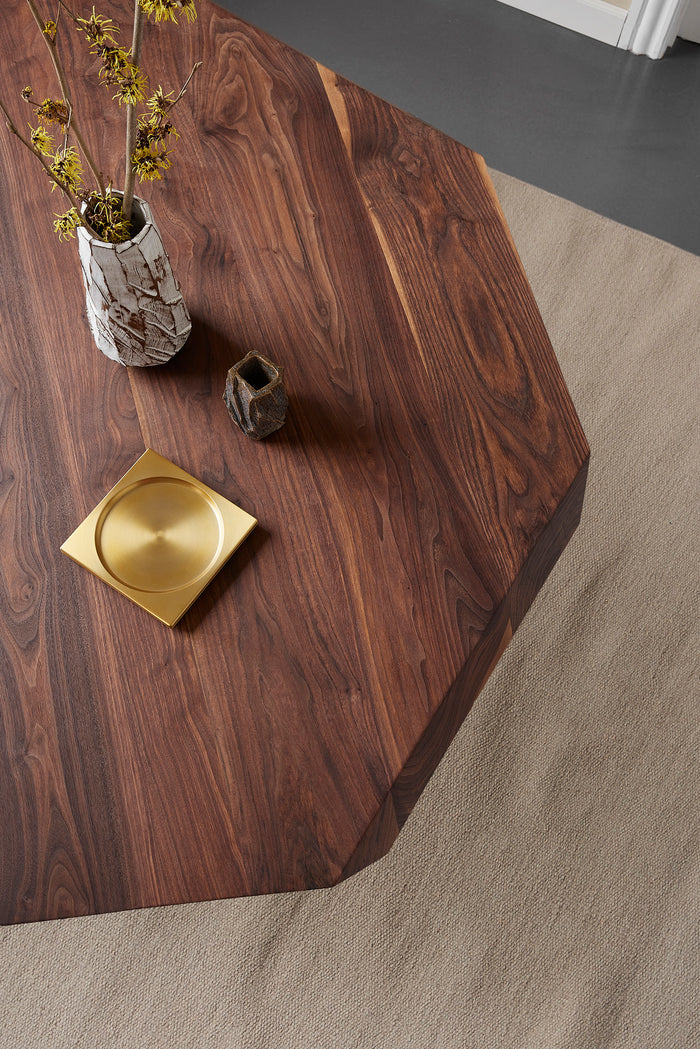
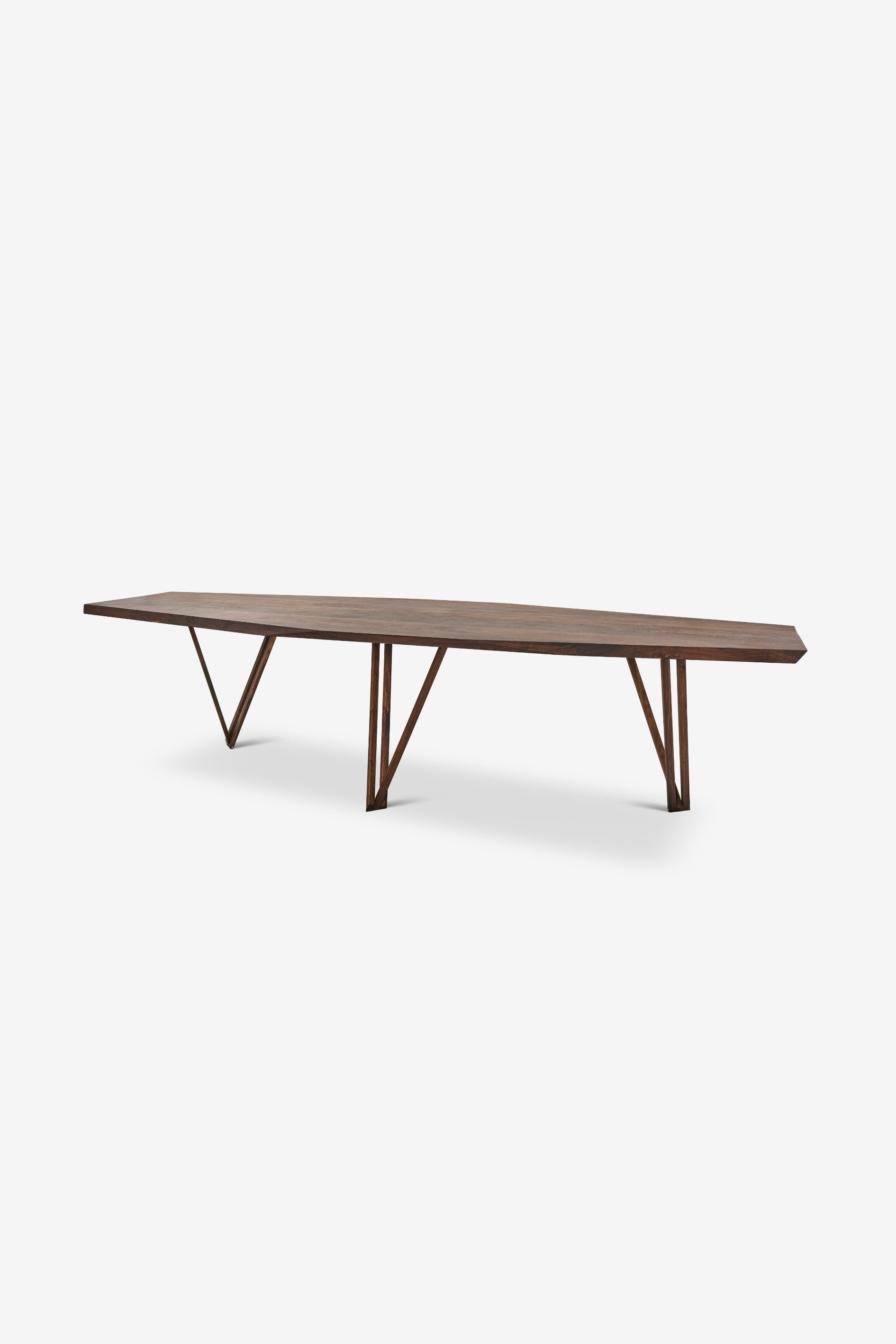
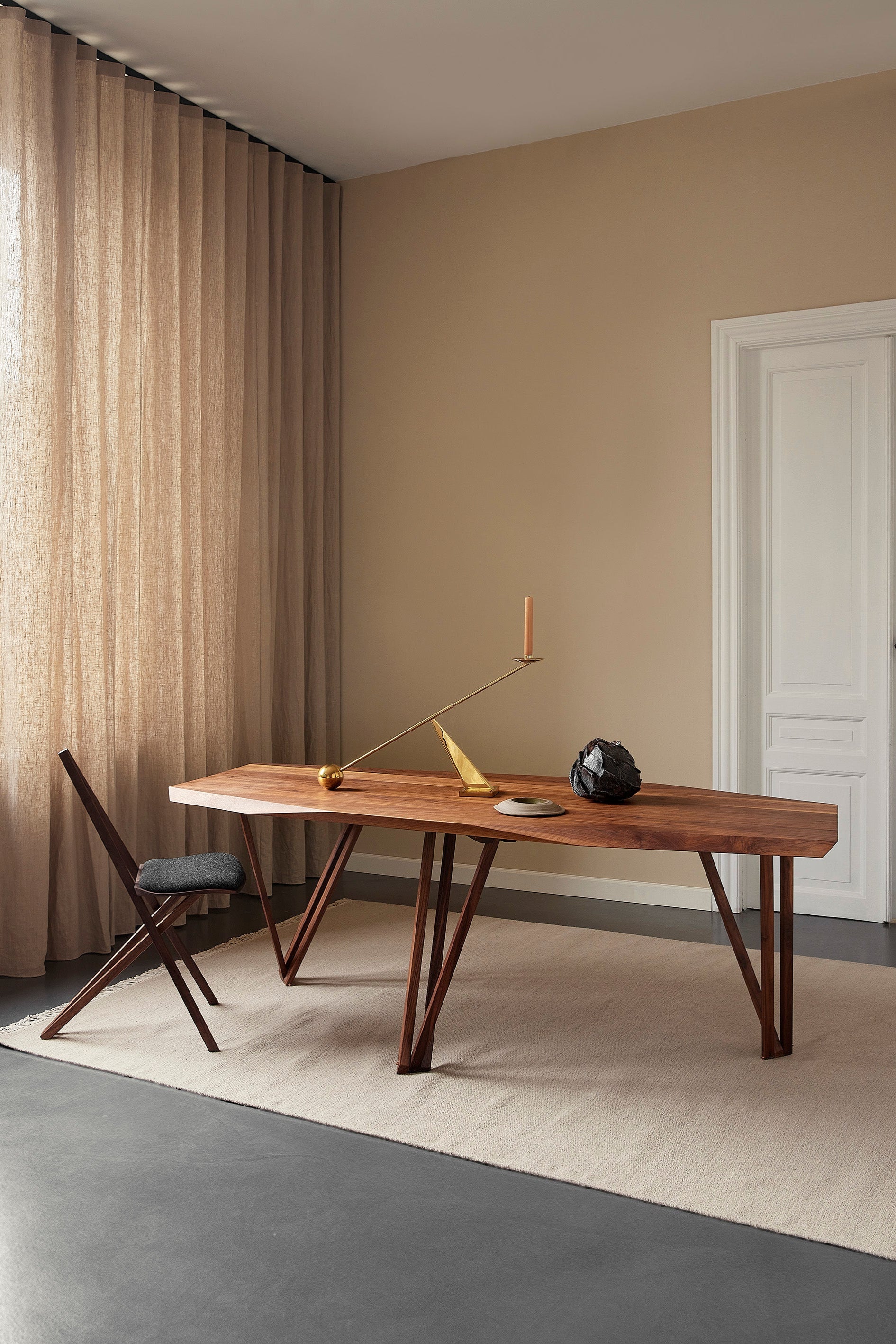
When curating a dining space, it is essential to consider the dialogue between the elements. A chair rarely stands alone; it exists in a constant relationship with the table. Our JN01 dining table in walnut wood was designed using the same geometric principles as our seating. By selecting both the table and chairs from the same design family, you create a cohesive narrative that brings a sense of calm and intentionality to the room. The repeating angles and matching wood tones ensure that the furniture feels like a unified installation rather than a collection of disparate parts.
Proportions and the Luxury of Space
A frequent question we encounter in our showroom concerns the ideal number of chairs for a specific table. As a guiding principle, each guest should be afforded approximately 60 cm of space to ensure they can dine comfortably without feeling crowded. Because our dining tables are often made to order, you have the freedom to specify the exact length required to accommodate your lifestyle, whether you frequently host large gatherings or prefer a more intimate setting. However, the consideration is not purely spatial; it is also visual. The dark, rich tones of walnut can feel heavy if the design is not handled with care. This is why we have worked extensively on the leg profiles of our chairs, ensuring they appear slim and graceful from every perspective. This allows you to place multiple chairs around a table while maintaining an air of openness and light.
Longevity and the Care of Natural Materials
Durability is the cornerstone of sustainability. We believe that the most environmentally friendly furniture is the furniture that never needs to be replaced. A solid walnut chair from Noyer is an investment in a piece of Danish design history. Unlike mass-produced alternatives, solid wood can be restored. Should the wood acquire the marks of a life well-lived after decades of use, it can be gently sanded and re-oiled, returning it to its original luster. This ability to renew the material is what makes solid timber the ultimate choice for the conscious consumer.
To ensure your furniture remains as beautiful as the day it left our workshop, we have compiled our best advice on care and maintenance. Walnut is a rewarding wood to care for; with the occasional application of high-quality oil, it retains its depth of color and resistance to the rigors of daily life. Should you have specific questions regarding the upkeep of the leather or the timber, our FAQ is an excellent resource for technical guidance and professional tips.
An Invitation to Exceptional Hospitality
Ultimately, the choice of the right dining chairs is about more than interior styling; it is about creating the framework for hospitality. It is about those moments when the meal is finished, but the company is too good to leave. It is the feeling of leaning back into a supportive backrest, feeling the warmth of the wood beneath your hands, and losing track of time. This is when a piece of furniture truly proves its worth—not just as an object of beauty, but as a catalyst for human connection. We invite you to explore our full collection of chairs and experience the quality of Noyer firsthand. Every piece that leaves our workshop carries with it our passion for craftsmanship and our belief that in the home, beauty and function should always walk hand in hand.