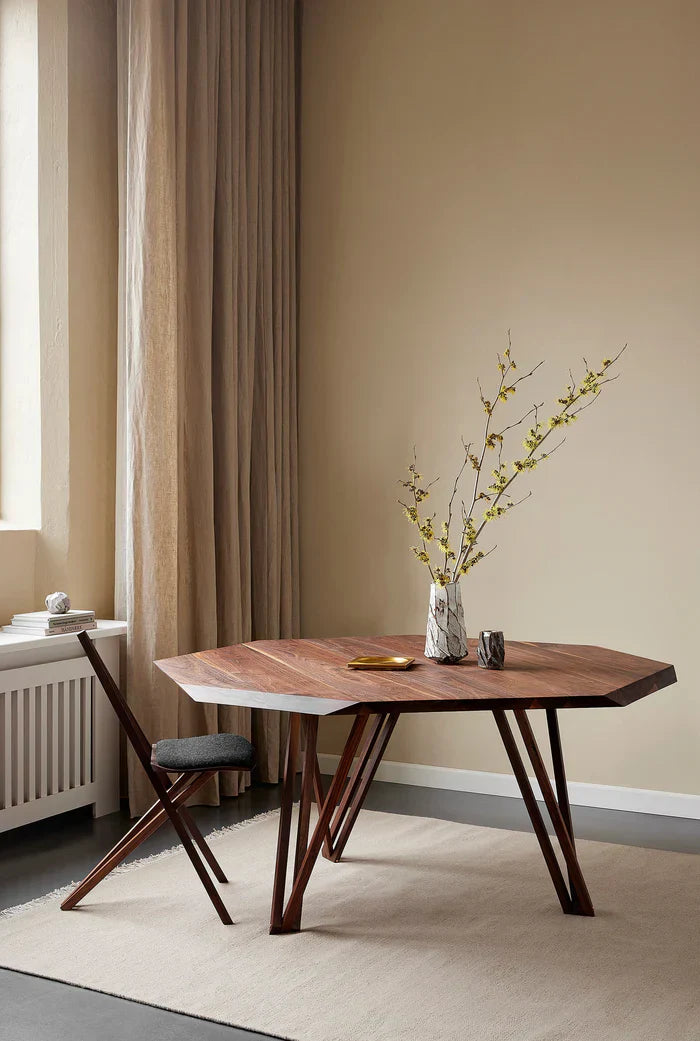
A solid American walnut dining table introduces a defined visual anchor to a dining area. The dark base tone, subtle shifts in hue, and pronounced grain patterns give the tabletop a physical presence that pale timbers or uniform veneers rarely match. Choosing a walnut dining table involves evaluating proportion, edge profiles, leg placement, and how the piece handles daily use.
Directional Geometry: 45-Degree Chamfered Edges and Faceted Profiles
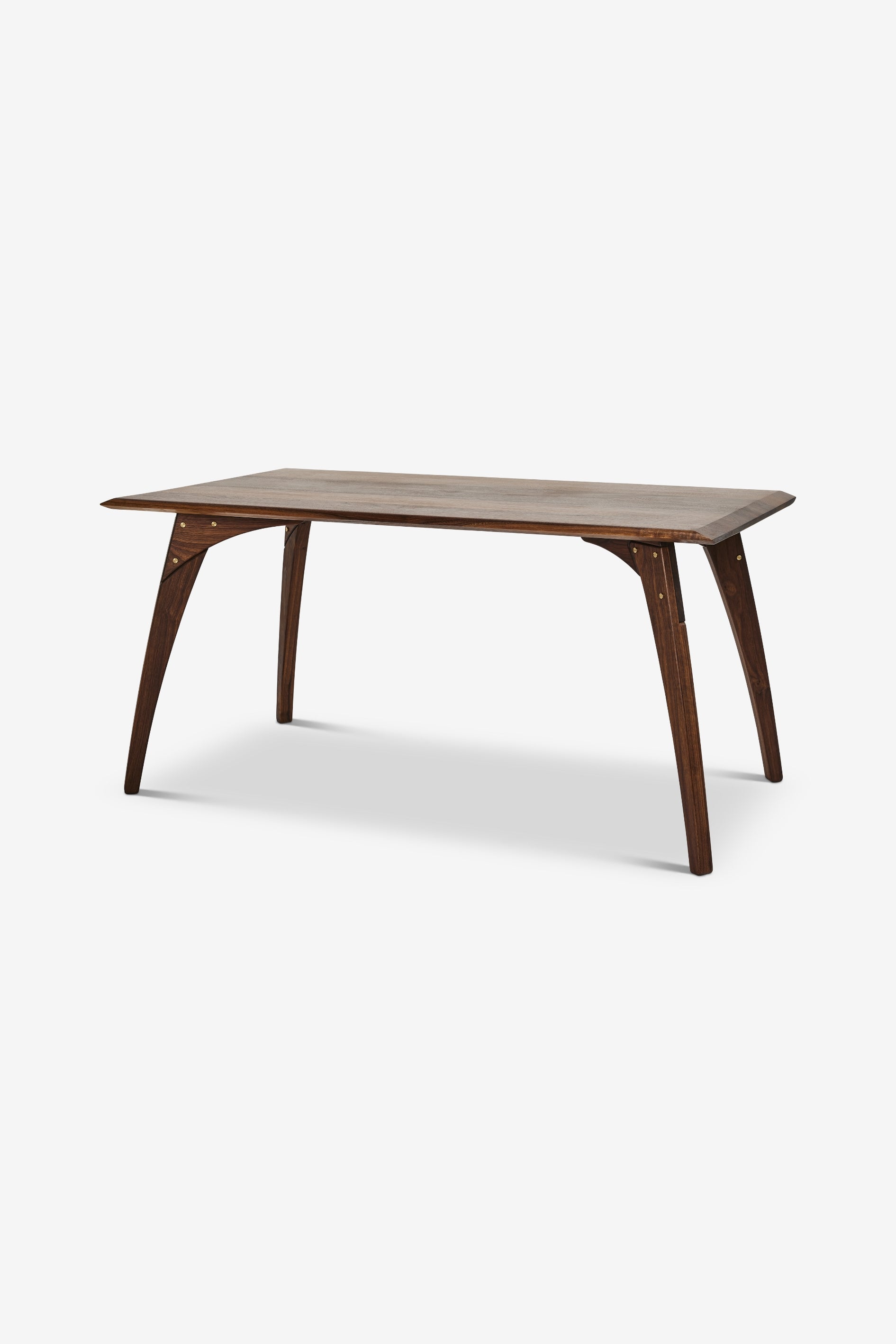
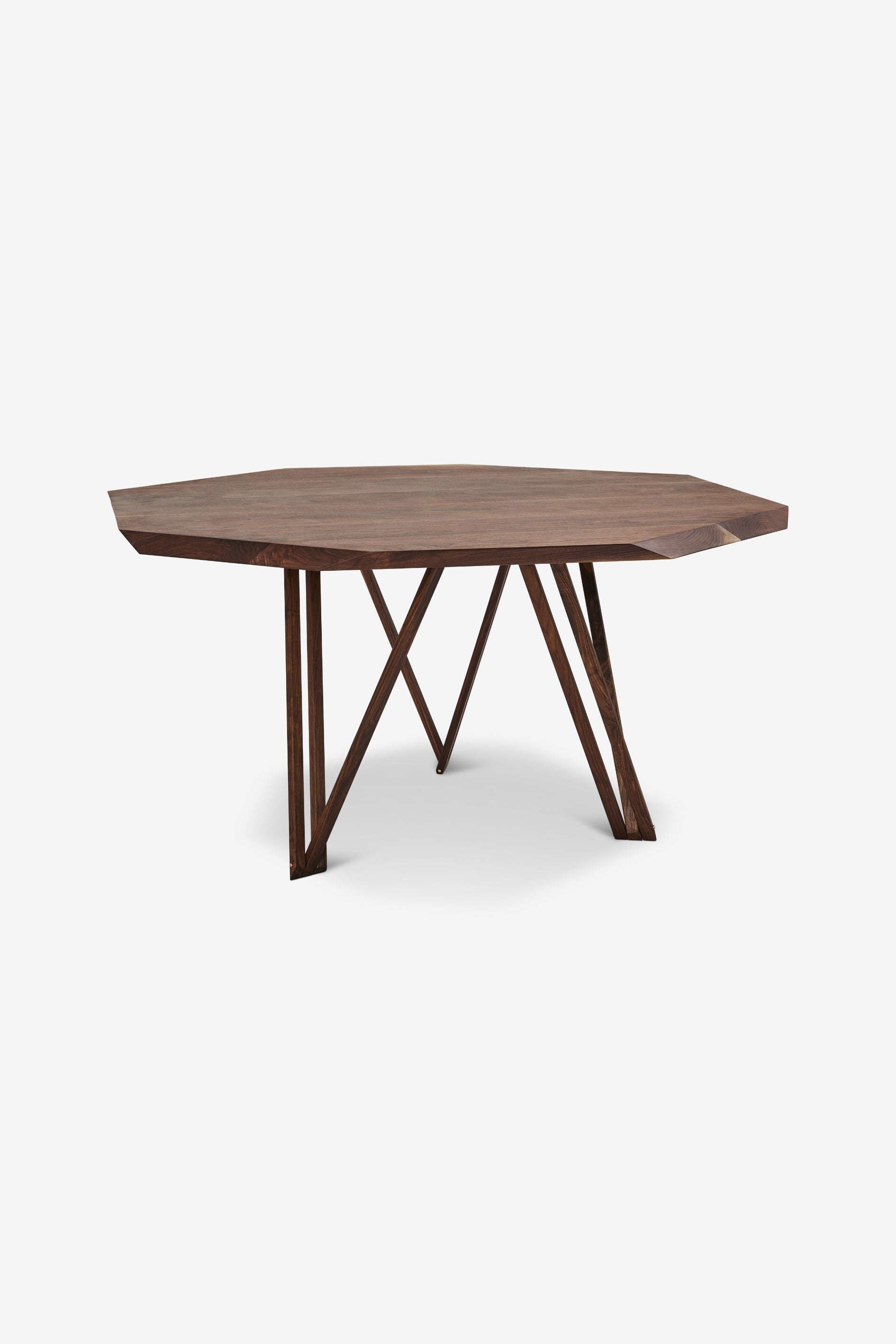
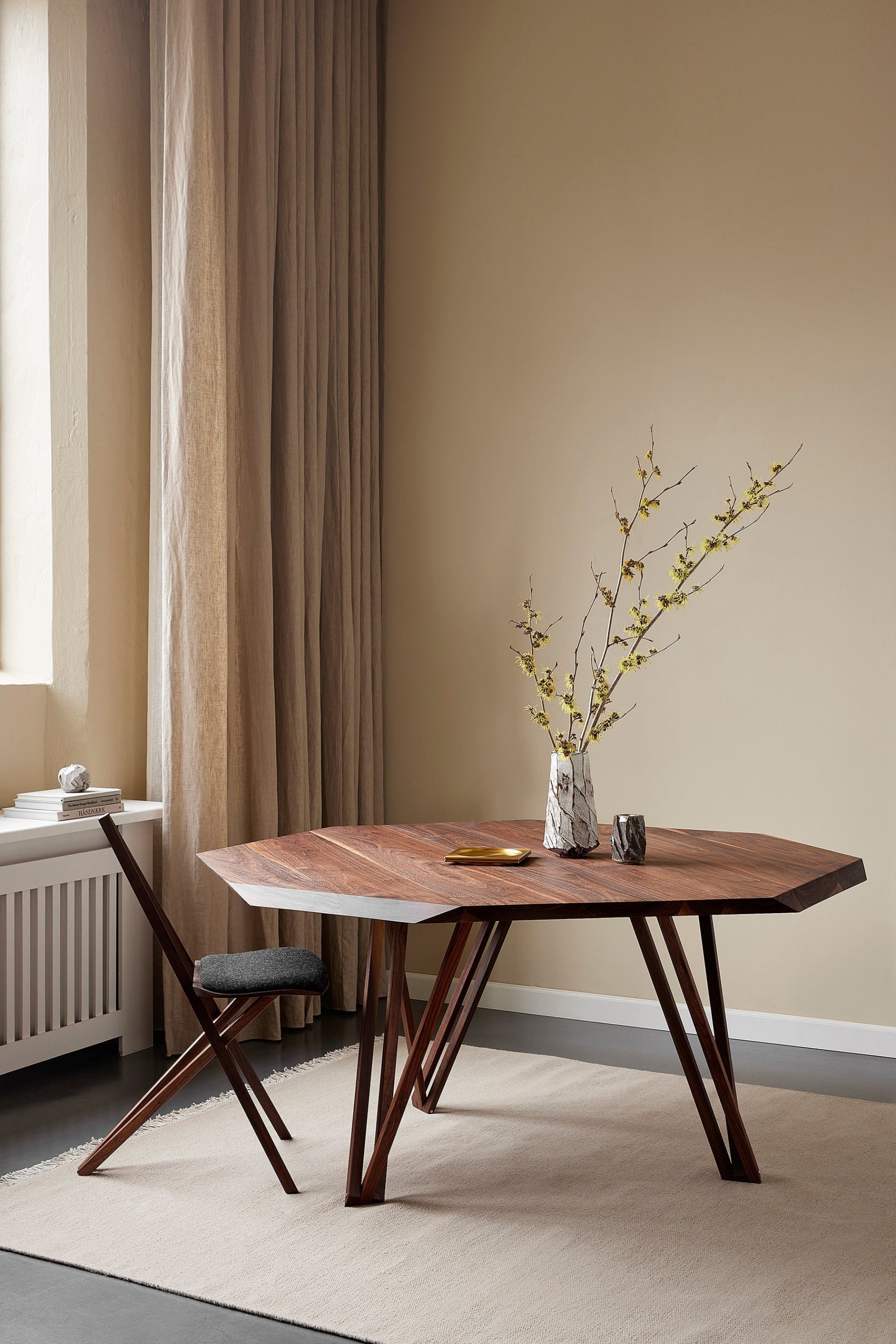
Traditional dining tables are typically standard rectangles or circles. When Janus Larsen and Nikolaj Hviid designed Noyer’s first furniture piece in 2015, the Dining table JN01 in walnut wood, they built around a faceted, octagonal geometry. Rather than conventional perpendicular edges, the perimeter of the solid walnut tabletop is cut with opposing 45-degree angles.
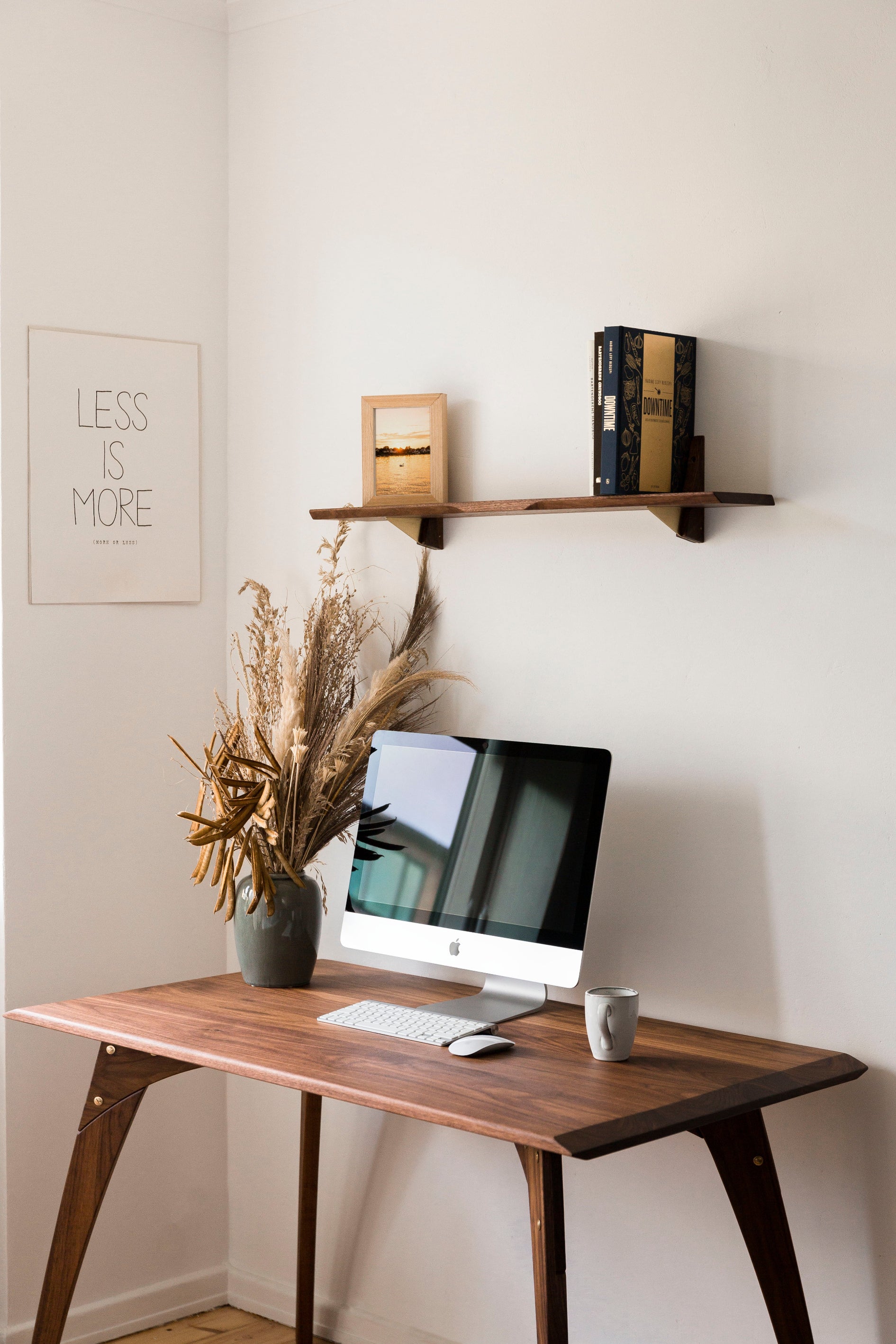
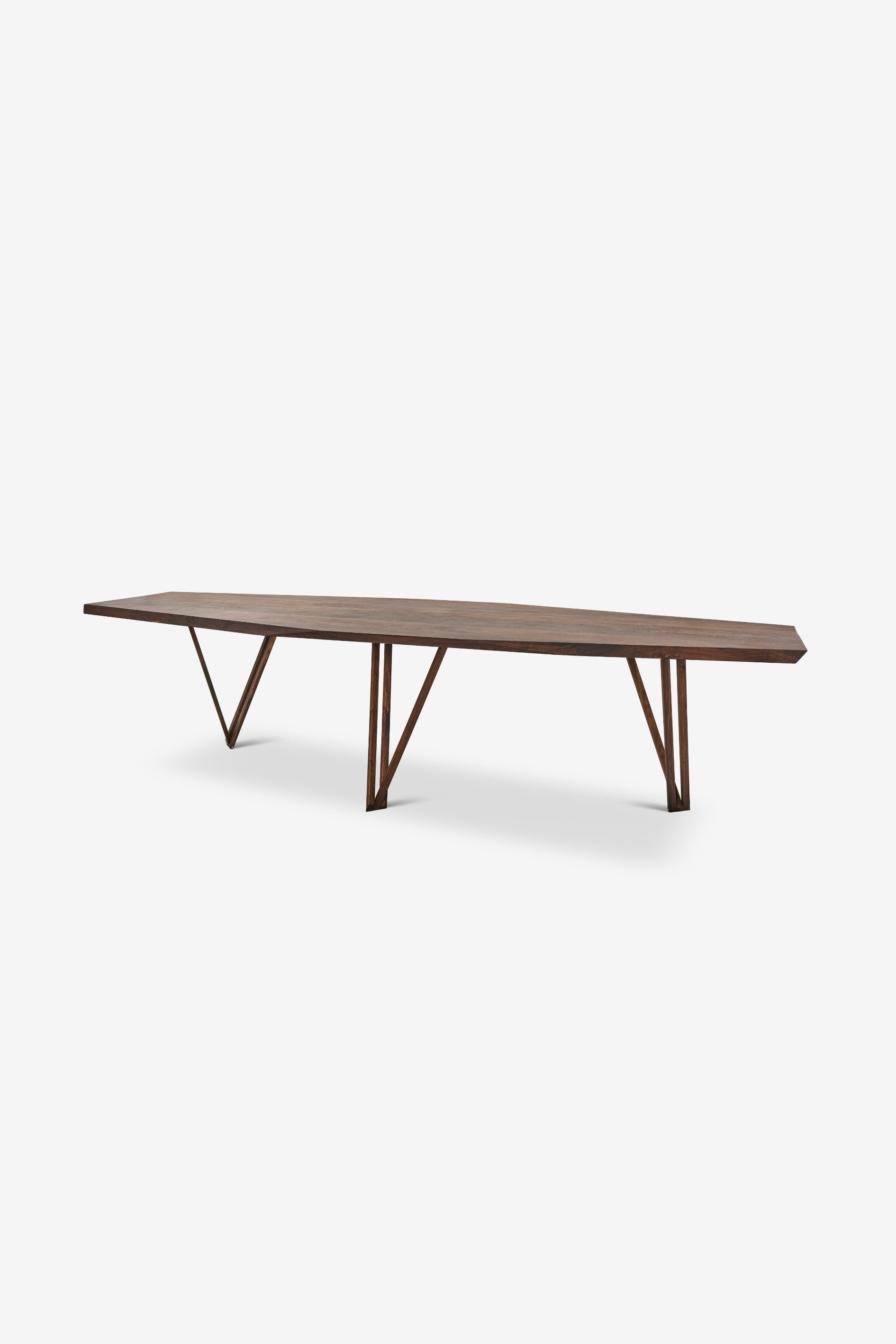
This reverse-chamfered edge profile alters how the piece sits in a room. The angled cut reduces the visual bulk of the solid timber slab, presenting a crisp, slender silhouette without compromising the underlying thickness or weight of the wood. The faceted edges also catch natural light from different angles, highlighting the natural grain across the joined planks.
Elongated vs. Compact Octagonal: Planning Room Proportions and Flow
Selecting between an elongated profile and a compact format depends on the room dimensions and the positioning of walkways:
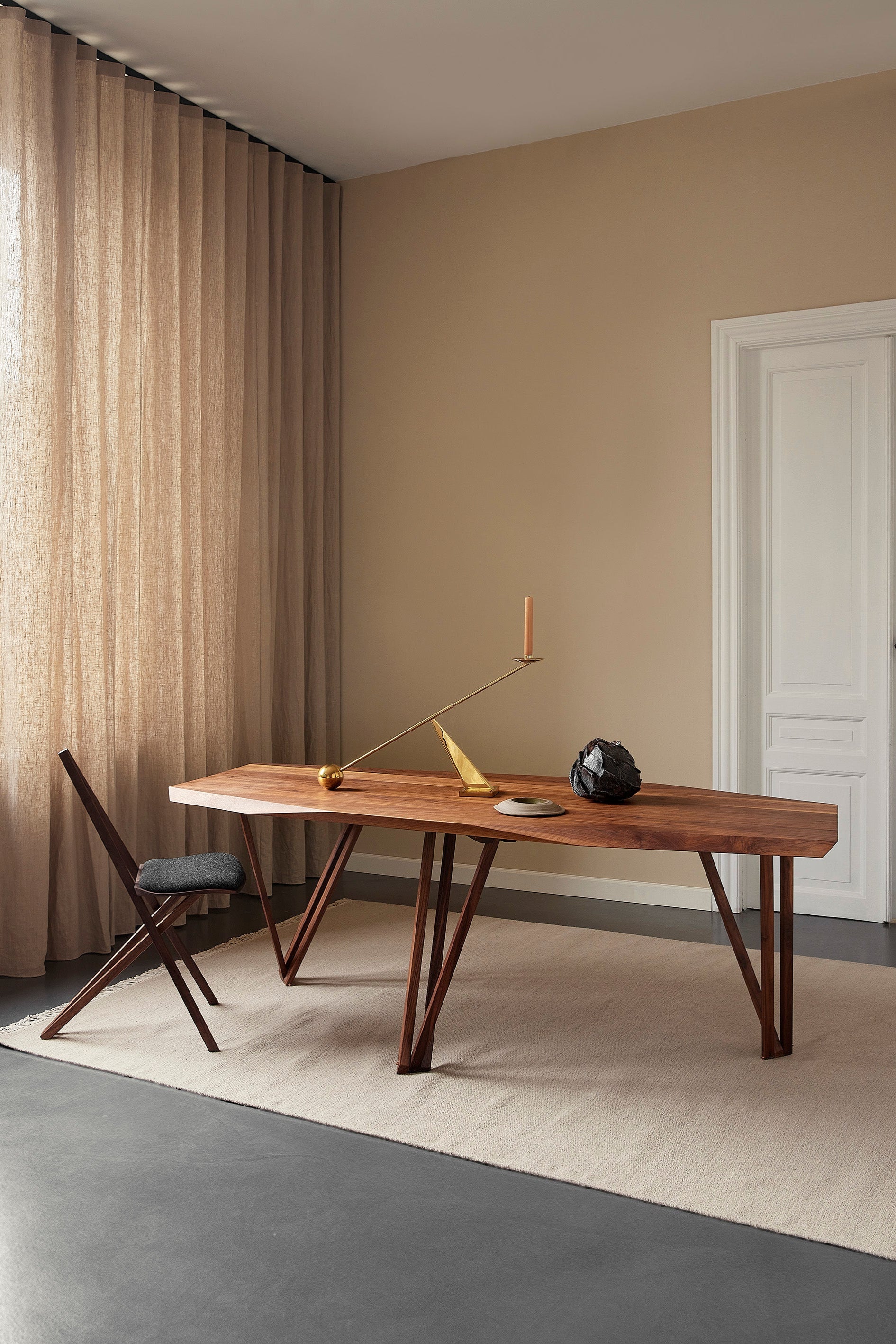
- The elongated dining table: The elongated version of JN01 suits rectangular dining rooms and open-plan kitchen-living areas where the table aligns with the room’s primary axis. The angled corners at the table ends soften the perimeter, leaving clear circulation paths around the seating area. Plan for a baseline clearance of at least 90 cm (36 inches) between the table edge and surrounding walls or furniture to allow chairs to pull out comfortably.
- The compact octagonal dining table: The Dining table JN01 in walnut wood 'round' uses an eight-sided geometry formatted into a balanced, circular footprint. This arrangement gathers chairs evenly around a central point, making it well suited to square dining rooms and open corners.
Base Construction, Leg Clearance, and Joinery
The positioning and build of the table legs directly dictate everyday comfort. On the JN01, the handcrafted angled legs are set inward beneath the tabletop. This inset placement provides comfortable legroom whether sitting along the sides or at the table ends.
Each table is built in our workshop in Valby, Copenhagen. When assembling the wide walnut planks, the joinery prioritizes a cohesive grain layout that displays the natural figure of the timber.
Material Properties and Linseed Oil Care
Solid American black walnut is a stable, durable hardwood with expressive grain. Tables from Noyer are finished with cold-pressed organic linseed oil. The oil saturates the wood pores, enriches the deep brown undertones, and leaves a matte surface suited to everyday dining.
Maintaining an oiled walnut tabletop requires a few straightforward steps:
- Daily cleaning: Wipe the surface with a damp cloth.
- Periodic oiling: When the surface appears dry or matte over time, reapply cold-pressed linseed oil to restore the grain depth and maintain surface protection. Find detailed guidance on our care and maintenance page.
Custom Dimensions from the Valby Workshop
Every dining table is made to order at our workshop in Valby. Because each piece is built individually from selected American walnut planks, we can tailor the length and width to match specific room layouts and seating requirements. You can examine the materials, profiles, and construction in person at our showroom or browse our complete collection of tables.