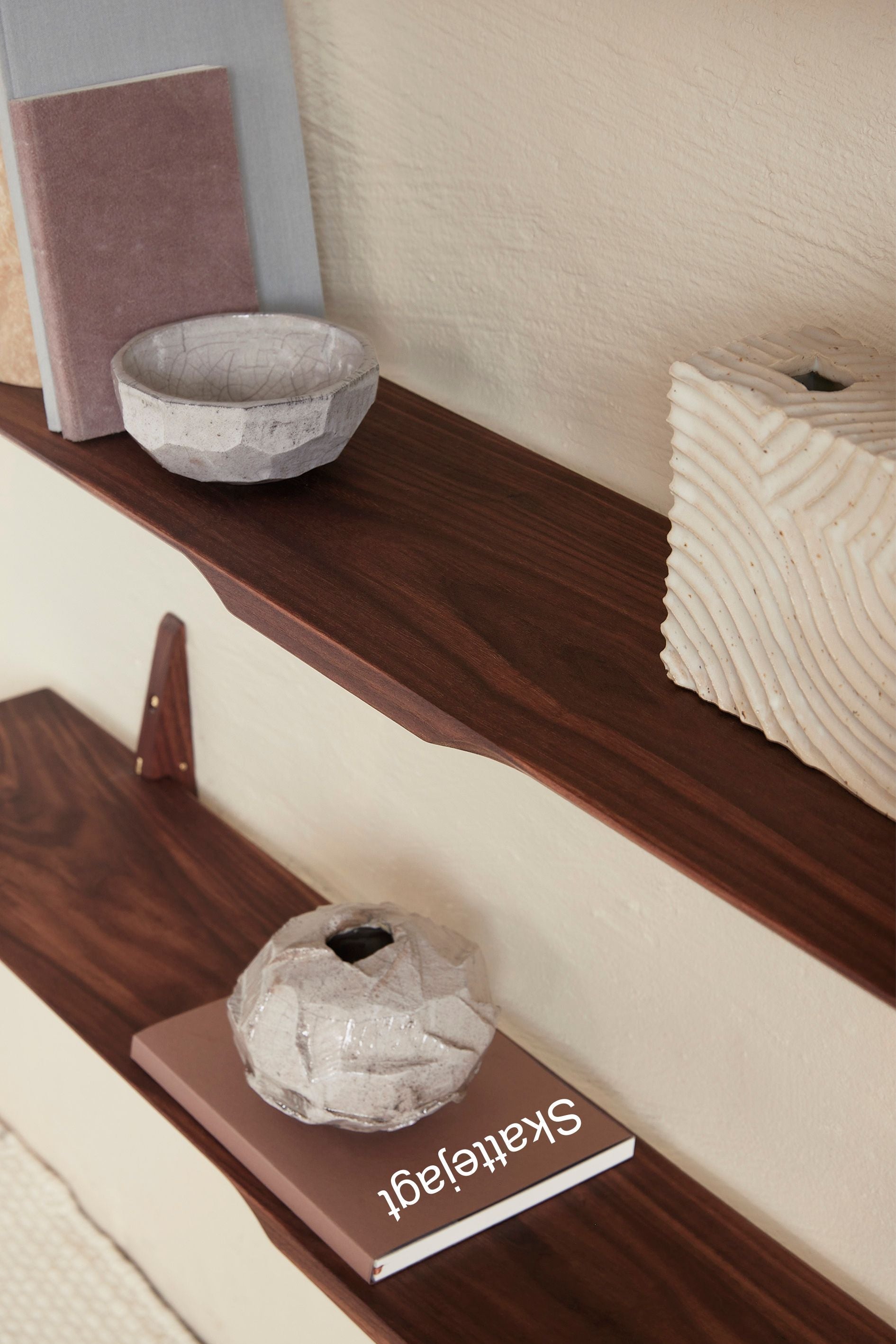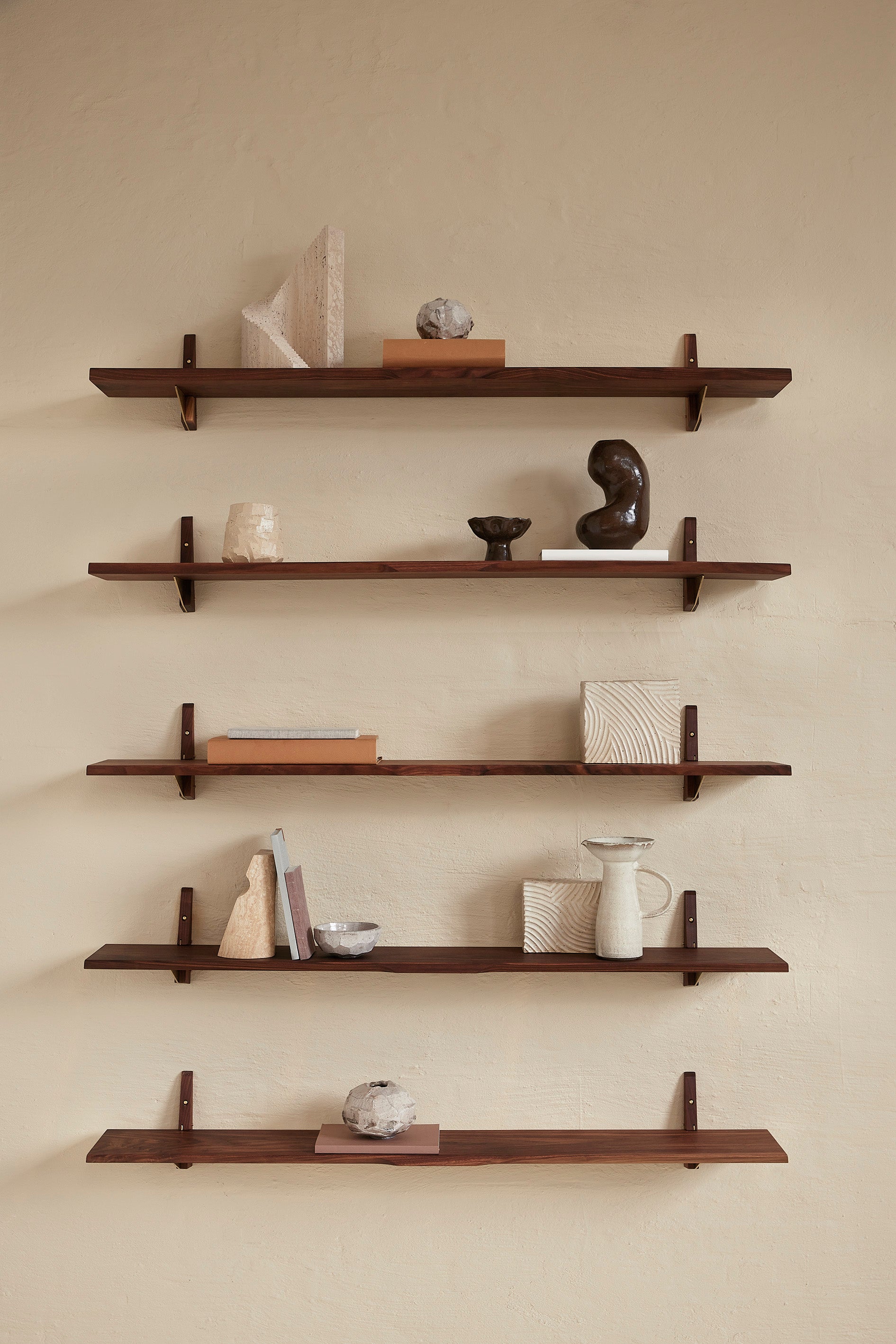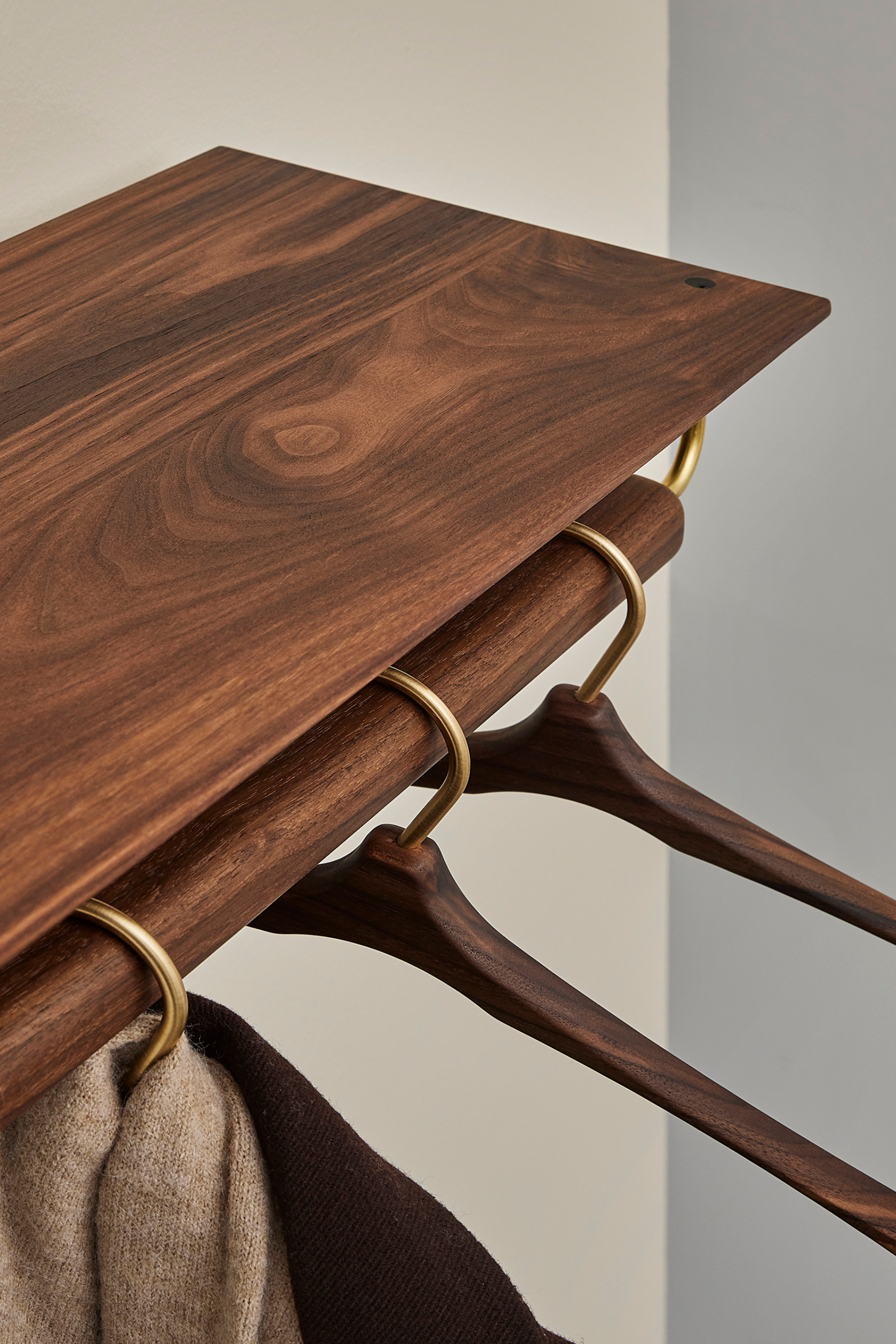
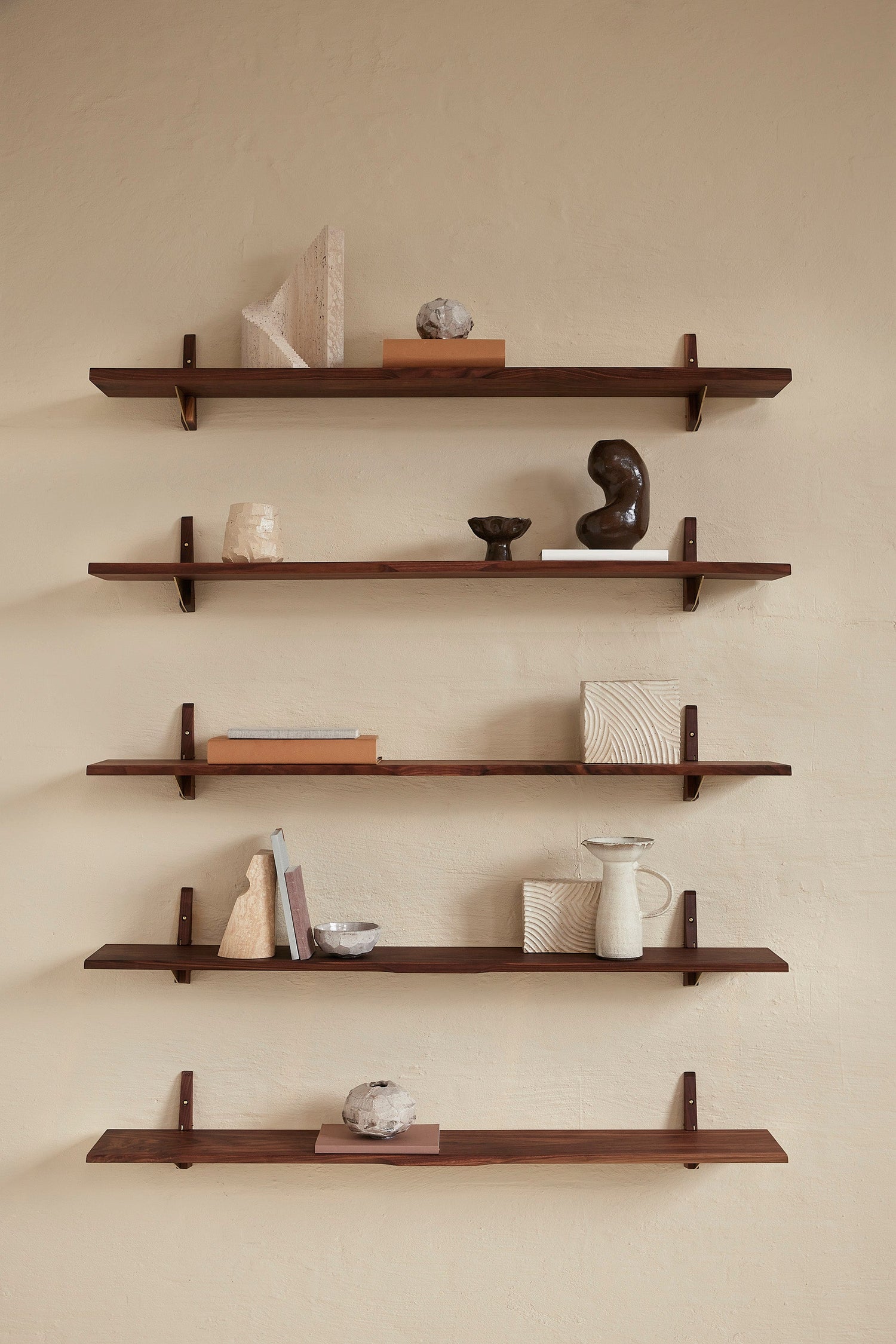
A wall shelf lifts objects off the floor and work surfaces. Mounted at eye level, it introduces material contrast and shadow against bare walls. Solid American walnut brings dark, varied grain patterns into the room, creating a visible focal point against light plaster or painted brick.
At Noyer, our shelving is made by hand in our Valby workshop in Copenhagen. The designs pair dense hardwood with custom brass brackets, combining dependable support with clean visual lines.
Choosing the Right Depth: 10 cm vs. 18 cm
Shelf depth determines which objects can stand securely on the ledge and how much clearance remains along a wall. The Wooden Shelf JN10 is made in two depths (10 cm and 18 cm) and three standard lengths (55 cm, 90 cm, and 120 cm) to suit different wall positions.
- The 10 cm depth: This compact profile fits narrow circulation areas. It provides a stable ledge for framed prints, perfume bottles, spice jars, or ceramic tumblers while leaving room to pass along corridors or dining nooks. The front edge features a distinct milled detail that defines the shelf outline.
- The 18 cm depth: Designed for wider objects, this depth holds books, ceramics, small kitchen containers, and everyday tableware. It provides usable surface area for layered displays while maintaining a compact footprint on the wall.
Upright Brass Brackets and Wall Mounting
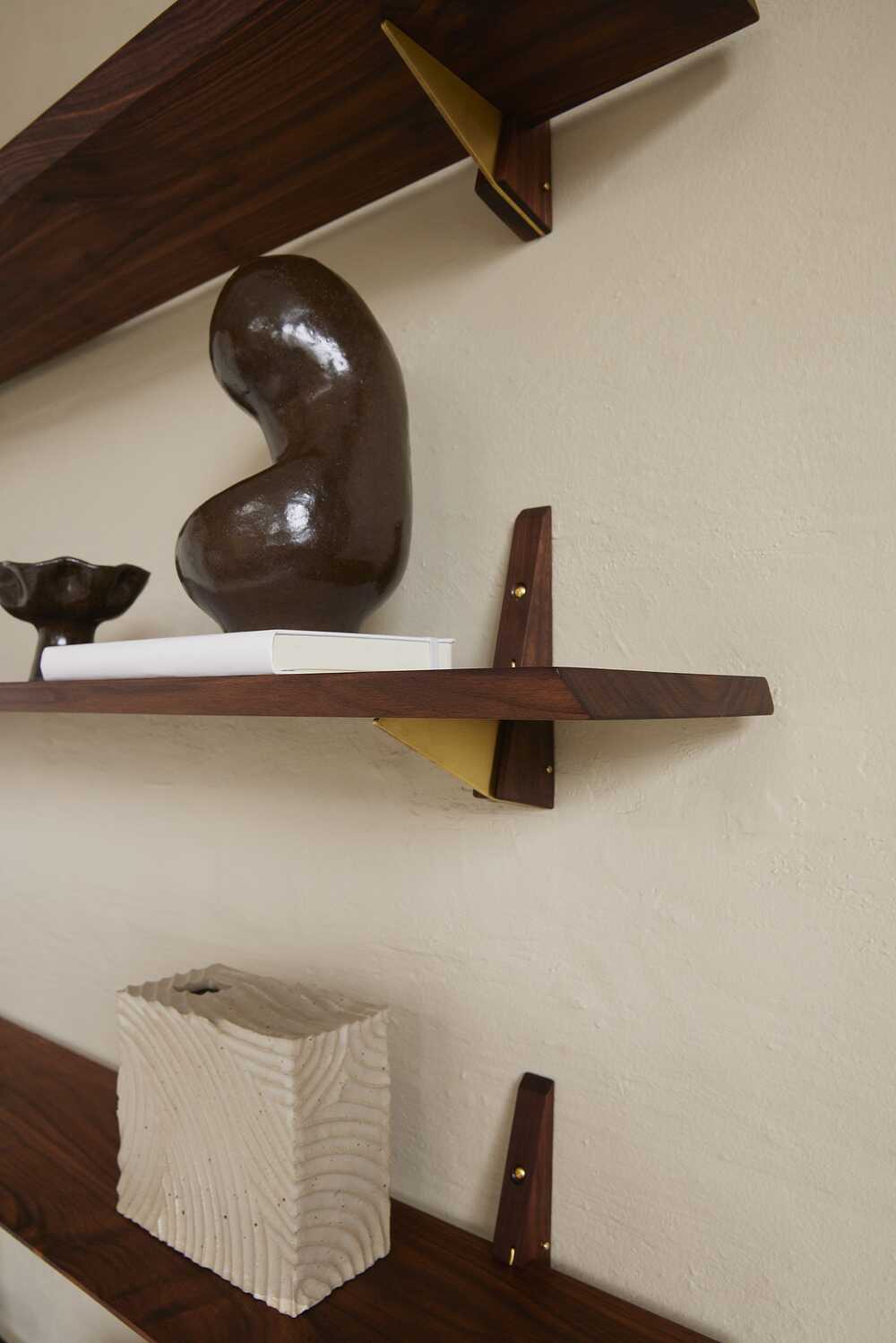
For the JN10 shelf, solid walnut is paired with custom brass brackets mounted vertically on edge. Positioning the brass brackets upright optimizes load-bearing strength and creates a floating expression on the wall.
When installing solid wood shelves, check the wall type beforehand:
- Brick and solid masonry: Expansion plugs and masonry screws anchor firmly into the wall, supporting heavier loads such as books or ceramic collections.
- Drywall and stud walls: Drive mounting screws into timber studs whenever possible. Where stud spacing does not align with bracket positions, use hollow-wall anchors rated for the combined weight of the shelf and its contents.
Placement Across the Home
Because walnut is a dimensionally stable, durable hardwood, it serves varied storage and display needs throughout the home:
- Living rooms: Mount a 120 cm shelf or two shelves above low furniture to display ceramics, lighting, or books. The dark brown tone stands out clearly against light-colored walls.
- Kitchens: Keep daily cookware and ingredients within reach. A shallow shelf holds spice jars, oil cruets, or tea tins, keeping worktops clear for food preparation.
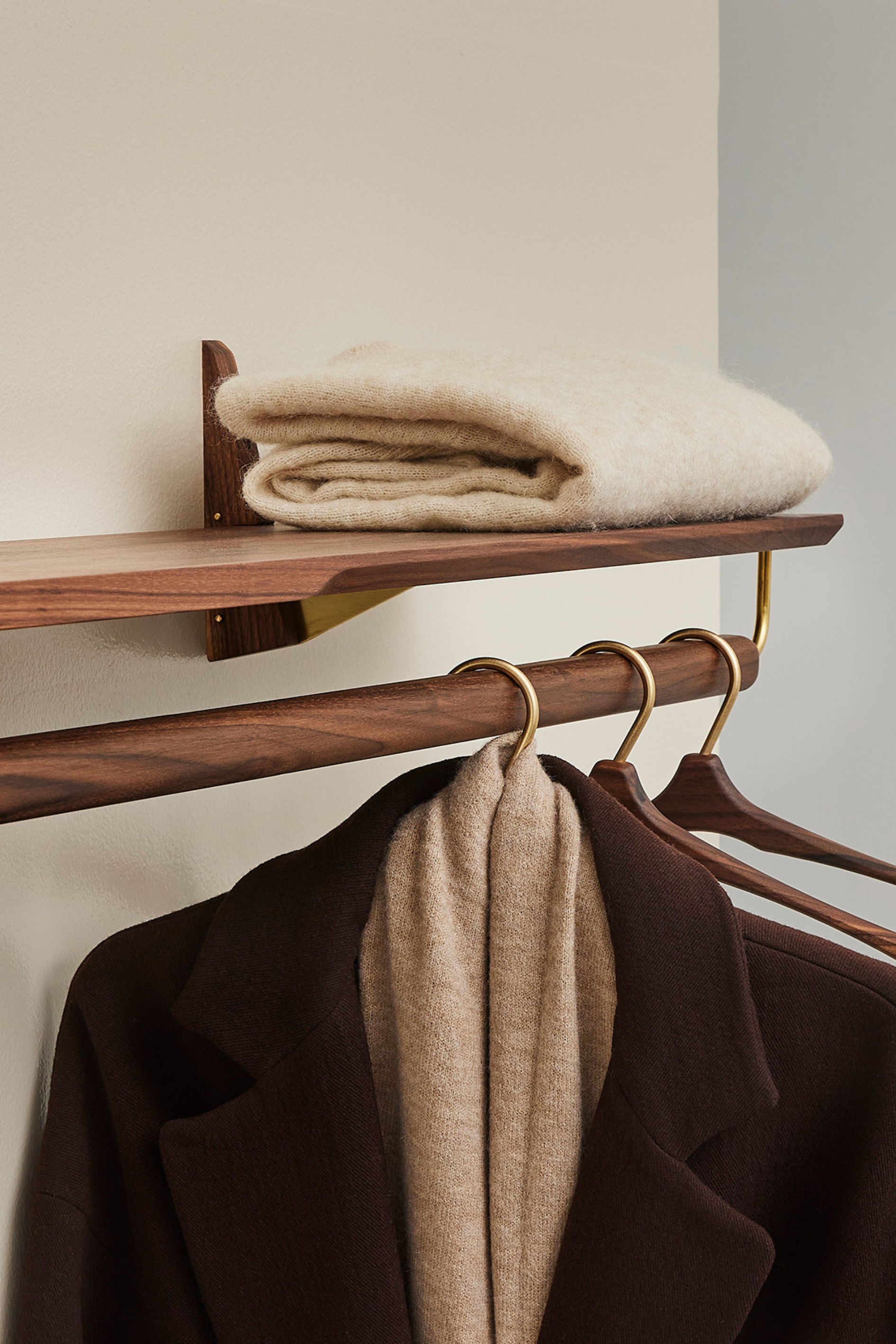
- Entryways: A compact wall shelf holds keys and daily items near the door. For hanging coats and outerwear, our broader storage collection includes dedicated hallway organizers with coat rails.
- Home offices: Mount shelving above a desk to hold reference books, stationery, or organizers, keeping the desktop uncluttered.
Caring for Oiled Walnut
Solid walnut is durable and form-stable, but simple routine care maintains the wood surface. Walnut is naturally photo-reactive; over years of indoor light exposure, dark tones gradually soften into warmer amber shades.
For regular maintenance, dust the wood with a soft, dry cloth. When cleaning surfaces in kitchens or dining spaces, wipe with a well-wrung damp cloth and dry immediately with a clean cloth to prevent watermarks. Avoid abrasive sponges, harsh chemical sprays, and silicone furniture polishes, which degrade oiled wood finishes.
Applying a wood oil refresher once or twice a year guards against moisture and prevents the wood from drying out. For detailed guidance on wood care, read our guide on care and maintenance.