When considering handcrafted designer furniture, the decision is rarely about quick interior styling. The real question is whether the difference between mass-produced items and bench-made solid wood pieces justifies the initial cost over years of everyday use. Where thin veneer or particleboard surfaces resist repair once daily life leaves a mark, solid timber offers an entirely different physical lifespan.
A solid hardwood table is a functional object designed for daily use. It can be maintained, sanded down, and re-oiled when worn, allowing the wood to patinate naturally over decades. Choosing bench-made pieces represents a long-term commitment to material quality and deliberate design rather than recurring replacement.
Solid Walnut Versus Veneer and Engineered Boards
Material differences become obvious under daily wear. Veneered boards feature a thin outer layer of wood glued over composite materials. When a tabletop receives a deep gouge from a dropped object or suffers moisture damage, repair is difficult because sanding quickly cuts through to the substrate beneath. Furniture built from particleboard can similarly lose structural stability if joints loosen during moves or heavy use.
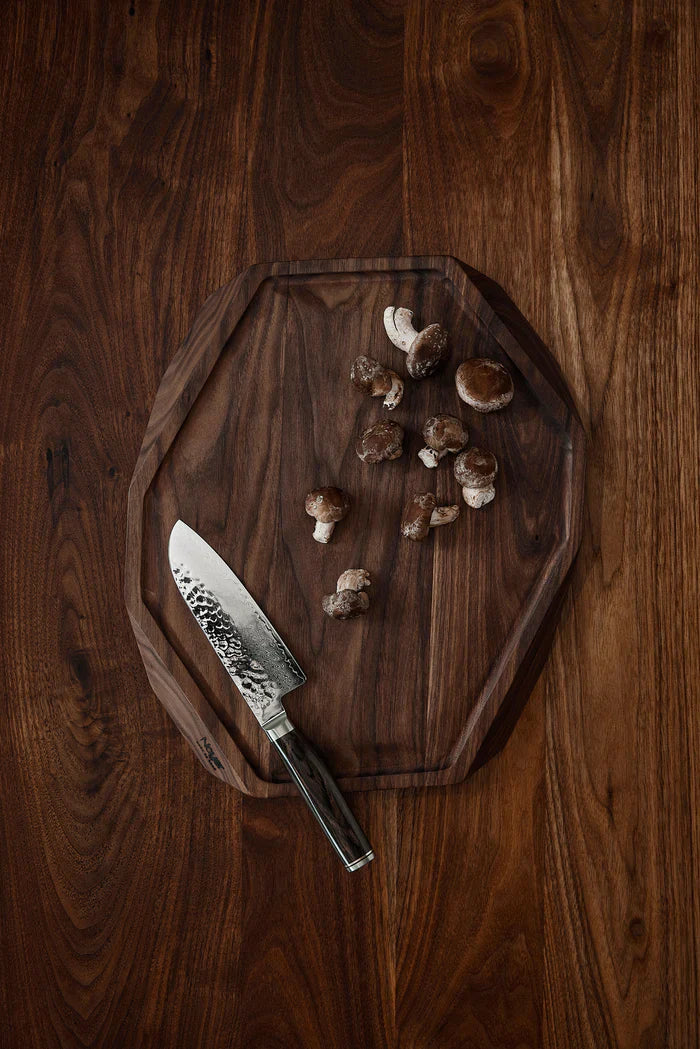
Solid timber, by contrast, possesses a continuous material structure throughout. Walnut is a dimensionally stable, relatively hard timber noted for its dark warmth and pronounced grain. When tabletops and legs are constructed from solid walnut, the surface can be sanded down and retreated with oil if surface scratches or wear arise. The piece withstands regular use without fear of irreparable damage.
This material integrity also supports long-term value. While mass-produced board furniture depreciates quickly, artisan-crafted solid wood furniture retains notable resale value on the secondary market because the underlying material can be refinished and restored.
Angles and Proportions That Define the Room
Furniture design depends on proportions and how an object interacts with daylight and adjacent room lines. At Noyer, we work with consistent 45-degree angles that break away from traditional square edges and bring the cross-section of the wood into view.
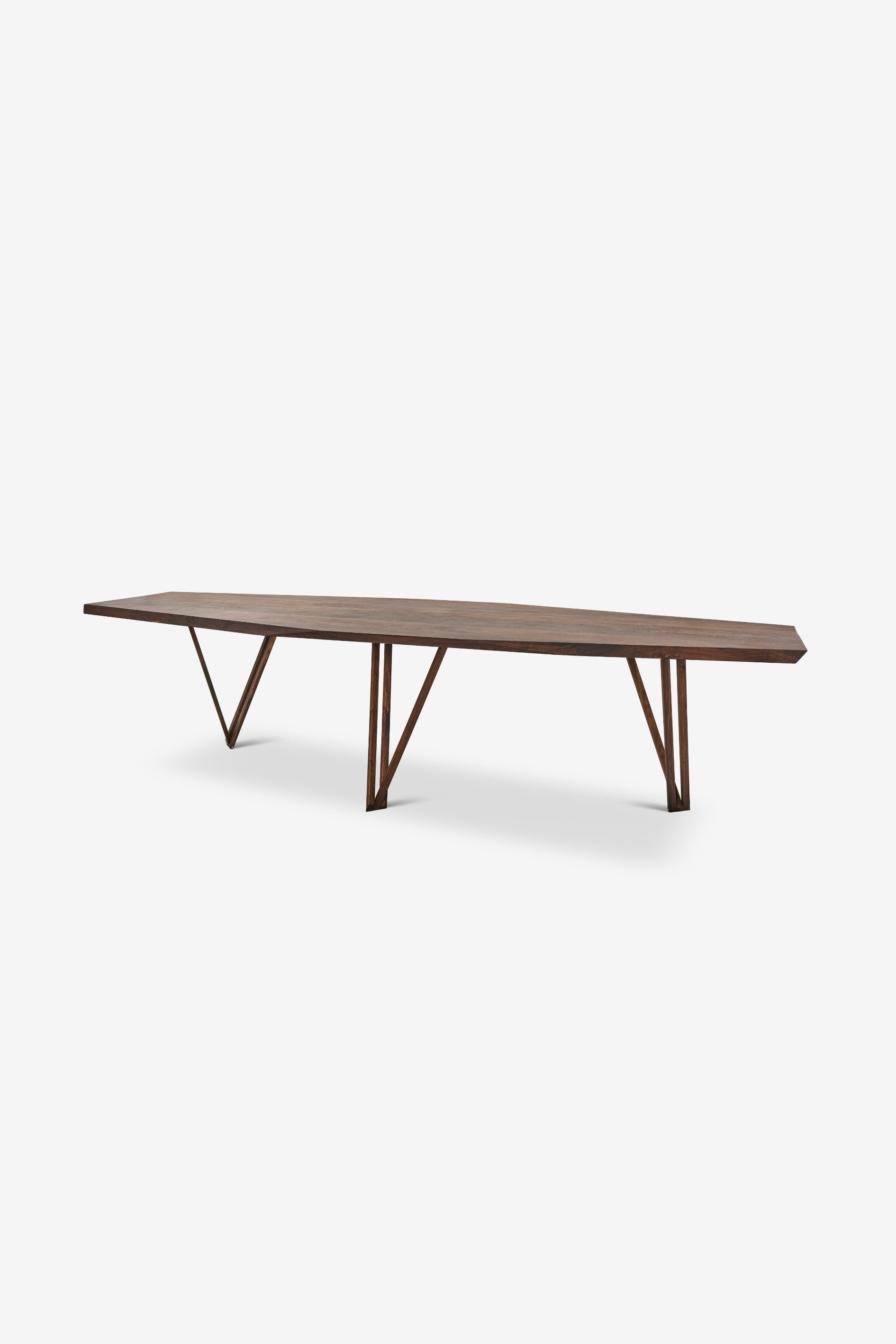
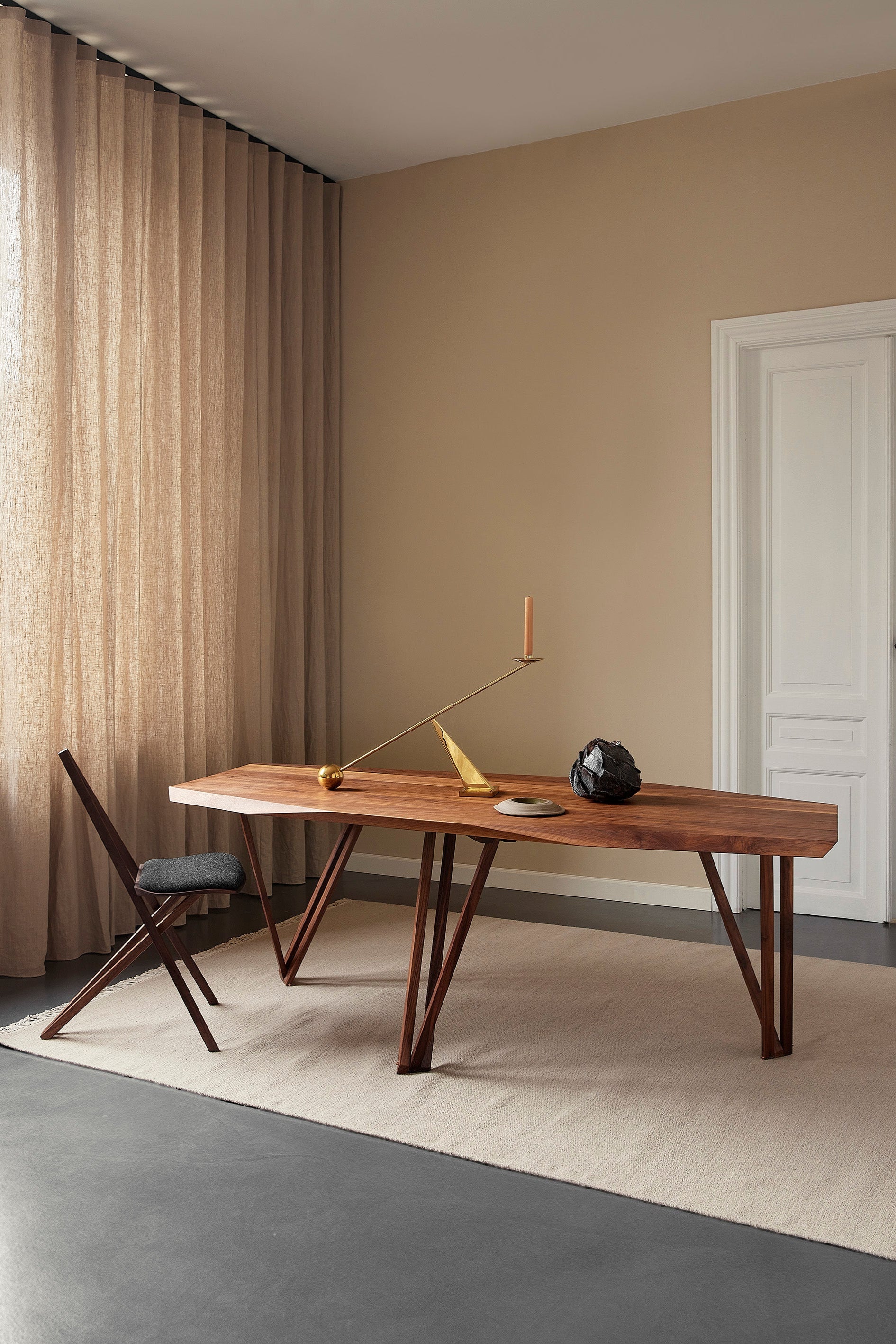
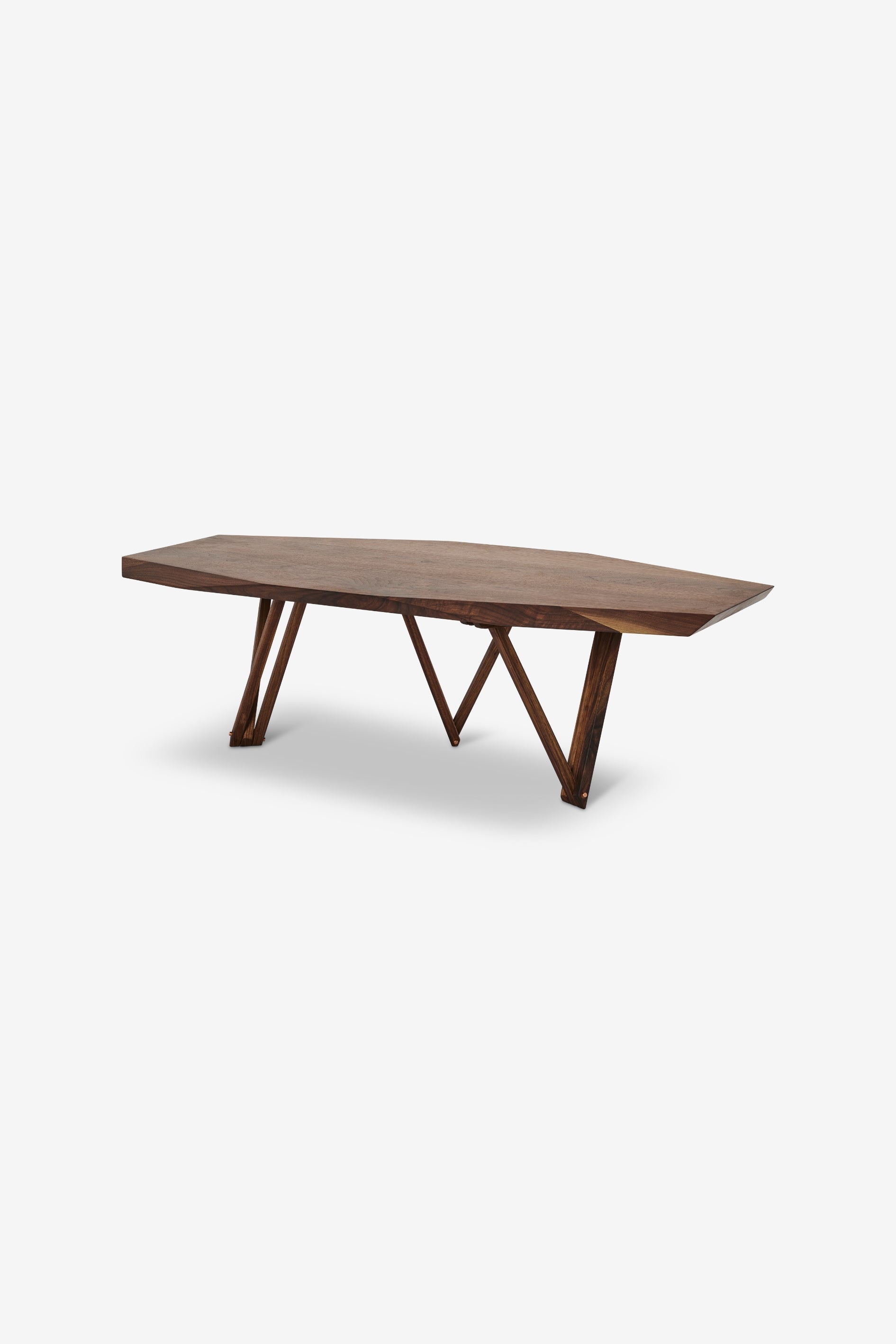
A clear example is our Dining table JN01 in walnut wood. The tabletop has an eight-sided profile with perimeter edges cut at opposing 45-degree chamfers. Craftsmen select and arrange the wide planks to create visual balance across the grain patterns. These opposing bevels expose the timber's cross-section along the perimeter, making the internal construction visible.
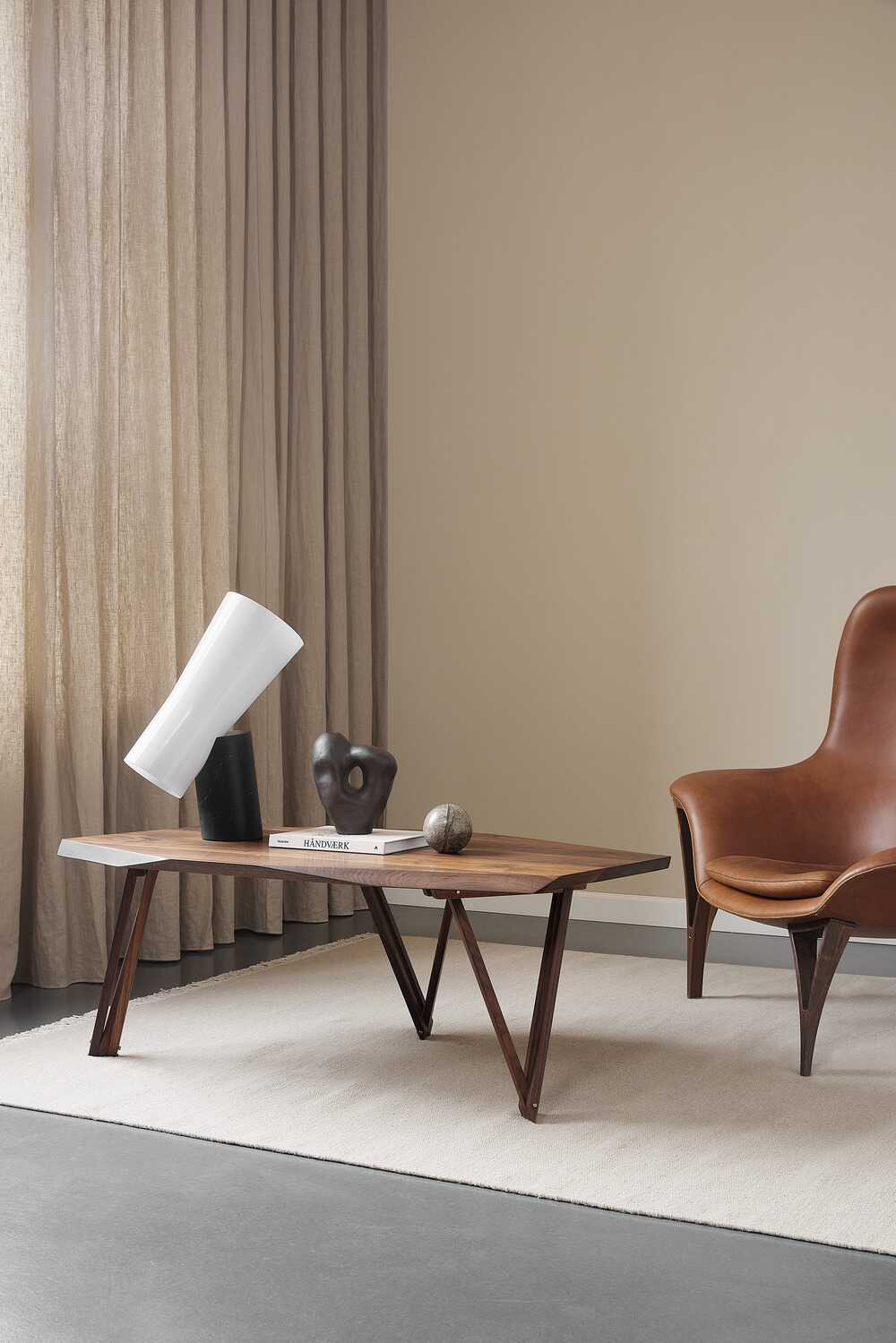
The same principle applies closer to the floor with our Coffee table JN02 in walnut wood. When side daylight strikes the chamfered facets, the grain and plank cross-sections stand out distinctly against the flooring. The table serves as a calm central element in front of the sofa, creating natural contrast between the dark walnut and lighter upholstery or walls. You can see further designs across our selection of handcrafted tables.
Material Dialogue: Solid Walnut and Leather
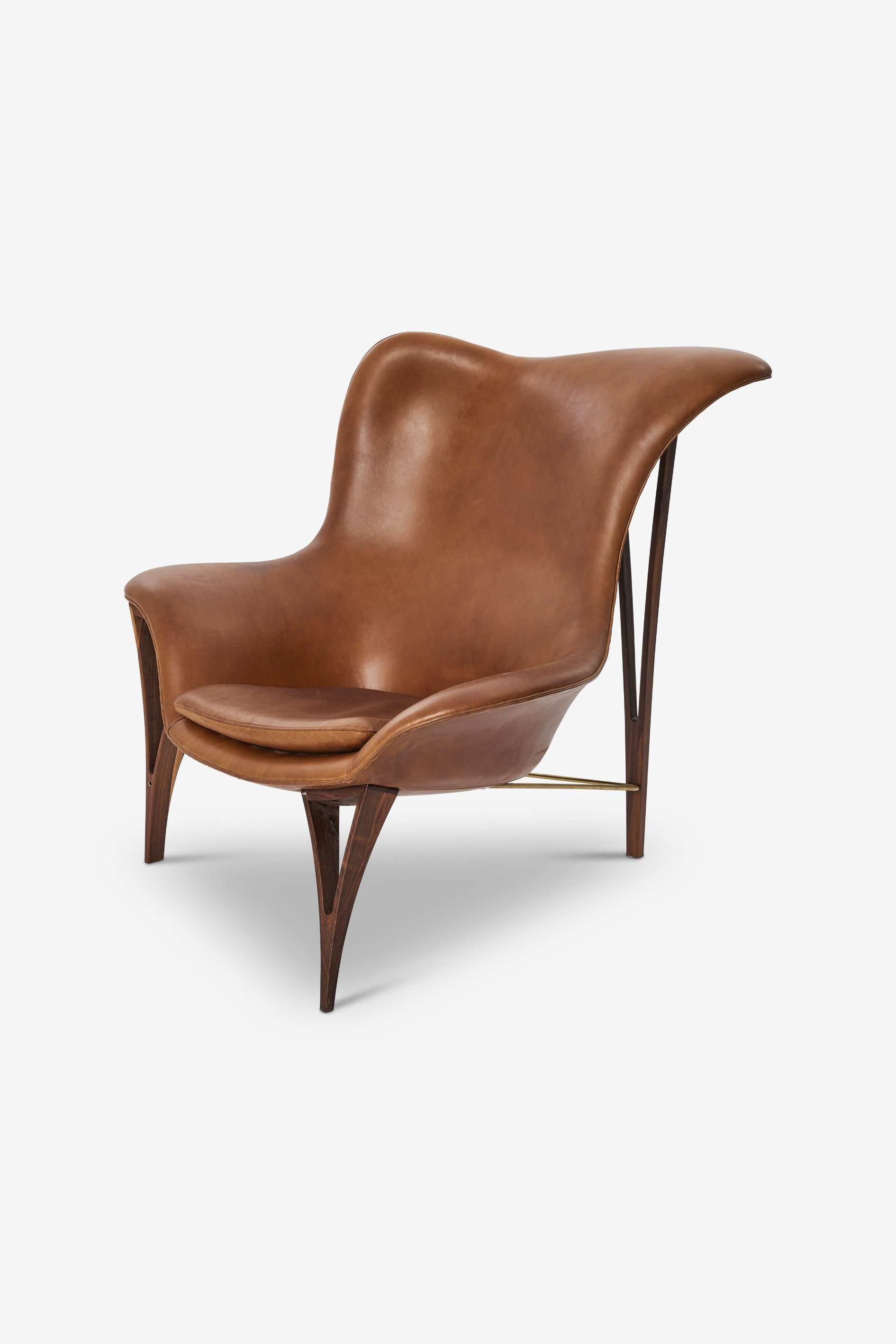
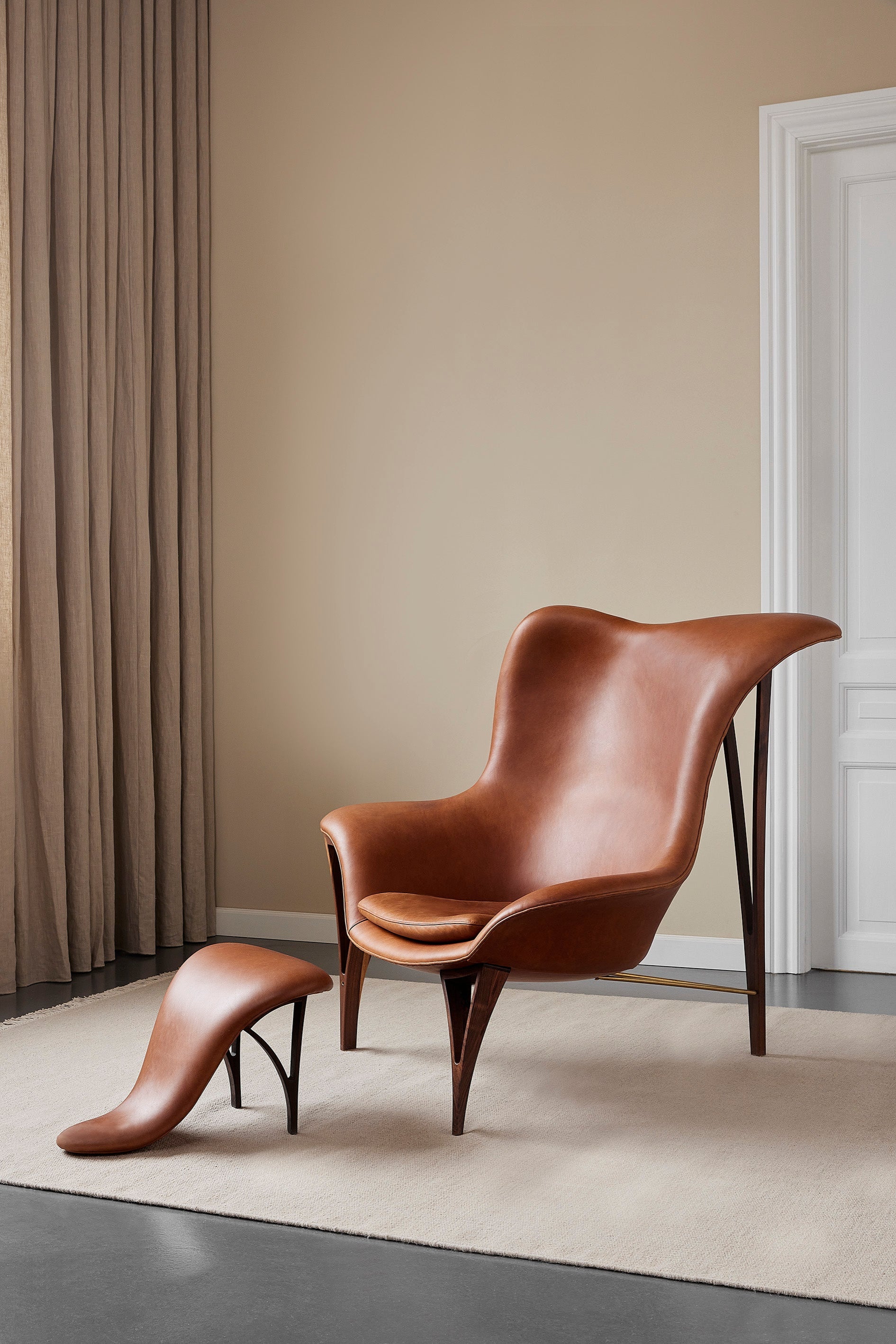
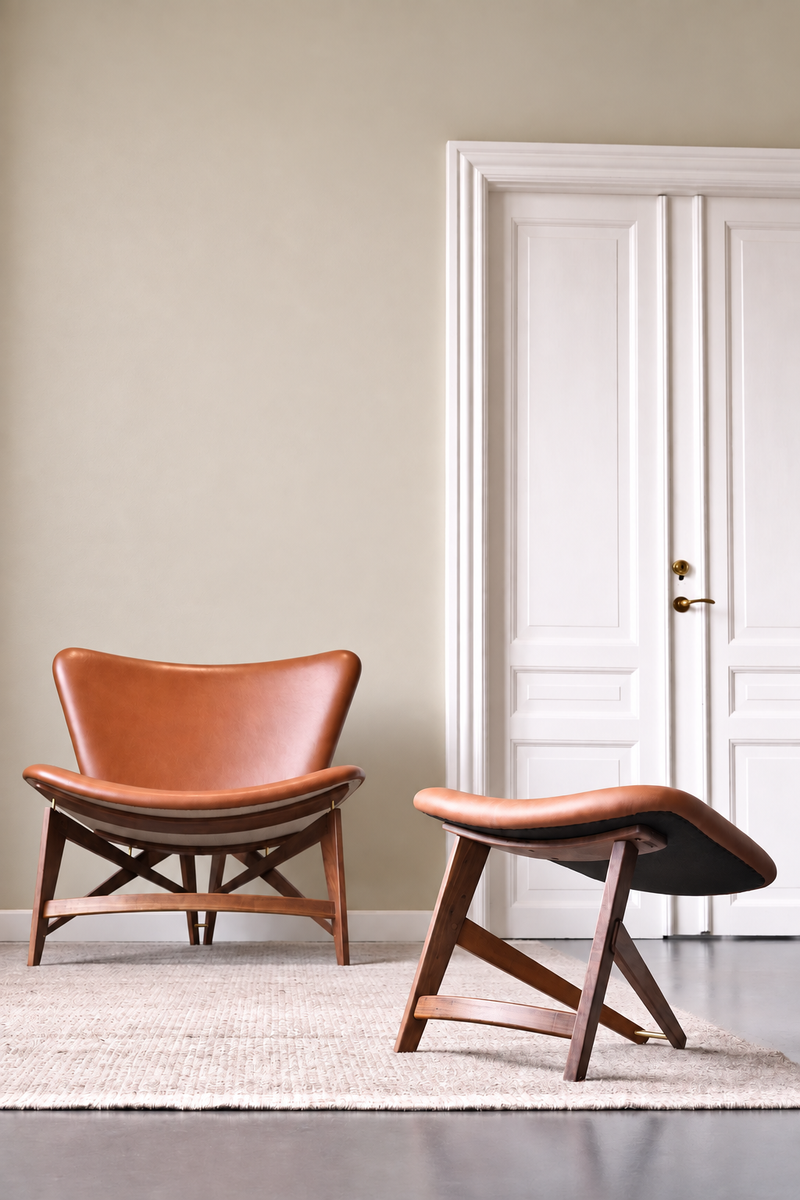
Designer furniture gains visual presence when solid timber meets other durable natural materials. Our Armchair JN07 Leather, originally designed for the Danish television design competition Danmarks Næste Klassiker (Denmark’s Next Classic), combines a recognizable profile and high seating comfort with upholstery in black or cognac-coloured leather. Leather requires modest maintenance and patinates with handling just like solid wood.
When surfaces patinate naturally through regular use, the furniture retains its character without requiring fragile treatment.
Caring for Solid Hardwood
Solid timber has straightforward maintenance requirements. Unlike veneer, which cannot tolerate deep sanding, solid tabletops and frame components can be sanded back, oiled, and repaired if scratches or signs of wear develop over the years.
With regular oil treatment, walnut develops a natural patina over time. In the same way, leather upholstery requires occasional care to patinate evenly through daily use. In our guide to care and maintenance, you can find detailed instructions on how to treat and preserve these surfaces.
Choosing Furniture for the Long Term
When selecting designer furniture for your home, consider how each piece functions in context: Do its dimensions respect the room's walkway clearances? Is the material solid so that future wear can be repaired? And does the form have a balance you will still appreciate decades ahead?
In our workshop, tables are made to order with a production lead time of 4 to 6 weeks, and every table can be tailored to custom dimensions so the tabletop fits the proportions of your space. If you would like to examine the wood grain and angled edges in person, you are welcome to visit our showroom or contact us to discuss specific dimensions.