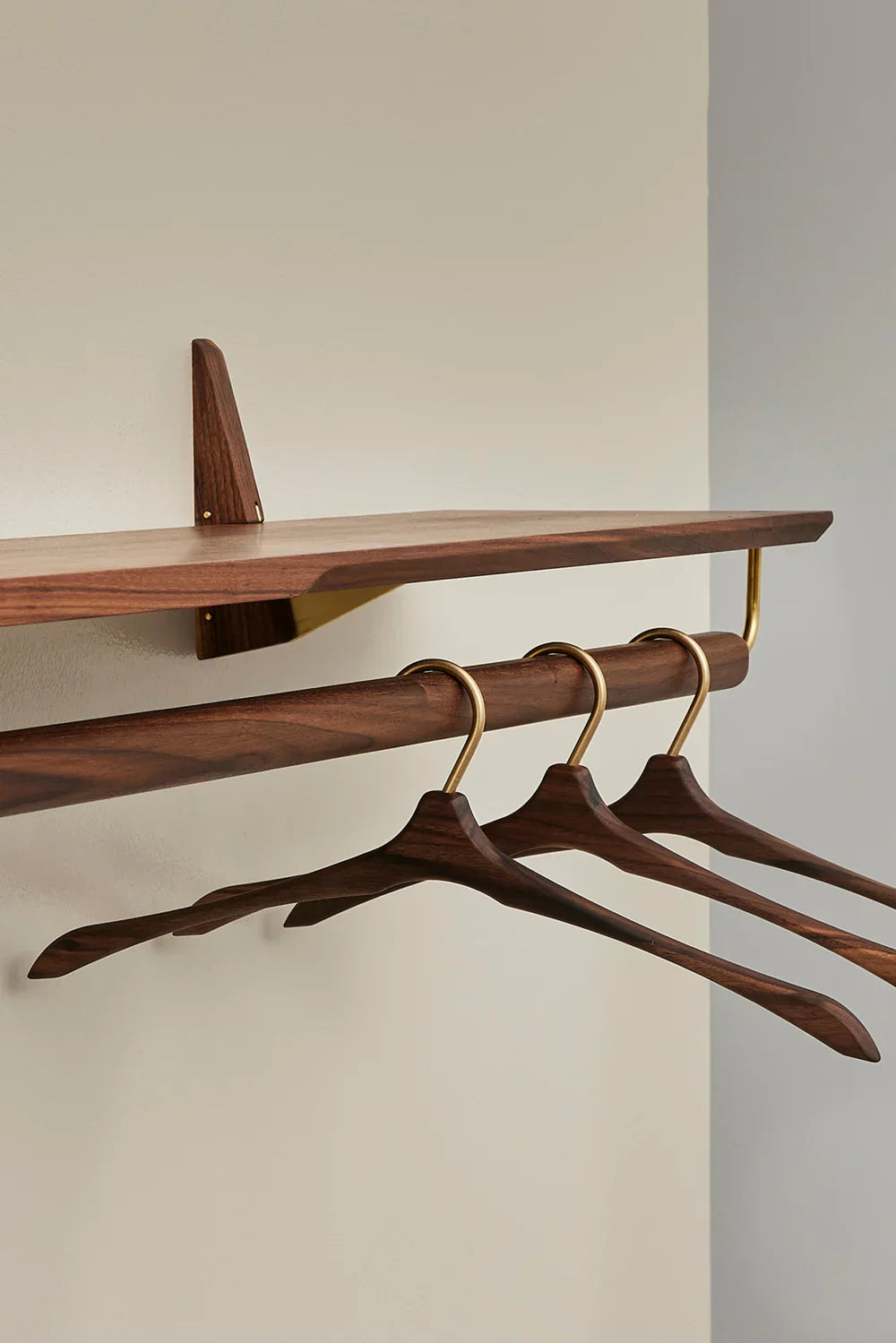
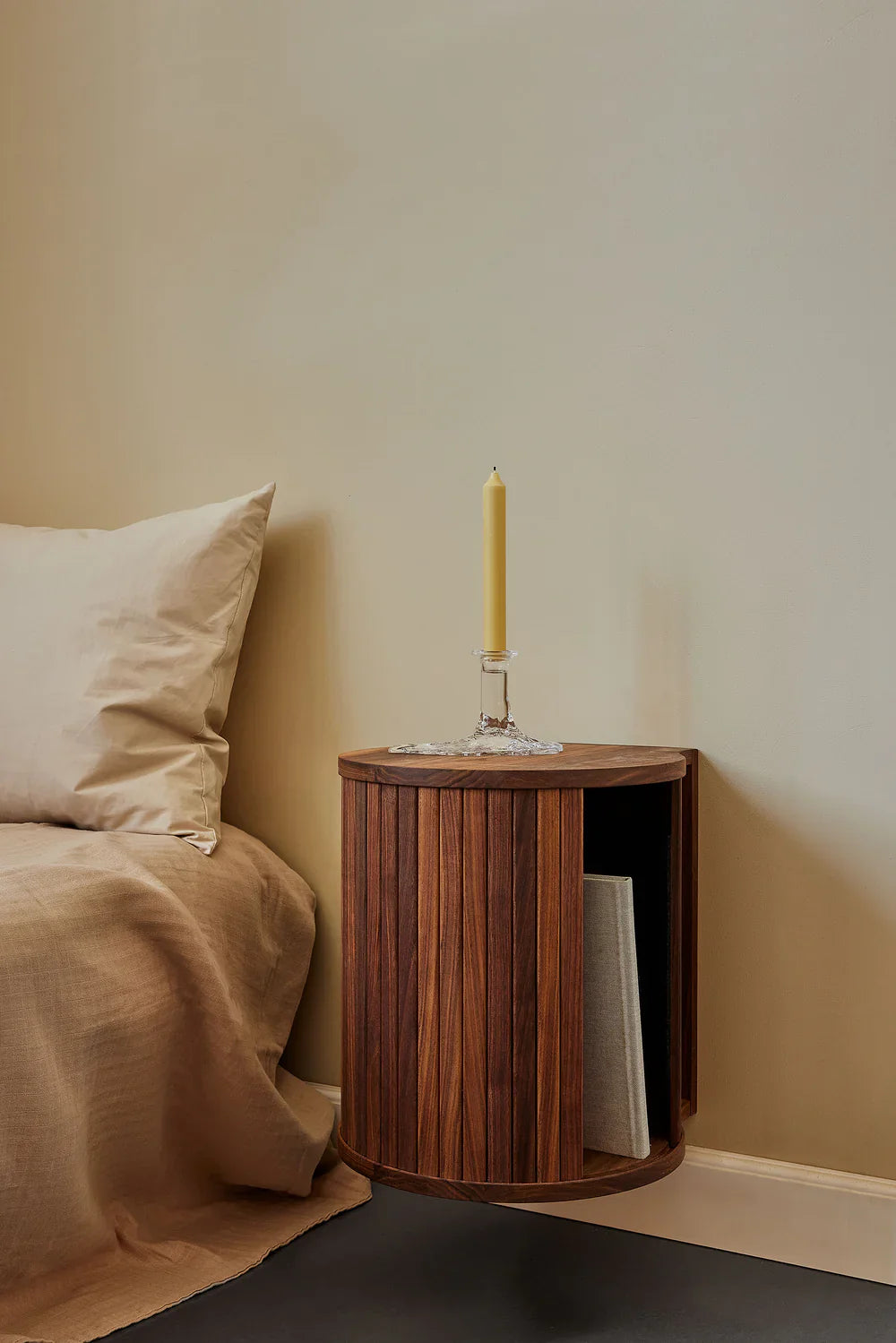
Mounting storage on the wall alters how a room feels. By lifting solid wood off the floor, the continuous sightline down to the baseboards remains unbroken, which creates an impression of open space and simplifies daily floor cleaning. Wall-mounted walnut cabinets also introduce a defined material presence against pale or lime-washed walls, letting the natural grain and precise profiles of the timber frame the architecture around them.
Clearing Floor Space and Softening Scale
Freestanding floor units can easily dominate a living room, hallway, or bedroom. By choosing wall-hung storage, light moves freely underneath the cabinet, reducing visual weight even when the unit provides substantial interior volume.
Solid American walnut brings dark brown tones and varied grain patterns that anchor a wall. The contrast against lighter surfaces adds organic warmth without making the piece feel bulky or heavy in the room.
Slatted Profiles, Tambours, and Depth
A cabinet front does not need to be a flat, unyielding surface. Constructing fronts from vertical timber slats creates a rhythmic interplay of light and shadow that shifts as daylight changes throughout the day.
These vertical slats also offer a distinct tactile experience. Whether configured as a curved slatted front or a classic rolling tambour door, the mechanism slides smoothly along its tracks, keeping stored items neatly concealed behind a lively wooden surface.
Three Wall-Hung Solutions in Solid Walnut
Different spaces require different depths, heights, and interior configurations. Three pieces from our Copenhagen workshop illustrate how these principles apply to specific everyday needs:
1. The Curved Wall Cabinet: JN18
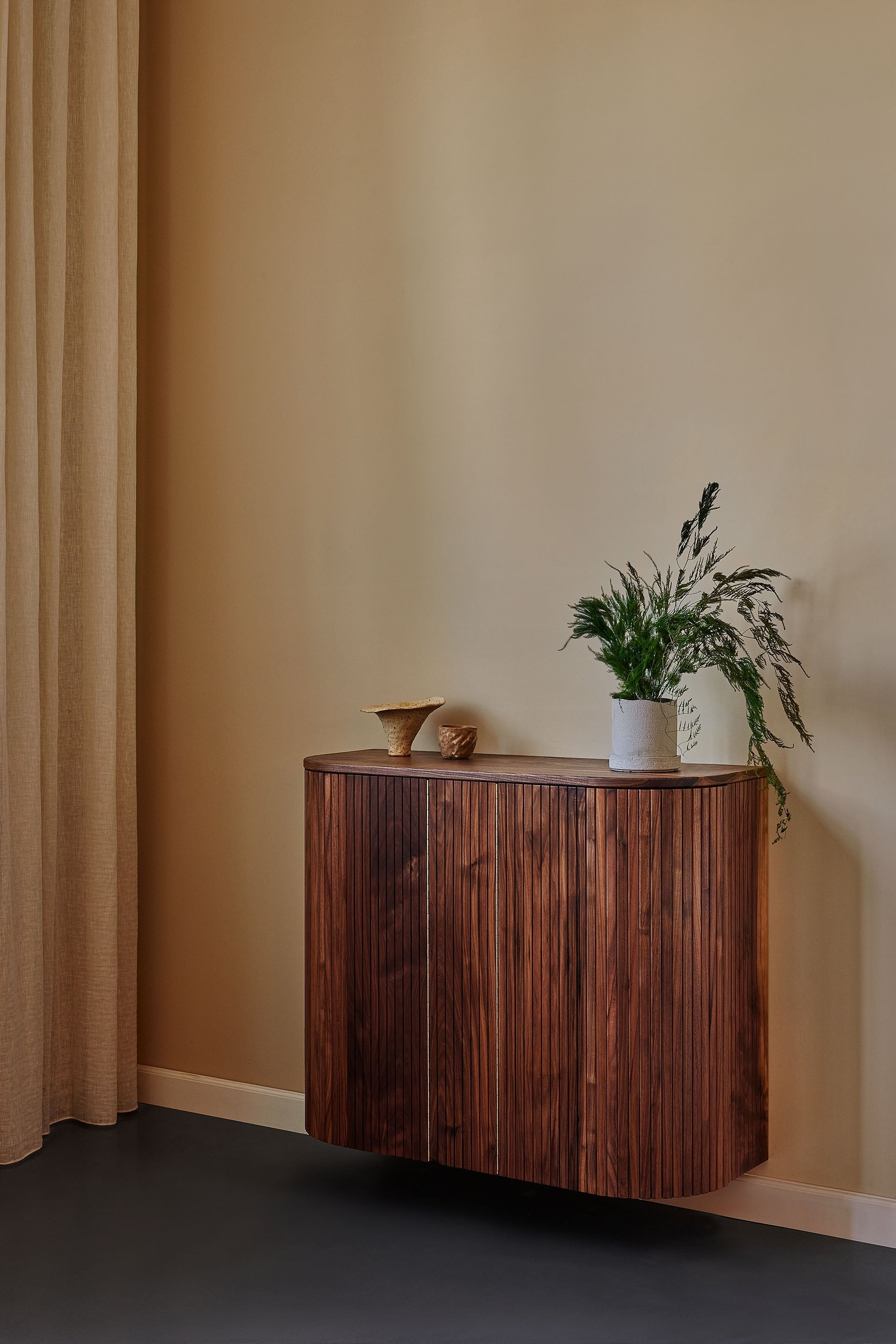
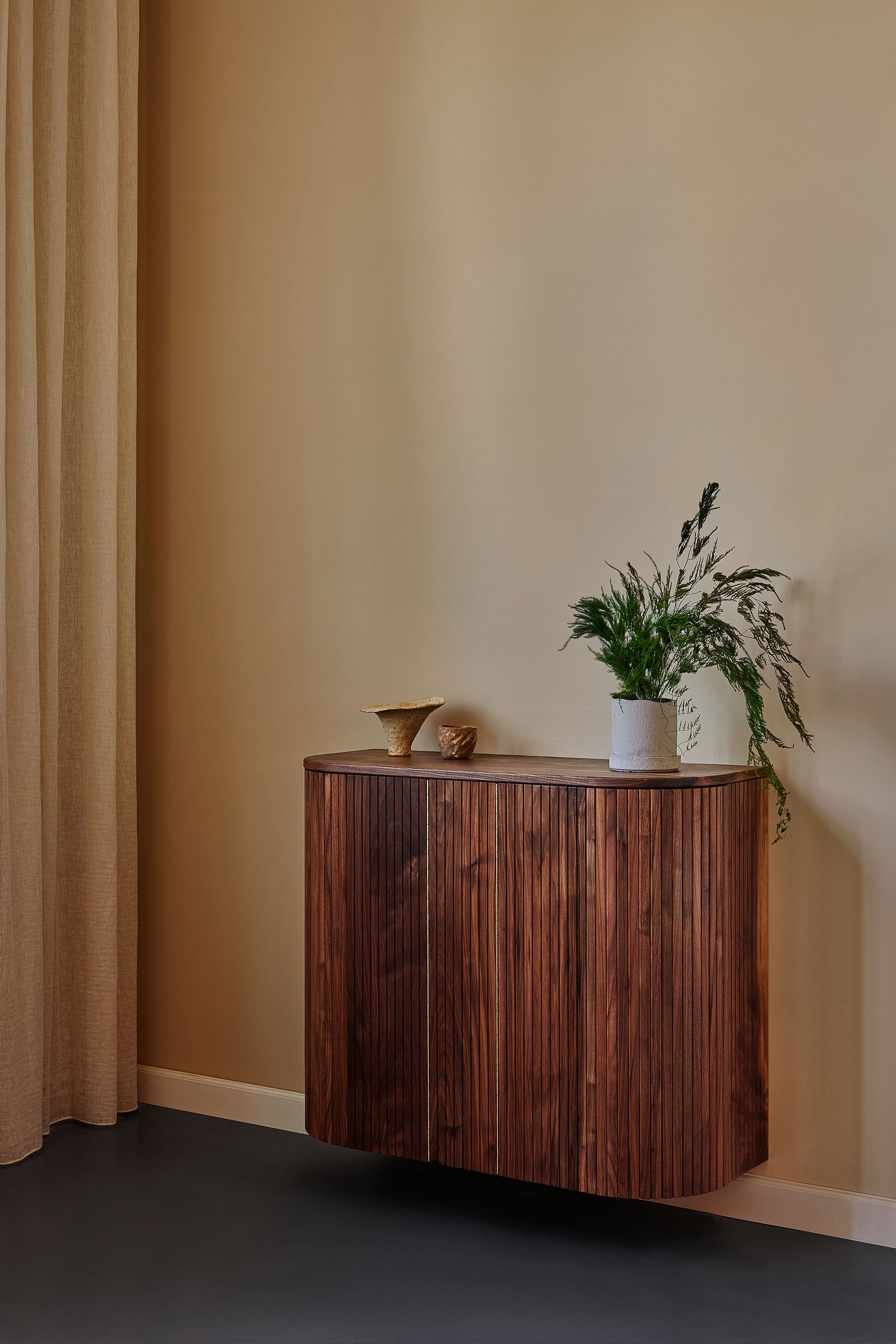
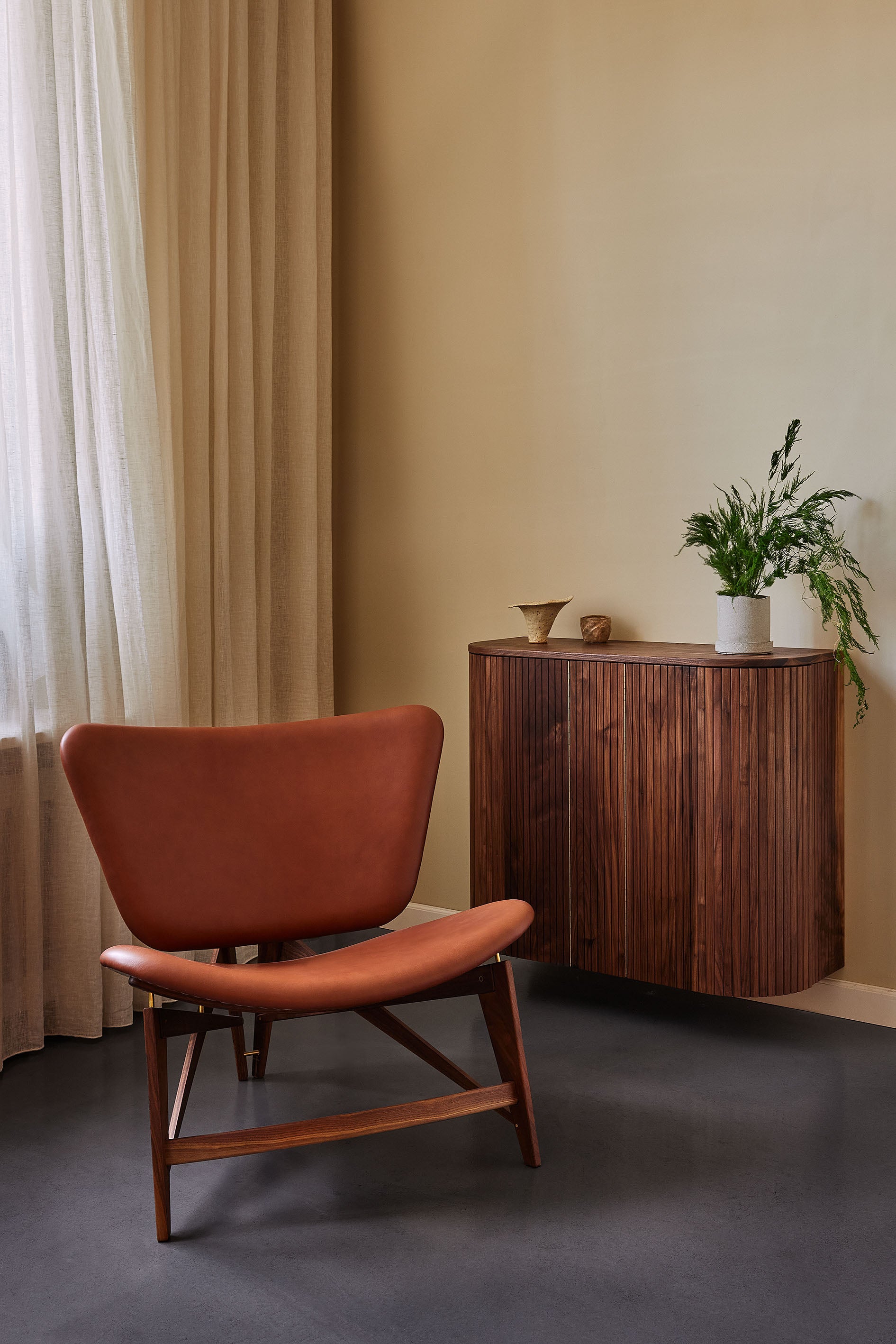
Measuring 97.5 cm wide, 80 cm high, and 40 cm deep, the Wall-Mounted Cabinet JN18 provides generous internal capacity. The curved doors are assembled from individual walnut profiles that round smoothly at the corners. Inside, two solid walnut shelves on each side accommodate tableware, glassware, or books, set against a matte black CDF back panel.
2. The Compact Tambour Cabinet: JN19
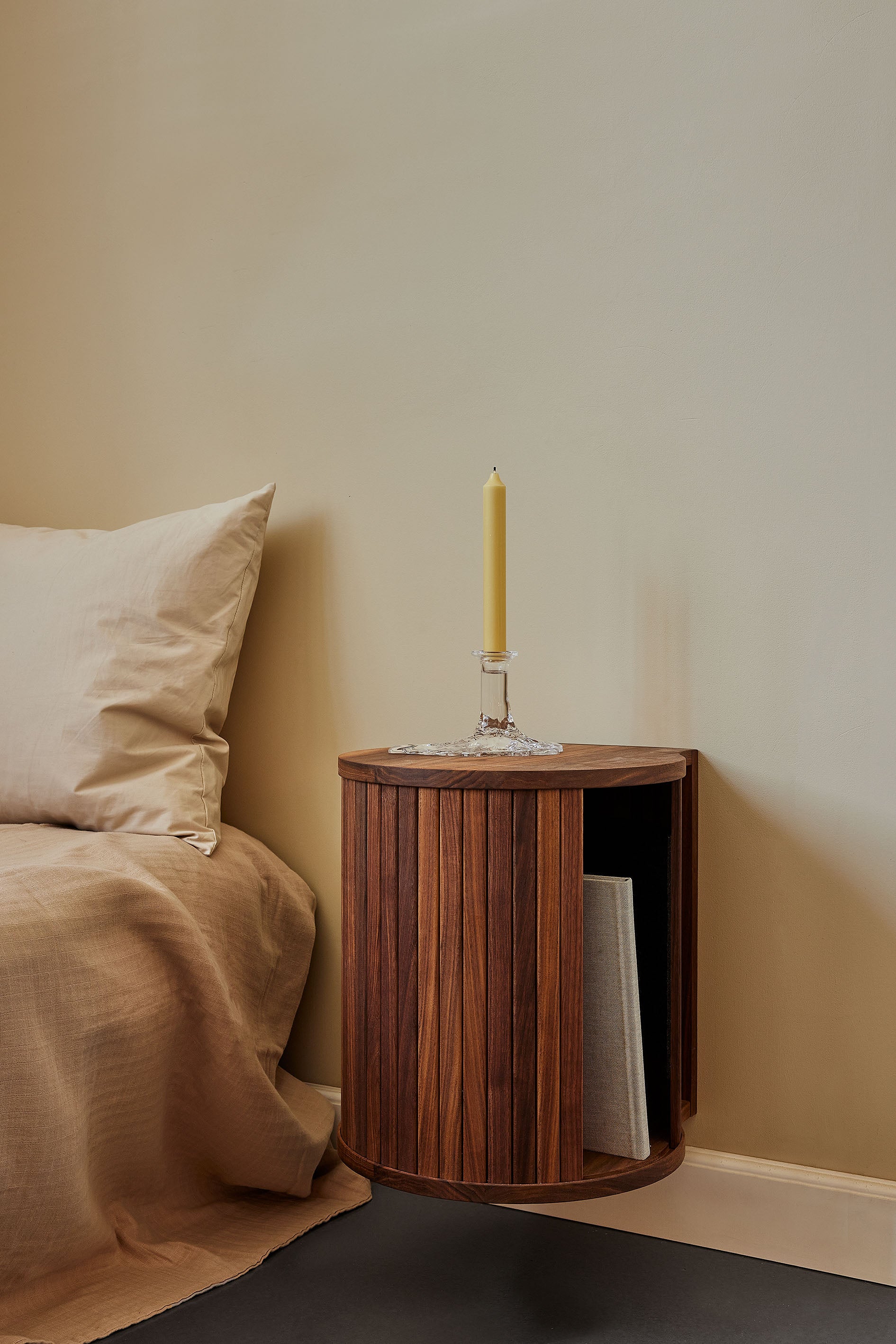
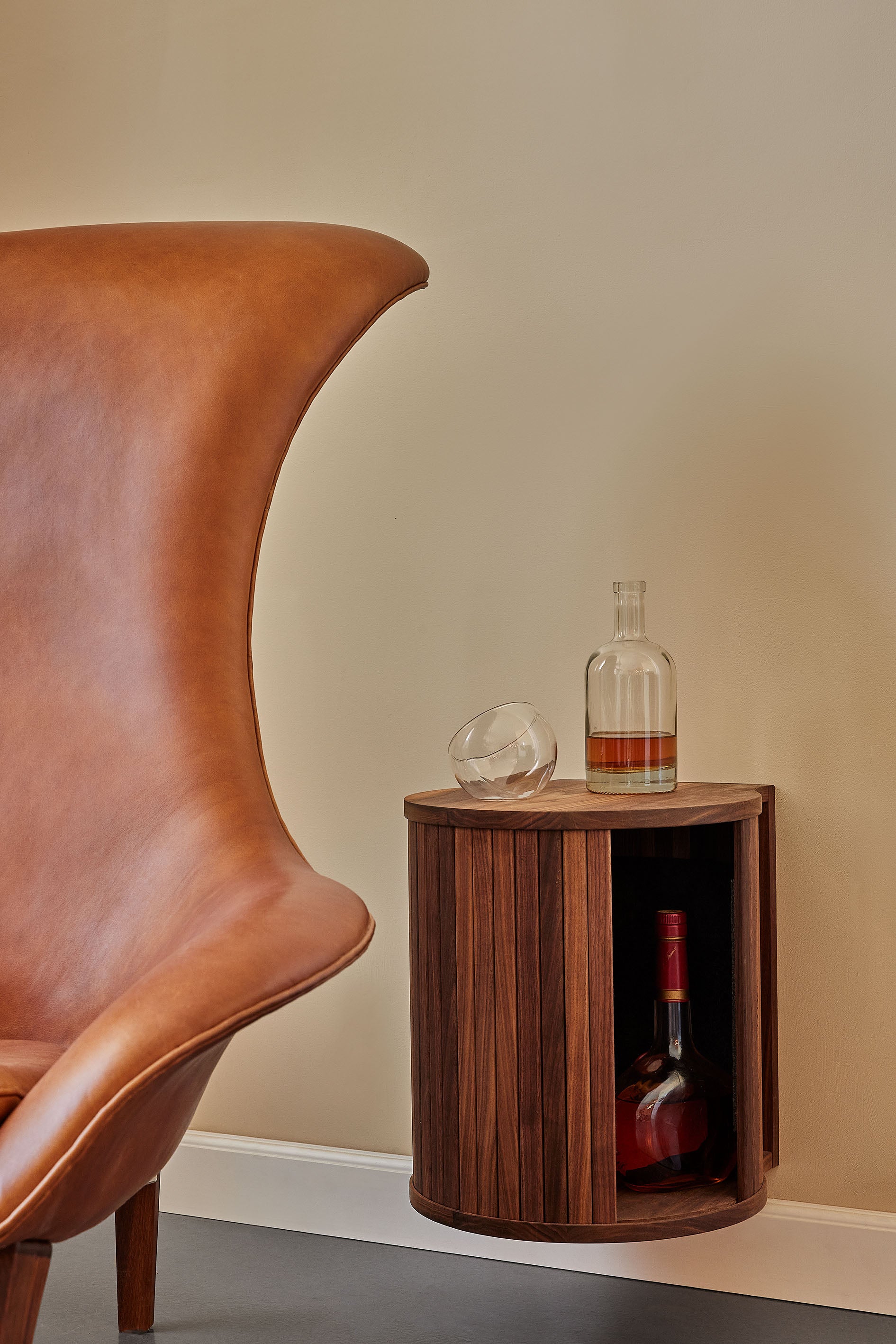
Functioning as a bedside nightstand or a compact wall-hung bar unit, the Wall-Mounted Nightstand JN19 optimizes vertical height over width. At 36.5 cm high, 32 cm wide, and 34.5 cm deep, it fits neatly beside a bed frame. A central vertical brass rod adds structural strength and a subtle metallic detail, while the rolling tambour door conceals personal items so the top surface remains open for a reading lamp.
3. The Low-Profile Console: JN26
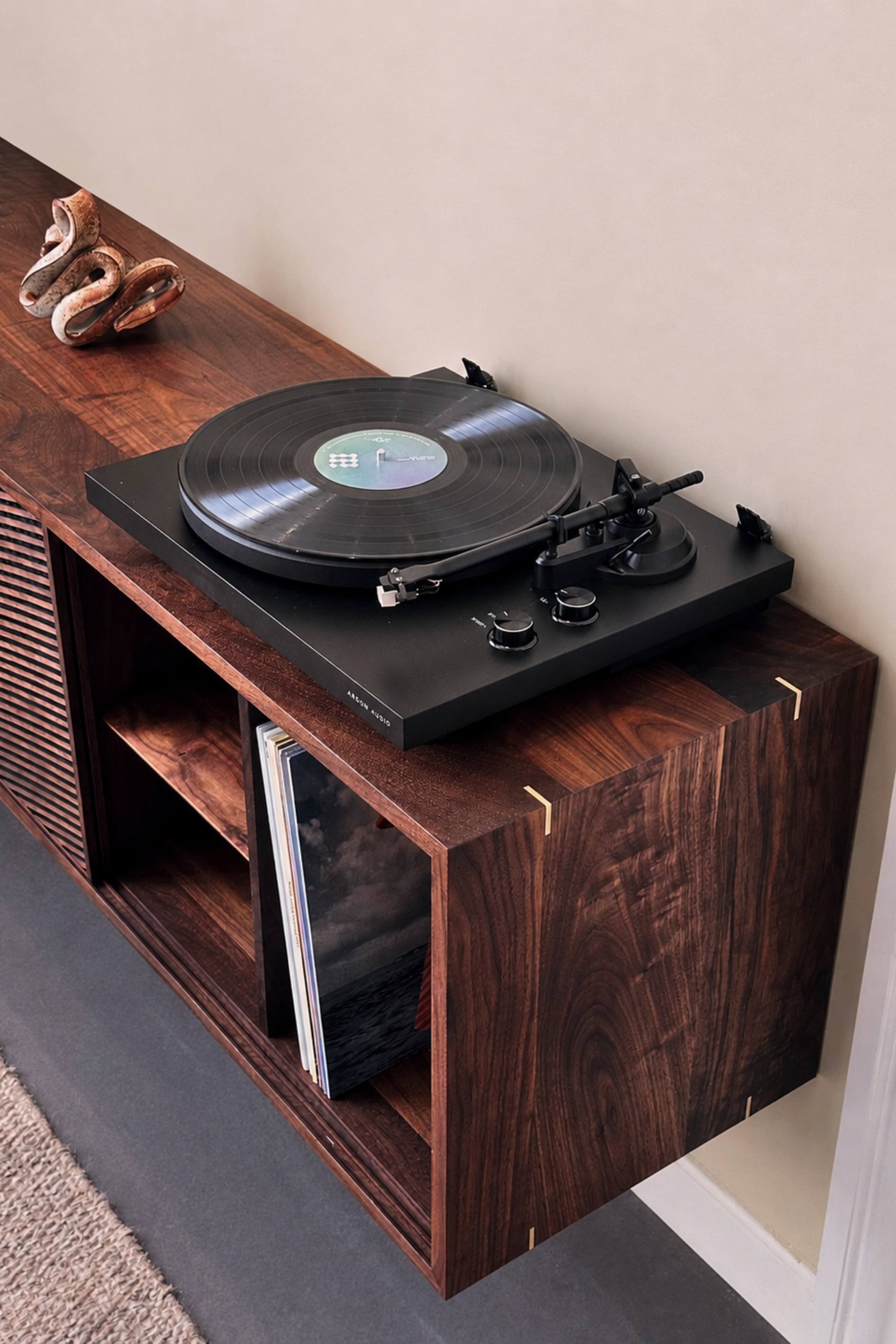
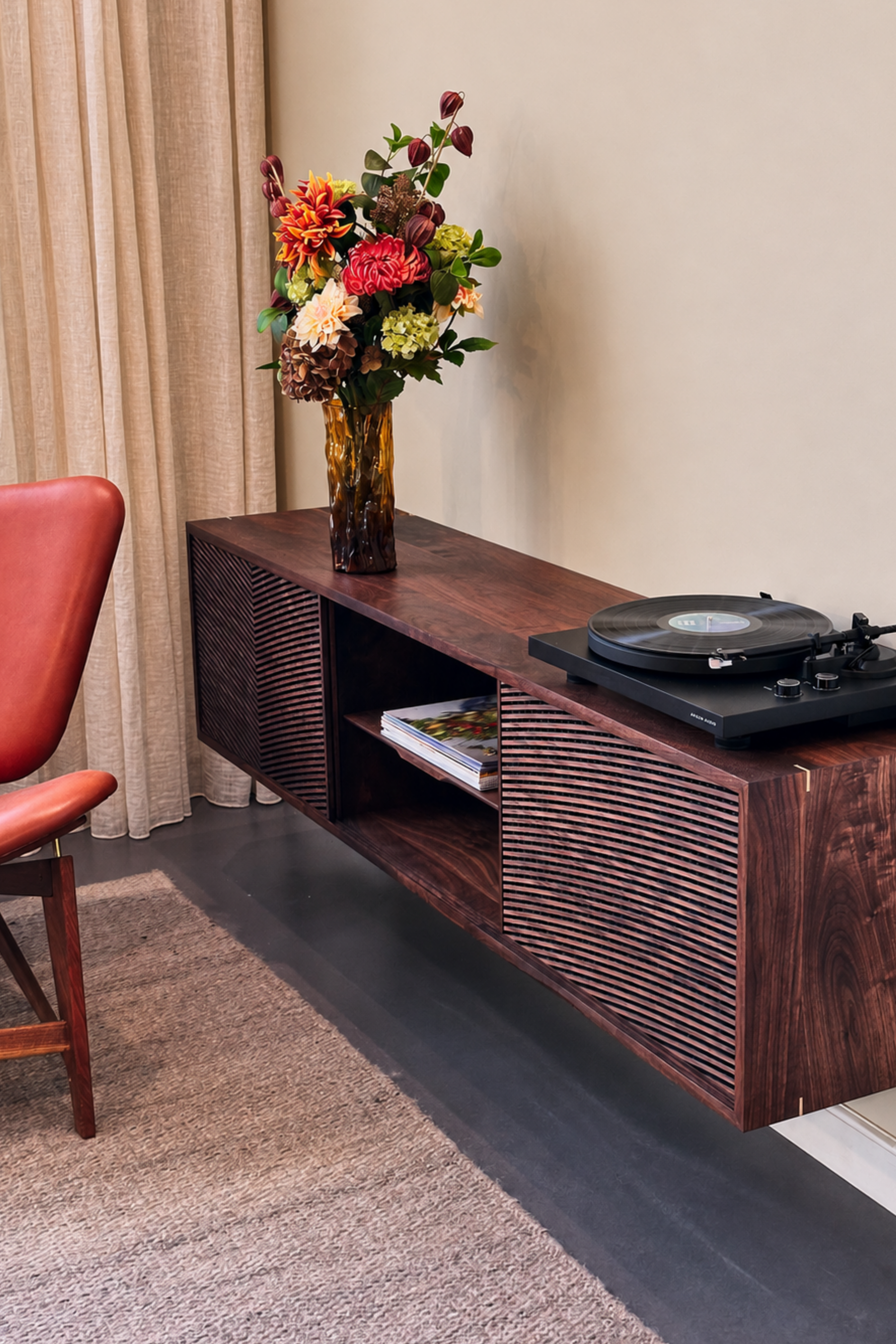
For living areas and media spaces, the Turntable Cabinet JN26 establishes a calm, horizontal line. Spanning 1700 mm in length with a height of 405 mm, it provides a stable platform for a turntable, while the compartments behind the sliding slatted doors are dimensioned for vinyl records and audio components. Discrete brass joinery details on the sides cleanly bind the solid walnut construction.
Mounting and Structural Wall Fastening
Solid hardwood storage carries inherent weight, requiring secure structural anchoring for long-term safety and stability. We employ a concealed French cleat system: a precision-beveled timber rail is secured to the wall, allowing the cabinet to seat firmly over it. This draws the furniture tight against the wall surface with no visible brackets or screw heads.
Before installation, assess your wall construction:
- Solid Masonry and Concrete: Use heavy-duty wall plugs and screws designed to support both the dead weight of the cabinet and heavy loads of books, dishware, or vinyl.
- Drywall and Stud Partitions: Anchor the mounting rail directly into the timber or steel wall studs. Do not rely solely on hollow drywall fixings for heavy solid wood cabinetry.
Review our detailed installation guidelines on our assembly page, or reach out to our workshop with questions regarding specific wall types and dimensions.