
A desk is more than a mere piece of furniture; it is the landscape of your professional life, a foundation for creativity, and a silent partner in your daily focus. At Noyer, we view our designs as living objects that evolve alongside their owners, gaining character and history through the patina they develop over time. Investing in a high-end piece of furniture is a commitment to quality, and understanding how to care for a walnut desk is essential to ensuring that this investment can be passed down through generations. American walnut, the cornerstone of our workshop in Valby, possesses a natural resilience and a depth of grain that only grows more beautiful when treated with the respect it deserves.
Daily Preservation and the Art of Cleaning
In a busy home office, it is the small, consistent routines that make the most significant difference. To maintain the tactile quality of the wood, daily maintenance requires minimal but precise effort. Dust and light debris are best removed with a soft, dry cloth or a high-quality microfiber cloth that will not scratch the surface. If a spill occurs, it is vital to blot it up immediately to prevent moisture from penetrating the pores of the timber. Walnut is a porous material, and while our oil finish provides a protective barrier, standing liquid can eventually leave marks if left unattended.
When it comes to deeper cleaning, the rule is simple: less is more. You should always use a well-wrung cloth dampened with lukewarm water. It is a common misconception that powerful chemical cleaners are necessary to keep a surface hygienic. On the contrary, you must strictly avoid dish soaps, multi-purpose sprays, or any degreasing agents. These substances strip the wood of its natural oils, leaving the surface dry, brittle, and vulnerable. If water alone is insufficient for a stubborn mark, a very mild soap solution may be used, but you must always follow up with a dry cloth to ensure no moisture remains. By keeping the surface clean and dry, you ensure that the protective oils remain intact within the wood fibers.
Re-oiling: Revitalizing the Solid Walnut Surface
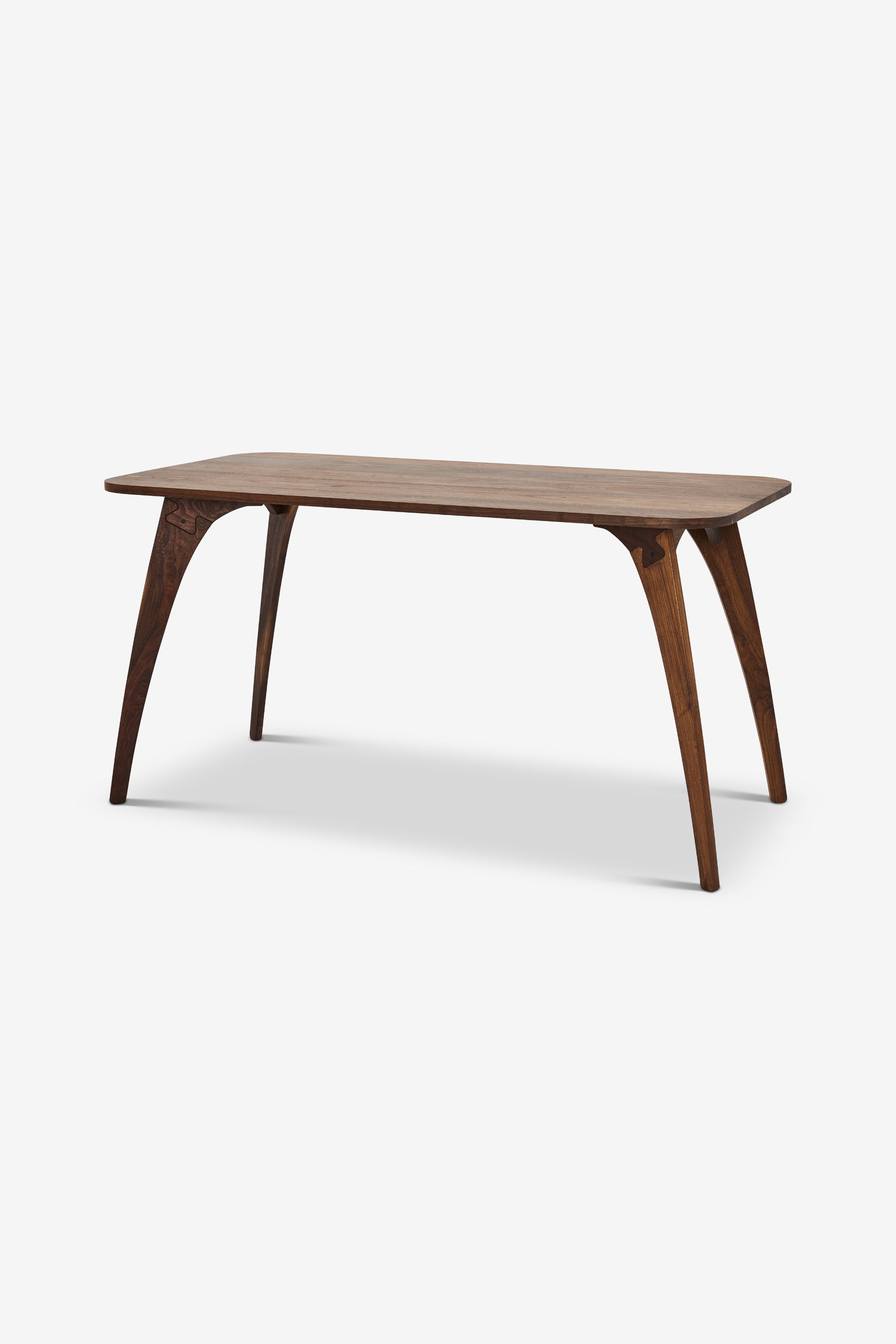
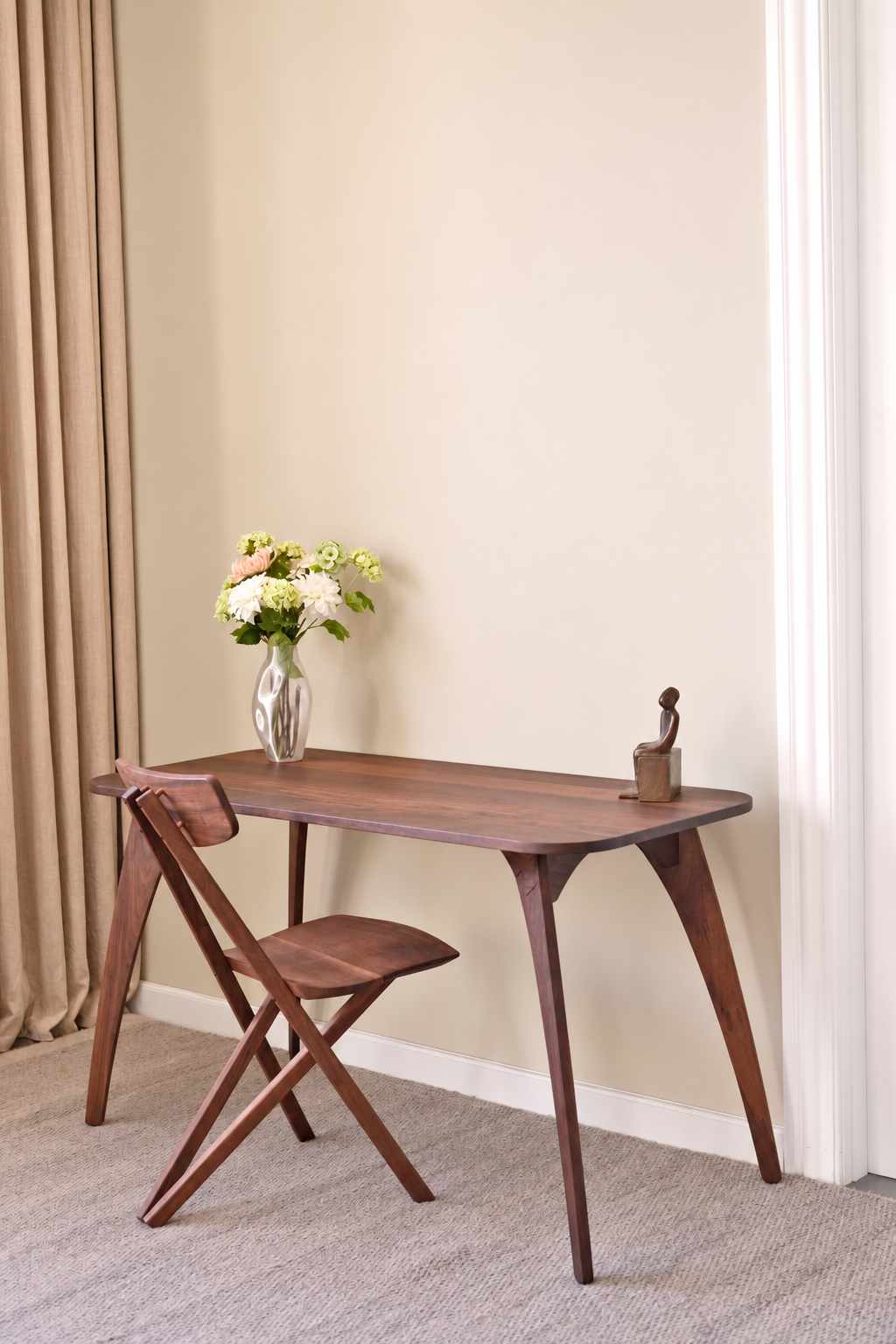
Every Noyer desk, such as the minimalist Desk JN13 in walnut wood, leaves our workshop saturated with cold-pressed linseed oil. This treatment does more than just protect; it saturates the wood, highlighting the dark, warm nuances of the walnut and creating a silky finish that is a joy to touch. However, over time, the wood will naturally absorb this oil or dry out slightly, particularly during the winter months when indoor heating creates a dry climate. Periodic re-oiling is the most effective way to restore the original luster and maintain the wood's health.
The Step-by-Step Oiling Process
Before you begin the oiling process, ensure the desk is completely clean and dry. If the surface feels slightly rough to the touch, you may perform a light sanding. Use a fine-grit sandpaper, at least 240 grit, and always sand in the direction of the wood grain. This gently opens the fibers, making the wood more receptive to the new treatment. Once the dust is cleared, you are ready to apply the oil.
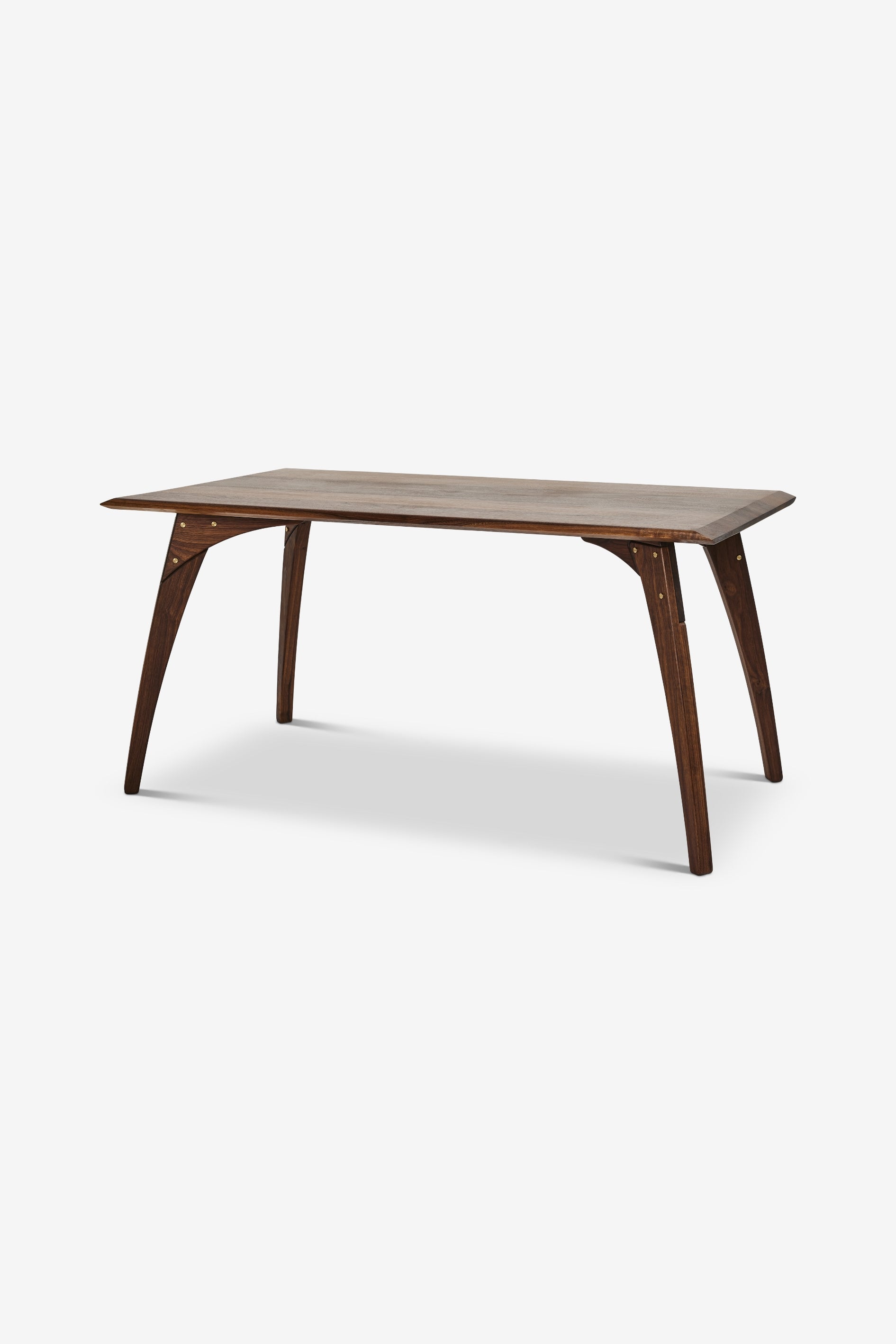
- Application: Apply an even layer of cold-pressed linseed oil using a lint-free cloth. Ensure you cover the entire surface, including the characteristic angled edges and joinery details found on pieces like the Desk JN09 in walnut wood.
- Saturation: Allow the oil to penetrate the wood for approximately 15 to 20 minutes. Observe the surface; if certain areas appear dry, they have absorbed the oil quickly and may require a second application to reach full saturation.
- The Critical Wipe-Down: This is the most important step in the process. Any excess oil must be thoroughly wiped away with a clean, dry, lint-free cloth. If excess oil is left to dry on the surface, it will become tacky and difficult to remove later. The surface should feel smooth, not sticky.
- Curing: Allow the desk to rest for at least 24 hours before placing equipment or papers back on it. This allows the oil to cure and harden, creating a durable protective shield.
The frequency of this process depends on the environment and usage, but as a general rule, you should oil your desk once or twice a year. For more detailed advice on the specific products we recommend, you can visit our dedicated Care and Maintenance page.
Addressing Imperfections: Scratches and Water Rings
Even with the most careful use, life happens. A laptop might leave a faint scratch, or a forgotten coffee mug might leave a pale ring. The inherent advantage of solid walnut furniture is its ability to be repaired. Unlike veneered alternatives, which have only a thin layer of wood over a composite core, solid timber has the substance to be worked with. Superficial scratches often vanish with a simple application of oil, which saturates the fibers and makes the mark disappear.
For deeper scratches, a localized sanding with fine-grit sandpaper followed by re-oiling will usually restore the area perfectly. If you encounter white rings caused by moisture, it is often a sign that the liquid has been trapped in the oil finish rather than the wood itself. This can frequently be remedied by rubbing the area gently with a cloth dipped in oil. For more complex issues or specific questions about structural care, our FAQ about our tables offers a wealth of experience gathered from our years in the workshop.
The Evolution of Patina: Aging with Grace
Walnut is renowned for its unique aging process. While many woods darken or turn yellow over time, walnut is photo-reactive, meaning it tends to lighten and develop a warmer, more golden honey-toned patina when exposed to natural light. This is not a defect; it is a hallmark of the material's authenticity. To ensure this color transition happens evenly, we recommend that you avoid leaving objects in the same position on the desk for extended periods during the first few months. This allows sunlight to reach the entire surface uniformly.
Our philosophy at Noyer is to create furniture that becomes an integral part of your story. Whether you choose a standard design or a bespoke piece tailored to your space, the craftsmanship remains the same. You can learn more about our approach to the cabinetmaker's craft on our About Us page. By following these principles on how to care for a walnut desk, you ensure that your workspace remains inspiring, beautiful, and functional for decades to come. A well-cared-for desk is not just a delight to the eye; it is a tactile pleasure to use every single day.
If you are looking to complement your home office with other high-quality elements, we invite you to explore our full collection of handmade tables, where functionality and aesthetics are always in perfect balance.