Choosing the right dining chair seat height determines whether sitting down to dinner feels effortless or cramped. When a chair is too high, thighs press against the underside of the tabletop; when it sits too low, elbows sit below the edge, forcing shoulders upward. Understanding standard measurements and clearance requirements ensures your chairs and table work comfortably together.
Standard Dining Chair and Table Dimensions
To evaluate chair proportions, begin with the dining table. Most standard dining tables stand between 71 and 76 cm (28 to 30 inches) high from the floor to the top surface. To suit these proportions, standard dining chairs feature an uncompressed seat height between 43 and 48 cm (17 to 19 inches).
For ergonomic posture and easy movement, plan for 25 to 30 cm (10 to 12 inches) of vertical clearance between the chair seat and the underside of the table. This gap provides sufficient room for your thighs while keeping plates, glasses, and cutlery within natural reach of your forearms.
Measuring Clearance: The Table Apron Factor
A common measurement mistake is checking clearance only to the upper surface of the table. Many solid wood dining tables include a structural apron or crossbeam beneath the top surface. An apron can reduce legroom by several centimeters.
When calculating legroom:
- Measure the distance from the finished floor to the lowest edge of the table apron or supporting subframe, rather than the tabletop itself.
- Subtract your chair’s seat height from this measurement. If the remaining space is less than 25 cm, sitting with legs crossed or shifting position comfortably will be restricted.
- If your chairs feature armrests, measure from the floor to the top of the armrest. Ensure this dimension leaves clearance beneath the table apron so you can slide the chairs fully in when not in use.
Horizontal spacing also matters for dinner guests. As a rule of thumb, allow at least 60 cm of table width per person for side chairs, and 65 to 70 cm when using chairs with armrests.
Seat Material and Cushion Compression
When selecting dining chairs, account for how different materials behave under body weight. A rigid seat surface maintains a fixed height, whereas upholstered cushions compress:
- Solid wood seats: A solid timber seat, such as walnut, provides a fixed, uncompressed height. What you measure unloaded is the exact position where you sit.
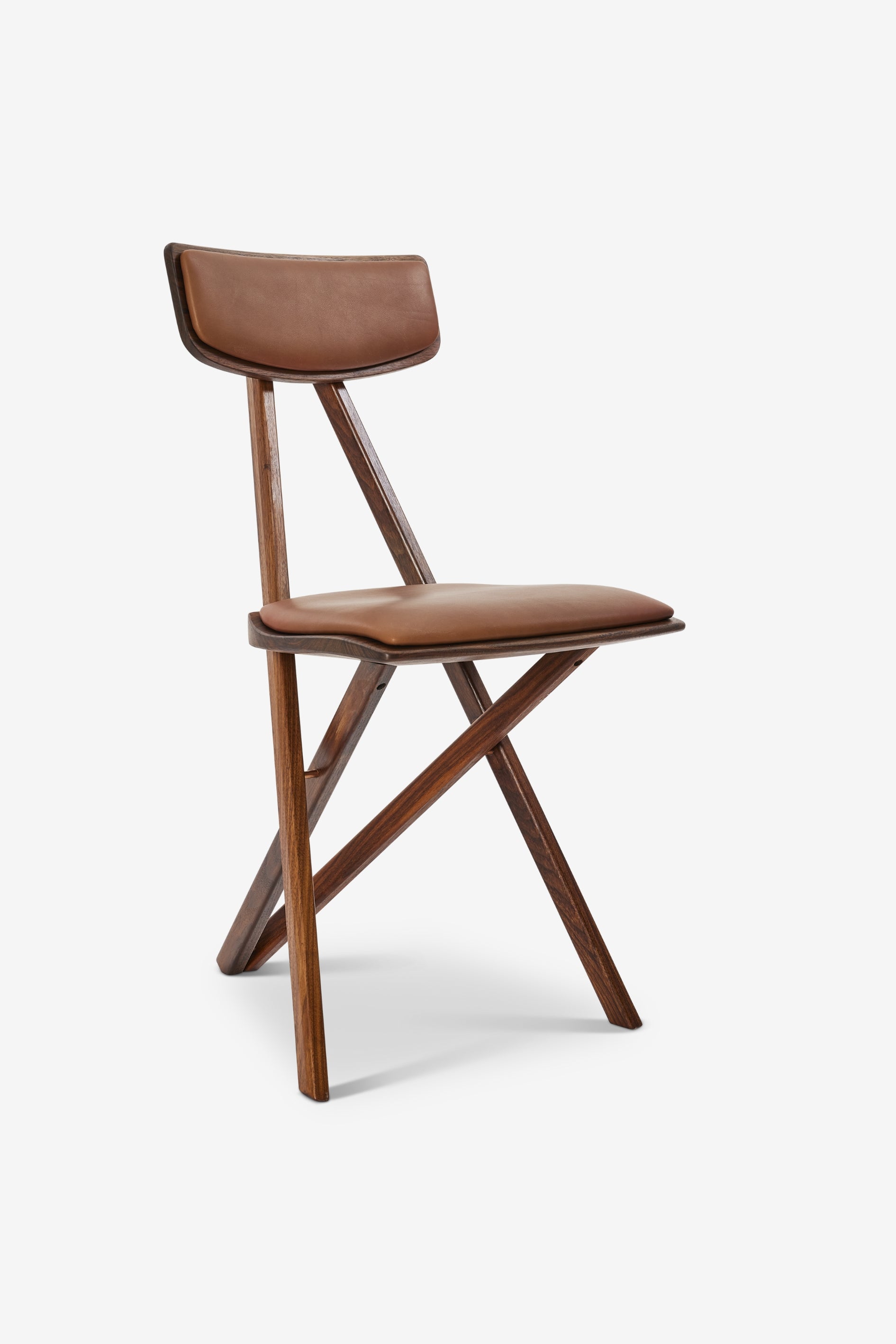
- Upholstered seats: Padded foam typically compresses by 2.5 to 4 cm (1 to 1.5 inches) when occupied. A chair with a thick padded seat measuring 48 cm unloaded will typically compress to around 44 to 45.5 cm under body weight.
- Leather upholstery: Aniline leather over firm padding offers initial give while maintaining support, settling slightly under use without sagging.
Pairing Chairs with Solid Wood Tables: The JN16 and JN01
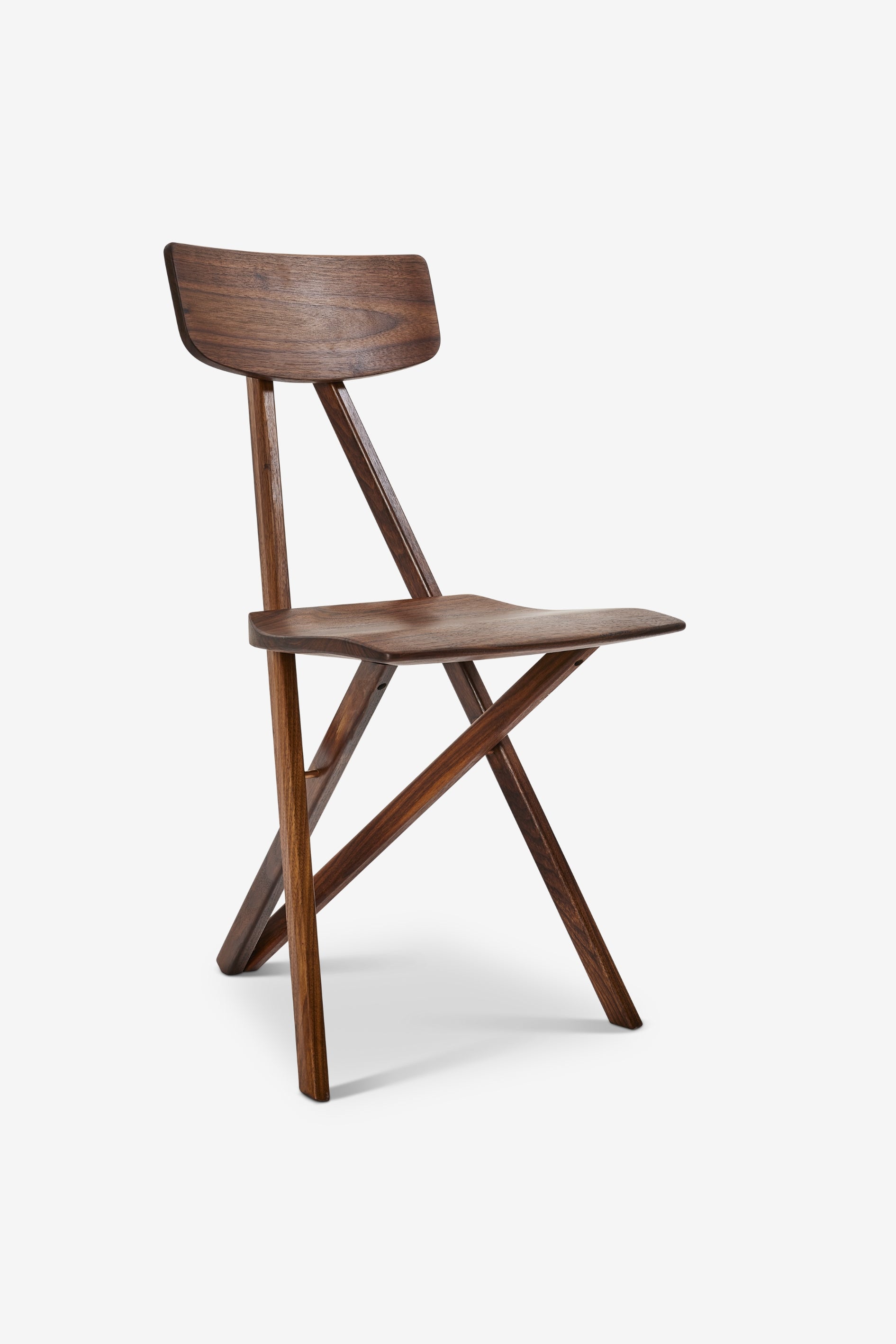
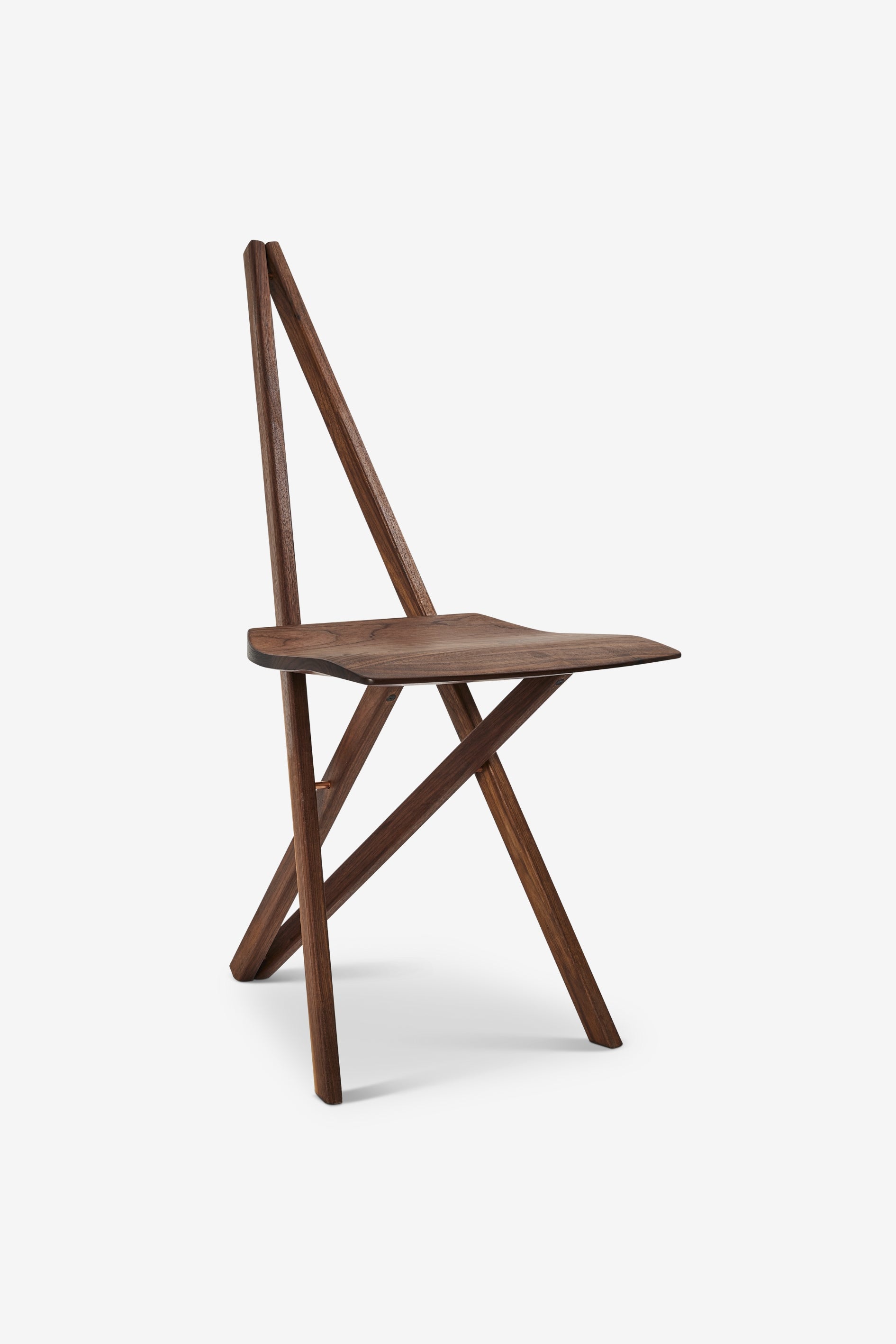
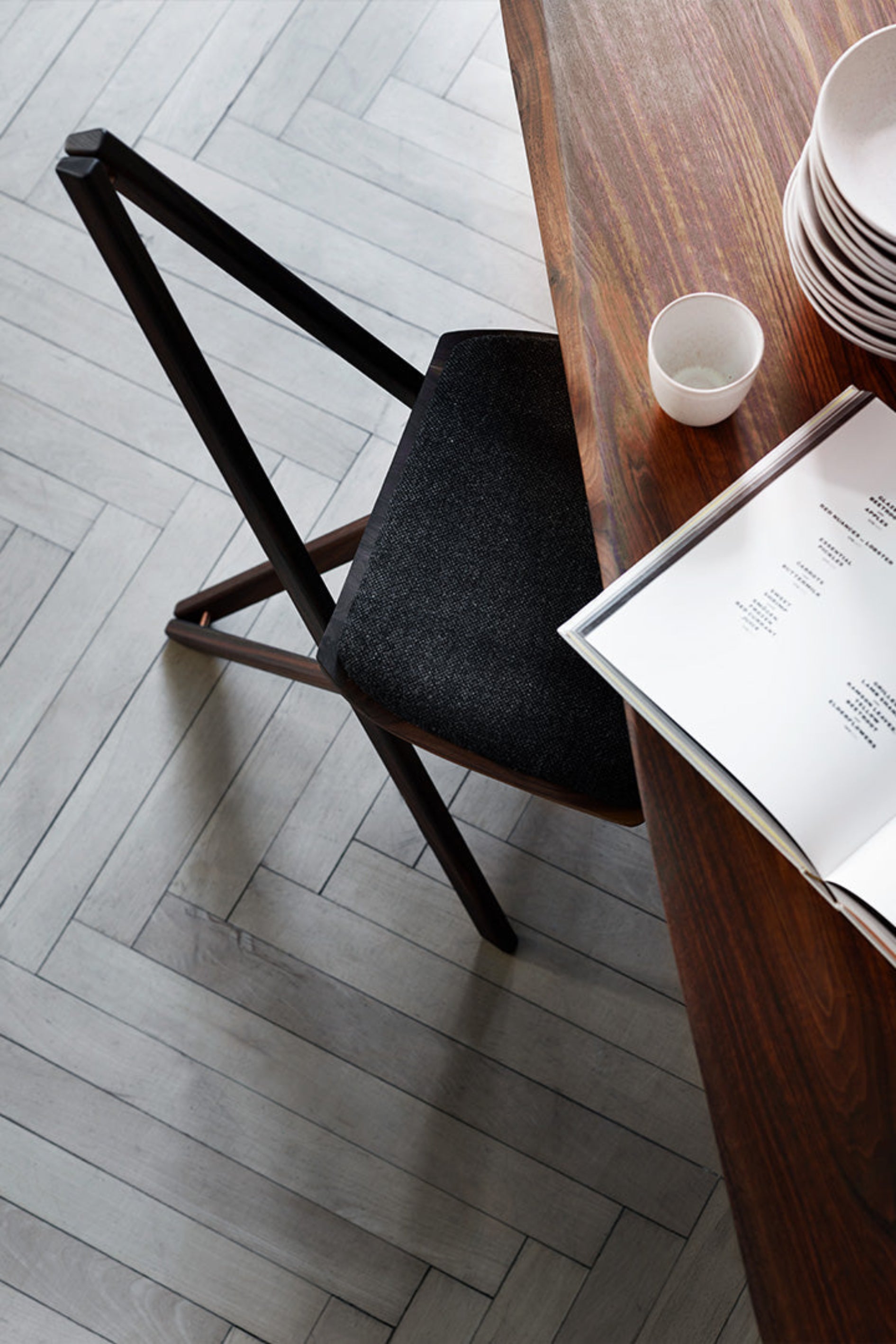
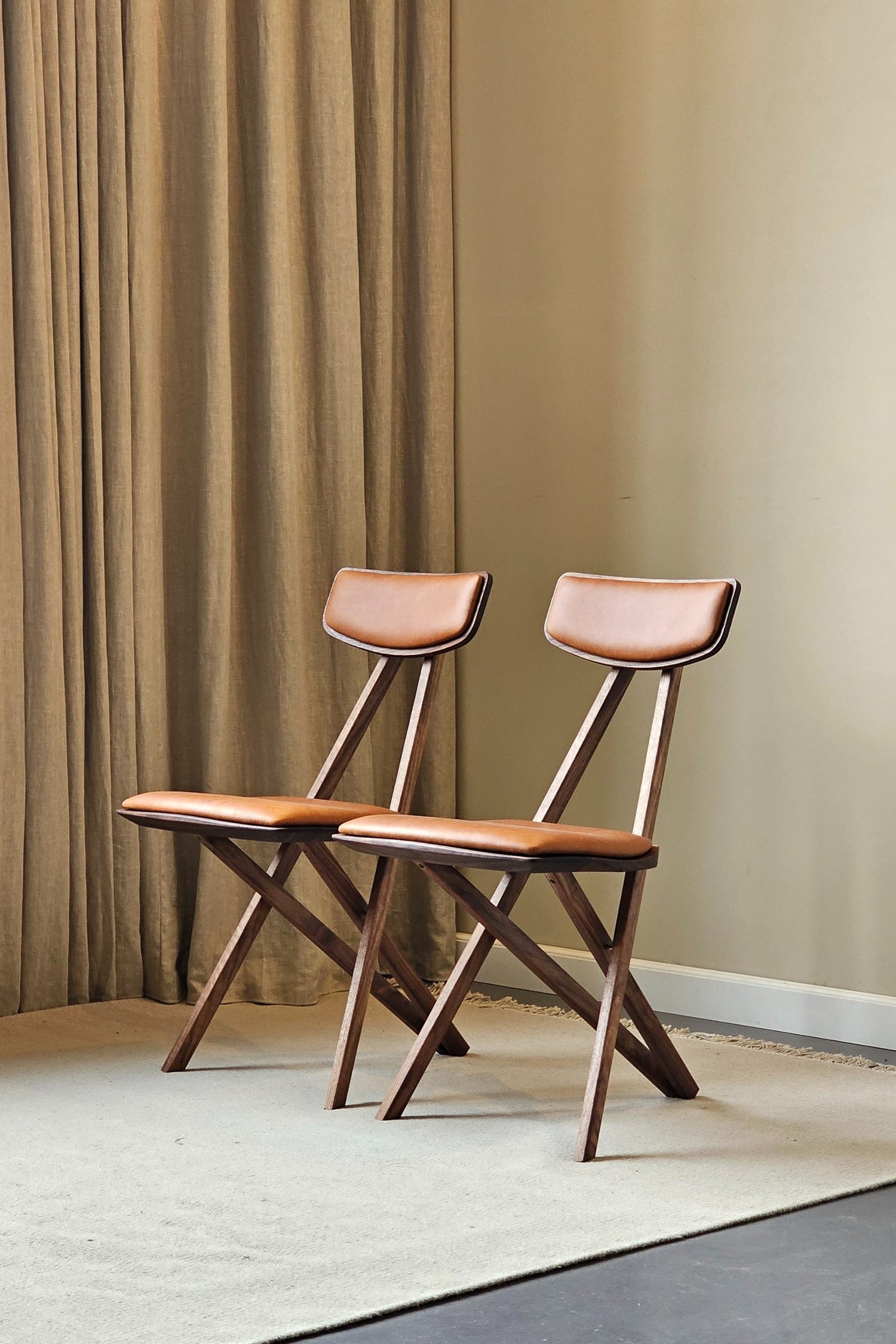
Proportions and leg clearance are central considerations in handcrafted furniture. The JN16 dining chair by Noyer illustrates how seat height pairs with tabletop profiles. Built in solid American walnut, the JN16 is designed to align with standard-height dining surfaces such as Noyer’s JN01 dining table.
The JN16 chair is available in three seat configurations, each suited to everyday dining:
- Solid walnut: Highlights the natural grain pattern and provides a firm, fixed seat height with clean geometry.
- Hallingdal upholstery: Features durable wool textile over padding, balancing tactile warmth with supportive resilience.
- Black aniline leather: Offers a supple, breathable surface that develops a natural patina over time.
The JN16 chair and JN01 table are proportioned to work together, maintaining comfortable vertical clearance and an aligned seating position for everyday meals.
How to Test Your Setup at Home
Before making a final decision, verify your dining dimensions directly in your dining space:
- Sit upright with your feet flat on the floor and elbows resting on the table. Your elbows should bend at approximately a 90-degree angle without requiring you to lift or hunch your shoulders.
- Verify that your thighs do not touch the table frame when sitting back against the chair’s backrest.
- Check that you can pull the chair inward to a natural dining position without catching armrests or knees on the tabletop edge.
Taking precise vertical measurements from the floor to both the seat and the table's lowest edge ensures your dining chairs deliver lasting comfort and function at every meal.