
When a dining table is set for an evening with guests, the chairs dictate how long everyone stays seated. The tabletop provides the surface for dinner, but the chair determines physical ease over hours of conversation. Choosing dining chairs requires balancing posture, joint angles, and resilient materials with clean design.
Angles and Support in Solid Wood
Solid wood seating is often assumed to feel unforgiving over a long meal. In practice, comfort depends on seat incline, weight distribution, and frame geometry rather than thick layers of padding. At Noyer, chair proportions support an upright yet relaxed posture that remains comfortable throughout multi-course dinners.
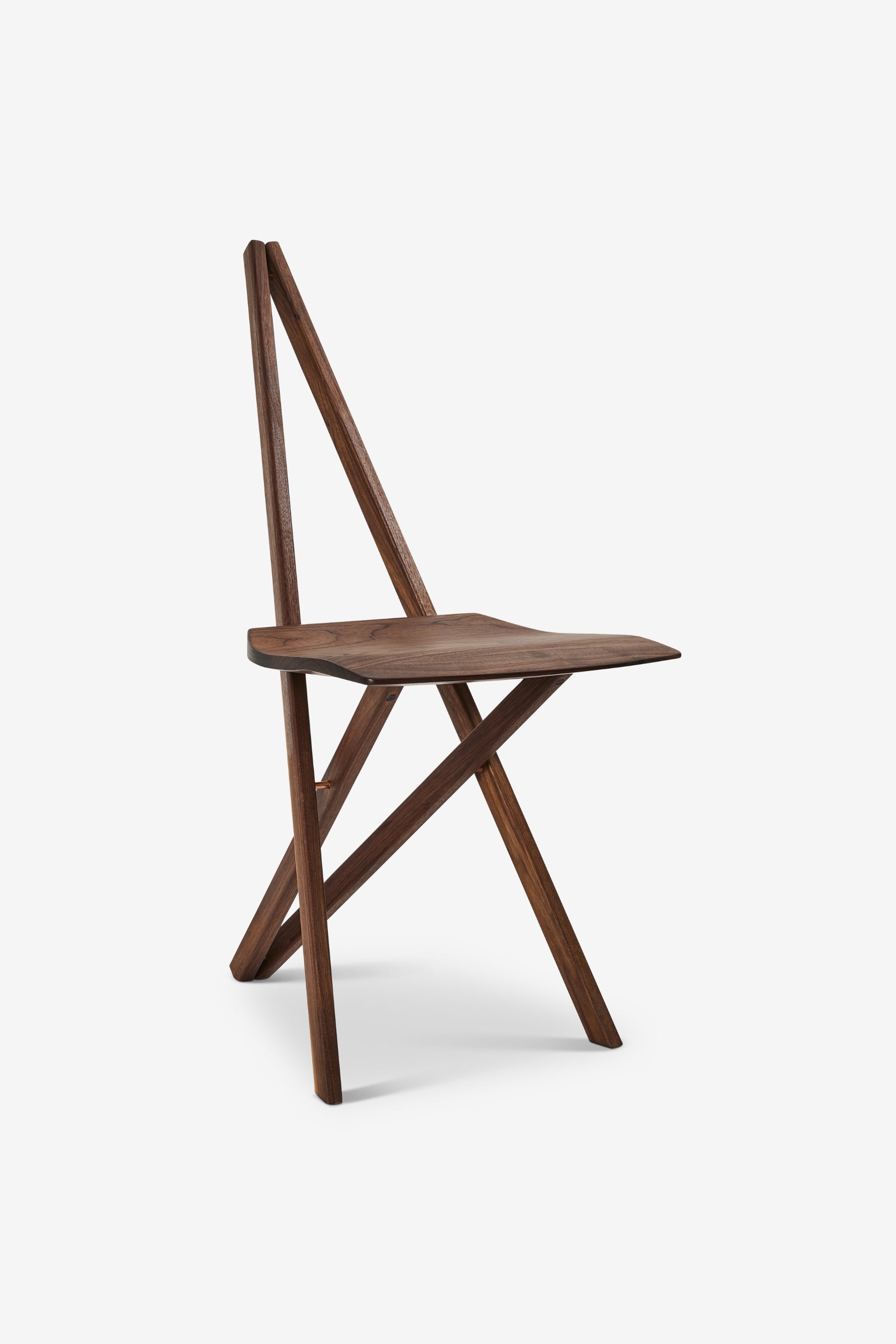
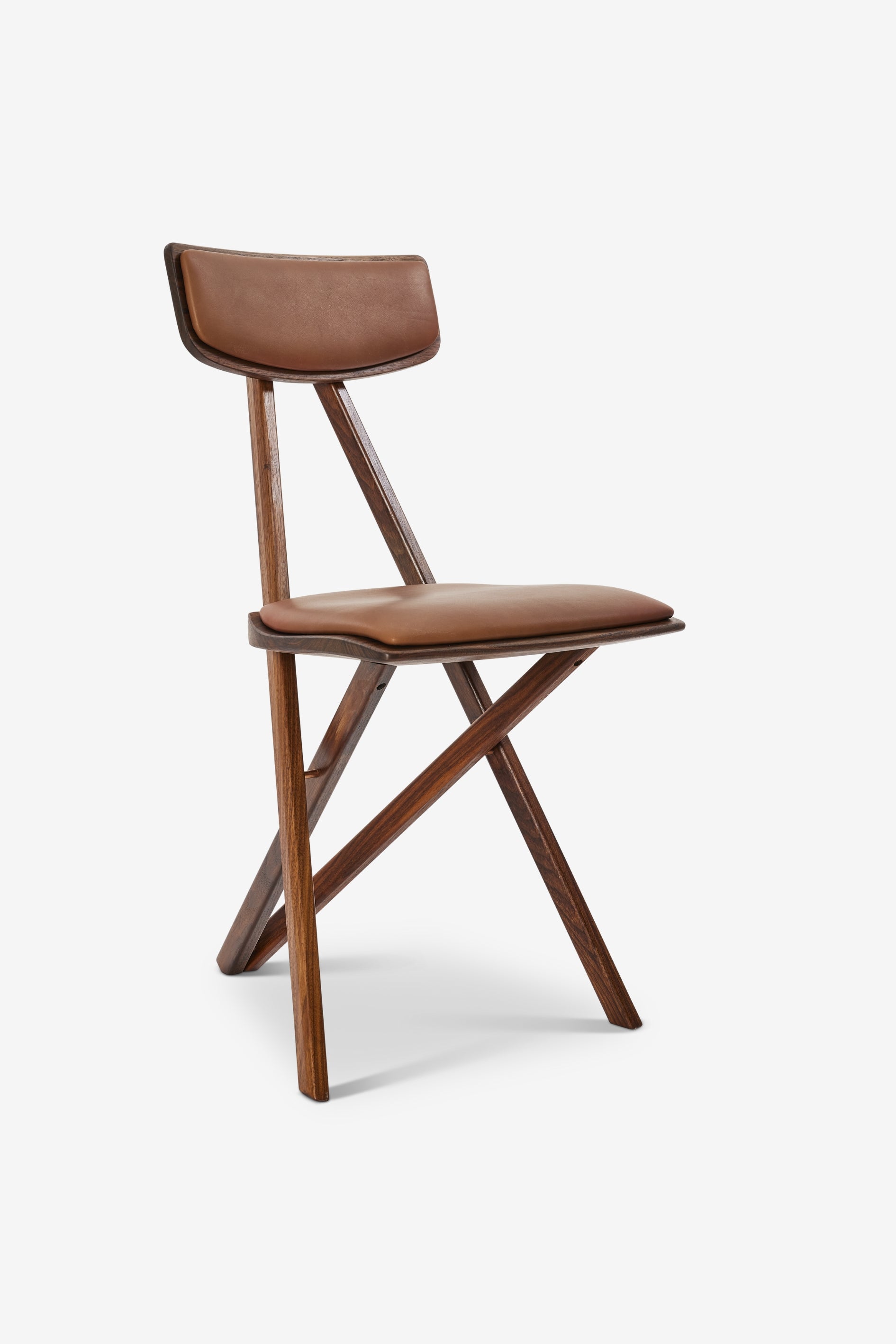
Our collection of chairs builds on the structural capacity of solid American walnut. The JN11 dining table chair originated as a prototype for Denmark’s televised national furniture design competition, Danmarks Næste Klassiker. Its frame relies on the geometric strength of the triangle to create a rigid, stable structure with minimal material bulk, combining durability with supportive seating comfort through its angled profile.
Seat Options: Walnut, Hallingdal Wool, or Leather
Daily dining demands different qualities from a chair seat. Some interiors benefit from the quiet discipline of unadorned timber, while others call for upholstery to cushion extended dinners. Both the JN11 and the evolved JN16 dining chair in walnut wood come with three distinct seat surfaces:
- Solid Walnut: An unpadded wooden seat reveals the dark grain and natural color variation of American walnut, developing a soft patina through handling and daily use.
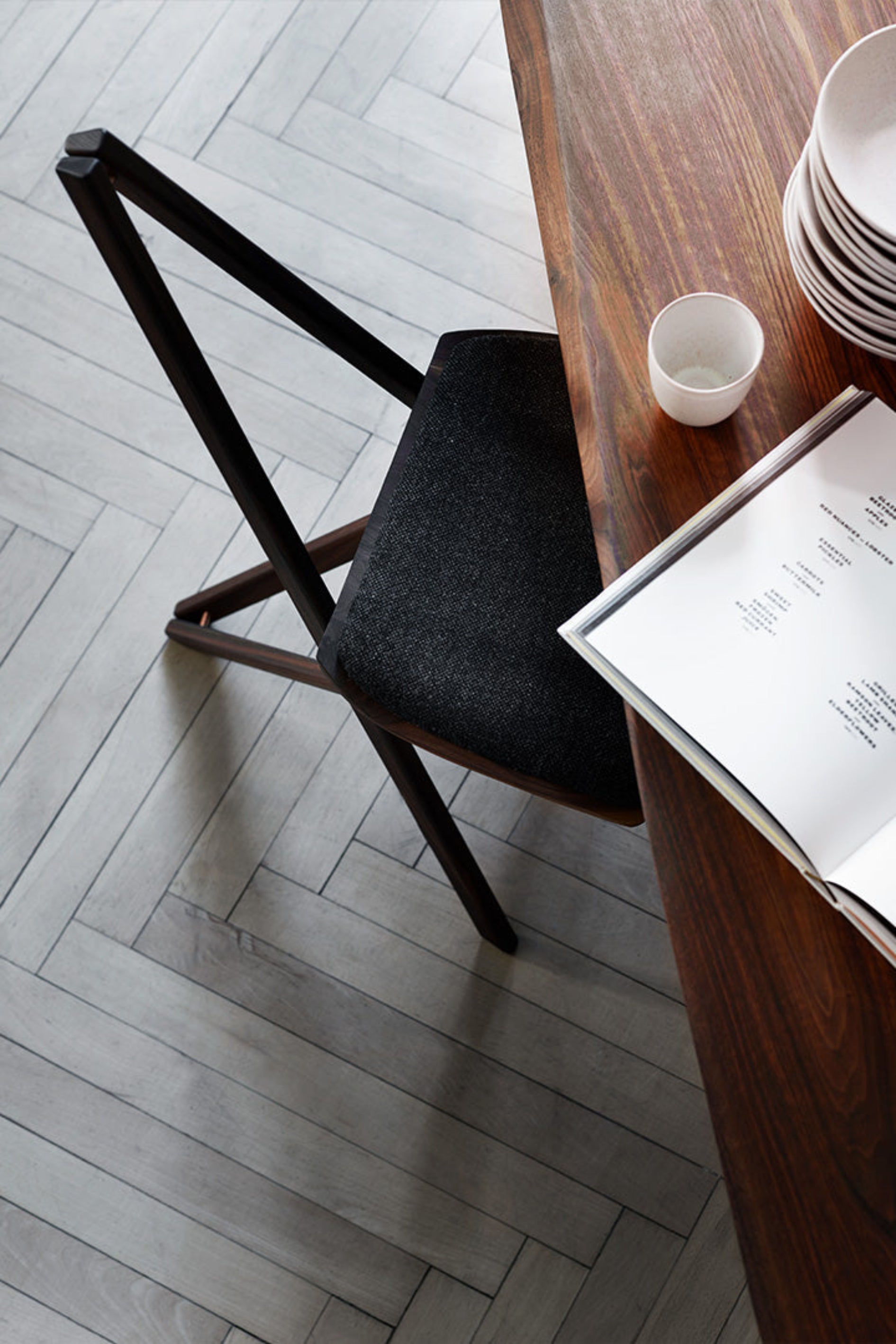
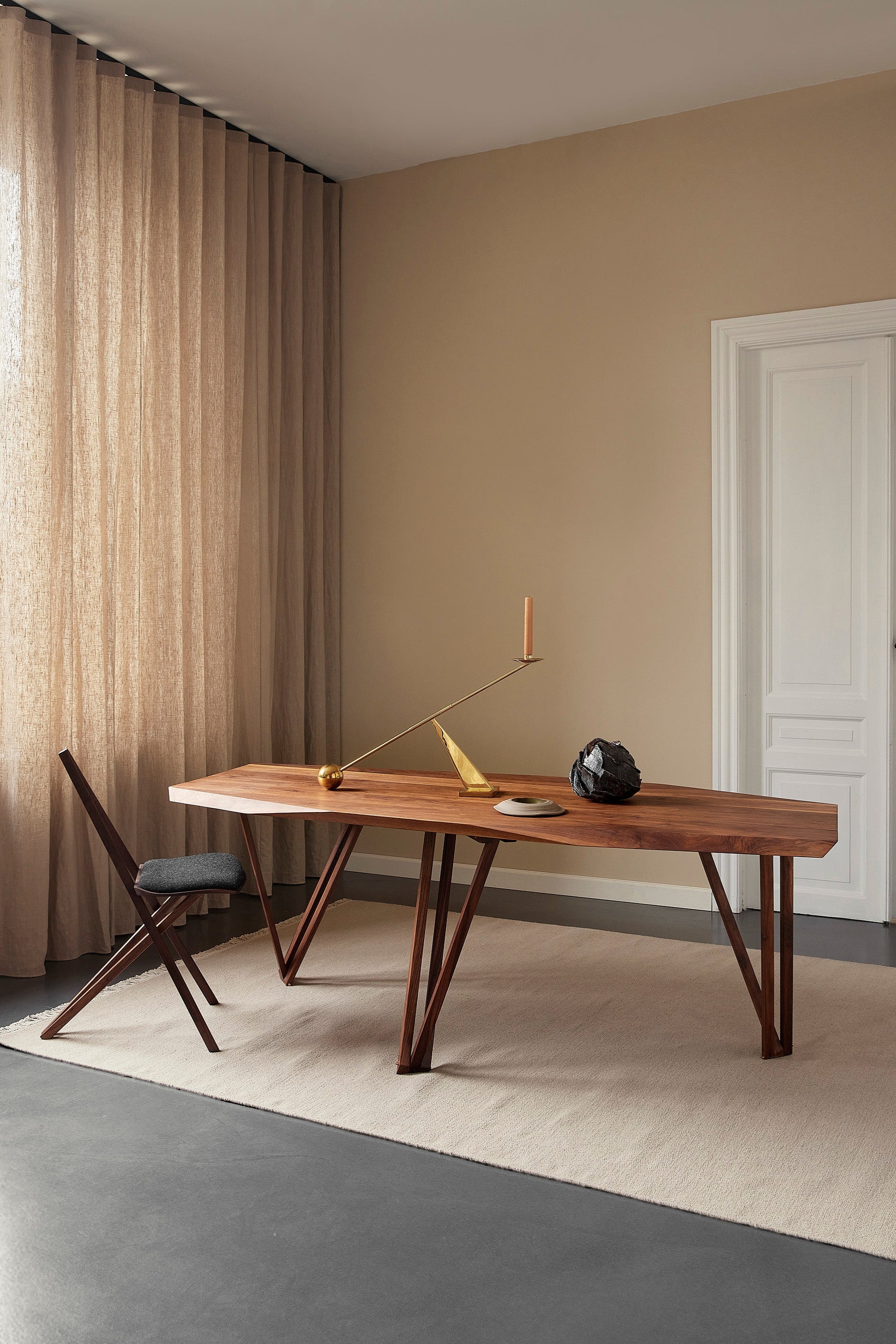
- Hallingdal Wool: For the JN16, high-resilience foam wrapped in Hallingdal wool introduces a durable woven structure that contrasts with the dark walnut frame while resisting heavy abrasion.
- Leather: Upholstered over high-resilience foam on the JN16, leather provides a padded surface across both the seat and the backrest.
Backrest Profiles for Long Dinners
Back support shapes both posture and sightlines across the dining room. The JN11 uses a slender vertical back structure without a crosswise rail, exposing the joint details and leaving open views across the room.
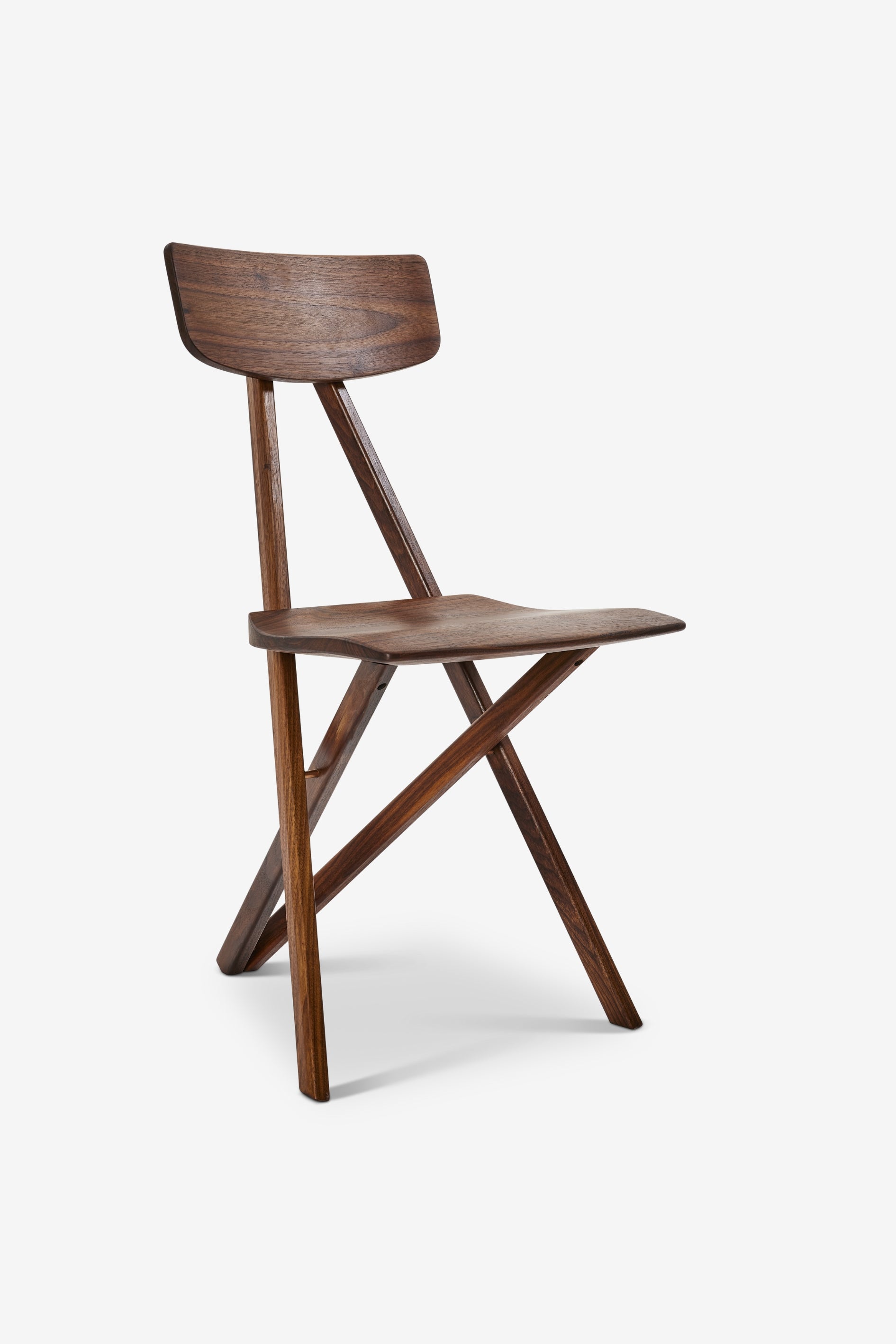
The JN16 builds on the same construction principles as the JN11, but adds a horizontal backrest to increase comfort when dinner extends over several hours. The backrest provides stable support for the upper body, whether selected in solid walnut or with wool or leather upholstery.
Clearances Around the Dining Table
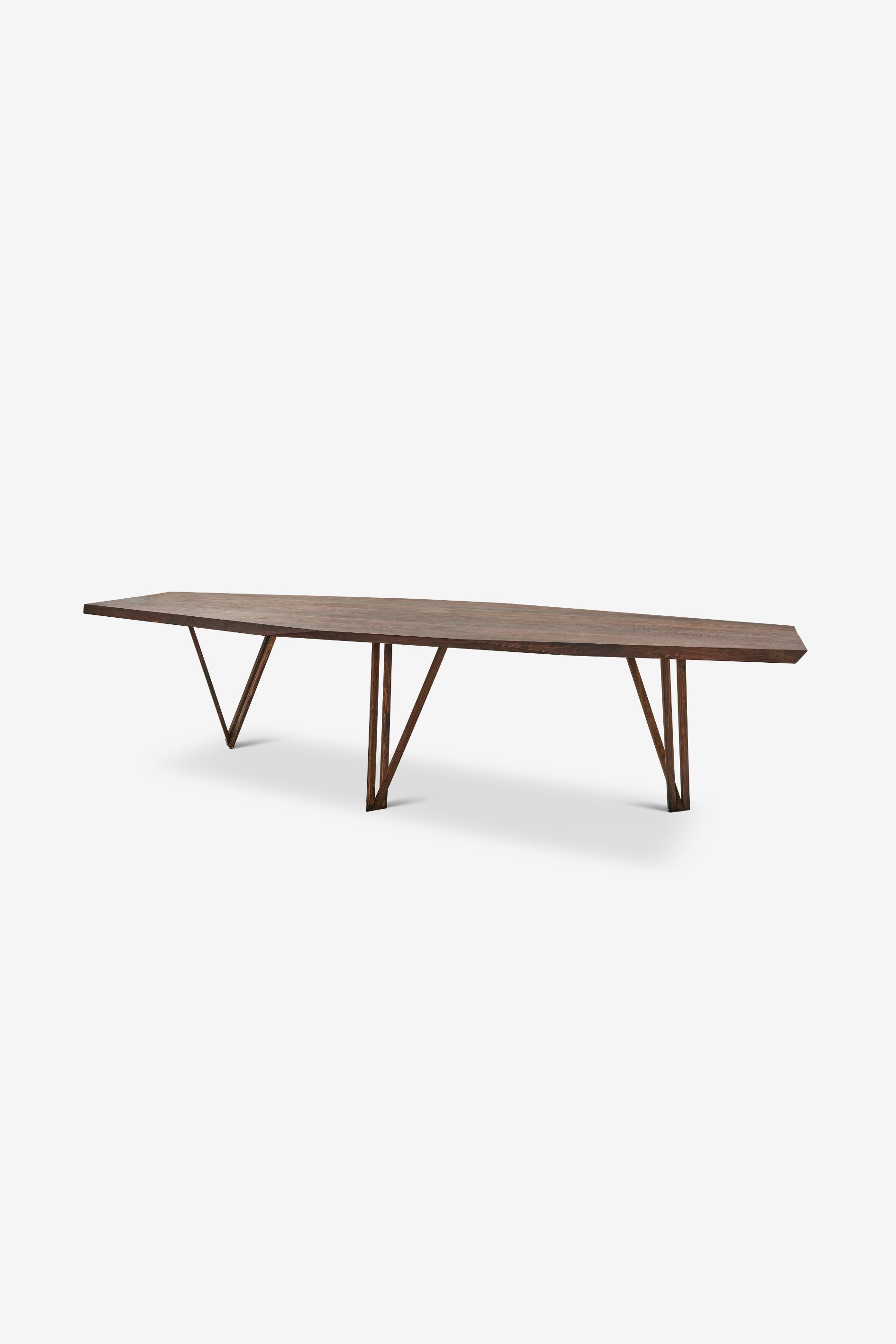
Pairing chairs with a table requires attention to clearances as well as visual balance. The JN16 shares a design language with the JN01 dining table, where the tabletop's 45-degree cut edges and custom angled legs create a consistent geometry across the room. Walnut chairs also work well as a deliberate dark accent beside light oak floorboards or matte linoleum tabletops. To ensure practical movement, keep these spatial guidelines in mind:
- Vertical Legroom: Maintain 25 to 30 cm (10 to 12 inches) of vertical clearance between the chair seat and the underside of the tabletop or apron so thighs can move freely.
- Perimeter Width per Diner: Allocate 60 to 65 cm (24 to 26 inches) of table edge per chair to allow diners enough elbow room during meals.
- Passage Behind Seated Guests: Leave at least 90 cm (36 inches) between the table edge and surrounding walls or sideboards so chairs can slide back without blocking circulation.
To inspect the walnut grain in person and test different seat configurations, visit our Copenhagen showroom or explore complementary designs in our curated collection of tables.