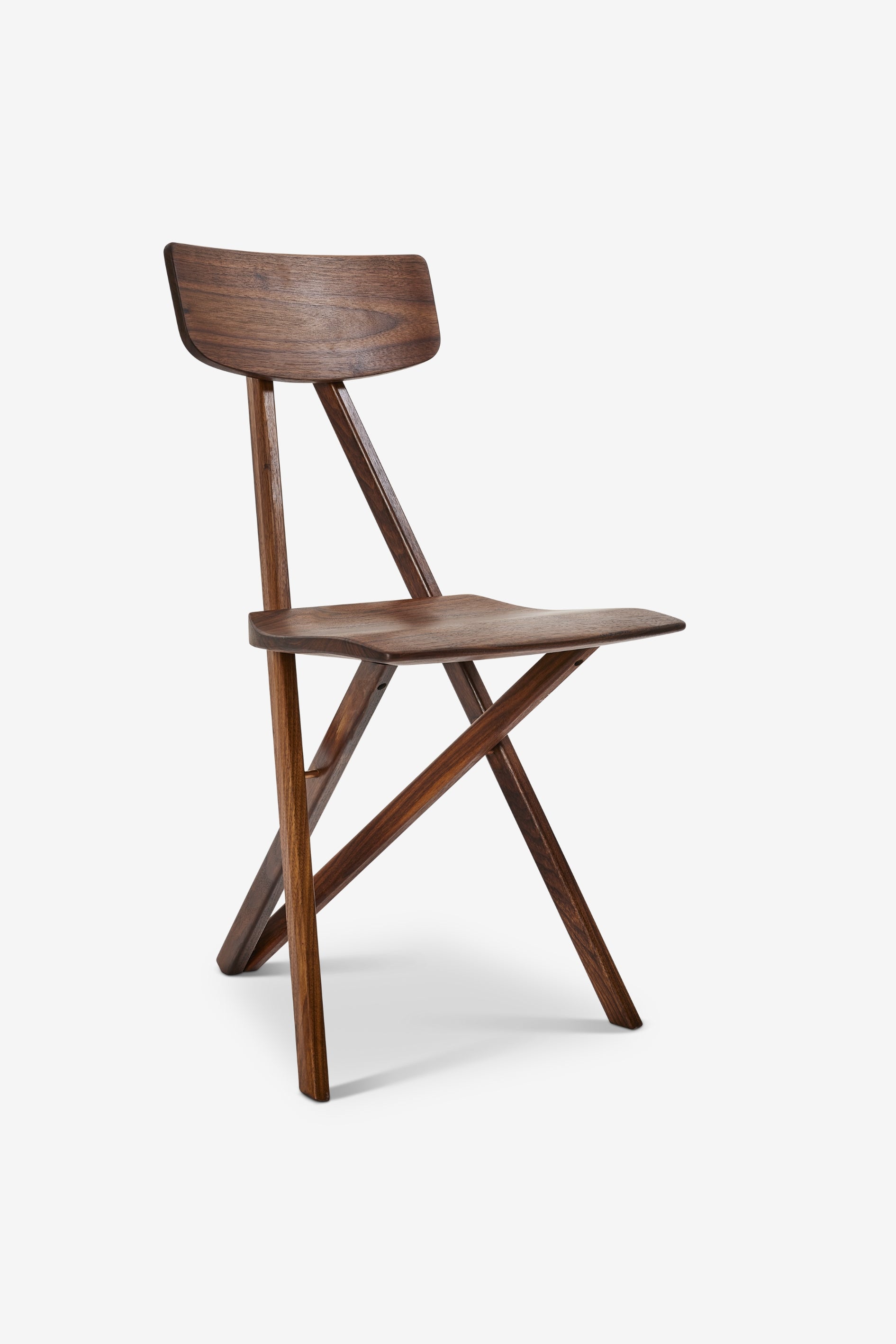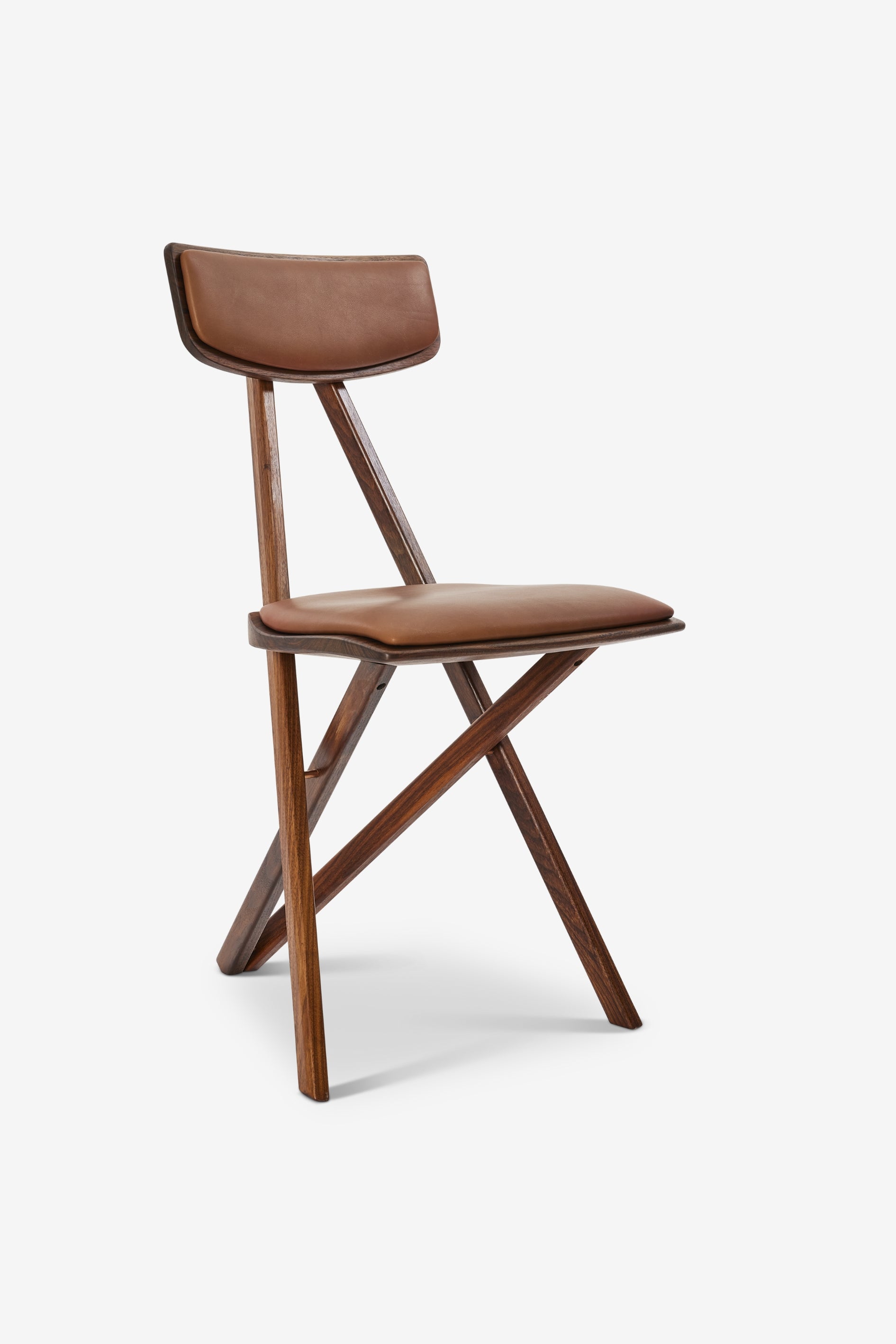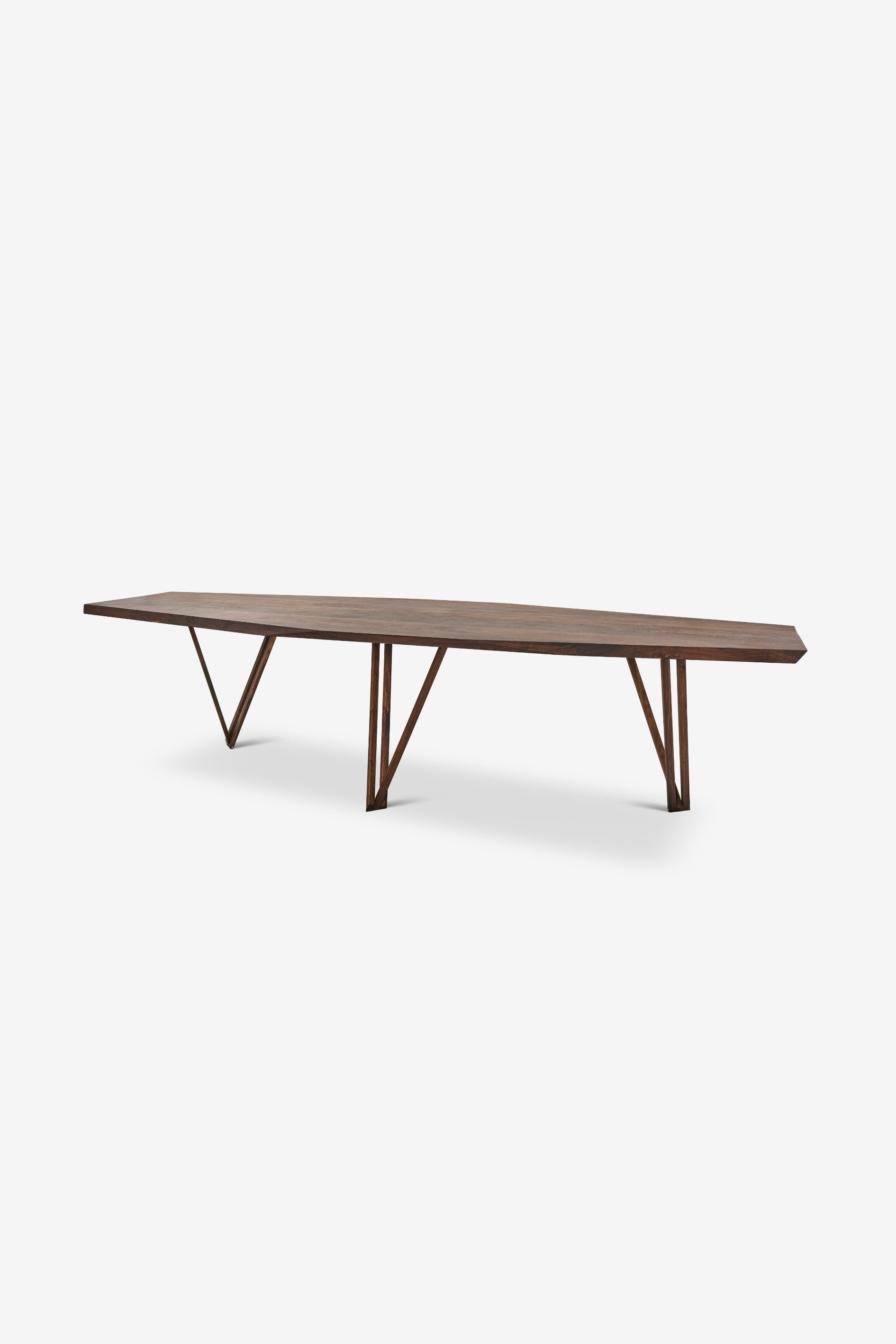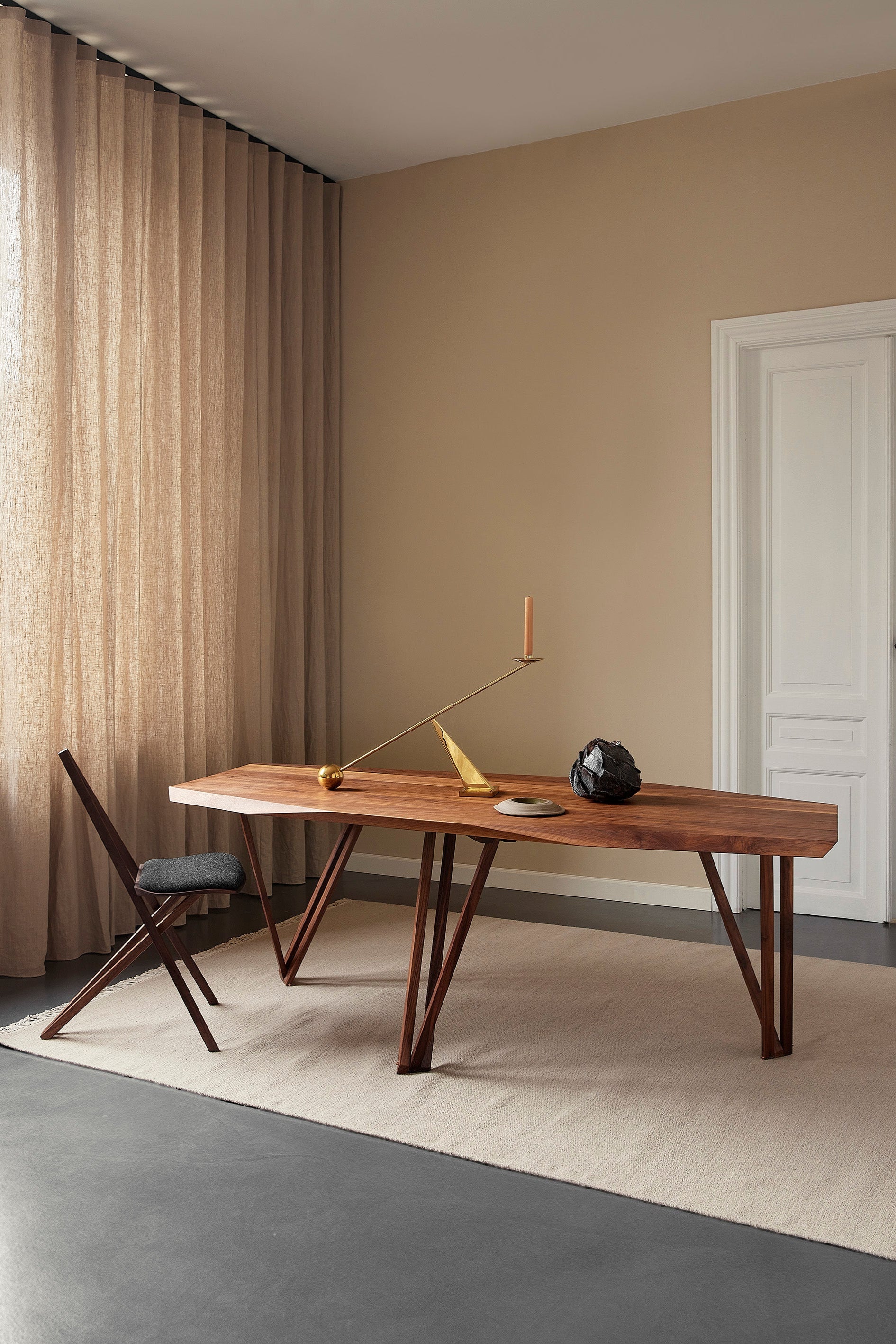
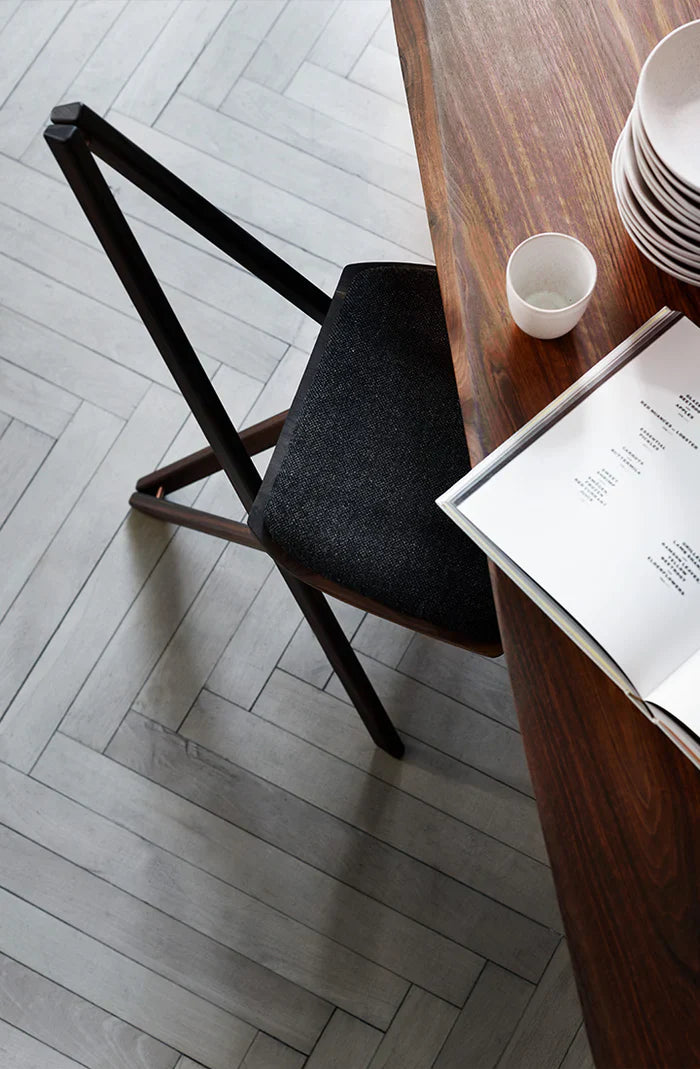
A dining chair must support comfortable seating through everyday meals and long evenings around the table. While the table creates the central surface in the dining area, the chairs are what you physically interact with for hours. Choosing wooden dining chairs requires balancing seat height, seat contouring, table clearances, and the tactile qualities of the material.
Seat Height and Table Clearances
The vertical relationship between the chair seat and the tabletop determines your posture. A standard dining table typically stands around 75 cm high. This pairs best with a dining chair seat height between 45 and 50 cm. This proportion provides an ergonomic clearance of 25 to 30 cm between the seat and the underside of the table, leaving comfortable thigh room and allowing forearms to rest on the surface without hunching the shoulders.
When planning table seating, allow a width of at least 50 to 60 cm per place setting. Expanding this allowance toward 70 to 76 cm provides additional elbow room and makes it easier for diners to get up and sit down without disturbing adjacent guests.
Solid Wood Ergonomics and Seating Comfort
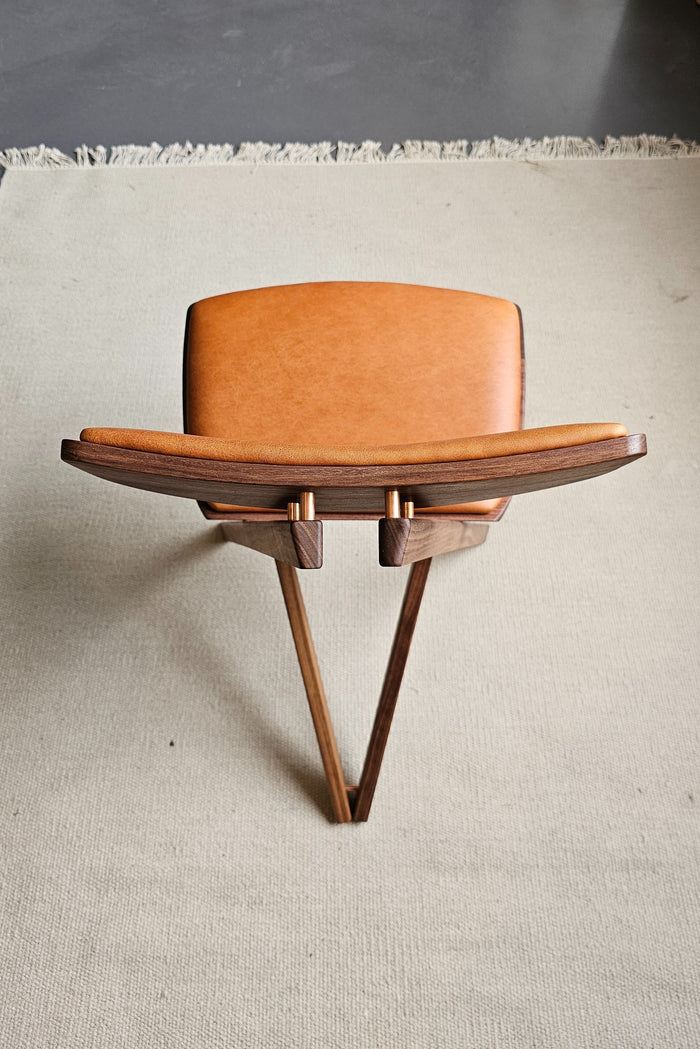
Solid timber is a firm material, but a wooden chair does not have to feel hard. Comfort relies on the contouring of the seat and the angle of the backrest. A gently curved seat pan distributes body weight evenly, while a well-positioned backrest supports the lumbar spine.
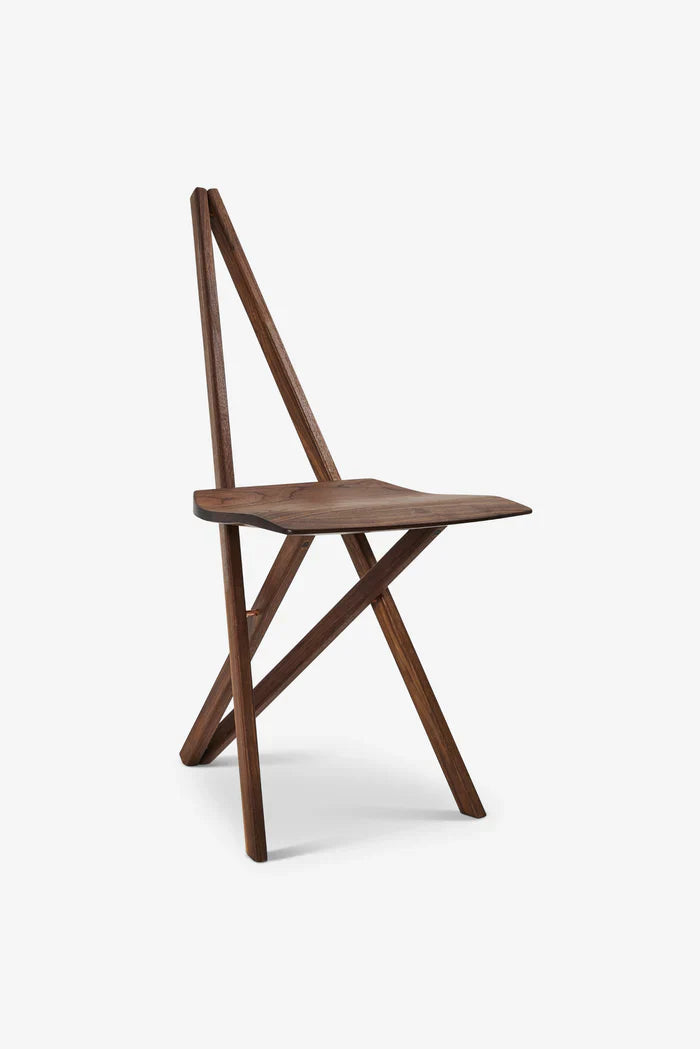
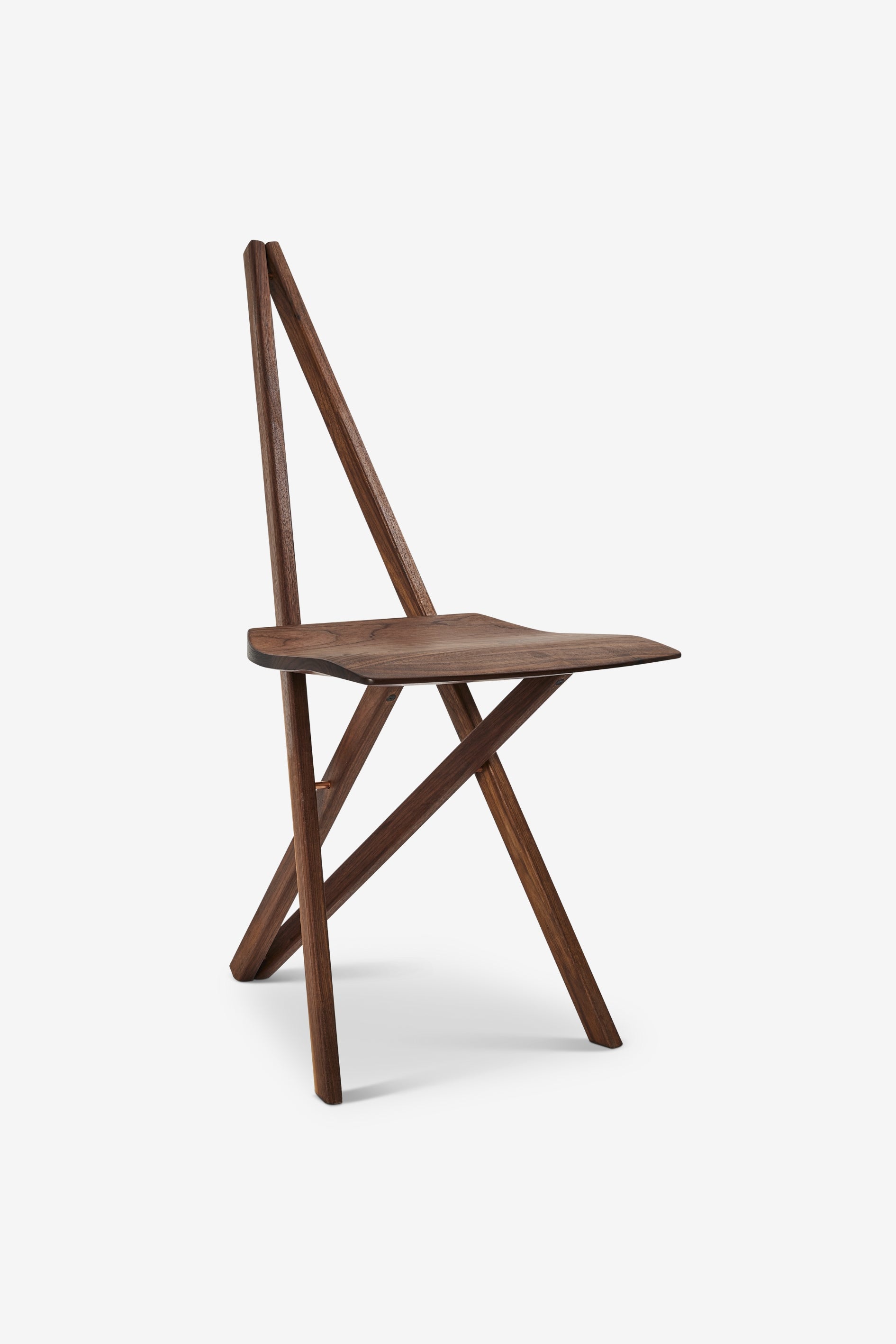
At Noyer, our exploration of American walnut led to the Dining table chair JN11, designed around a lightweight yet strong solid timber construction. Its evolution, the Dining chair JN16 in walnut wood, integrates a curved backrest in solid walnut for extended upper-body support. The choice between an all-wood seat and an upholstered finish depends on how you use the space:
- Solid walnut: A clean wood seat that showcases uninterrupted walnut grain and the warm, dark glow of the timber.
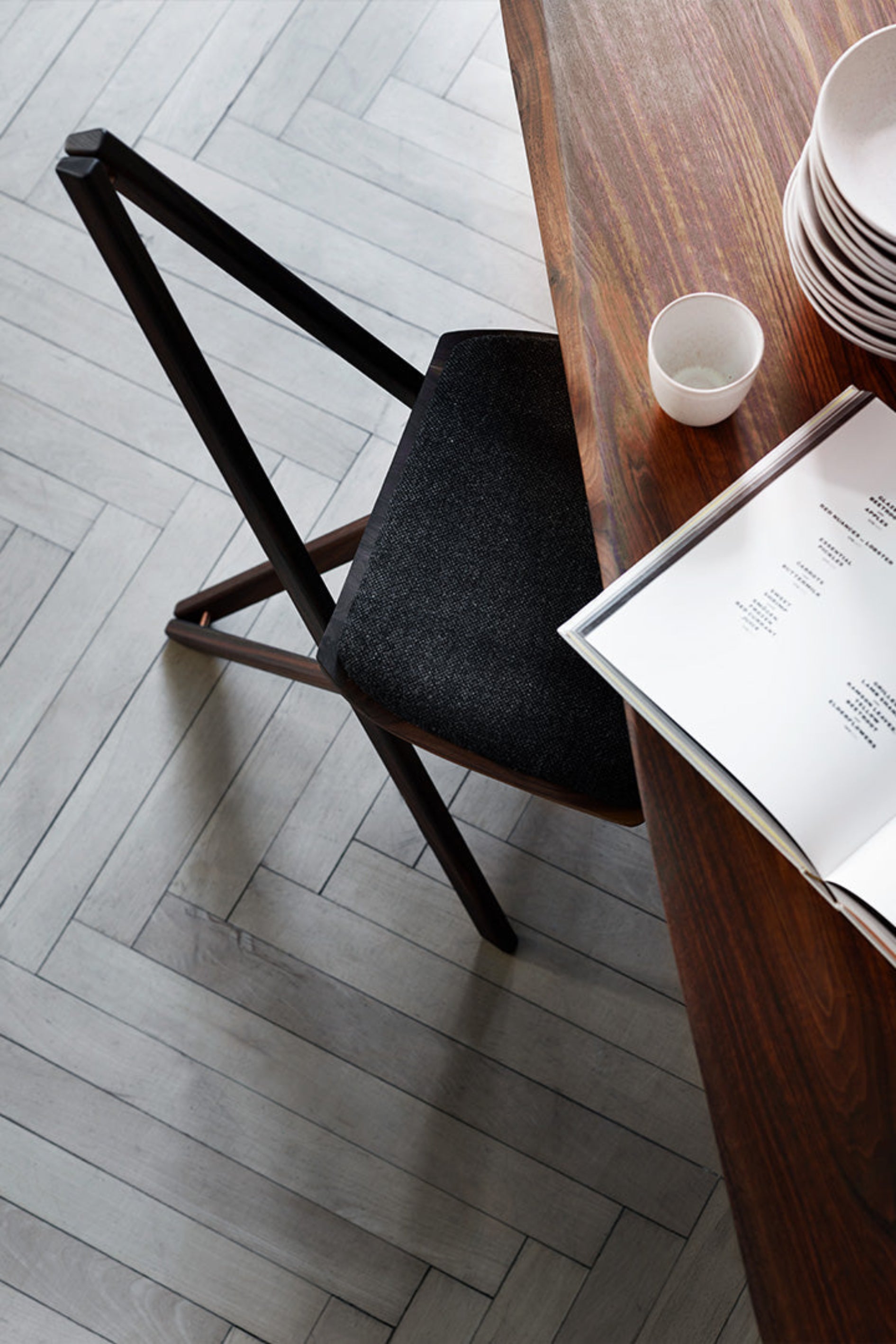
- Upholstery in wool or leather: Seats cushioned with resilient cold foam and upholstered in hard-wearing Hallingdal wool or soft leather offer extra softness during long dinner parties or working from home.
Balancing Dark Hardwood with the Room
American walnut carries a rich, dark tone with lively grain patterns. Introducing walnut chairs does not mean the entire dining space must be dark. Solid walnut chairs offer a grounded, calm contrast alongside light oak flooring, clean plastered walls, or tabletops in other materials.
Pairing the chairs with a matching piece such as the Dining table JN01 in walnut wood creates a shared design language across the room, repeating precise 45-degree angles and consistent wood tones.
Care and Indoor Climate
Solid wood is a natural material that absorbs and releases moisture as household conditions change. Keeping indoor relative humidity between 40% and 60% helps prevent timber joints from loosening or planks from warping.
For daily cleaning, wipe surfaces along the direction of the grain using a soft cloth wrung out tightly in clean, lukewarm water. Avoid harsh detergents and ammonia-based cleaners. Treating the wood periodically with oil replenishes its protective barrier against spills and revives the deep luster of the walnut grain. For detailed instructions, explore our guide to Care and Maintenance.